Artwork
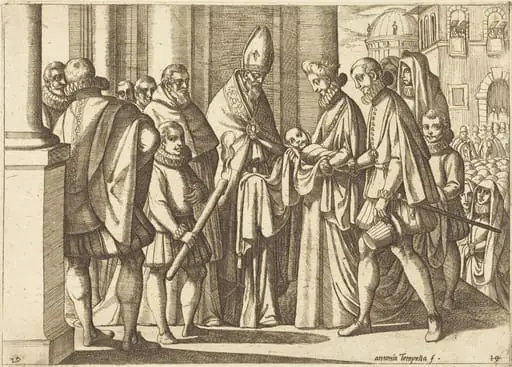
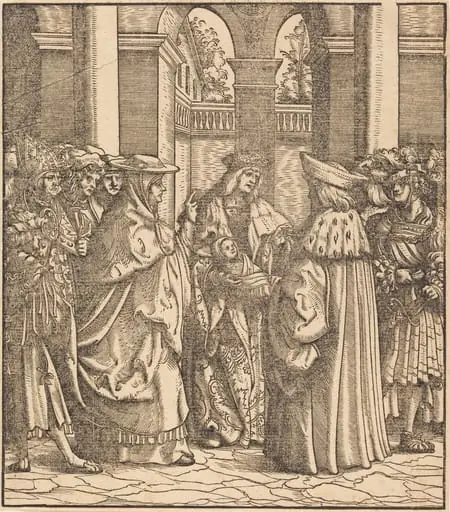
The Archbishop Blessing the Child after the Baptism
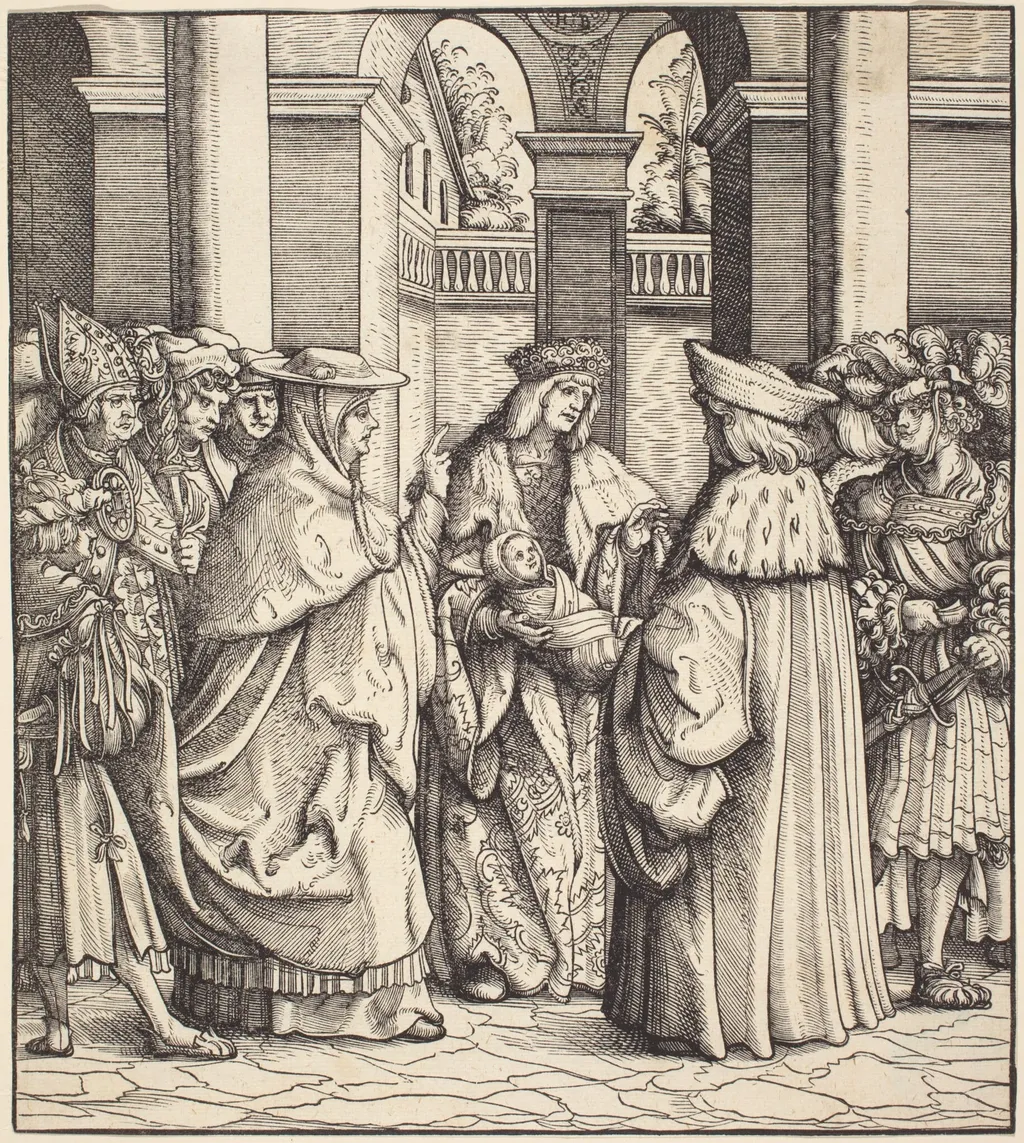
The Archbishop Blessing the Child after the Baptism is an ink print by the Renaissance artist Hans Burgkmair the Elder. It dates from 1515 and is held in the collection of the National Gallery of Art.
About this work
Overview
Hans Burgkmair the Elder’s woodcut, dated 1515, portrays a baptismal ceremony in which an archbishop blesses an infant. The central figures are the cleric, dressed in a long robe and a distinctive hat, and the swaddled child held aloft. Surrounding them are several onlookers attired in contemporary Renaissance garments, observing the rite.
Subject & Meaning
The composition emphasizes the sacramental act of baptism, highlighting the hierarchical role of the archbishop as spiritual intermediary. The child’s upward gaze suggests innocence and receptivity, while the surrounding figures convey communal participation and the social importance of the rite within early sixteenth‑century Christian society.
Technique & Style
Executed as a woodcut, the image was carved in relief on a wooden block and printed onto paper, a common reproductive method of the period. Burgkmair’s handling of line and hatching creates a clear tonal contrast, allowing intricate details in clothing and facial expressions despite the medium’s limitations.
History & Provenance
Created in the early years of Burgkmair’s career, the print reflects the artist’s engagement with religious subjects for a broad audience. Woodcuts of this type were often distributed as devotional illustrations or as part of illustrated books, facilitating the spread of visual narratives across German-speaking regions.
Context
The work emerges from the Northern Renaissance, a time when printmaking expanded the reach of visual culture. Burgkmair’s print aligns with contemporary trends that combined detailed observation of contemporary dress with traditional iconography, bridging devotional function and emerging secular interest in realistic representation.
Artist & collection
Artist
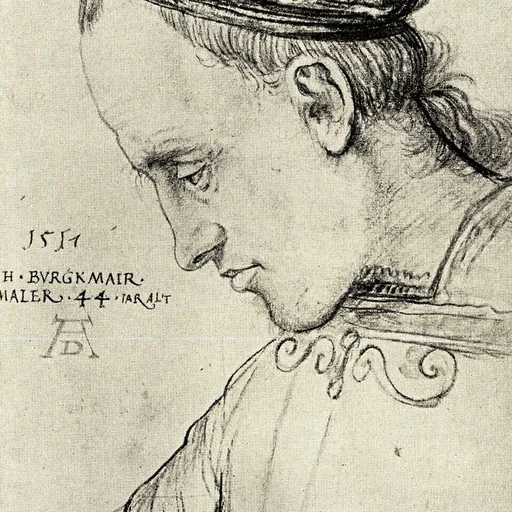
Hans Burgkmair the Elder (1473–1531) was a German artist, born in Augsburg.

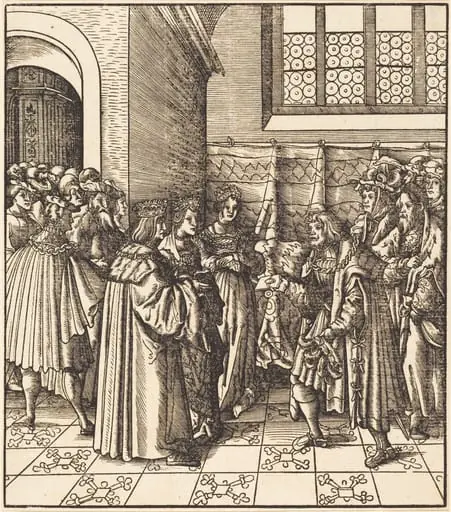 A Legation before a King, near Him Two Women Standing
 Philip as a Boy before Margaret of Austria
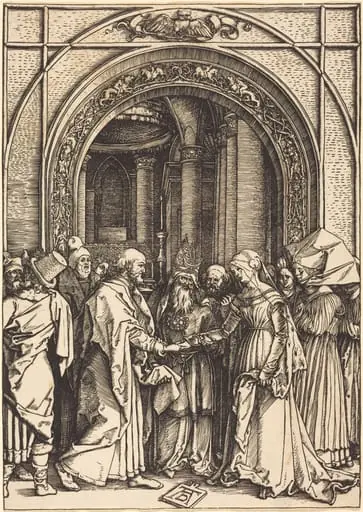 The Betrothal of the Virgin
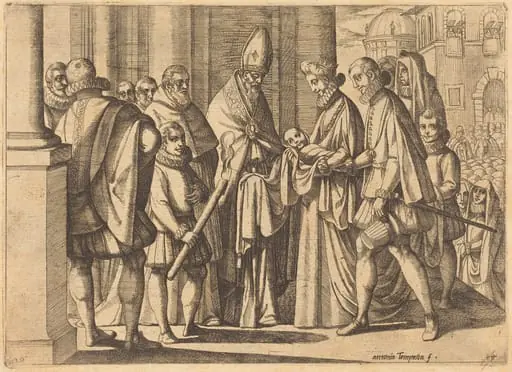 Philip as a Boy before Margaret of Austria
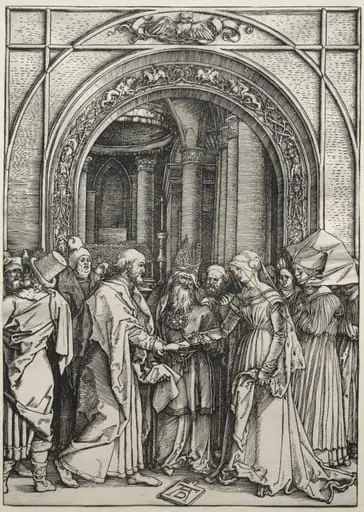 The Betrothal of the Virgin
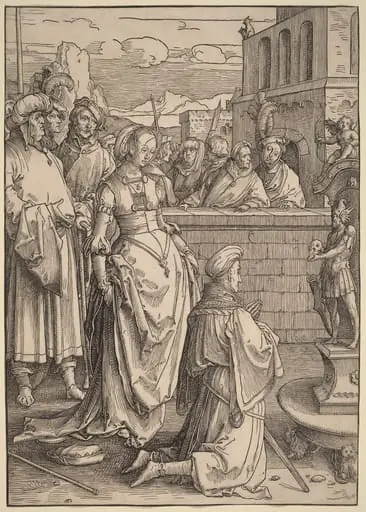 Solomon's Idolatry
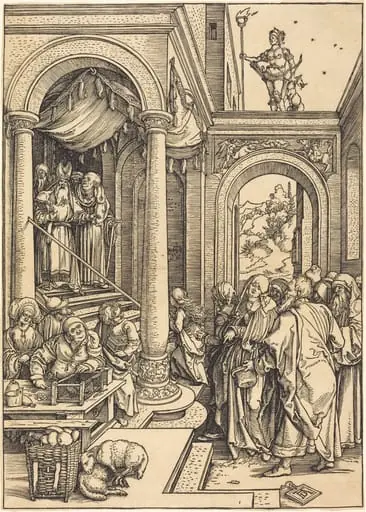 The Presentation of the Virgin in the Temple
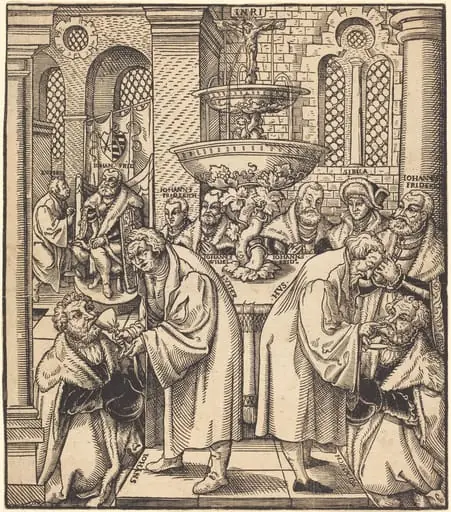 The Reformers Luther and Hus Giving Communion to the Princes of the House of Saxony
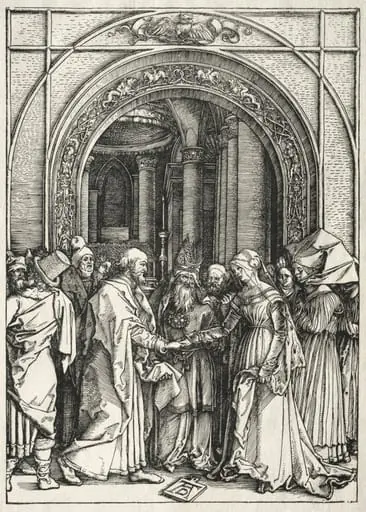 Life of the Virgin: Marriage of the Virgin and St. Joseph
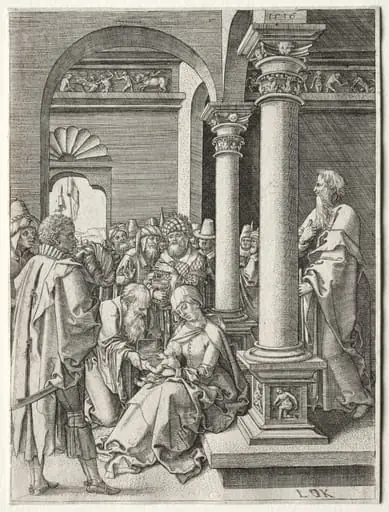 L'Adoration des Rois
 Jesus before Annas
 The Archbishop Blessing the Child after the Baptism