Artwork
Saint Verona
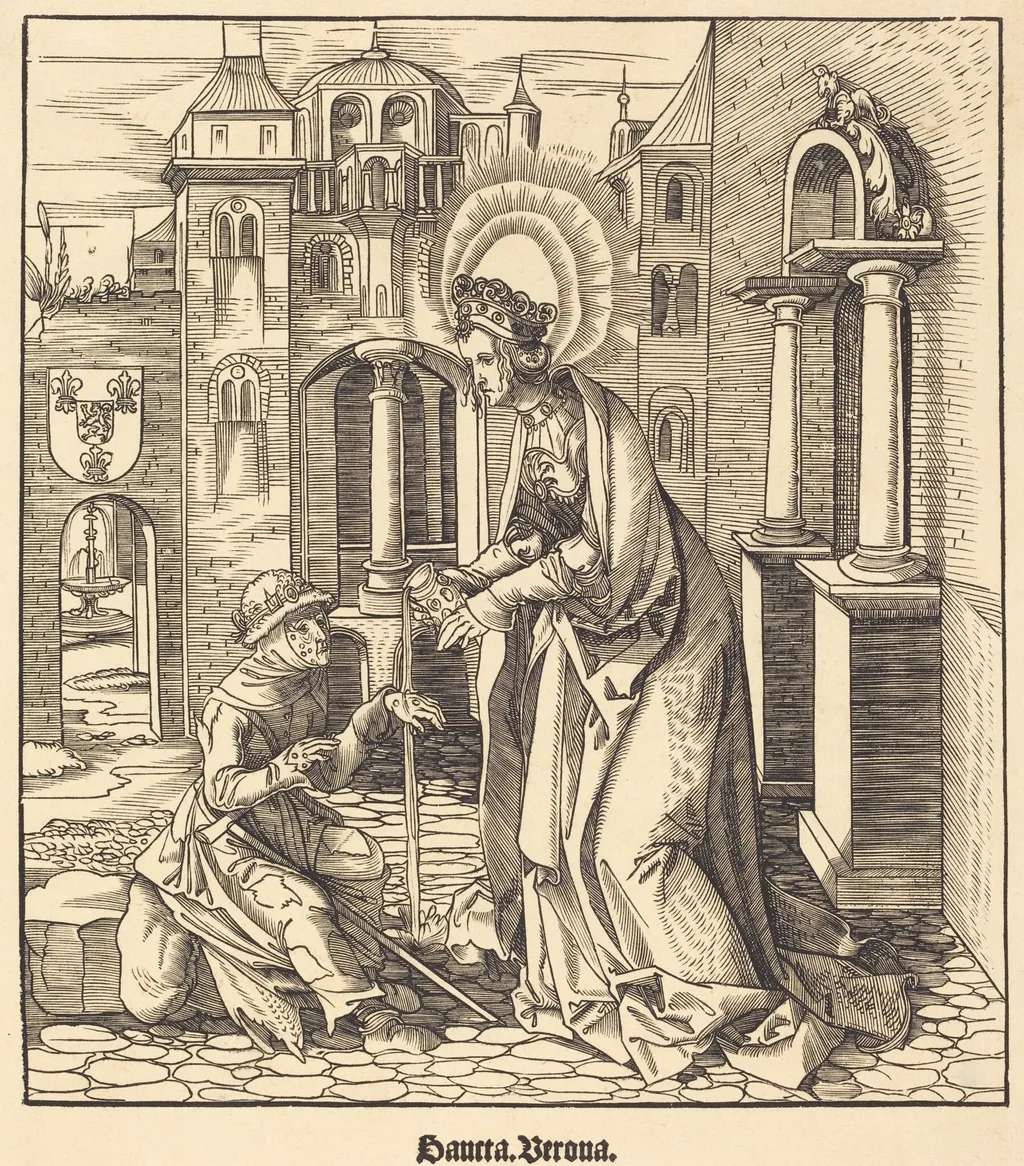
Saint Verona is an ink print by the Renaissance artist Leonhard Beck. It dates from 1517 and is held in the collection of the National Gallery of Art.
About this work
Overview
Beck, trained in the city’s artistic milieu and influenced by Hans Holbein the Elder, specialized in printmaking for imperial and ecclesiastical patrons.
Created in 1517 by Leonhard Beck, a German artist based in Augsburg, this woodcut depicts a religious scene featuring a saintly figure. Beck, trained in the city’s artistic milieu and influenced by Hans Holbein the Elder, specialized in printmaking for imperial and ecclesiastical patrons. The work is part of a broader effort to produce devotional imagery under Emperor Maximilian I’s sponsorship, reflecting the era’s fusion of art and religious propaganda.
Subject & Meaning
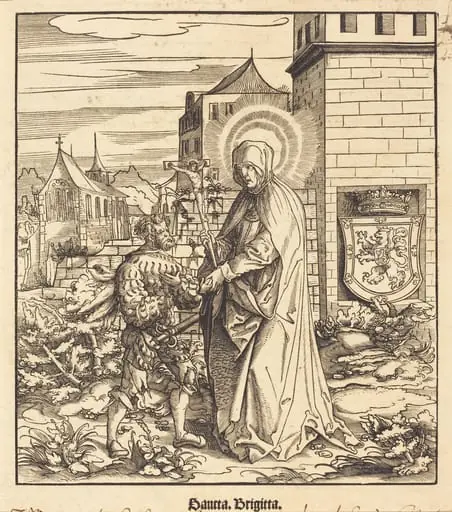
The image portrays a tall, robed saint standing between two monumental columns before a church, with a smaller figure kneeling below, reaching toward the saint’s outstretched hand. The halo and posture suggest divine intercession, while the act of supplication conveys humility and spiritual appeal. The composition reflects common devotional themes of the time, emphasizing the saint’s role as an intermediary between the faithful and the divine.
Technique & Style
Executed in woodcut, the image relies on precise, dark linear strokes to define form and texture without color. The background features intricate architectural details—spires, arches, and masonry—rendered with fine, controlled lines. The contrast between the light paper and bold outlines creates depth and focus, guiding the viewer’s eye from the kneeling supplicant to the elevated saint, a hallmark of Beck’s graphic precision.
History & Provenance
Leonhard Beck, son of the miniaturist Georg Beck, worked within Augsburg’s vibrant print culture during the early 16th century. His woodcuts were frequently commissioned for imperial projects under Maximilian I, who used such imagery to reinforce his authority and piety. This print likely circulated as part of devotional collections or illustrated religious texts, though its specific early ownership remains undocumented.
Context
In early 16th-century Germany, woodcuts were a primary medium for disseminating religious imagery, especially as literacy expanded and print technology grew. Beck’s work aligns with the Catholic devotional tradition before the Reformation, when saints were central to personal piety. His architectural settings reflect contemporary urban churches, grounding sacred narratives in familiar, tangible environments.
Legacy
Beck’s woodcuts contributed to the development of Northern European printmaking, influencing later artists through their clarity of line and narrative focus. Though less widely known than contemporaries like Dürer, his work exemplifies the collaborative, patron-driven nature of early print production. This piece survives as a quiet testament to the role of print in shaping religious experience during a time of profound cultural change.
Artist & collection
Artist
Leonhard Beck (c. 1480 – 1542) was a painter and woodcuts designer in Augsburg, Germany. He was the son of Georg Beck, a miniaturist who was active in Augsburg c. 1490–1512/15. Leonhard collaborated with his father on…

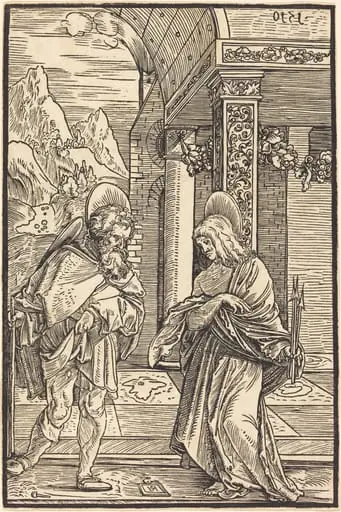 Saint Roch and Saint Sebastian
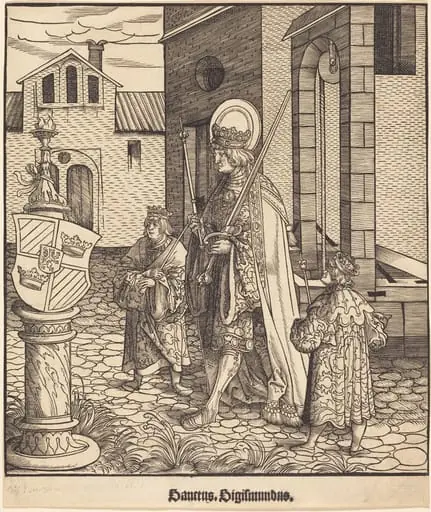 Saint Sigismundus
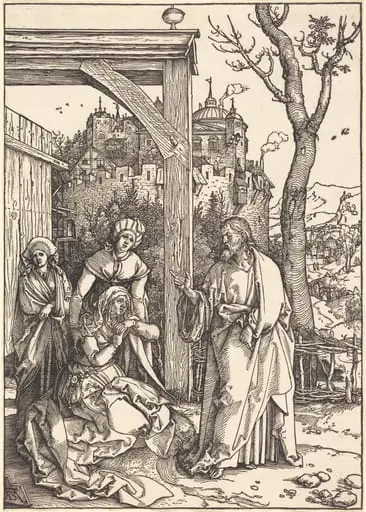 Christ Taking Leave from His Mother
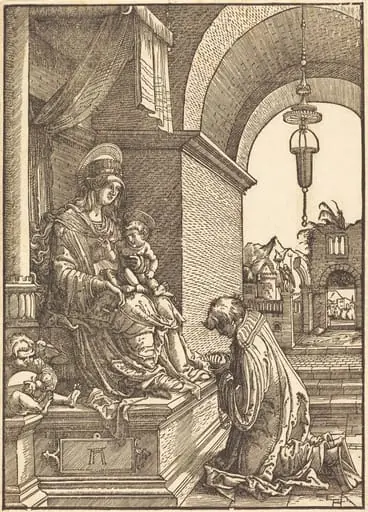 A Cleric Kneeling before the Virgin and the Christ Child
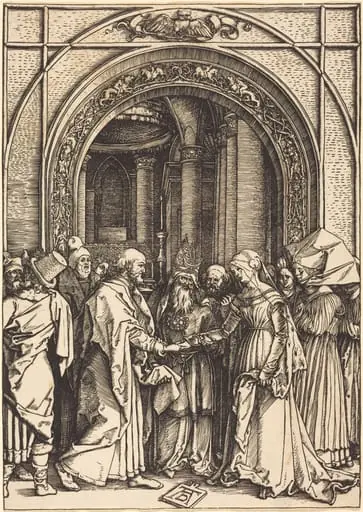 The Betrothal of the Virgin
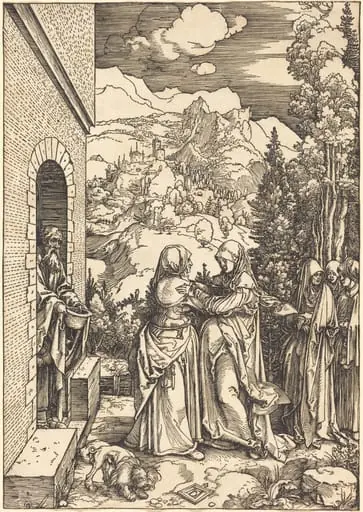 The Visitation
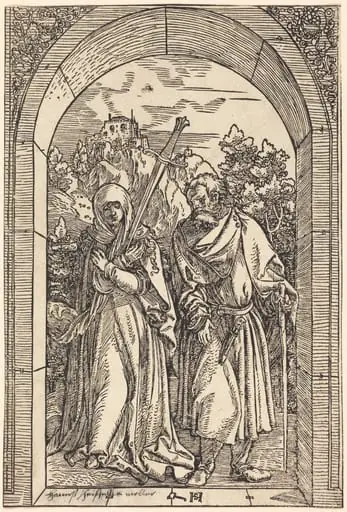 Mater Dolorosa and Saint Joseph
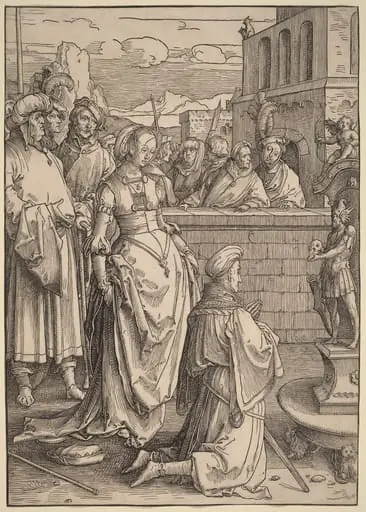 Solomon's Idolatry
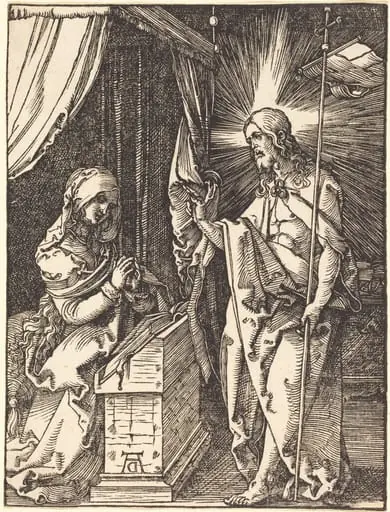 Christ Appearing to His Mother
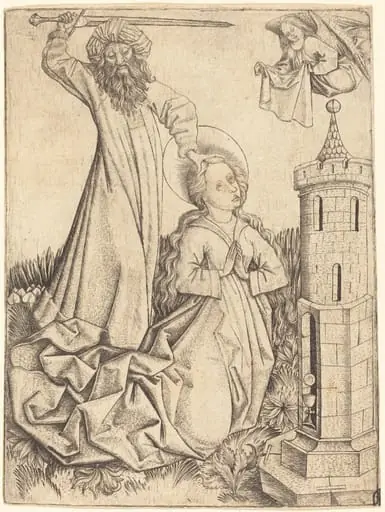 The Martyrdom of Saint Barbara
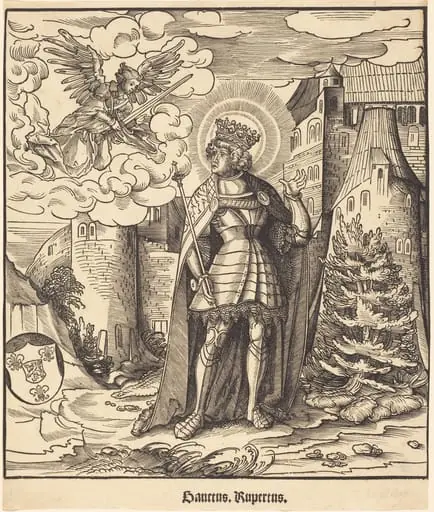 Saint Rupertus