Artwork
A Turkish Horseman
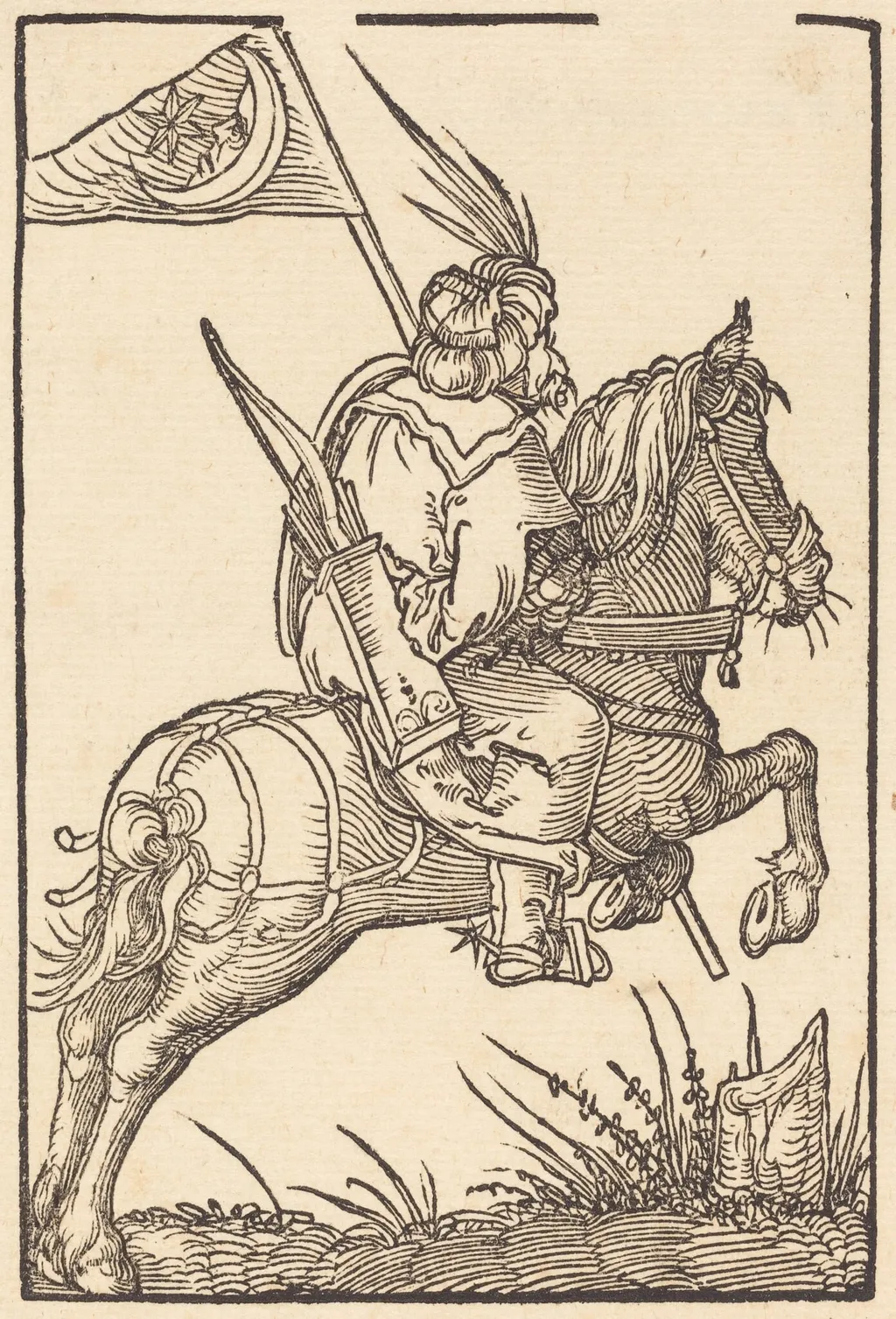
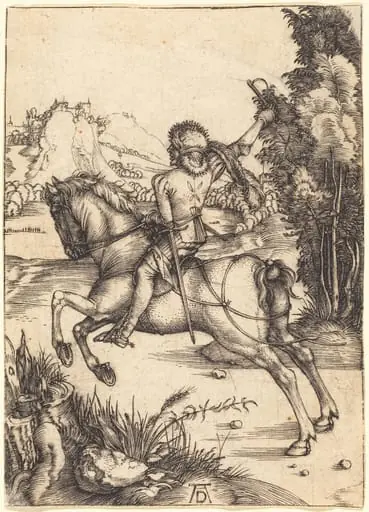
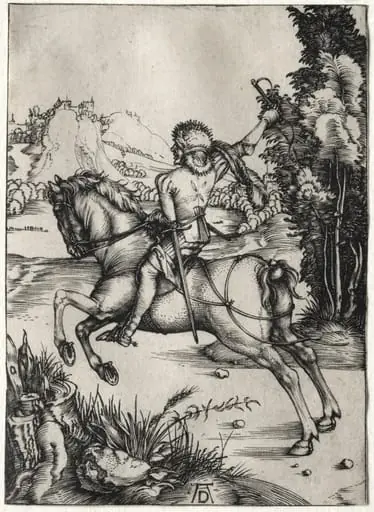
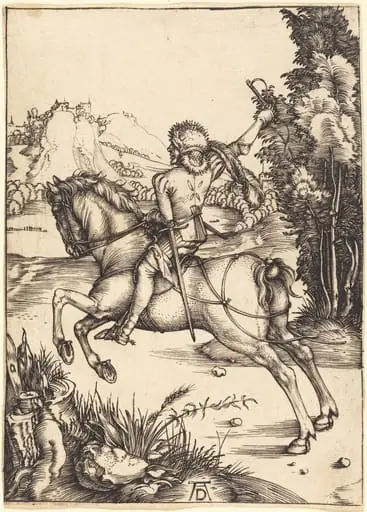
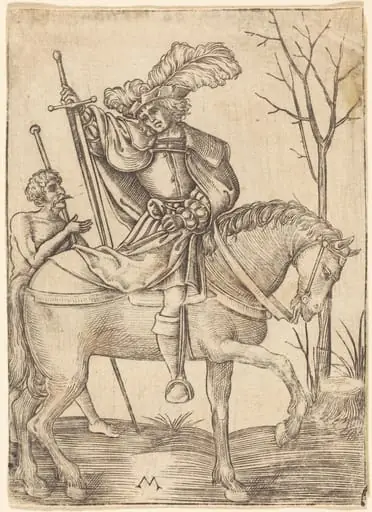
A Turkish Horseman is an ink print by the Renaissance artist Hans Springinklee. It dates from 1507 and is held in the collection of the National Gallery of Art.
About this work
Overview
Created in 1507 by the Nuremberg artist Hans Springinklee, this woodcut is one of several prints produced during the early Renaissance in Germany. Springinklee, who trained under Albrecht Dürer, employed the woodcut technique to capture a dynamic equestrian figure. The image reflects the period’s fascination with distant cultures and the growing circulation of printed imagery across Europe.
Subject & Meaning
The print portrays a mounted figure dressed in clothing associated with Ottoman cavalry, including a turban and elaborate garments.
The print portrays a mounted figure dressed in clothing associated with Ottoman cavalry, including a turban and elaborate garments. He holds a banner bearing a crescent moon, a symbol linked to Islamic rule. The obscured face and stylized posture suggest an idealized or symbolic representation rather than a portrait, possibly conveying European perceptions of Ottoman military power during a time of political tension.
Technique & Style
Springinklee used fine, controlled lines to render textures in fabric, horsehair, and harness, demonstrating mastery of the woodcut medium. The horse’s raised hooves and flowing mane convey motion, while the flat background focuses attention on the rider. The composition balances detail with clarity, typical of German printmakers who prioritized precision over atmospheric depth.
History & Provenance
The print was made during a period of heightened European awareness of the Ottoman Empire, following military encounters and diplomatic exchanges. Though no early ownership records are documented, similar prints from Springinklee’s circle circulated among collectors and scholars in southern Germany. Its survival suggests it was valued for its craftsmanship and topical relevance.
Context
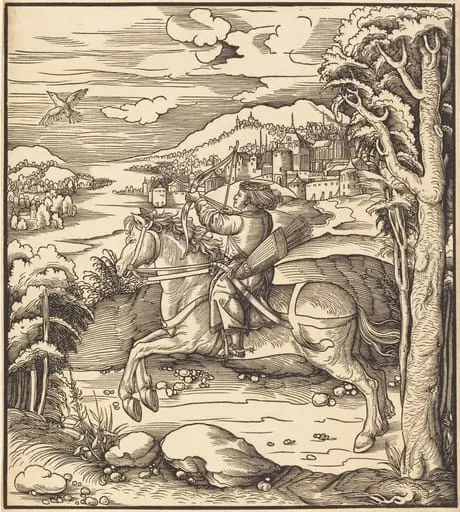
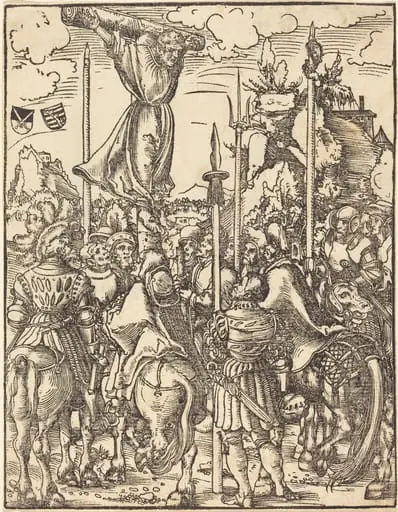
In early 16th-century Europe, woodcuts served as accessible visual media for news, religion, and exotic subjects. The depiction of a Turkish horseman aligns with broader trends in print culture that sought to visualize foreign peoples, often blending observation with stereotype. This image reflects both curiosity about the East and the political anxieties surrounding Ottoman expansion.
Legacy
Springinklee’s woodcut contributes to a corpus of Northern Renaissance prints that documented non-European figures through a European lens. While not widely reproduced, it remains a significant example of how printmakers translated contemporary geopolitical concerns into portable, repeatable images. Its technical refinement influenced later generations of German print artists.
Artist & collection

Artist
Hans Springinklee (c.1490/c.1495 – c.1540) was a German artist from Nuremberg, best known for his woodcuts. He was a pupil of Albrecht Dürer.