Artwork
Cup
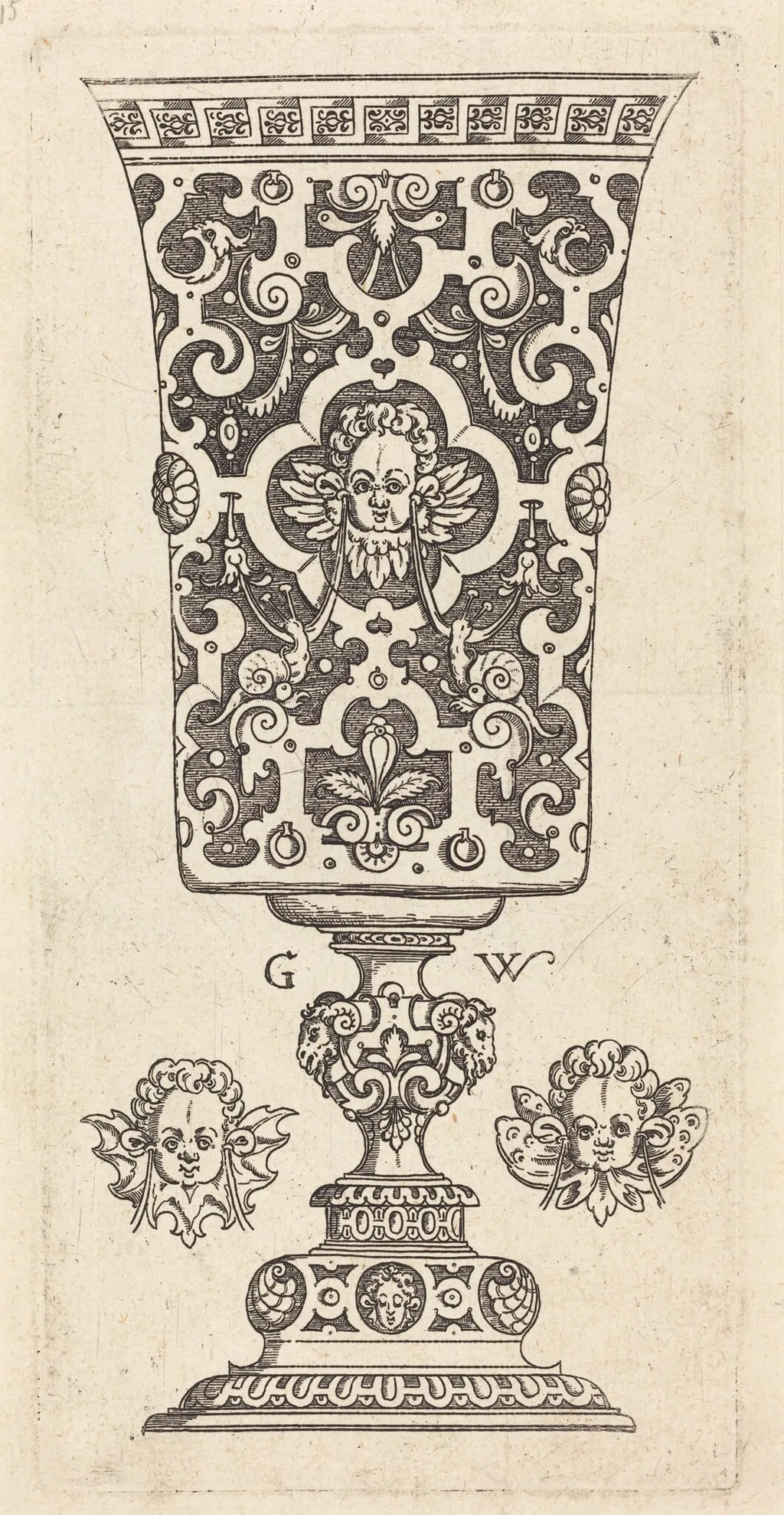
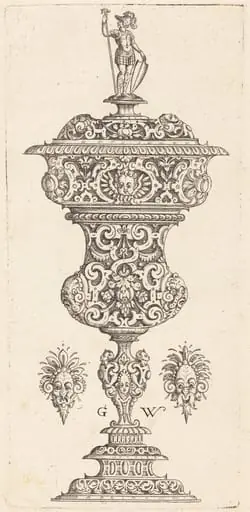
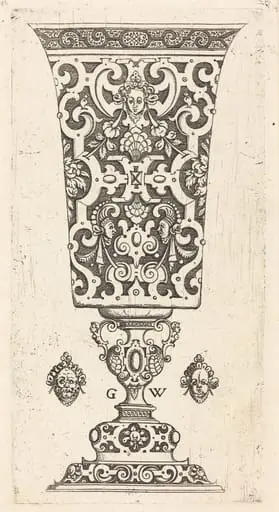
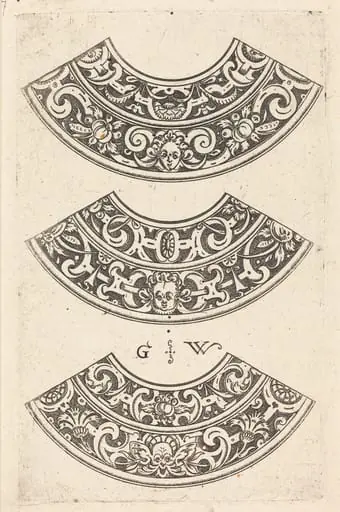
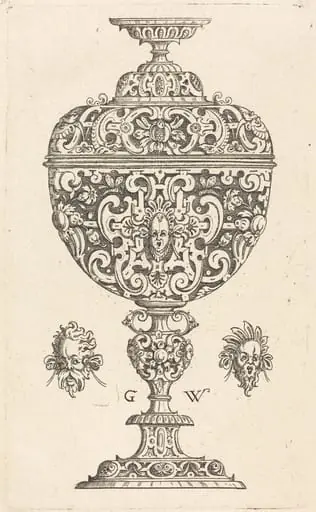
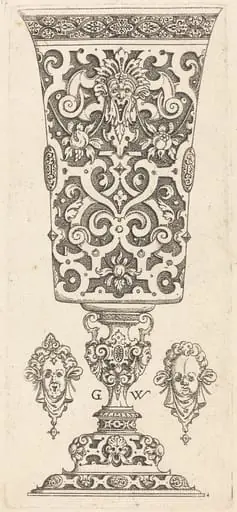
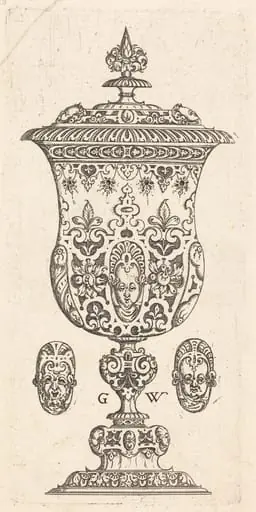
Cup is an ink print by the Renaissance artist Georg Wechter I. It dates from 1556 and is held in the collection of the National Gallery of Art.
About this work
Overview
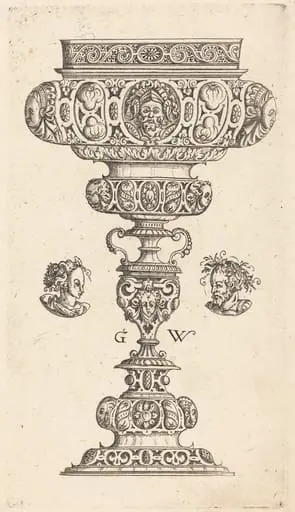
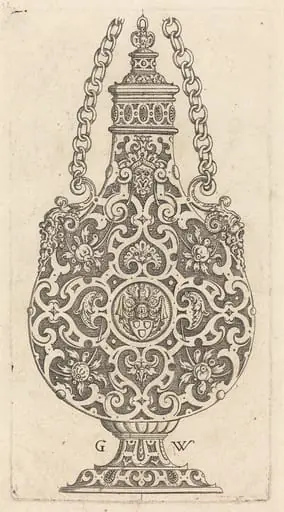
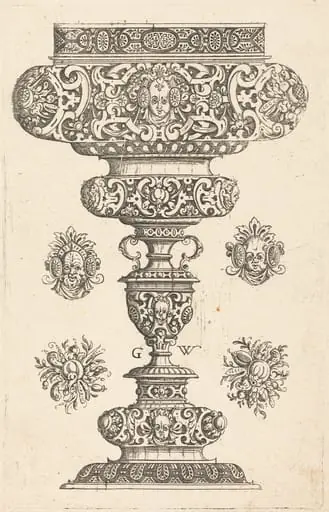
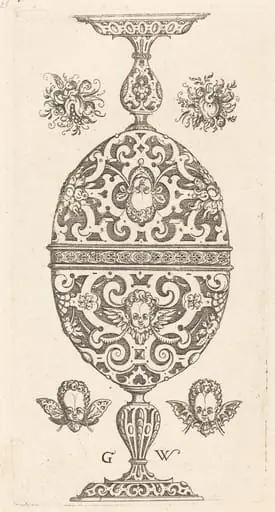
Cup is a black‑and‑white etching executed in 1556 by the German printmaker Georg Wechter I. The work measures a vertical composition centered on an elaborately decorated vase, rendered entirely in line work without any applied color. The artist’s monogram, the letters G W, appears beneath the central motif, identifying the creator.
Subject & Meaning
The central vase is filled with a profusion of swirling floral motifs, from which emerges a winged, curly‑haired face that peers through the blossoms. Supporting the base are two smaller, winged heads that frame a stylized pedestal, suggesting a playful interaction between the natural and the mythic, a common Renaissance fascination with hybrid figures.
Technique & Style
The image was produced by etching, a process in which a metal plate is coated with a resist, drawn upon, and then exposed to acid to bite the lines. Wechter’s hand is evident in the dense, intricate hatching and the precise, controlled contours that give the composition its busy, decorative quality typical of mid‑16th‑century German prints.
History & Provenance
Created in the mid‑Renaissance, the print reflects the period’s interest in ornamental design and allegorical subjects. While specific ownership records are scarce, the presence of the artist’s initials suggests it may have been intended for a market of collectors familiar with Wechter’s workshop output.
Context
Georg Wechter I worked within a tradition of German printmakers who combined ornamental motifs with figurative elements, often for use in pattern books or decorative arts. The inclusion of winged figures aligns with contemporary emblematic imagery, where hybrid beings conveyed moral or symbolic messages in a visually engaging format.
Artist & collection