Artwork
Expulsion from Paradise
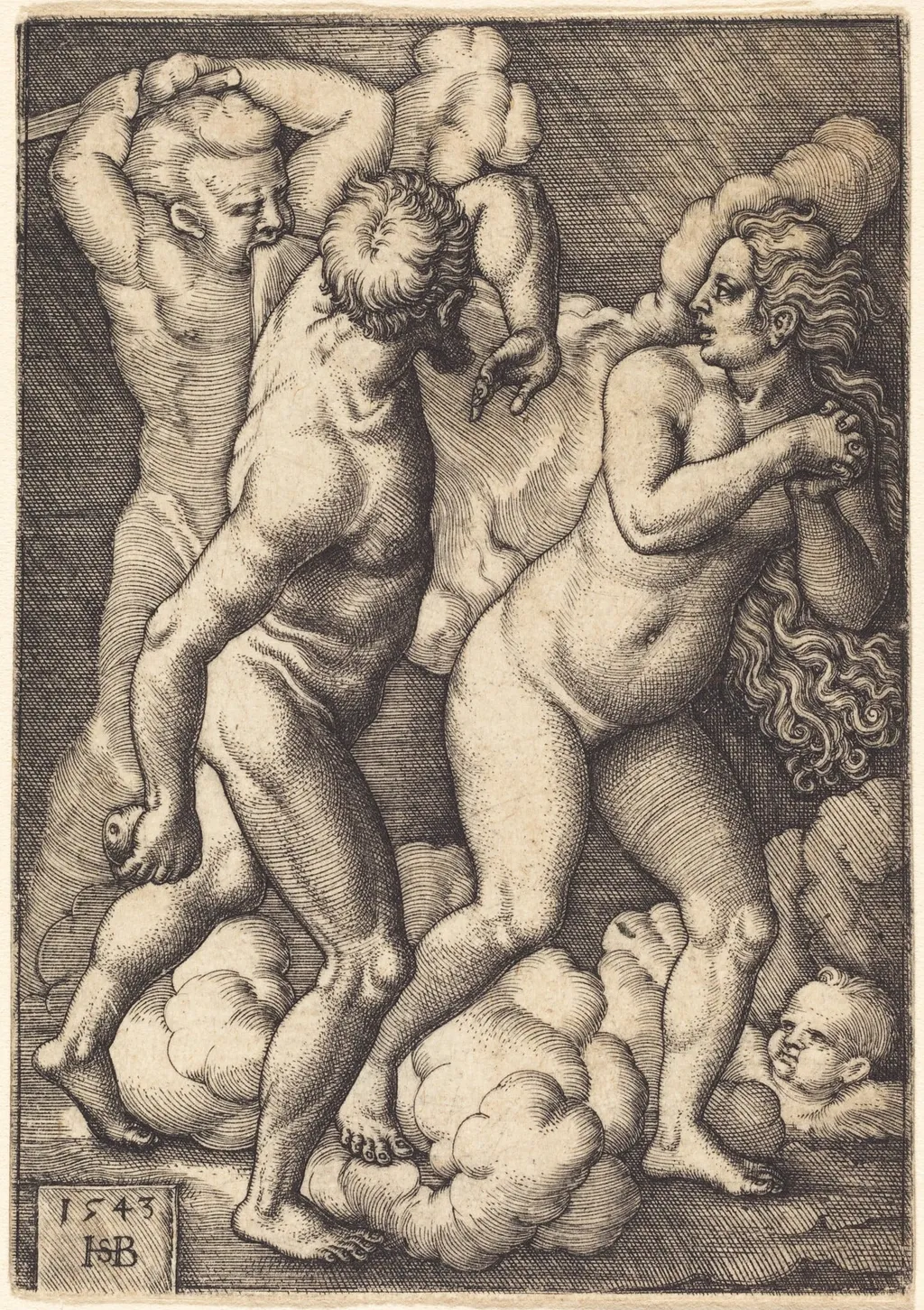
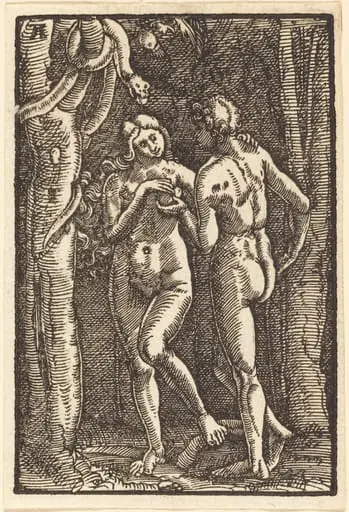
Expulsion from Paradise is an ink print by the Renaissance artist Sebald Beham. It dates from 1543 and is held in the collection of the National Gallery of Art.
About this work
Overview
This work exemplifies his mastery of fine line and compact composition, translating biblical narrative into a tightly controlled graphic form.
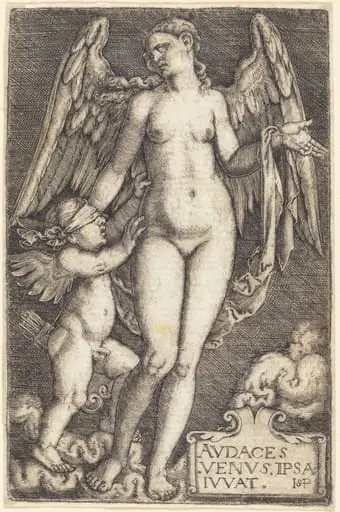
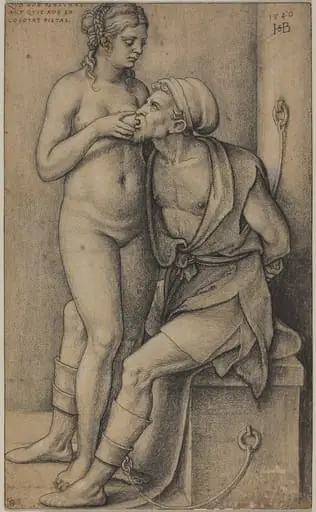
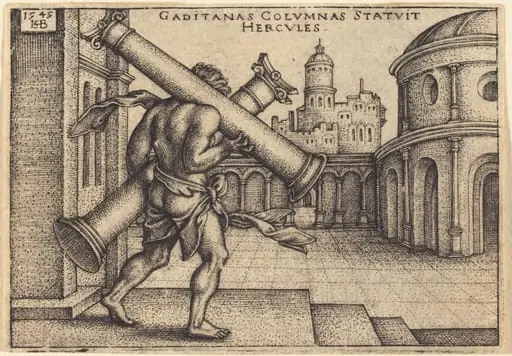
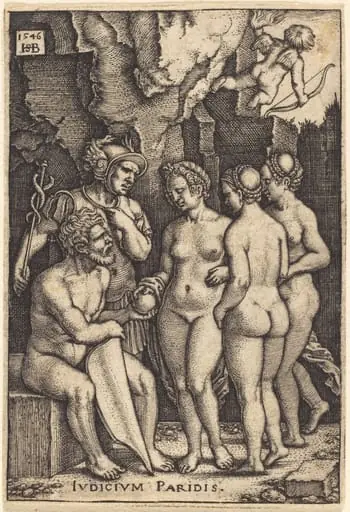
Created in 1543, *Expulsion from Paradise* is an engraving by Sebald Beham, a German artist known for his precision in small-scale prints. As part of the group called the 'Little Masters,' Beham refined the art of detailed copperplate engraving following in the wake of Dürer. This work exemplifies his mastery of fine line and compact composition, translating biblical narrative into a tightly controlled graphic form.
Subject & Meaning
The scene illustrates the moment Adam and Eve are cast from Eden, as described in Genesis. Adam shields his face in anguish, while Eve clings to him, her posture tense and turned away. A small angelic figure hovers near her feet, gazing back toward the garden, suggesting divine authority and the irrevocability of their exile. The emotional weight lies in their isolation and the abrupt severing from a lost paradise.
Technique & Style
Beham employed fine, interwoven lines to model form and shadow, using a burin to incise the copper plate with meticulous control. The dense foliage is rendered through layered cross-hatching, creating depth without color. The rough edges and urgent linework convey movement and tension, emphasizing the physicality of the expulsion. The entire image is built from ink pressed from metal, not painted, highlighting the engraver’s hand.
History & Provenance
Beham worked primarily in Nuremberg before moving to Frankfurt, where he produced a large body of prints throughout the 1530s and 1540s. *Expulsion from Paradise* dates from his mature period, reflecting his established reputation among collectors of Northern Renaissance prints. Though few records of its early ownership survive, the work circulated widely through print markets, contributing to its survival in multiple institutional collections.
Context
In mid-16th century Germany, religious imagery remained central to print culture despite rising Protestant reform movements. Beham’s biblical scenes catered to both devotional and aesthetic interests, offering intimate, portable versions of sacred stories. His small-format engravings appealed to urban elites and scholars, who valued technical skill and moral symbolism over monumental scale.
Legacy
Beham’s influence endured through his technical precision and narrative economy, inspiring later engravers in the Northern tradition. Though less celebrated than Dürer, his ability to convey complex emotion and spatial depth in miniature formats helped sustain the engraving’s relevance. *Expulsion from Paradise* remains a key example of how personal expression and craftsmanship converged in early modern printmaking.
Artist & collection
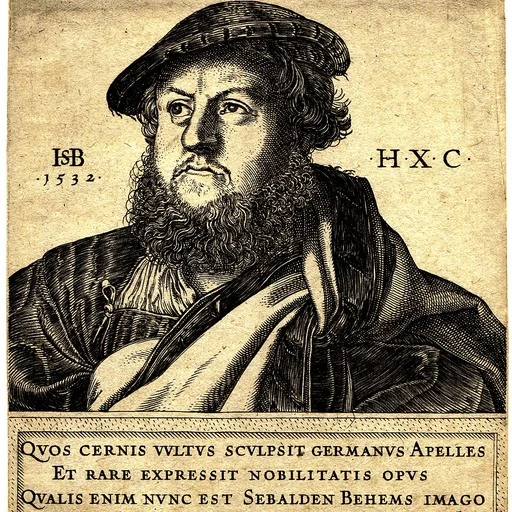
Artist
Sebald Beham (1500–1550) was a German painter and printmaker, mainly known for his very small engravings.