Artwork
Genius on a Dolphin
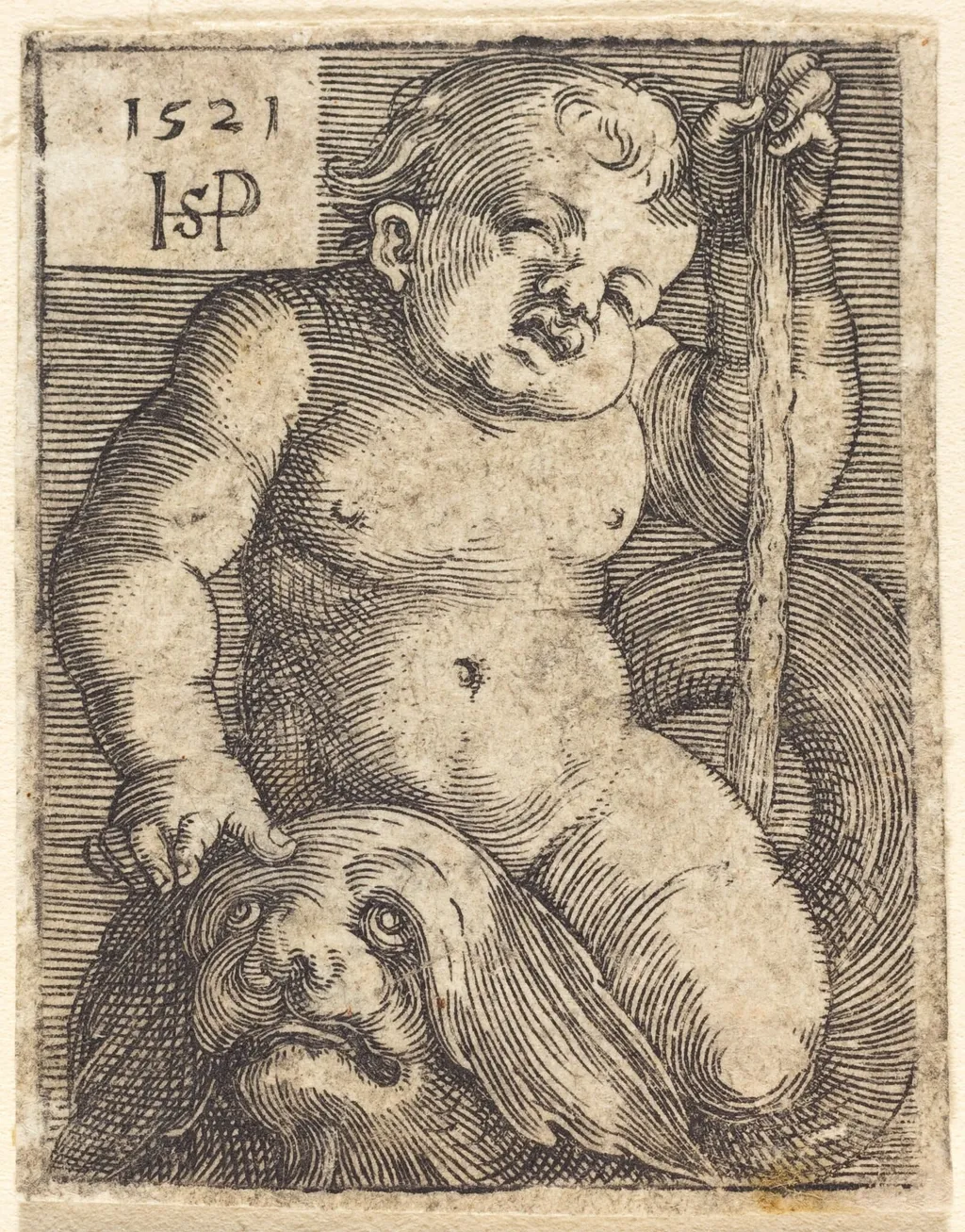
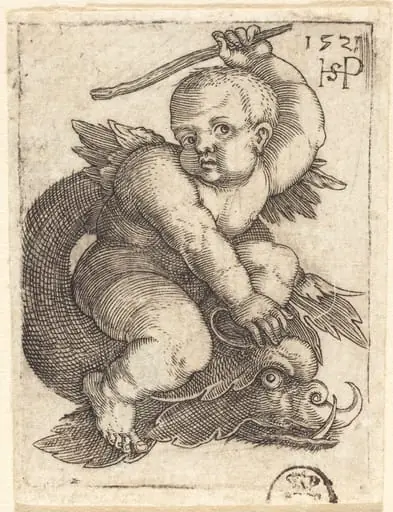
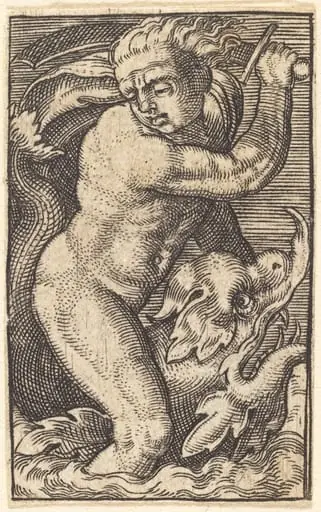
Genius on a Dolphin is an ink print by the Renaissance artist Sebald Beham. It dates from 1521 and is held in the collection of the Rosenwald Collection.
About this work
Overview
Sebald Beham, a German artist from Nuremberg, produced this engraving in 1521 during the early years of the Northern Renaissance.
Sebald Beham, a German artist from Nuremberg, produced this engraving in 1521 during the early years of the Northern Renaissance. A member of the group known as the 'Little Masters,' he specialized in small-scale, finely detailed prints. His work in engraving, etching, and woodcut helped extend the legacy of Albrecht Dürer’s technical precision, influencing a generation of printmakers across German-speaking regions.
Subject & Meaning
The image portrays a bearded, nude male figure riding a dolphin, holding a flame in one hand and a book in the other. The figure blends classical symbolism with Renaissance humanist ideals, evoking the dual nature of knowledge: creative and illuminating, yet volatile and untamed. The dolphin, often associated with guidance and the sea of learning, suggests a journey through intellectual realms, while the wild hair and flame hint at the unpredictable power of genius.
Technique & Style
Beham employed fine, precise engraving lines to model form and texture, using cross-hatching to create subtle gradations of light and shadow. His meticulous control over the burin allowed for intricate detail in the figure’s musculature, the dolphin’s scales, and the swirling hair. The composition’s compactness and clarity reflect the Little Masters’ focus on intimate, highly finished works intended for private collectors rather than public display.
History & Provenance
Created in 1521, the engraving was part of Beham’s prolific output during his time in Nuremberg and later Frankfurt. Though widely circulated in print form, original impressions are now rare. The version held by the National Gallery of Art in Washington, D.C., is one of the best-preserved examples, likely acquired in the early 20th century as part of a broader effort to document Northern Renaissance printmaking traditions.
Context
In early 16th-century Germany, classical mythology was revived through humanist scholarship and artistic patronage. Artists like Beham drew from ancient texts and iconography to explore abstract concepts—wisdom, inspiration, and the soul’s journey. This engraving reflects a cultural moment when learning was seen as both noble and perilous, echoing philosophical debates about the boundaries of human knowledge and divine order.
Legacy
Beham’s work contributed to the standardization of engraving as a medium for intellectual expression in Northern Europe. His ability to condense complex ideas into small, finely rendered images influenced later printmakers and helped bridge medieval symbolism with Renaissance humanism. Though less famous than Dürer, his technical discipline and thematic depth remain significant in the study of early modern graphic arts.
Artist & collection
Artist
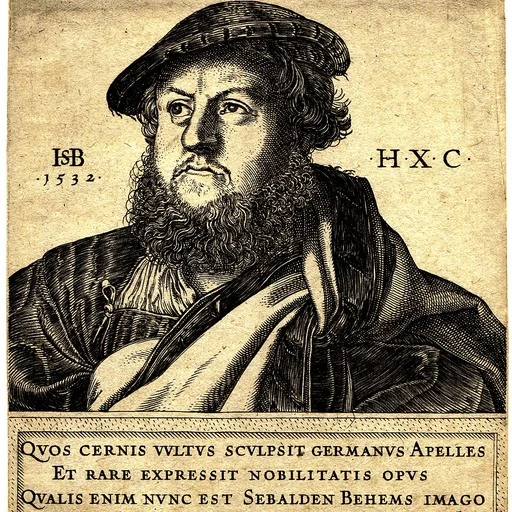
Sebald Beham (1500–1550) was a German painter and printmaker, mainly known for his very small engravings.