Artwork
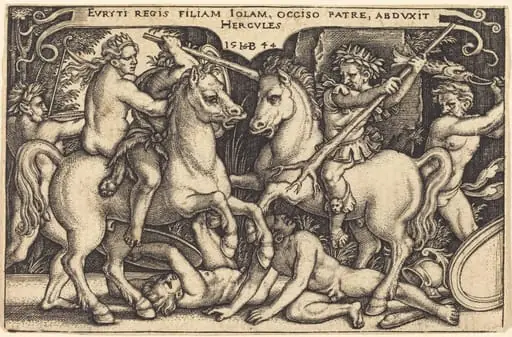
Hercules Abducting Iole
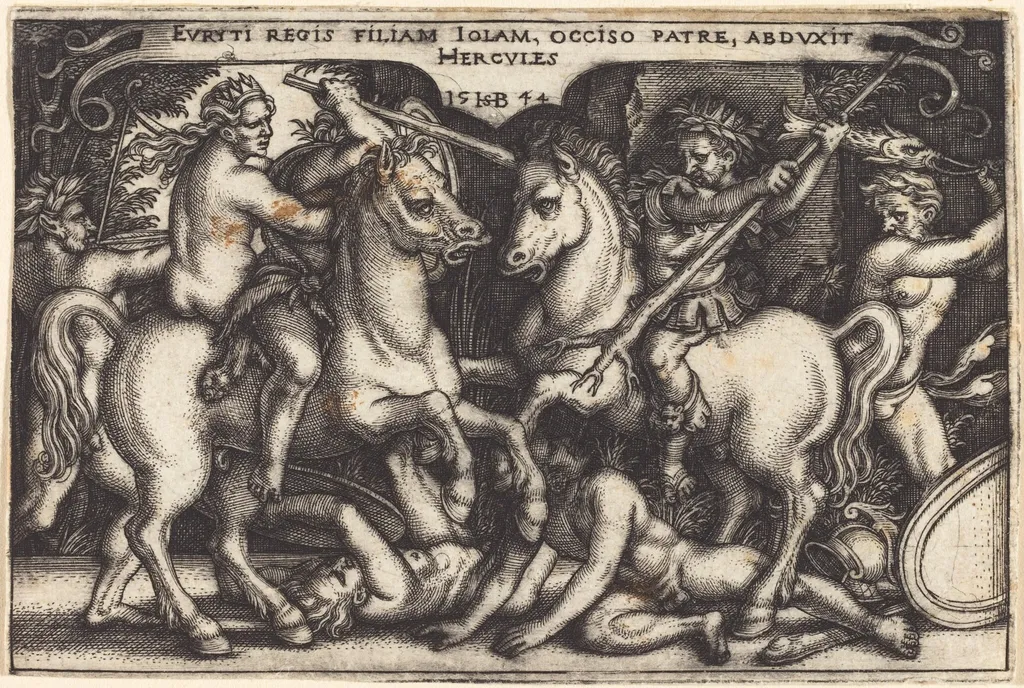
Hercules Abducting Iole is an ink print by the Renaissance artist Sebald Beham. It dates from 1544 and is held in the collection of the National Gallery of Art.
About this work
This engraving shows Hercules carrying off Iole, a woman in a long robe, over his shoulder.
This engraving shows Hercules carrying off Iole, a woman in a long robe, over his shoulder. His muscles bulge as he strides forward. Iole clings to his arm, her face turned back in fear.
Sebald Beham made this in 1544 when prints like this sold well to regular people. His tiny lines build deep shadows, making the scene feel urgent and real.
If you like this bold style, check out Beham, Sebald next.
Overview
Created in 1544, *Hercules Abducting Iole* is an engraving by Sebald Beham, a German artist known for his precise, small-format prints. As part of the group termed the 'Little Masters,' Beham specialized in intricate compositions that appealed to a broad audience. This work exemplifies his technical mastery and his engagement with classical mythology, rendered in fine, controlled lines that convey movement and tension.
Subject & Meaning
The scene captures Hercules forcibly carrying Iole, a princess from Greek myth, over his shoulder. Her posture—head turned back, arms gripping his arm—suggests resistance and distress. The moment reflects a violent episode from the myth of Hercules’ later life, where he takes Iole after her father’s defeat. Beham presents the action without moral commentary, focusing instead on the physical drama of the abduction.
Technique & Style
Beham employed fine, densely packed lines to model form and shadow, creating a sense of depth and weight despite the small scale. His use of cross-hatching and delicate contouring gives muscular tension to Hercules and drapery flow to Iole’s robe. The composition is tightly framed, enhancing the immediacy of the struggle. The precision of the engraving reflects the influence of Dürer, yet Beham’s style is more compact and emotionally charged.
History & Provenance
The engraving was produced during a period when printed images were widely circulated among middle-class collectors in Germany. Beham’s prints, including this one, were sold individually or in sets, often bound into albums. While no early ownership records are documented for this specific impression, similar works by Beham appear in major European collections from the late 16th century onward, indicating their popularity and durability.
Context
In mid-16th century Nuremberg, where Beham worked, printmaking thrived as both art and commerce. Classical myths were popular subjects, offering artists a way to engage with humanist ideals while satisfying public taste for dramatic narratives. Beham’s focus on intimate, intense scenes distinguished him from larger-scale painters, positioning his engravings as accessible yet sophisticated objects for private contemplation.
Legacy
Beham’s engravings, including *Hercules Abducting Iole*, helped define the aesthetic of the Little Masters and influenced later generations of printmakers. His ability to convey complex narratives in miniature formats demonstrated the expressive potential of engraving beyond mere reproduction. Though less celebrated than Dürer, Beham’s work remains a key reference in the history of Northern Renaissance print culture.
Artist & collection
Artist
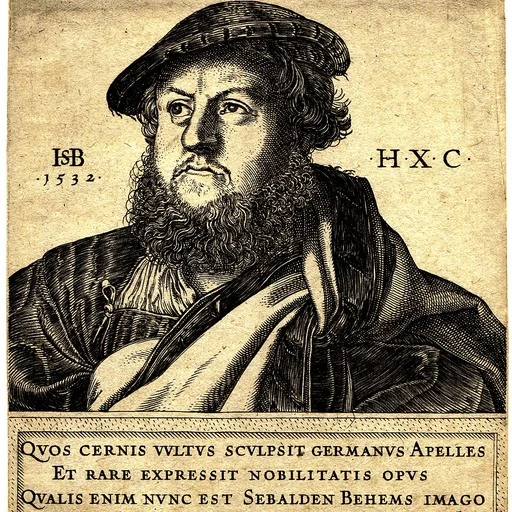
Sebald Beham (1500–1550) was a German painter and printmaker, mainly known for his very small engravings.


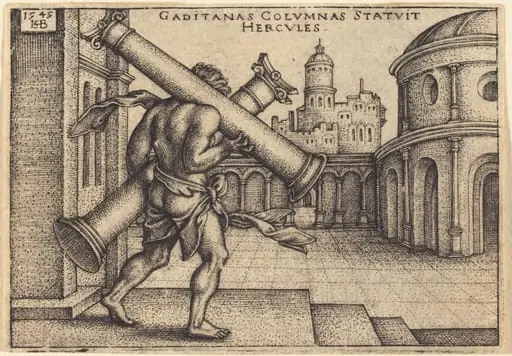
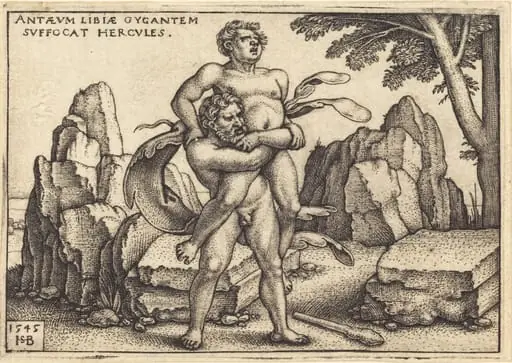 Hercules Killing Antaeus
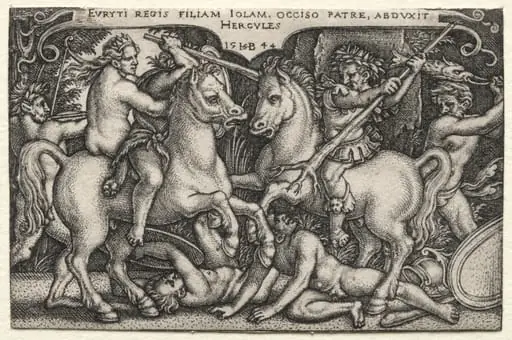 The Labors of Hercules: Hercules Abducting Iole
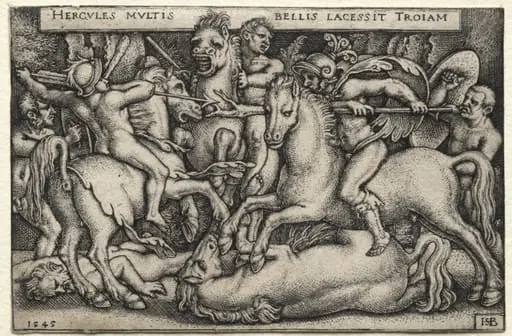 The Labors of Hercules: Hercules Conquering Troy
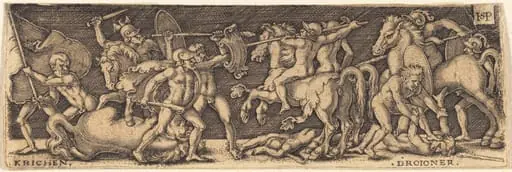 Greeks and Trojans
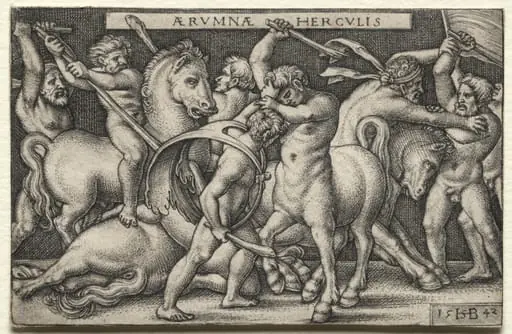 The Labors of Hercules: Hercules Defeating the Centaurs
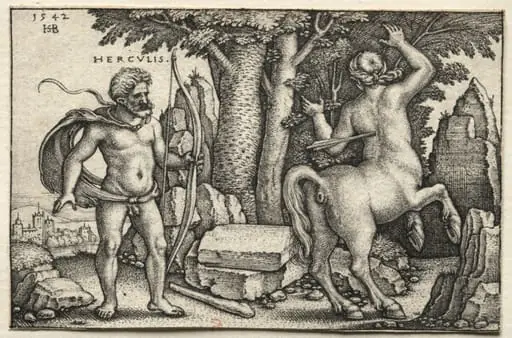 The Labors of Hercules: Hercules Shooting Nessus
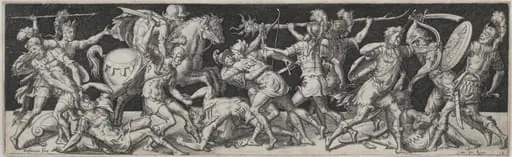 Combats and Triumphs No. 10
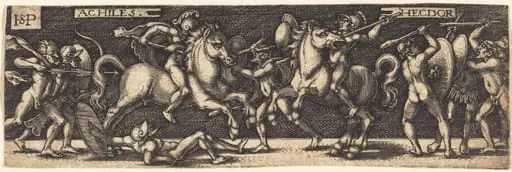 Achilles and Hector
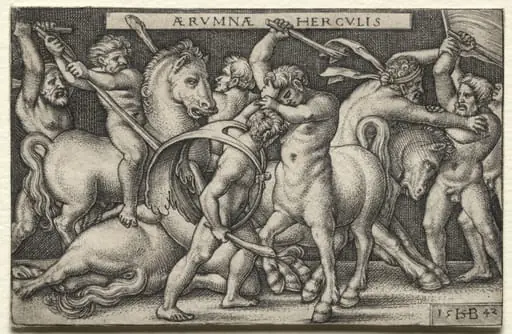 The Labors of Hercules
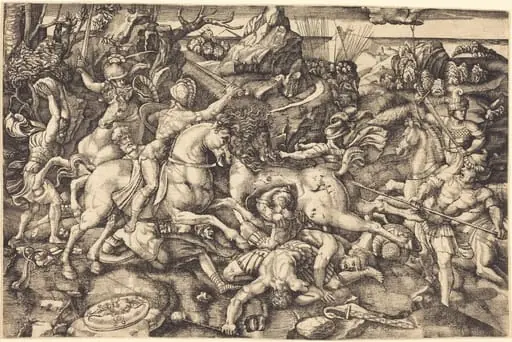 Combat between Horsemen and Foot Soldiers
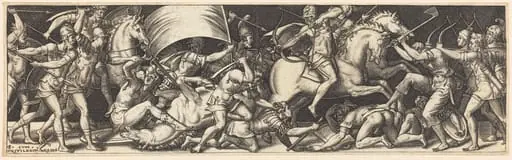 Battle of Horsemen and Foot Soldiers
 Hercules Abducting Iole