Artwork
The Labors of Hercules: Hercules Abducting Iole
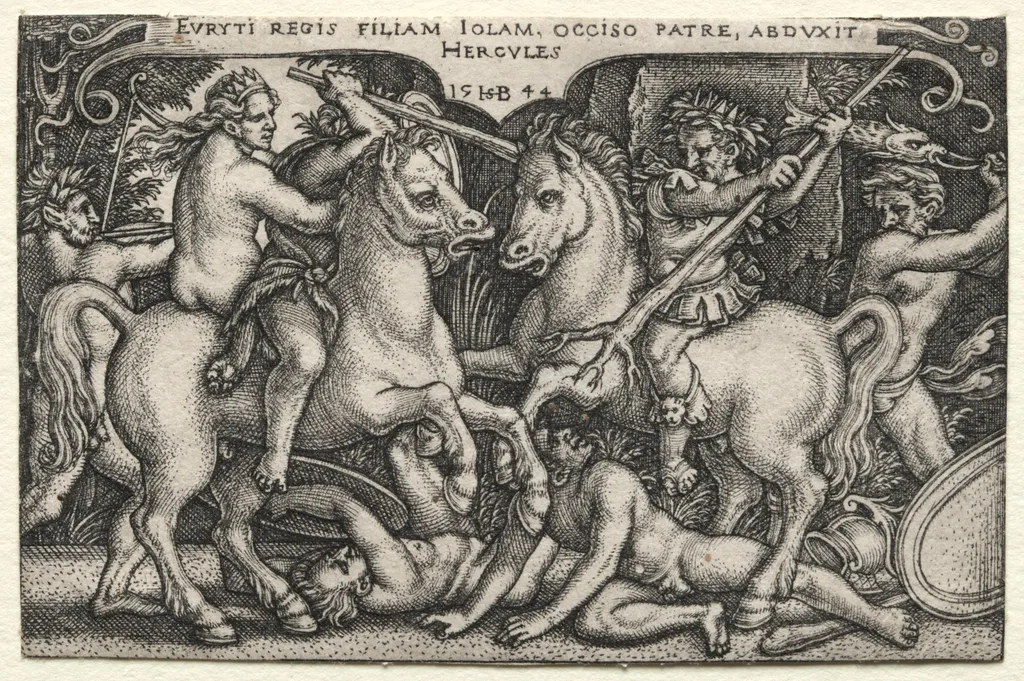
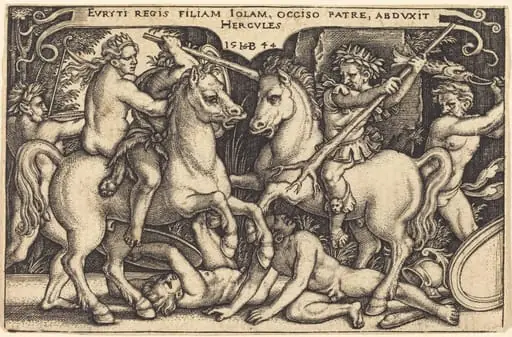
The Labors of Hercules: Hercules Abducting Iole is a print by the Renaissance artist Sebald Beham. It dates from 1544 and is held in the collection of the Cleveland Museum of Art.
About this work
The scene mixes myth and small details: a dead man’s body in the corner, Hercules’ bulging muscles, and a lion’s pelt tied around his neck.
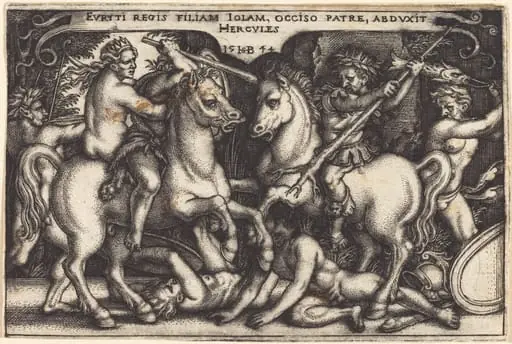
This print shows Hercules dragging a woman by the wrist while lions and a dead man hang nearby. The scene mixes myth and small details: a dead man’s body in the corner, Hercules’ bulging muscles, and a lion’s pelt tied around his neck.
Beham packed 12 Hercules stories into tiny prints. Each labor looks bigger than life despite the small size. Check the way the lion’s fur curls—sharp and scratchy, like real fur.
Look up Hans Sebald Beham (German, 1500–1550).
Overview
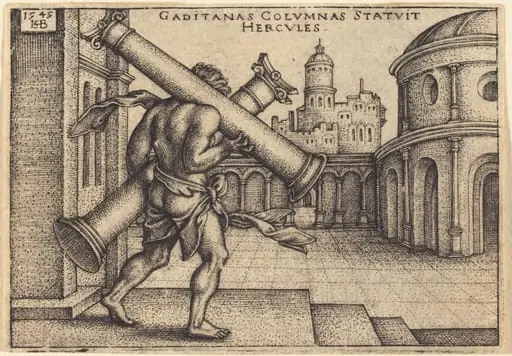
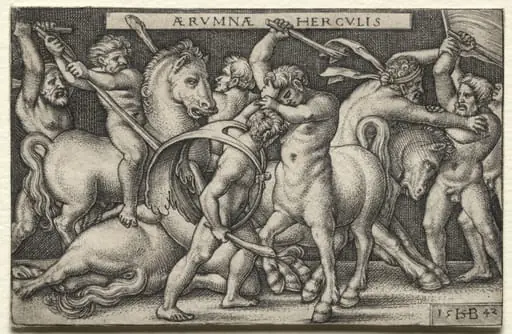
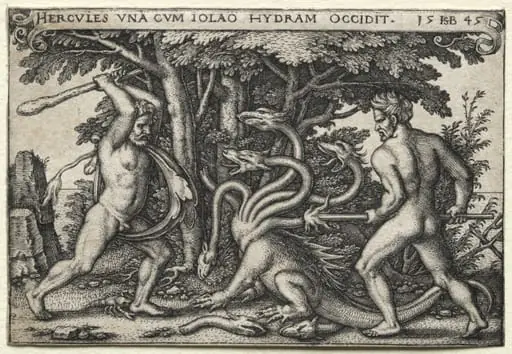
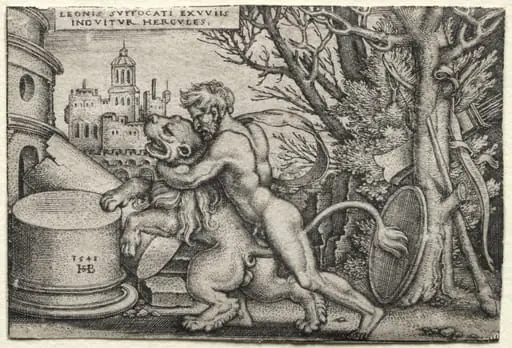
This print is part of a series by Hans Sebald Beham, a German artist known for his small, intricate engravings. The series depicts 12 scenes from the life of Hercules, a hero from classical mythology.
Subject & Meaning
The print shows Hercules abducting Iole, a scene from his life that precedes his death. The image combines mythological and realistic elements, including a dead body and a lion's pelt worn by Hercules.
Technique & Style
Beham's engraving technique captures detailed textures, such as the curls of the lion's fur. The small size of the print belies the larger-than-life scale of the figures depicted.
Context
Beham was part of a group of German printmakers known as the 'Little Masters,' who gained recognition for their skill in creating small, detailed prints that appealed to collectors of miniature objects.
Artist & collection
Artist
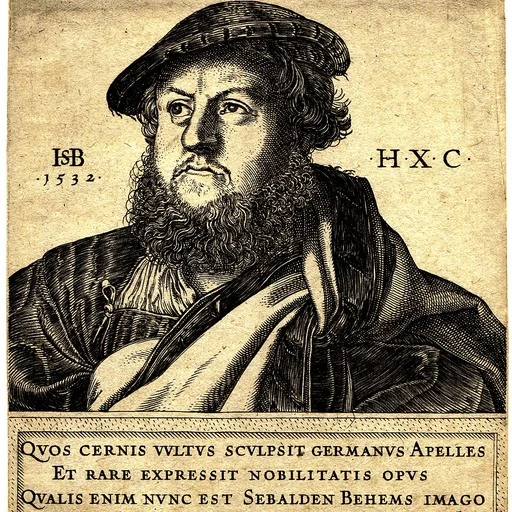
Sebald Beham (1500–1550) was a German painter and printmaker, mainly known for his very small engravings.