Artwork
The Labors of Hercules
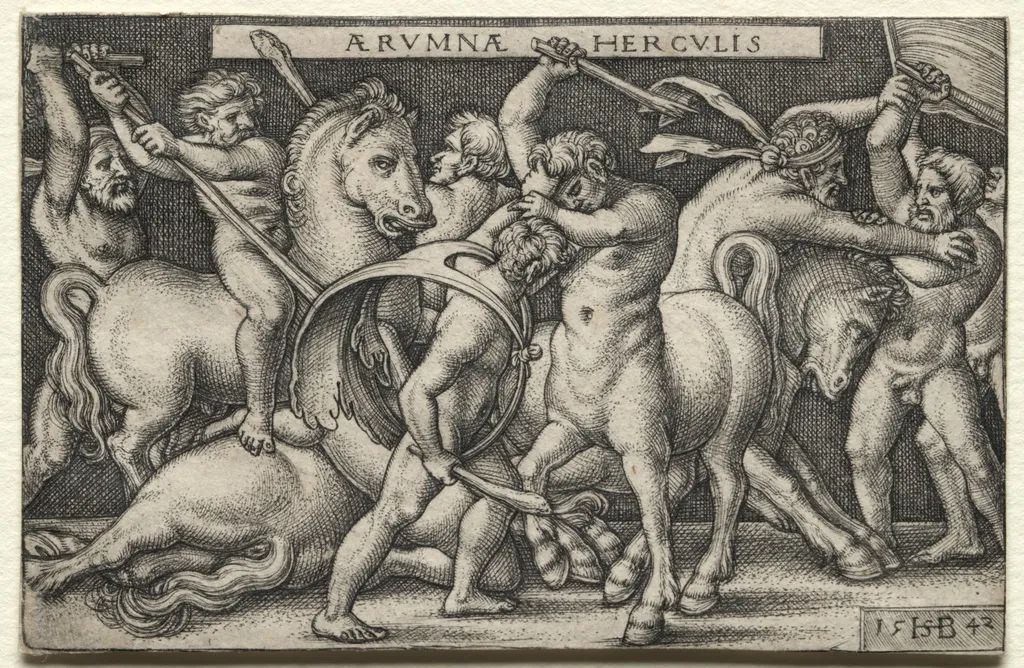
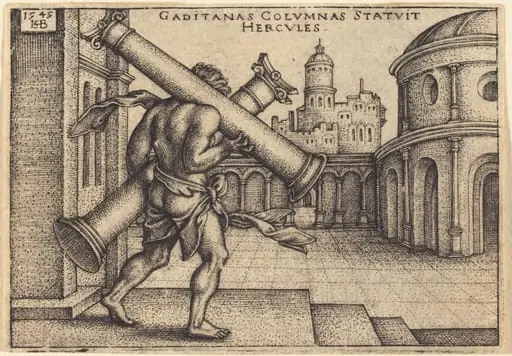
The Labors of Hercules is a print by the Renaissance artist Sebald Beham. It dates from 1542 and is held in the collection of the Cleveland Museum of Art.
About this work
Overview
Hans Sebald Beham, a German engraver of the early 16th century, produced a compact series of twelve prints that recount the adventures of Hercules. Each image is rendered at a diminutive scale, characteristic of the group of artists known as the “Little Masters.” The set condenses a range of mythological episodes into a single, tightly organized composition.
Subject & Meaning
The series centers on the legendary hero Hercules, son of Jupiter and the mortal Alcmena, whose deeds were celebrated throughout Renaissance art.
The series centers on the legendary hero Hercules, son of Jupiter and the mortal Alcmena, whose deeds were celebrated throughout Renaissance art. Three of the twelve images illustrate his most famous labors—strangling the Nemean lion, slaying the Lernean Hydra, and retrieving Cerberus from the underworld—while the remaining plates portray earlier episodes and moments preceding his death, reflecting the hero’s moral and physical trials.
Technique & Style
Beham employed fine engraving to achieve an extraordinary level of detail within a very small format, a hallmark of the Little Masters. The prints display precise line work and careful shading, allowing multiple narrative scenes to coexist in a confined space without loss of clarity. This meticulous approach underscores the artist’s skill in miniature narrative composition.
History & Provenance
Created in the early 1520s, the Hercules series was intended for collectors drawn to curiosities and miniature artworks. The prints circulated among affluent patrons of the German Renaissance, who valued both their technical virtuosity and their classical subject matter. Surviving copies are now held in several European museum collections.
Context
During the Northern Renaissance, classical mythology experienced renewed interest, and Hercules emerged as a popular exemplar of virtue and strength. Beham’s work aligns with this trend, translating grand mythic narratives into intimate, portable objects that could be examined closely, reflecting contemporary tastes for both scholarly content and decorative finesse.
Artist & collection
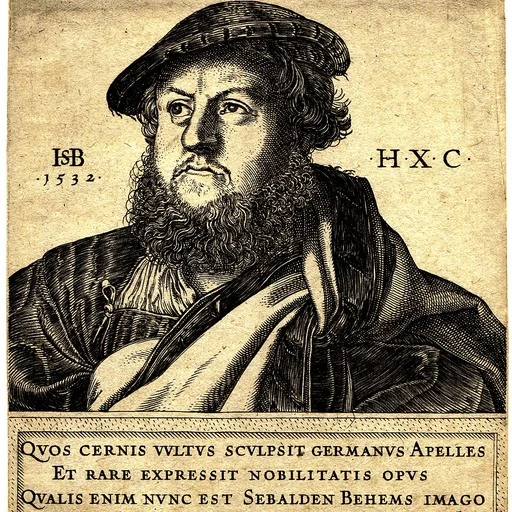
Artist
Sebald Beham (1500–1550) was a German painter and printmaker, mainly known for his very small engravings.


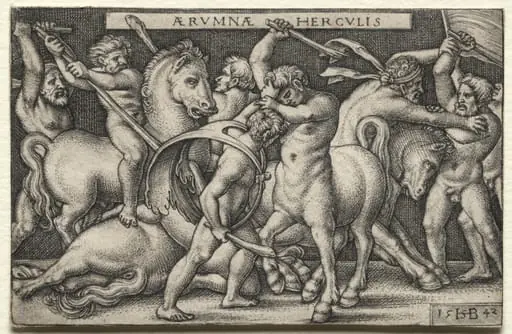 The Labors of Hercules: Hercules Defeating the Centaurs
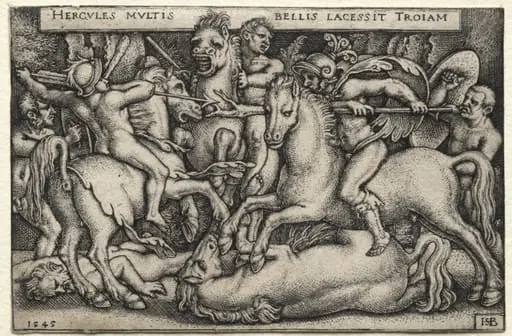 The Labors of Hercules: Hercules Conquering Troy
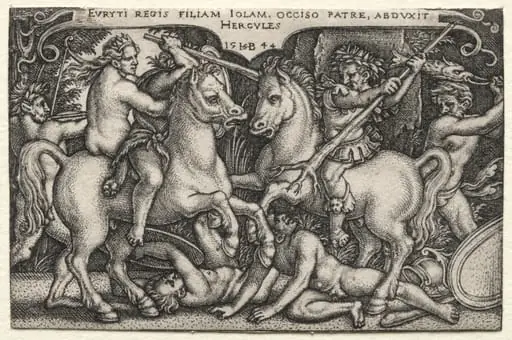 The Labors of Hercules: Hercules Abducting Iole
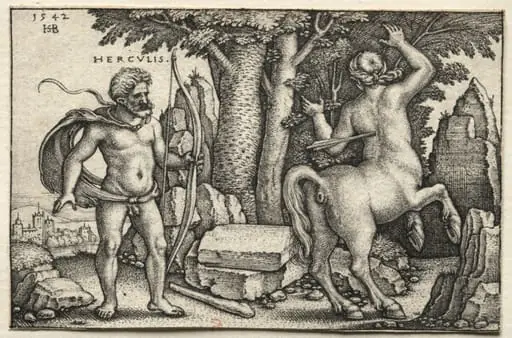 The Labors of Hercules: Hercules Shooting Nessus
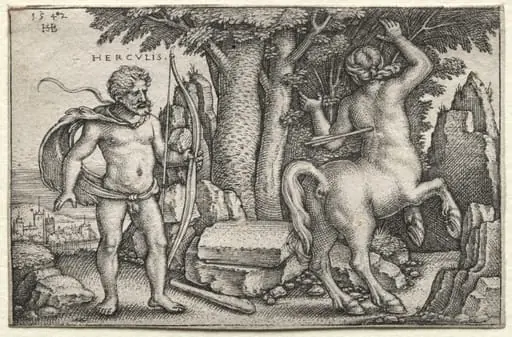 The Labors of Hercules: Hercules and Nessus
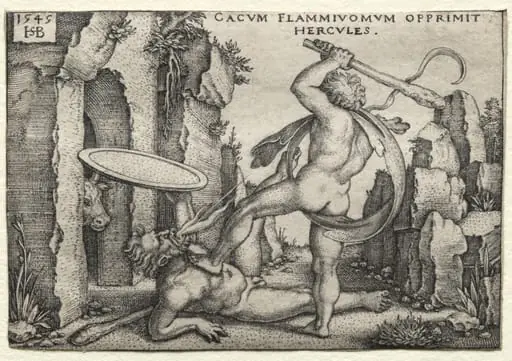 The Labors of Hercules: Hercules Killing the Giant Cacus
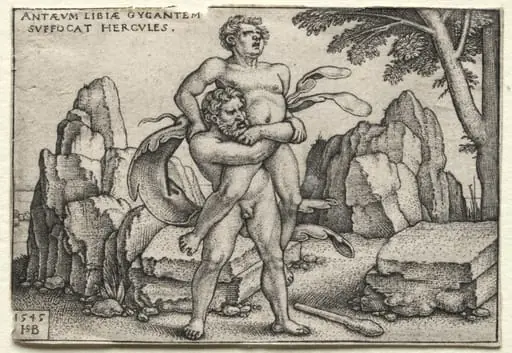 The Labors of Hercules: Hercules Crushing Antaeus
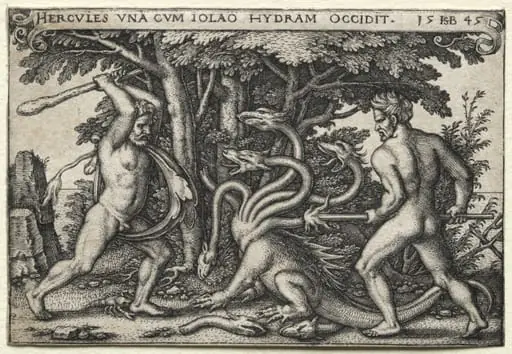 The Labors of Hercules: Hercules Killing the Lernean Hydra
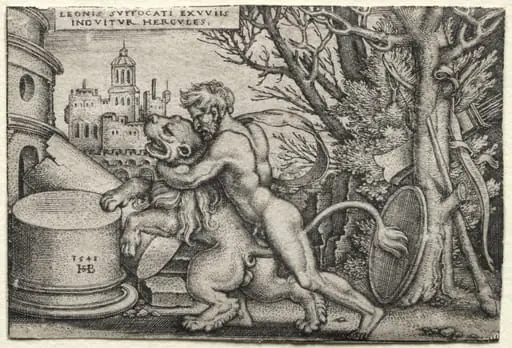 The Labors of Hercules: Hercules Strangling the Nemean Lion