Artwork
The Labors of Hercules: Hercules Shooting Nessus
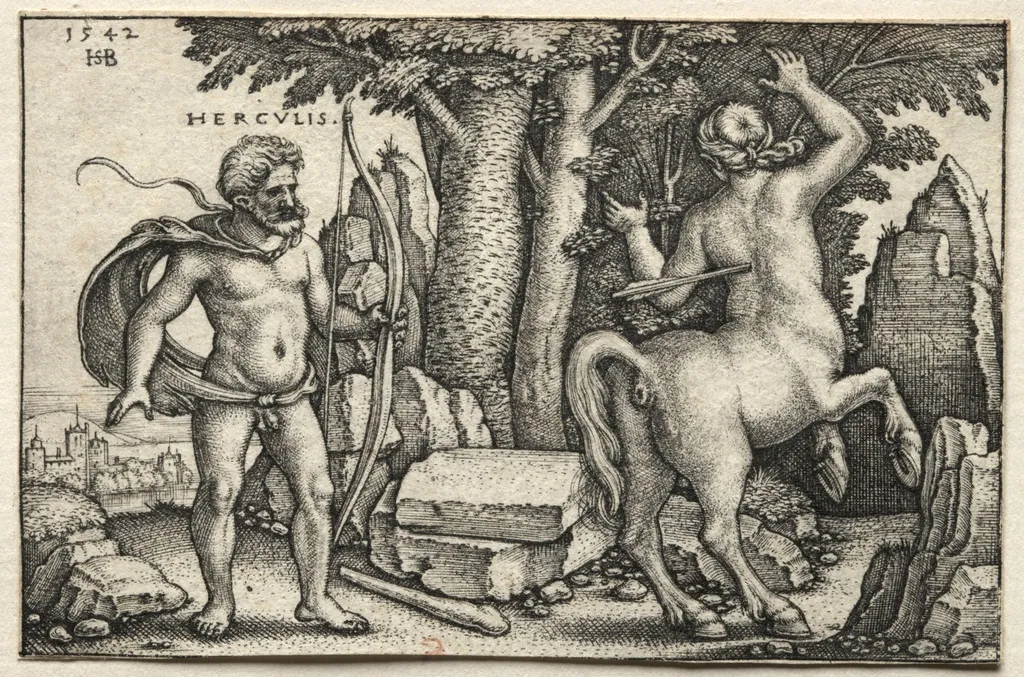
The Labors of Hercules: Hercules Shooting Nessus is a print by the Renaissance artist Sebald Beham. It dates from 1542 and is held in the collection of the Cleveland Museum of Art.
About this work
Overview
Hans Sebald Beham’s 1542 print, *The Labors of Hercules: Hercules Shooting Nessus*, presents a compact yet intricate scene from Greek myth. Executed in the fine engraving style that defined Beham’s output, the work captures the moment Hercules draws his bow to strike the centaur Nessus, emphasizing both narrative tension and technical precision.
Subject & Meaning
The image illustrates a lesser‑known episode of Hercules’ labors, in which the hero confronts the treacherous centaur Nessus. By focusing on the precise moment of the shot, Beham underscores themes of heroism, justice, and the violent resolution of deceit that permeate classical storytelling.
Technique & Style
Beham employs the meticulous line work characteristic of the German “Little Masters,” achieving a high level of detail within a modest scale. Subtle gradations of light and shadow suggest a chiaroscuro effect, lending depth to the figures and heightening the drama of the encounter.
History & Provenance
Born in Nuremberg and later active in Frankfurt, Beham produced roughly 252 engravings and 1,500 woodcuts over his career. This print is among his numerous mythological subjects, reflecting the mid‑16th‑century market for small, collectible prints that could be owned by a broad audience of collectors.
Context
The work belongs to a period when Northern European artists revived classical themes, adapting them to the detailed, intimate format of printmaking. Beham’s engagement with mythological content aligns with contemporary humanist interests while showcasing the technical possibilities of engraving as a medium.
Artist & collection
Artist
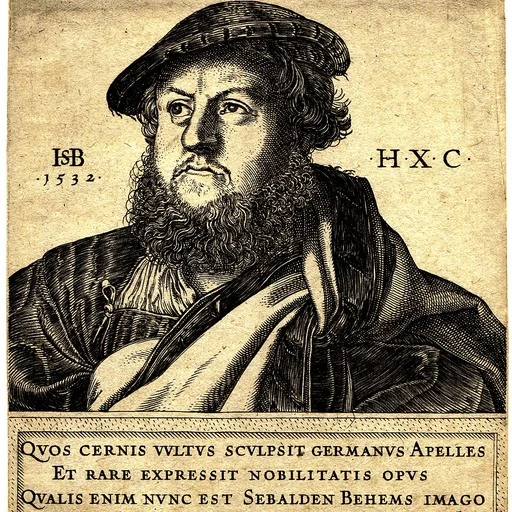
Sebald Beham (1500–1550) was a German painter and printmaker, mainly known for his very small engravings.


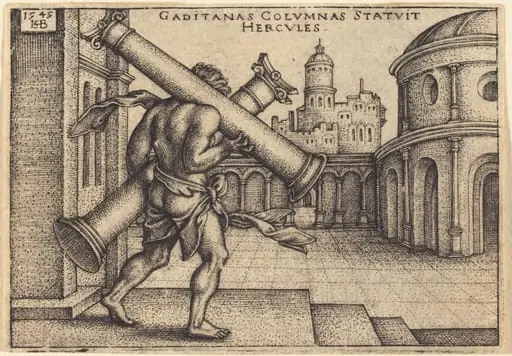
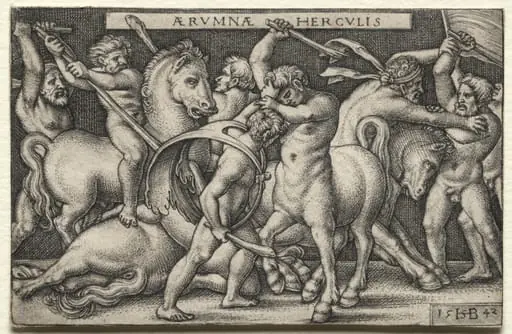 The Labors of Hercules: Hercules Defeating the Centaurs
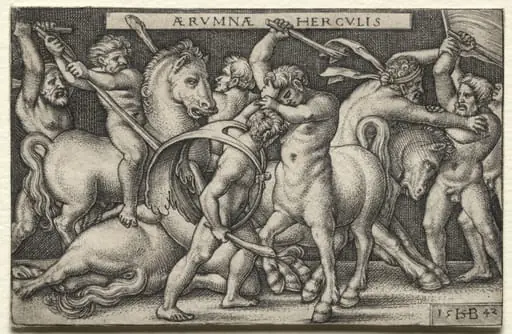 The Labors of Hercules
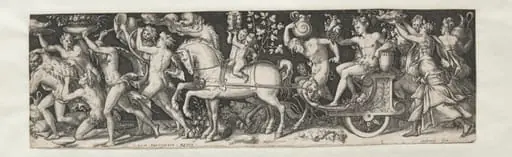 Combats and Triumphs No. 5: The Triumph of Bacchus
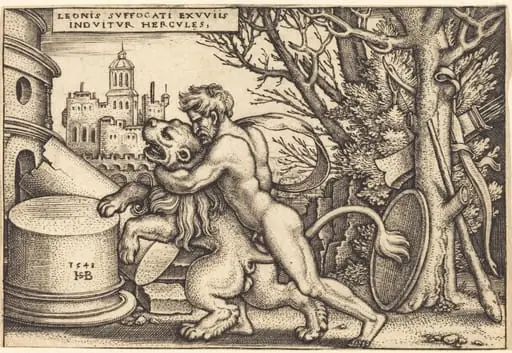 Hercules Killing the Nemean Lion
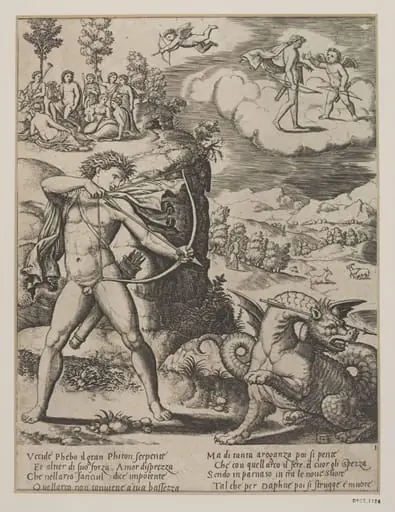 The History of Apollo and Daphne
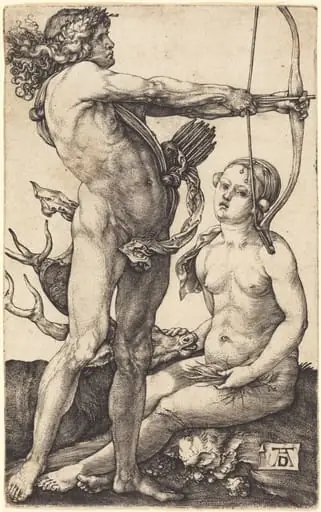 Apollo and Diana
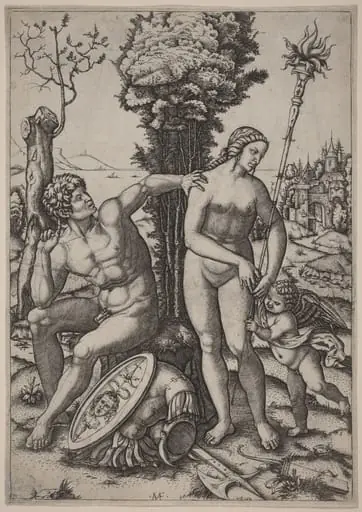 Mars, Venus, and Eros
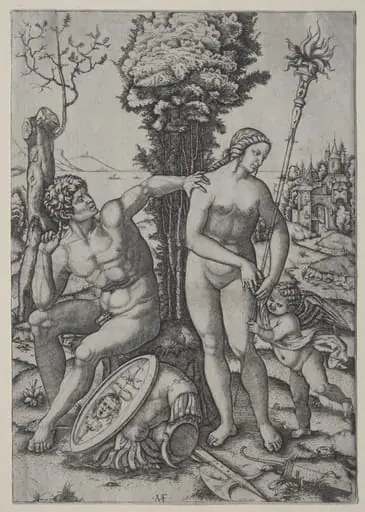 Venus, Mars and Cupid
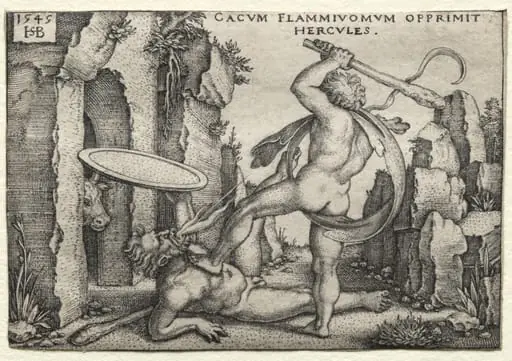 The Labors of Hercules: Hercules Killing the Giant Cacus
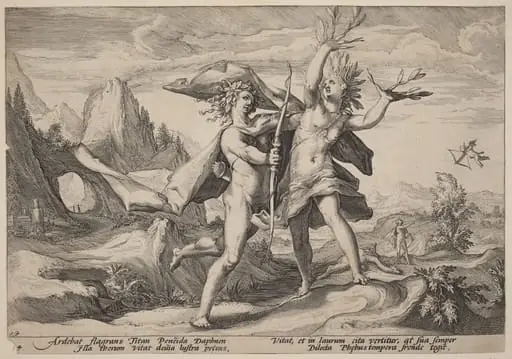 Daphne Changed into a Laurel Tree