Artwork
Judith Seated in an Arch
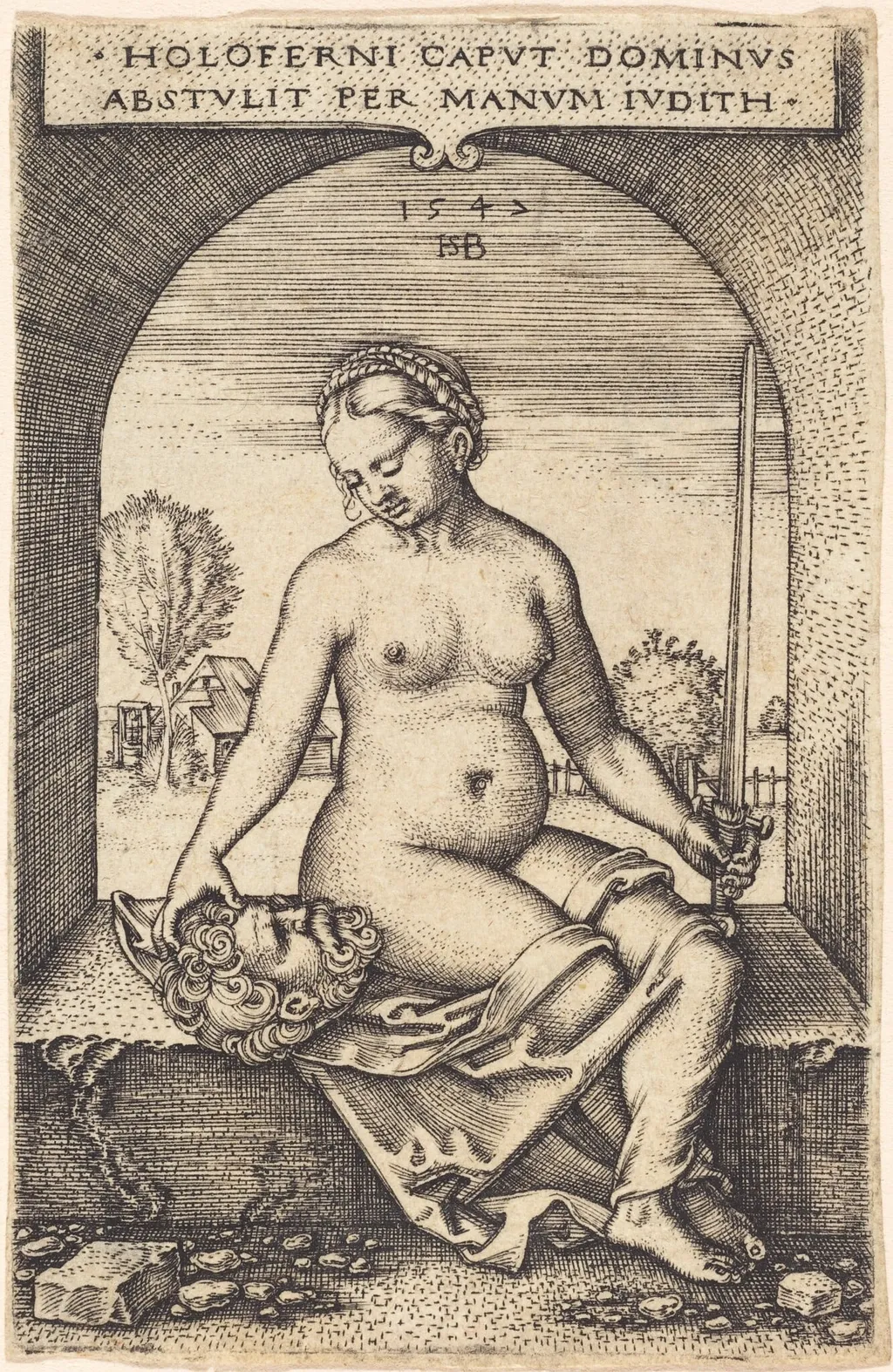
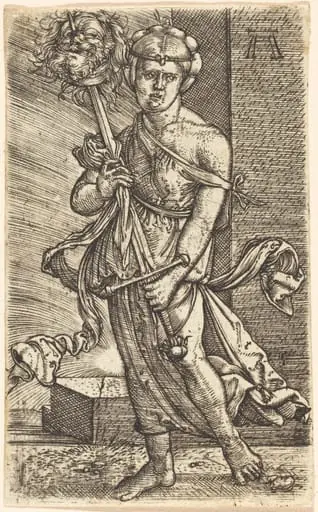
Judith Seated in an Arch is an ink print by the Renaissance artist Sebald Beham. It dates from 1547 and is held in the collection of the National Gallery of Art.
About this work
Overview
Created in 1547 by the German artist Sebald Beham, this engraving portrays the biblical figure Judith in a moment of quiet aftermath.
Created in 1547 by the German artist Sebald Beham, this engraving portrays the biblical figure Judith in a moment of quiet aftermath. Executed with fine, controlled lines typical of Beham’s technique, the image is small in scale but rich in detail. As a member of the group known as the Little Masters, Beham specialized in intricate prints that demanded close viewing, contrasting with the monumental style of earlier Renaissance artists like Dürer.
Subject & Meaning
The print depicts Judith, a biblical heroine, seated calmly within an archway, holding the severed head of Holofernes by the hair. Her bare chest and wreath suggest both triumph and symbolic purity, while the scattered weapons and distant village reinforce the narrative of deliverance through cunning. The composed demeanor contrasts with the violence of her act, emphasizing moral resolution over brutality.
Technique & Style
Beham employed fine, precise engraving lines to model form and shadow, creating depth and texture without relying on broad tonal areas. The architectural frame is rendered with meticulous attention to stone texture and perspective, while the background village is suggested through minimal, delicate strokes. His technique prioritizes clarity and detail, characteristic of the Little Masters’ approach to small-scale printmaking.
History & Provenance
Sebald Beham produced this work during his time in Frankfurt, where he settled after leaving Nuremberg. He remained active as an engraver and etcher until his death, maintaining a prolific output despite political and religious upheavals. The print likely circulated among collectors and artisans who valued his technical precision, though its early ownership records remain undocumented.
Context
In mid-16th-century Germany, biblical themes were frequently adapted for private devotion and artistic display. Beham’s work reflects the influence of humanist ideals and the growing interest in individual moral agency. His choice to depict Judith—a woman who used intelligence to save her people—resonated with contemporary debates on power, gender, and divine justice.
Legacy
Beham’s engravings, including this one, contributed to the development of small-format printmaking as a respected art form. Though overshadowed by larger Renaissance figures, his technical discipline influenced later generations of Northern European engravers. His focus on narrative detail and psychological nuance helped sustain the tradition of intimate, finely crafted prints beyond the era of Dürer.
Artist & collection
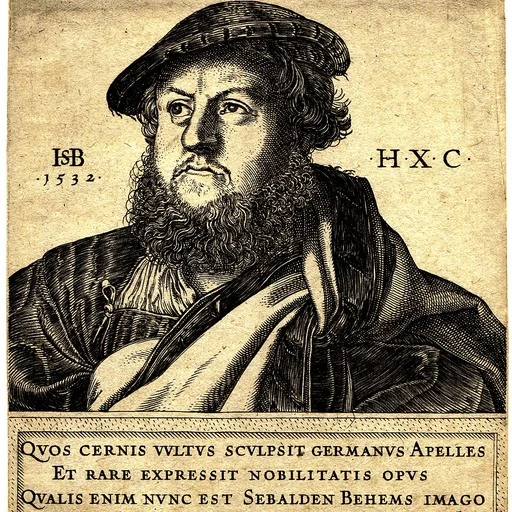
Artist
Sebald Beham (1500–1550) was a German painter and printmaker, mainly known for his very small engravings.