Artwork
Lucretia
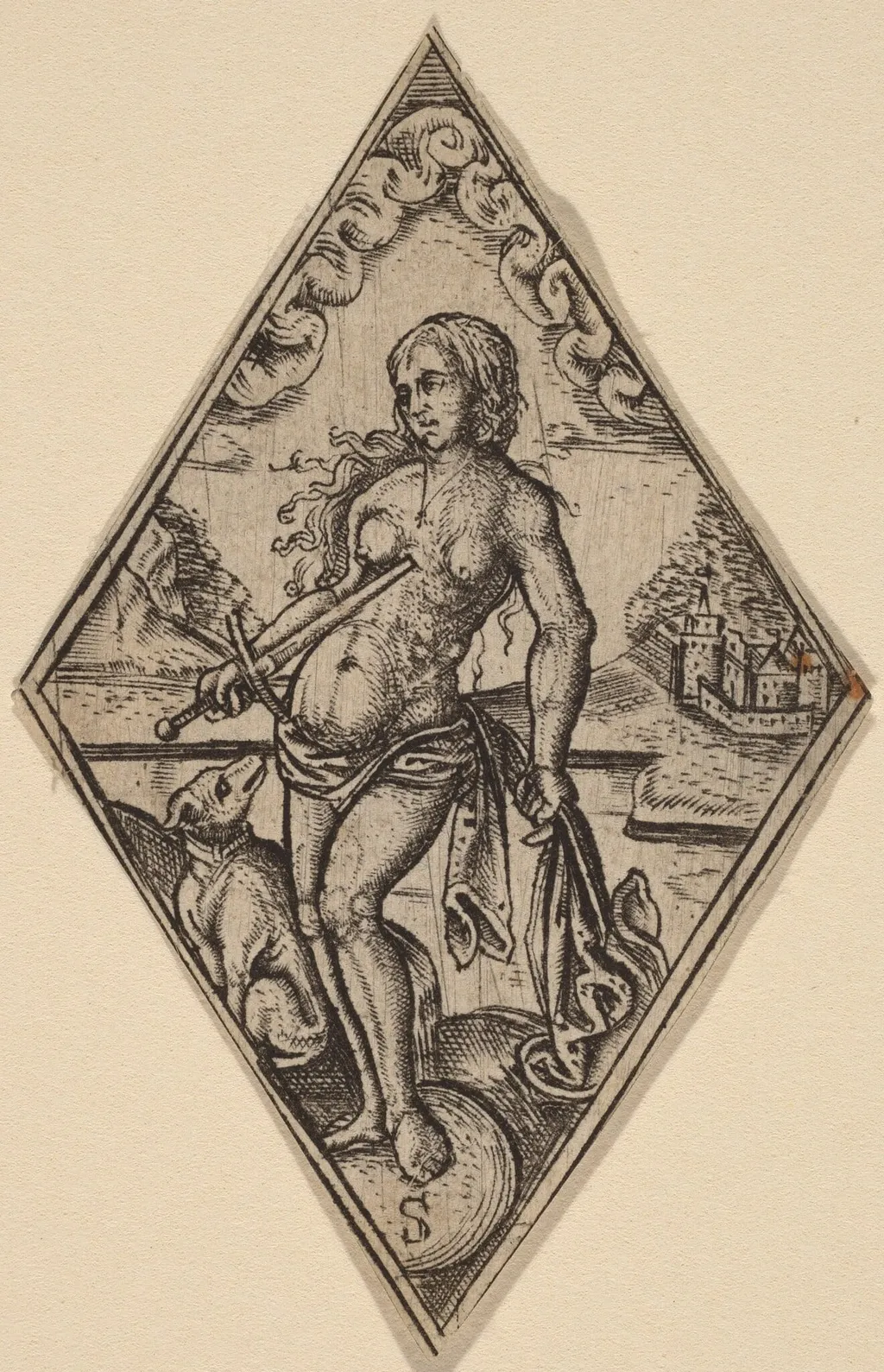
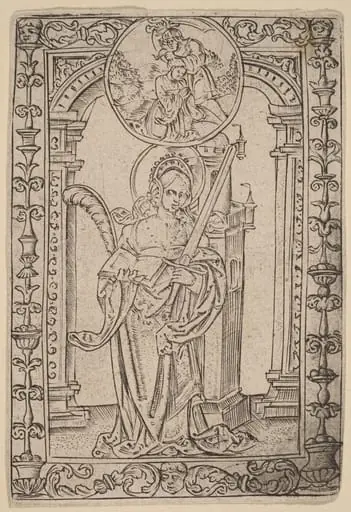
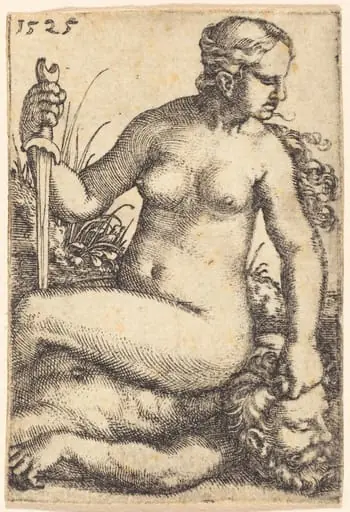
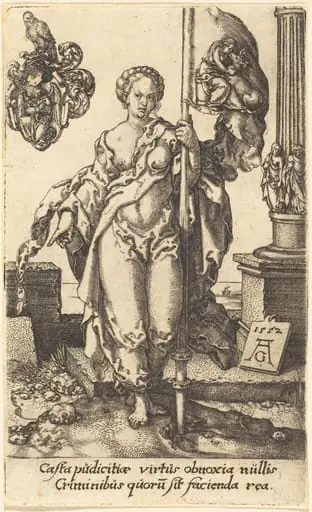
Lucretia is an ink print by the Renaissance artist Master S. It dates from 1502 and is held in the collection of the National Gallery of Art.
About this work
Overview
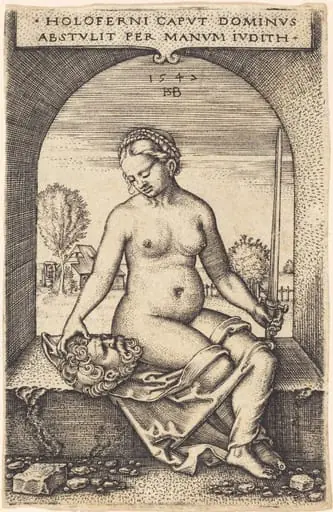
Created in 1502, this engraving on laid paper by the anonymous Master S presents a solitary female figure holding a sword in her right hand while a cloth is draped over her left shoulder. She stands before a prone body, with a distant building visible behind them, conveying a narrative scene rendered in fine line work.
Subject & Meaning
The central woman’s solemn expression and resolute stance suggest a moment of decisive action, possibly alluding to the legendary Roman Lucretia. The sword introduces tension, while the modestly placed cloth hints at themes of virtue and restraint, inviting viewers to contemplate the moral implications of the depicted event.
Technique & Style
Executed with precise incised lines on laid paper, the print exemplifies the meticulous draftsmanship characteristic of early Renaissance engraving. The contrast between the sharply rendered sword and the softer folds of the cloth demonstrates the artist’s skill in differentiating textures within a monochrome medium.
History & Provenance
The work is part of the collection of the National Gallery of Art in Washington, where it has been displayed as a representative example of early 16th‑century printmaking. Its attribution to Master S remains based on stylistic analysis, as the artist’s identity is otherwise undocumented.
Context
Produced during a period when printmaking began to disseminate classical and moral narratives more widely, the engraving reflects contemporary interest in antiquity and virtue. Its composition aligns with Renaissance ideals of balanced arrangement and the use of symbolic objects to convey ethical messages.
Artist & collection