Artwork
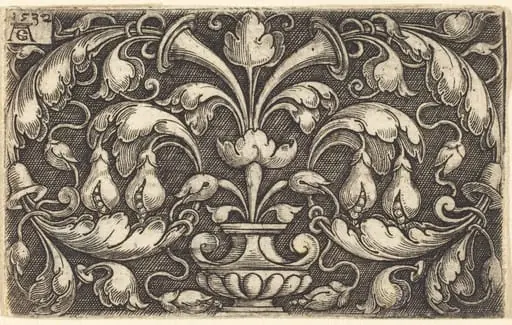
Ornament with a Vase Between Two Genii
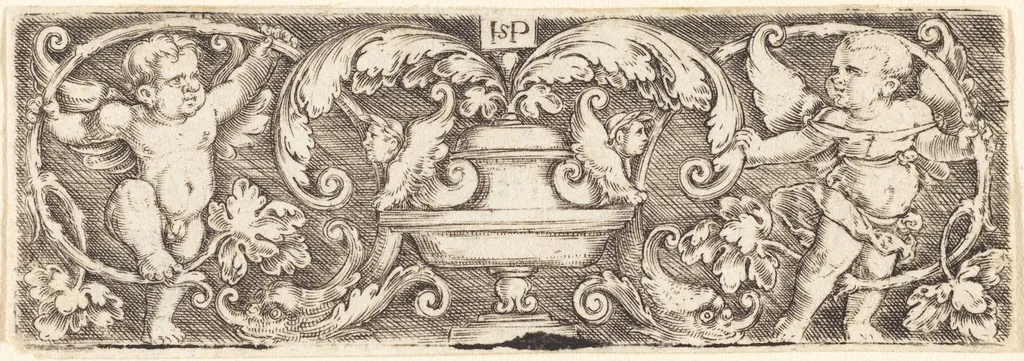
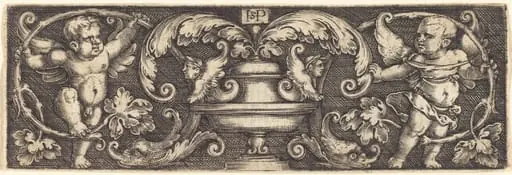
Ornament with a Vase Between Two Genii is an ink print by the Renaissance artist Sebald Beham. It dates from 1528 and is held in the collection of the National Gallery of Art.
About this work
Overview
Created around 1528 by Sebald Beham, this engraving is a small-scale decorative print typical of the German Renaissance. Beham, a Nuremberg artist, specialized in finely detailed engravings that fit within compact formats. The work belongs to a broader tradition of ornamental prints designed for reproduction and domestic use, reflecting the period’s interest in applied art and intricate design.
Subject & Meaning
Two winged figures, likely genii or spirit beings, support a tall central vase, symbolizing abundance or artistic inspiration.
Two winged figures, likely genii or spirit beings, support a tall central vase, symbolizing abundance or artistic inspiration. Surrounding them are scrolling foliage and small cherubic heads, suggesting a mythological or allegorical theme. The composition avoids narrative clarity, instead emphasizing harmony and balance—qualities valued in Renaissance ornamentation, where form often took precedence over explicit storytelling.
Technique & Style
Beham employed fine, precise lines to model form and texture, using cross-hatching and delicate contours to suggest depth and volume within a shallow space. The engraving’s tight composition is framed by rhythmic swirls and dotted borders, characteristic of the Little Masters’ style. The technique required exceptional control, as each line was incised directly into a metal plate, allowing for multiple precise impressions.
History & Provenance
This print emerged during Beham’s most productive period in Nuremberg, a center of printmaking innovation. As part of his extensive output of decorative engravings, it was likely circulated among collectors and artisans as a model for ornamentation. While its early ownership is undocumented, similar works by Beham appear in major European collections, indicating broad contemporary circulation.
Context
Beham was part of the Little Masters, a group of German artists who refined printmaking after Albrecht Dürer. Their work catered to a growing market for small, collectible images, often used in book illustration or as patterns for crafts. This engraving reflects the Renaissance fascination with classical motifs adapted into secular, decorative forms, bridging fine art and applied design.
Legacy
Beham’s ornamental prints influenced later generations of engravers and designers, particularly in the transmission of Renaissance motifs across Northern Europe. Though overshadowed by larger historical narratives, his meticulous technique and prolific output helped standardize decorative vocabulary in print culture, leaving a quiet but enduring mark on the evolution of graphic arts.
Artist & collection
Artist
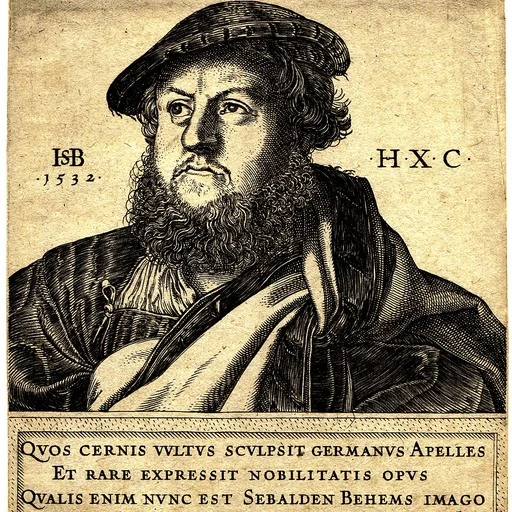
Sebald Beham (1500–1550) was a German painter and printmaker, mainly known for his very small engravings.


 Ornament
 Ornament
 Ornament with One Male and Two Female Figures
 Panel of Ornament with Candelabra Supported by Two Blindfolded Women
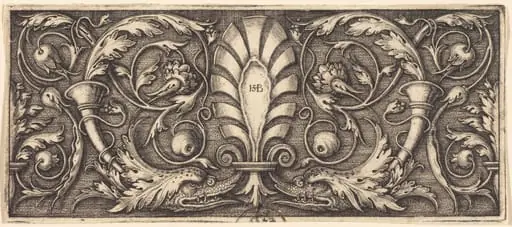 Ornament with Palmette and Two Dophin Heads
 High Ornament
 Ornament with Palmette and Two Dophin Heads
 Architectural Motif with Fruit in a Vase
 Ornament Panel: Triton Ridden by a Child
 Double Cup with Two Genii Riding on Dolphins
 Goblet with base decorated with two large scallops
 Ornament with a Vase Between Two Genii