Artwork
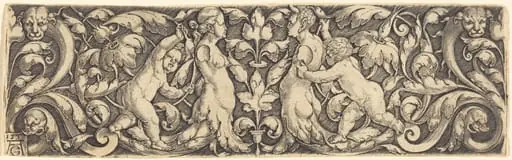
Ornament with Three Satyrs
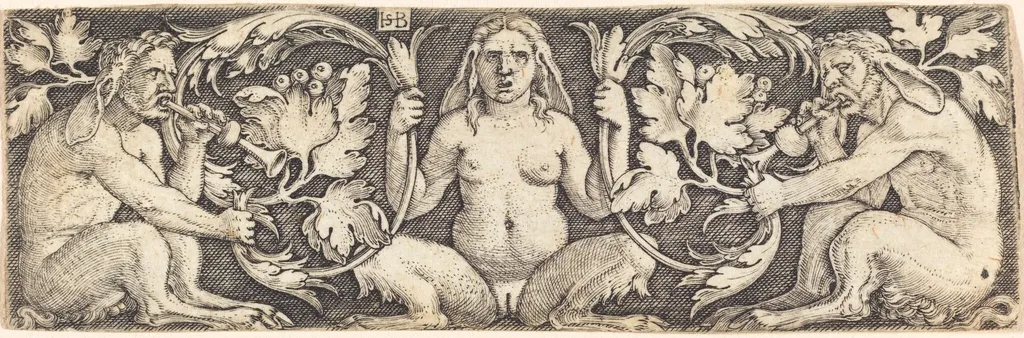
Ornament with Three Satyrs is an ink print by the Renaissance artist Sebald Beham. It dates from 1542 and is held in the collection of the National Gallery of Art.
About this work
Overview
Ornament with Three Satyrs is a small-scale engraving created by German artist Sebald Beham around 1542. Characteristic of his work, it exemplifies the detailed craftsmanship for which he was renowned.
Subject & Meaning
The engraving features three satyrs embedded within an ornate frame, surrounded by swirling vines. Their mythological attributes, such as goat legs and horns, are playfully integrated into the decorative design, highlighting the interplay between figural representation and ornamental motifs.
Technique & Style
Beham employed meticulous cross-hatching to achieve depth and dimensionality, with carefully carved lines that simulate realistic shadows. The piece reflects the influence of Albrecht Dürer, while showcasing Beham's distinct mastery of intricate detail and composition.
History & Provenance
As a 'Little Master,' Beham crafted this engraving for collector's markets, contributing to the popularity of small, highly detailed prints among connoisseurs of the time.
Context
Produced in the mid-16th century, Ornament with Three Satyrs situates Beham within the lineage of Dürer's printmaking legacy, yet also distinguishes his contribution to the 'Little Masters' group known for their diminutive, elaborate works.
Legacy
This engraving, through its technical precision and thematic blend of mythology and ornament, contributes to Beham's reputation as a skilled printmaker of his era, inviting comparison with the seminal works of Dürer.
Artist & collection
Artist
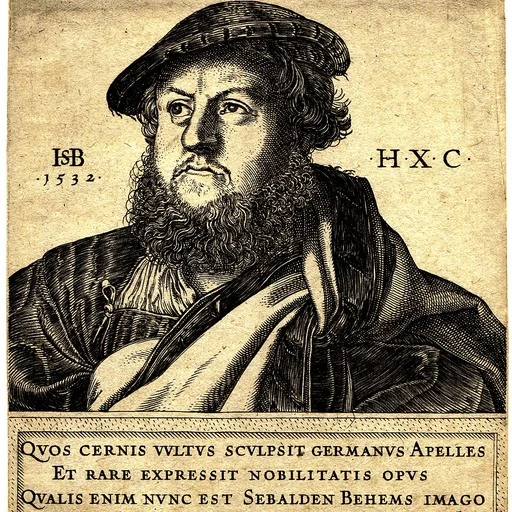
Sebald Beham (1500–1550) was a German painter and printmaker, mainly known for his very small engravings.


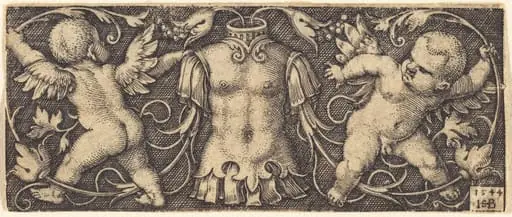 Ornament with Armour and Two Genii
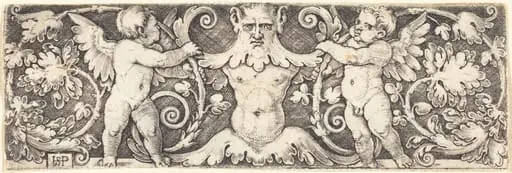 Ornament with Male Half Figure Between Two Genii
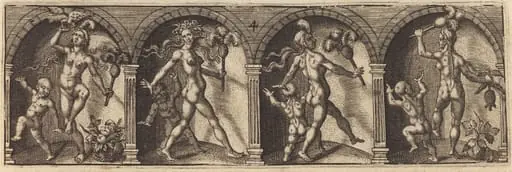 Les divers pourtraicts et figures IV
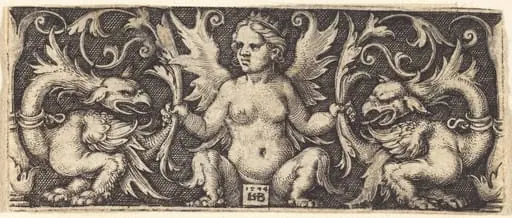 Ornament with Female Demon
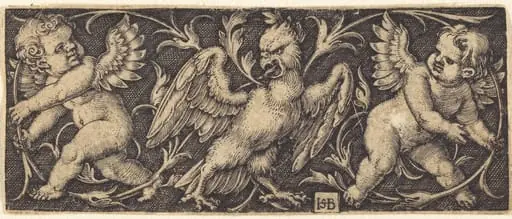 Ornament with Eagle and Two Genii
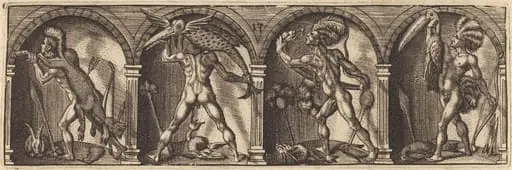 Les divers pourtraicts et figures XIII
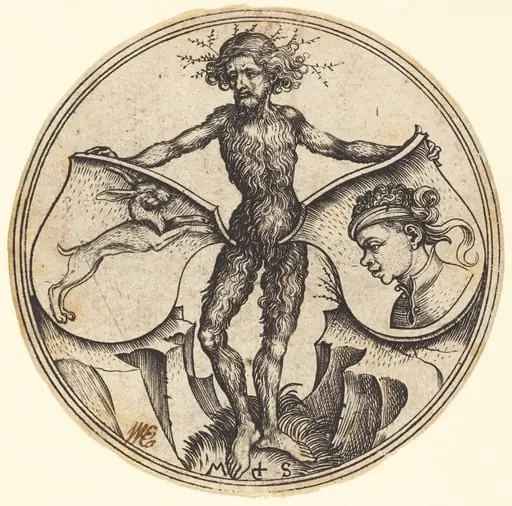 Shields with Rabbit and Moor's Head, Held by Wild Man
 Cross Panel with Vine in Center and Tritons' Couple
 Female Satyr Playing a Bagpipe