Artwork
Female Satyr Playing a Bagpipe
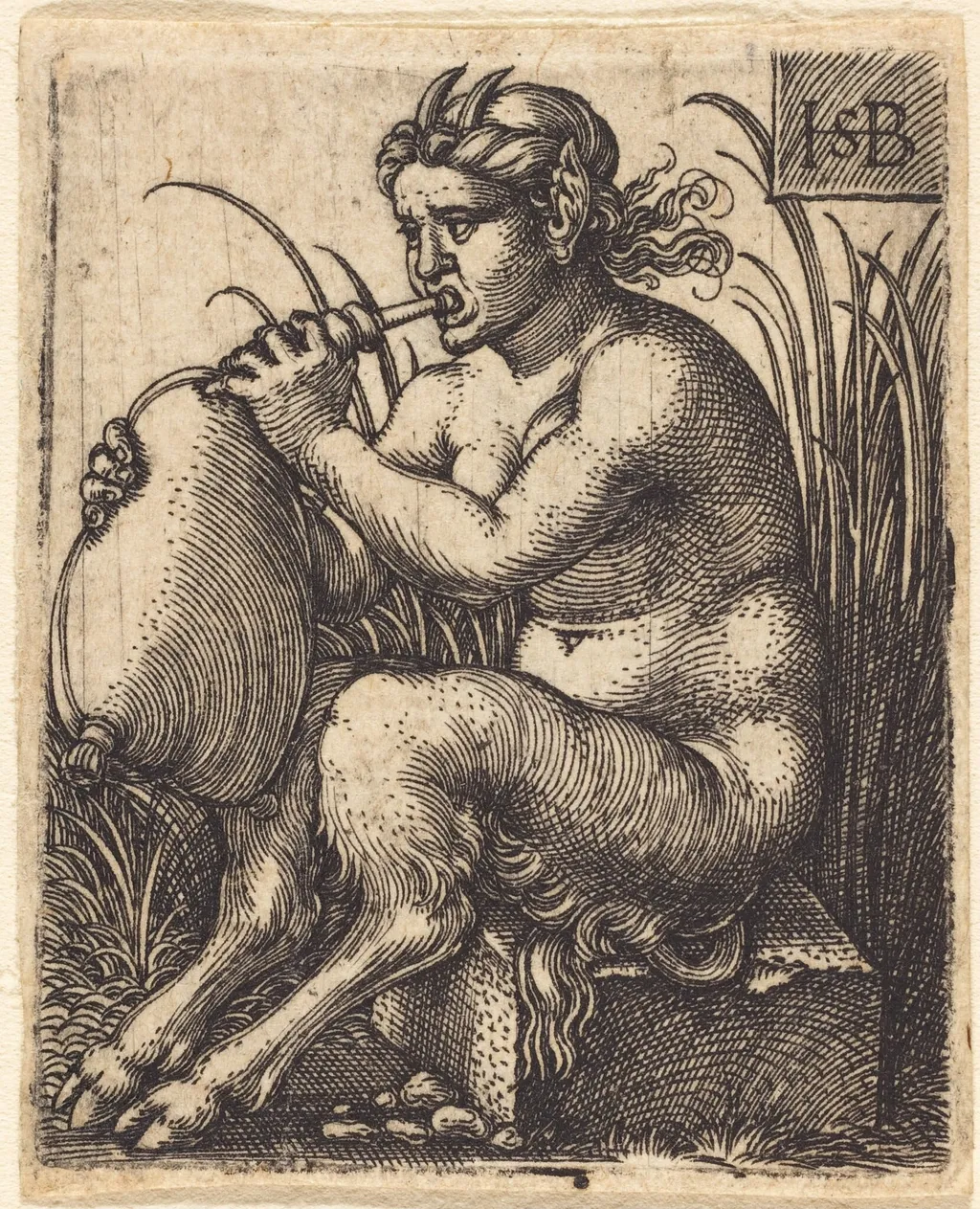
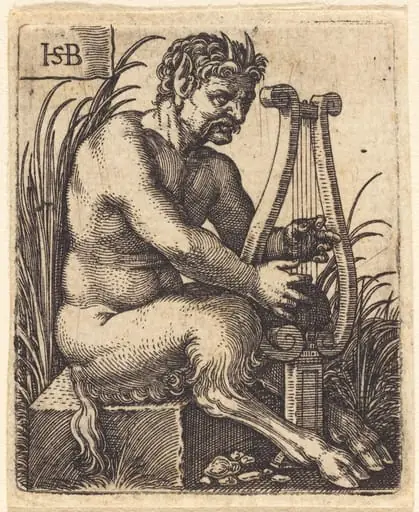
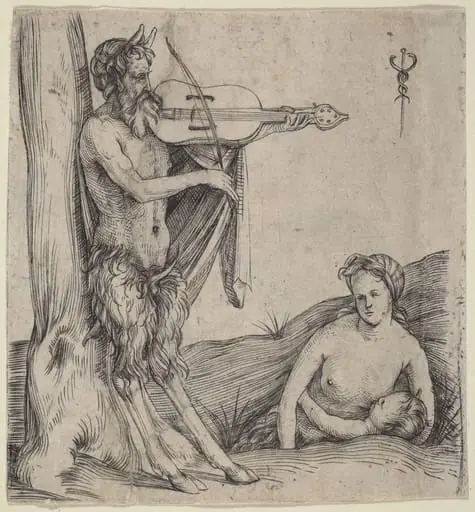
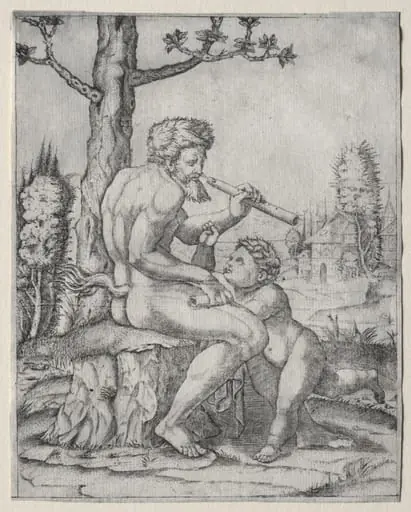
Female Satyr Playing a Bagpipe is an ink print by the Renaissance artist Sebald Beham. It dates from 1534 and is held in the collection of the National Gallery of Art.
About this work
Overview
Sebald Beham’s early‑16th‑century engraving presents a mythic creature—a satyr rendered with feminine traits—caught in the act of playing a bagpipe. Executed on a modest plate, the image balances a playful mood with meticulous line work, inviting viewers to notice both the figure’s joyous expression and the fine rendering of her leafy attire.
Subject & Meaning
The work merges classical mythology with a gendered twist, portraying a satyr—a traditionally male woodland spirit—as a woman adorned in foliage. Her cheerful demeanor and engagement with music suggest a celebration of nature’s spontaneity, while the hybrid form hints at Renaissance curiosity about the fluidity of identity and the pleasures of the pastoral realm.
Technique & Style
Rendered through copper engraving, Beham employs dense cross‑hatching and delicate incisions to model the folds of the satyr’s leaf‑clad garments and the texture of the instrument. The precision of each line creates a tactile sense of fabric and wood, characteristic of the “Little Masters” who favored compact, highly detailed prints that could be reproduced for a broad audience.
History & Provenance
Created circa 1534, the engraving belongs to the prolific output of Beham, a Nuremberg‑born artist who later worked in Frankfurt. As part of his extensive catalog of hundreds of prints, this piece reflects his position within the generation following Albrecht Dürer, contributing to the flourishing Northern Renaissance print market that circulated such works across Europe.
Context
During the early sixteenth century, printmaking became a primary vehicle for disseminating artistic ideas beyond the workshop.
During the early sixteenth century, printmaking became a primary vehicle for disseminating artistic ideas beyond the workshop. Beham’s small‑scale engravings catered to collectors interested in intricate, portable images. The choice of a mythological, music‑playing satyr aligns with contemporary humanist interests in classical themes, while the gendered reinterpretation reflects the period’s experimental approach to traditional subjects.
Artist & collection
Artist
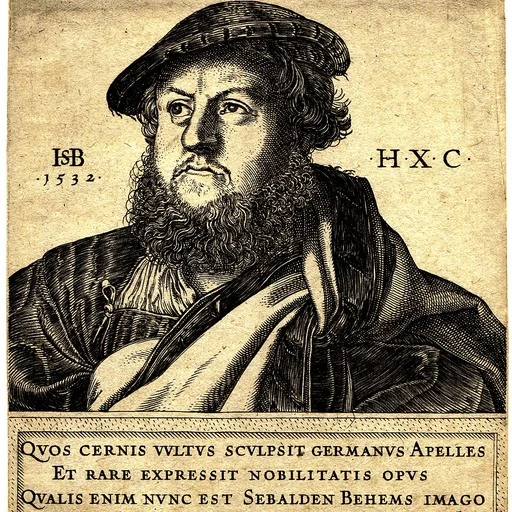
Sebald Beham (1500–1550) was a German painter and printmaker, mainly known for his very small engravings.