Artwork
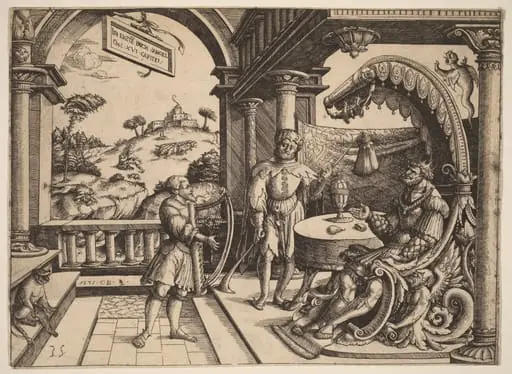
The Rich Man at the Table
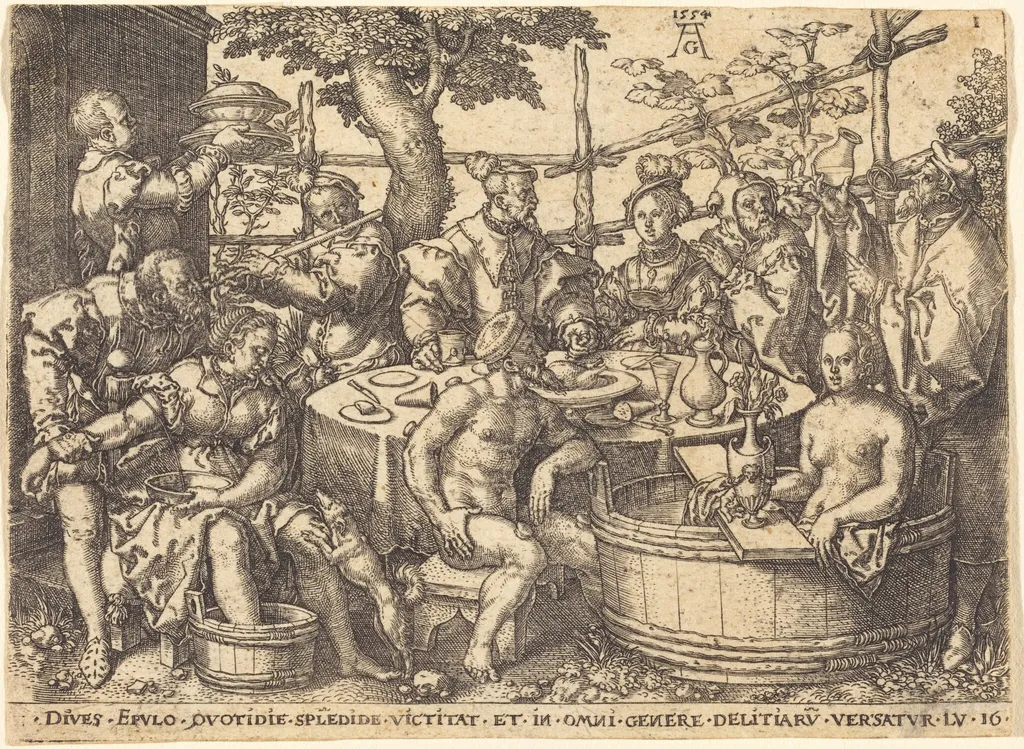
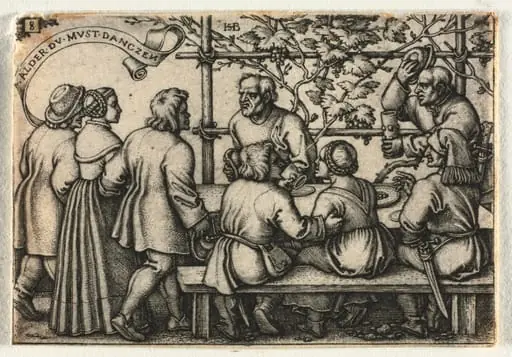
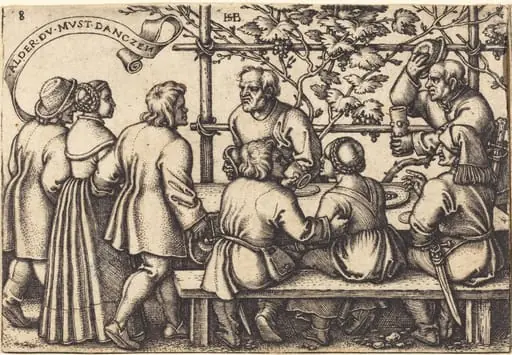
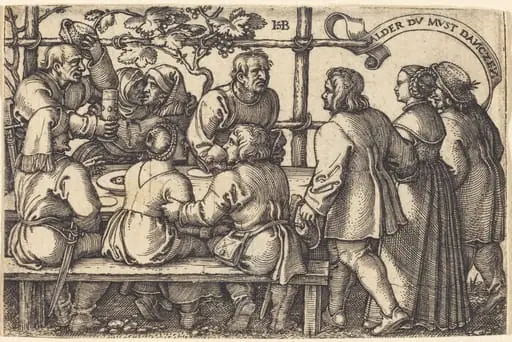
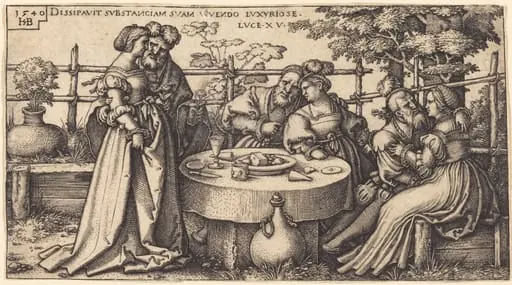
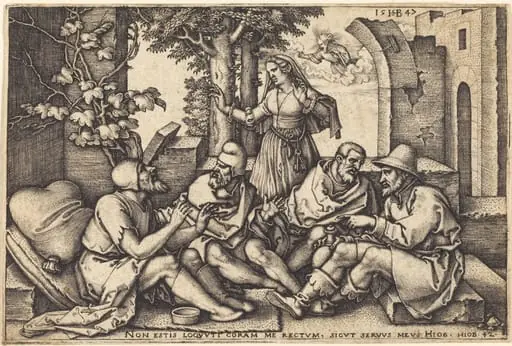
The Rich Man at the Table is an ink print by the Northern Renaissance artist Heinrich Aldegrever. It dates from 1554 and is held in the collection of the National Gallery of Art.
About this work
The painting is called The Rich Man at the Table by Aldegrever, Heinrich.
It's an allegory, which means it's using symbols to convey a message. The artist made this in 1554, during the Renaissance period, which was a time of great change in art and culture.
You can learn more about the technique used to create this piece by looking into etching.
Overview
The Rich Man at the Table is a 1554 etching by Heinrich Aldegrever, a German artist of the 'Little Masters' group. This small-scale print exemplifies the moral and social commentary characteristic of Aldegrever's work.
Subject & Meaning
The etching portrays a wealthy individual at a laden table, amidst abundance of food and drink. This scene likely serves as an allegory for themes of indulgence or excess, conveying a moral message through symbolic representation.
Technique & Style
Executed in etching, a technique popular during the Renaissance, the work showcases Aldegrever's skill in this medium. The piece aligns with the 'Little Masters' penchant for detailed, small-format prints.
History & Provenance
Created in 1554, during the Renaissance, the etching reflects the artistic and cultural shifts of the time. Provenance details are not specified.
Context
Part of the broader Renaissance art movement, The Rich Man at the Table sits within Aldegrever's oeuvre, which followed in the footsteps of influential figures like Albrecht Dürer, yet carved a distinct niche with its thematic focus.
Legacy
As an allegorical print by a 'Little Master,' it contributes to the legacy of 16th-century German printmaking, notable for its exploration of moral themes in accessible, small-scale formats.
Artist & collection

Artist
Heinrich Aldegrever or Aldegraf was a German painter and engraver. He was one of the "Little Masters", the group of German artists making small old master prints in the generation after Albrecht Dürer.