Artwork
Solon and Two Peasants
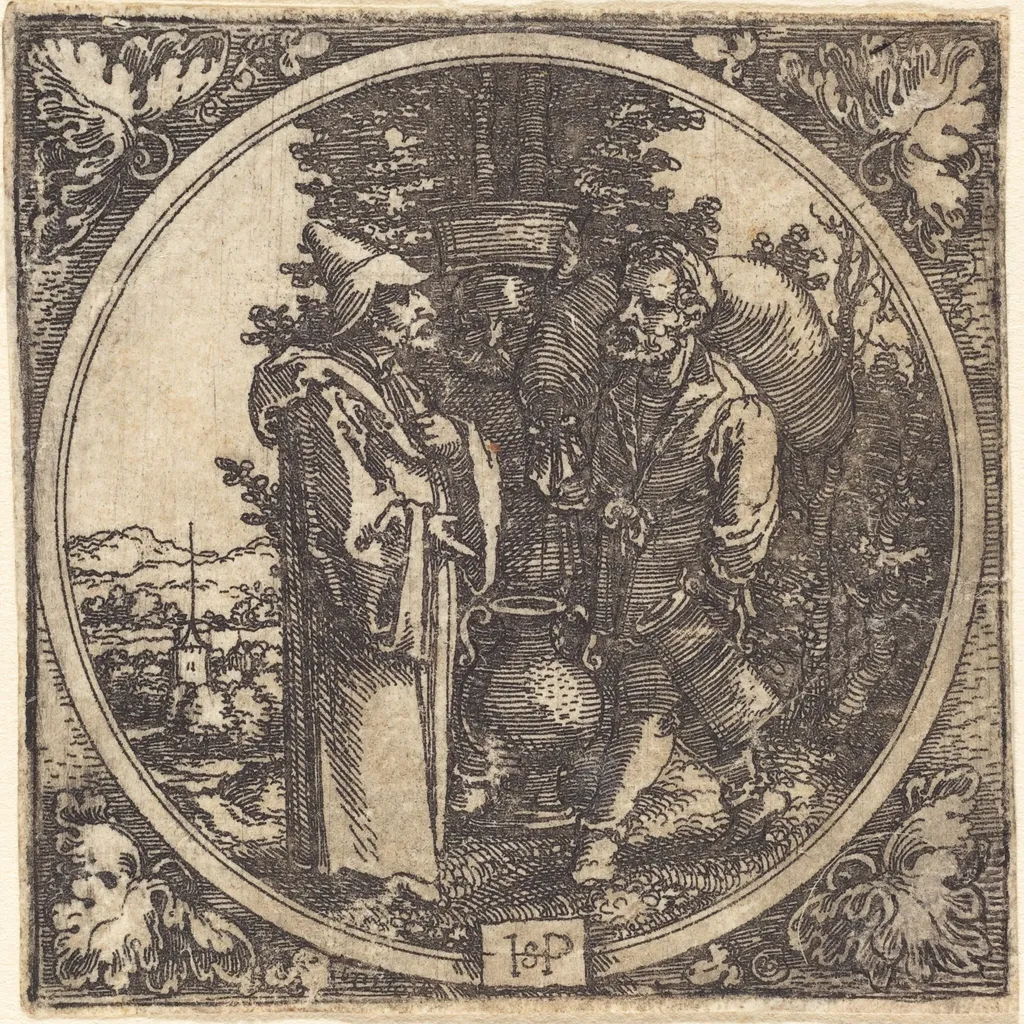
Solon and Two Peasants is an ink print by the Renaissance artist Sebald Beham. It dates from 1526 and is held in the collection of the National Gallery of Art.
About this work
Overview
Executed in Nuremberg, the print reflects Beham’s mastery of the etching technique, where ink is held in incised lines to produce rich tonal contrasts.
Created around 1526 by Sebald Beham, *Solon and Two Peasants* is a small-scale etching that exemplifies the precision and detail characteristic of the German Little Masters. Executed in Nuremberg, the print reflects Beham’s mastery of the etching technique, where ink is held in incised lines to produce rich tonal contrasts. The composition centers on three figures arranged in a tight circle, framed by an ornate border filled with miniature architectural and human forms.
Subject & Meaning
The scene portrays Solon, the legendary Athenian lawmaker, engaged in quiet dialogue with two rural laborers. Their calm, unembellished expressions suggest a moment of moral or civic reflection rather than dramatic action. The inclusion of peasants implies a theme of justice rooted in the lives of ordinary people, aligning with Solon’s historical reputation for reforming Athenian law to balance social classes.
Technique & Style
Beham employed etching to achieve fine, controlled lines that define each figure and decorative element with remarkable clarity. The ink sits within the etched grooves, producing deep blacks and subtle gradations that enhance texture without shading. The border, densely populated with tiny buildings and figures, demonstrates his affinity for intricate ornamentation, a hallmark of the Little Masters’ approach to printmaking.
History & Provenance
Beham, active in Nuremberg during the early 16th century, produced this work before relocating to Frankfurt. As a follower of Dürer’s legacy, he contributed to the flourishing of German print culture, though his focus remained on intimate, small-format works. *Solon and Two Peasants* survives as part of a broader corpus of his etchings, valued for their technical refinement rather than widespread public display.
Context
This print emerged during a period when German artists were refining printmaking as an independent art form, moving beyond mere reproduction. Humanist ideals influenced depictions of classical figures like Solon, who symbolized rational governance. Beham’s choice to pair him with peasants reflects a growing interest in civic virtue and the moral authority of everyday life within Renaissance humanist thought.
Legacy
Beham’s etchings, including this one, helped establish the viability of small-scale prints as serious artistic expressions. His meticulous linework and narrative restraint influenced later generations of Northern European printmakers. Though not widely exhibited in his time, his works remain studied for their technical discipline and subtle engagement with classical themes.
Artist & collection
Artist
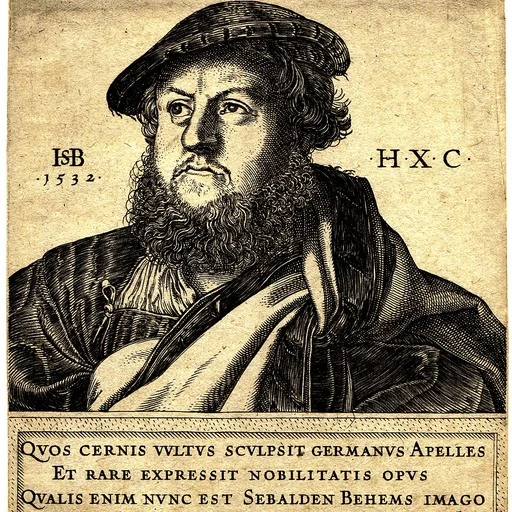
Sebald Beham (1500–1550) was a German painter and printmaker, mainly known for his very small engravings.

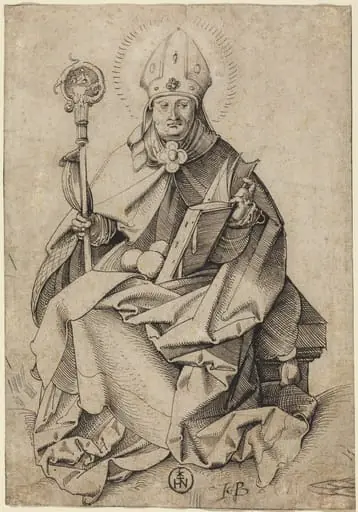
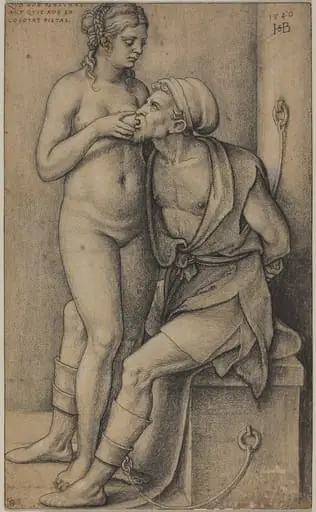
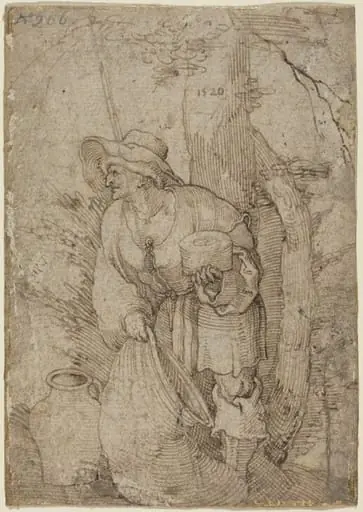

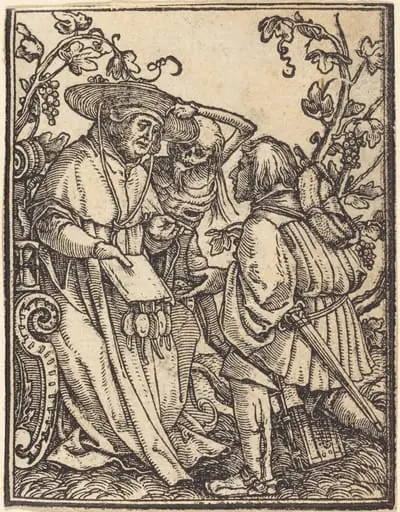 The Cardinal
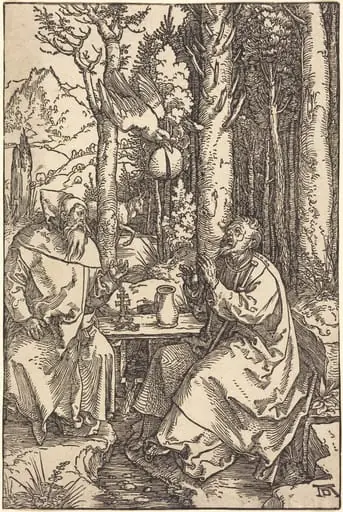 Saint Anthony and Saint Paul in the Wilderness
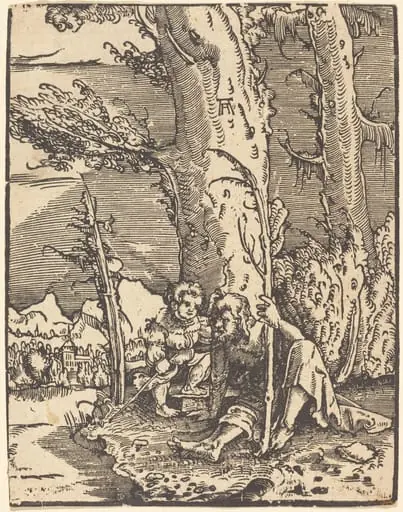 Saint Christopher Seated by a River Bank
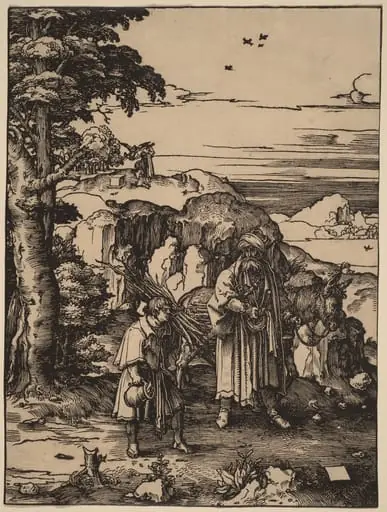 Abraham Going to Sacrifice Isaac
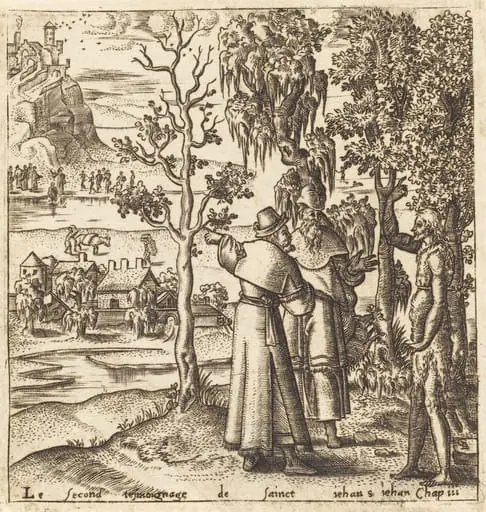 The Testimony of John
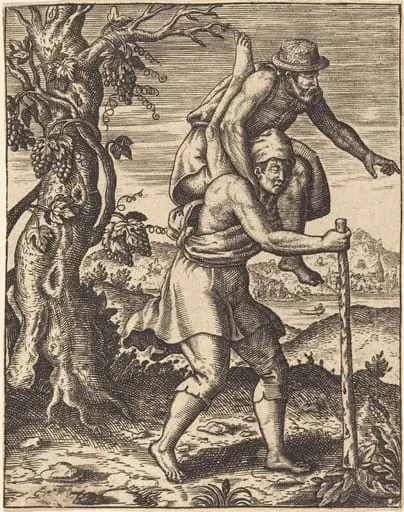 Exempel und Lehr Jetziger Welt Lauf
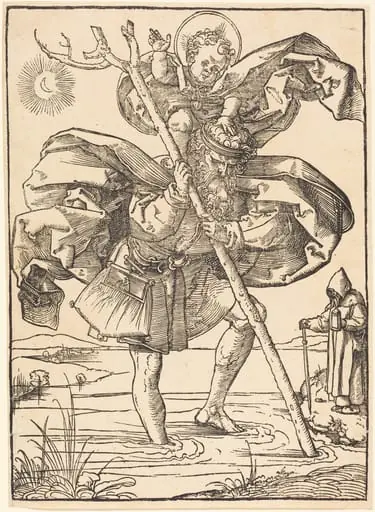 Saint Christopher
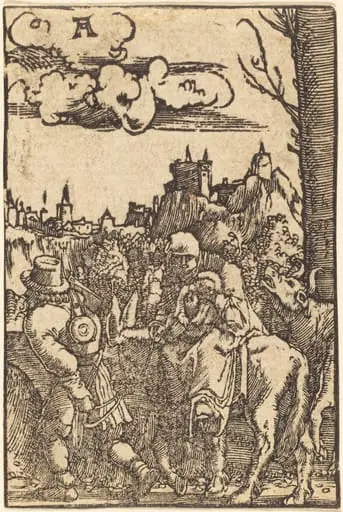 The Flight into Egypt
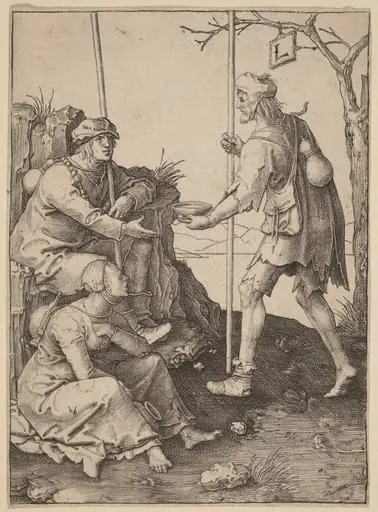 The Beggars
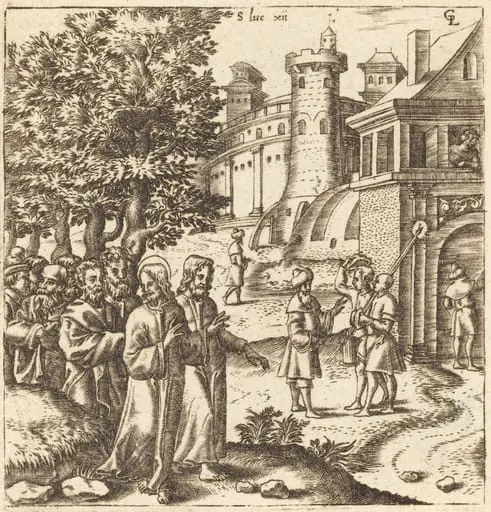 Christ Teaching the Multitude
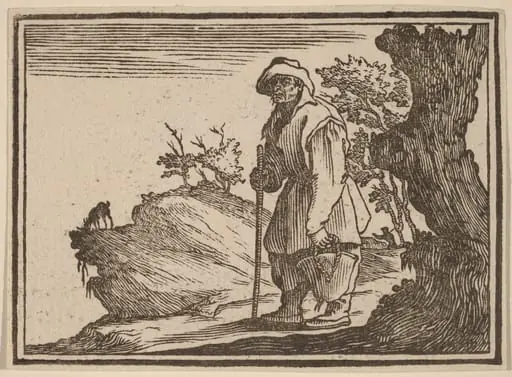 Peasant with Sack
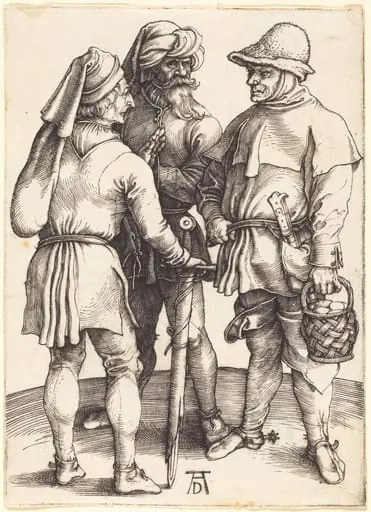 Three Peasants in Conversation