Artwork
Spes (Hope)
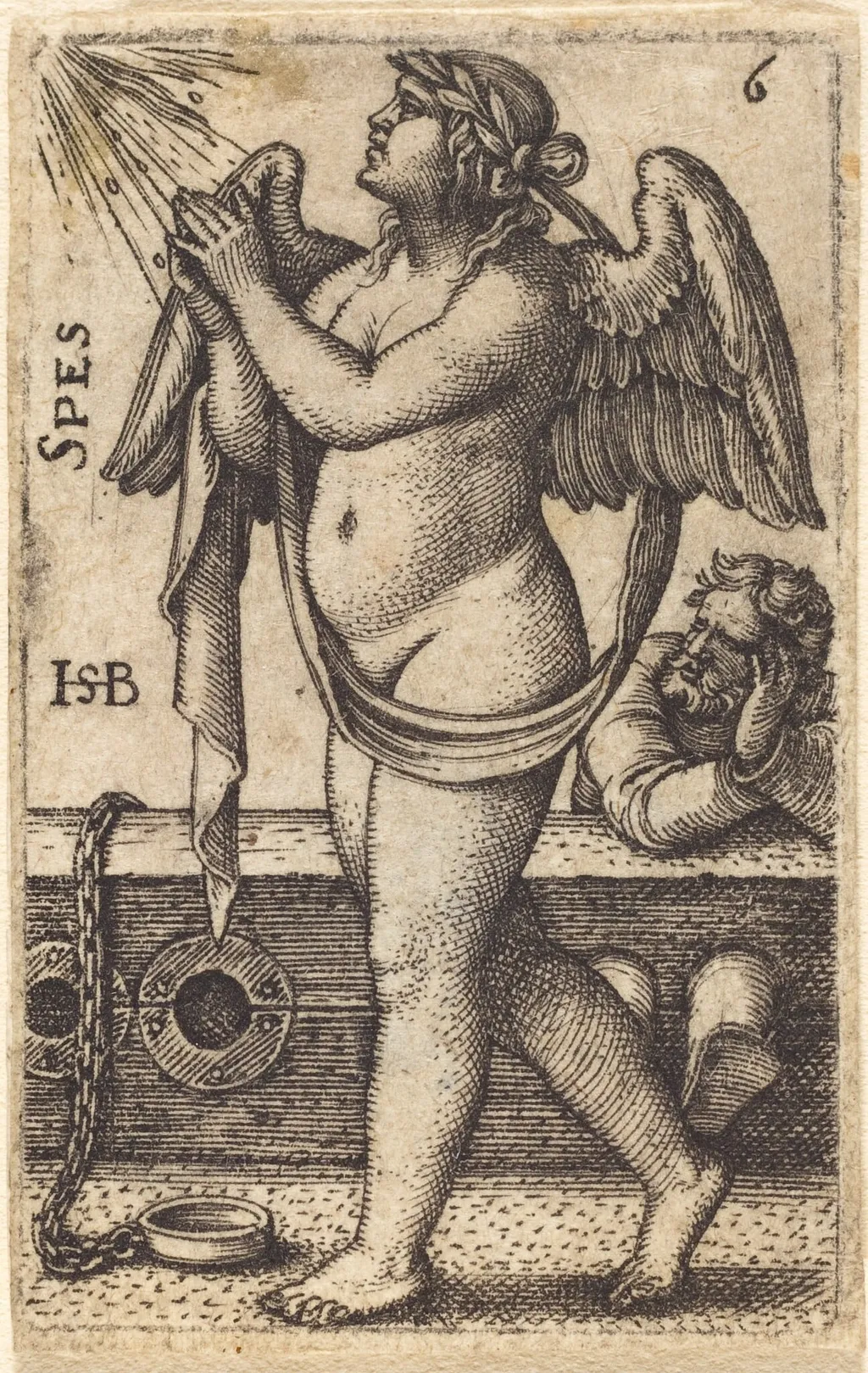
Spes (Hope) is an ink print by the Renaissance artist Sebald Beham. It dates from 1539 and is held in the collection of the National Gallery of Art.
About this work
Overview
Sebald Beham, a Nuremberg-based artist active in the early 16th century, produced *Spes (Hope)* in 1539 as part of his extensive series of small engravings.
Sebald Beham, a Nuremberg-based artist active in the early 16th century, produced *Spes (Hope)* in 1539 as part of his extensive series of small engravings. A leading figure among the so-called Little Masters, Beham specialized in finely detailed prints that reflected the legacy of Albrecht Dürer while developing a distinctive, intimate style. This work exemplifies his technical precision and thematic engagement with allegorical subjects, rendered in the demanding medium of metal engraving.
Subject & Meaning
The engraving depicts Hope personified as a robust, winged figure leaning over a diminished man who clutches a broken column and an empty bowl. The standing figure holds a banner emitting rays, symbolizing divine or transcendent promise. The contrast between the two forms conveys a narrative of resilience: the fallen represents despair or human frailty, while the winged entity offers unseen support, suggesting hope as an active, guiding force rather than passive wish.
Technique & Style
Beham employed fine, controlled lines to carve the image into a metal plate, creating sharp contrasts between light and shadow. Musculature, fabric folds, and the texture of the broken column are rendered with meticulous hatching and cross-hatching. The composition’s clarity and small scale reflect the Little Masters’ focus on detail over grandeur. Despite its modest size, the engraving achieves dramatic tension through precise tonal gradations and balanced asymmetry.
History & Provenance
Created during Beham’s mature period, *Spes* belongs to a body of approximately 252 engravings he produced between the 1520s and 1540s. These works circulated widely across Europe, often collected by humanist patrons and scholars. While the specific early ownership of this print is undocumented, its survival in multiple institutional collections suggests it was valued for its craftsmanship and moral symbolism during the Reformation era.
Context
In the decades following the Protestant Reformation, allegorical imagery like *Spes* served as a secular counterpart to religious iconography, offering moral guidance without direct biblical reference. Beham’s engagement with classical themes—Latin names, mythic figures—reflected Renaissance humanism’s revival of antiquity. His prints, though small, addressed universal concerns: endurance, loss, and the quiet persistence of hope amid uncertainty.
Legacy
Beham’s engravings, including *Spes*, influenced later Northern European printmakers through their technical discipline and psychological nuance. Though less celebrated than Dürer, his work contributed to the evolution of the miniature allegory as a vehicle for introspection. Today, *Spes* remains a key example of how small-scale prints could convey complex moral narratives, bridging medieval symbolism and early modern humanist thought.
Artist & collection
Artist
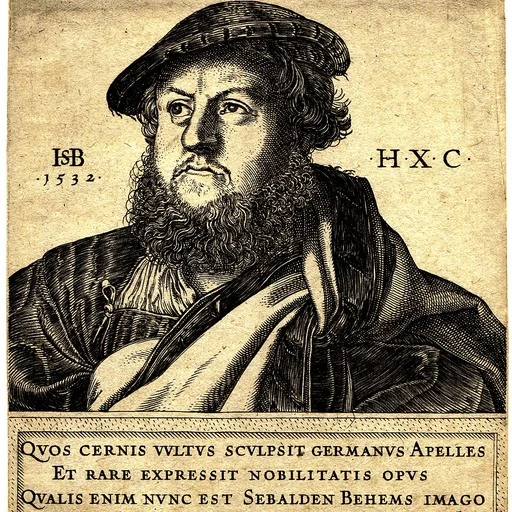
Sebald Beham (1500–1550) was a German painter and printmaker, mainly known for his very small engravings.


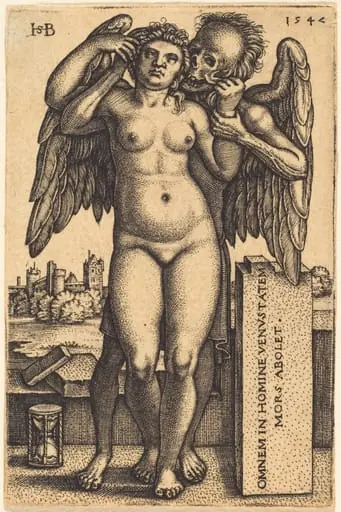 Death and the Maiden
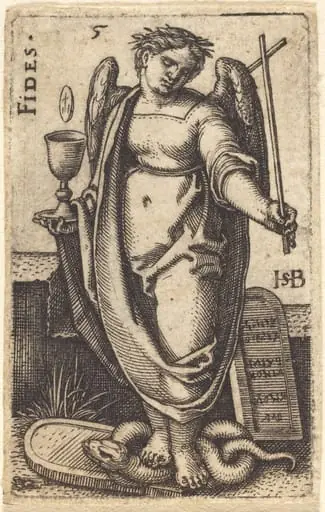 Fides (Faith)
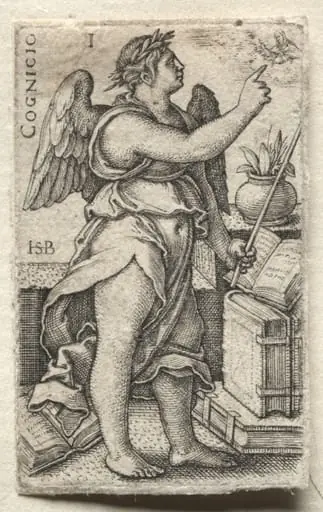 The Knowledge of God and the Seven Cardinal Virtues
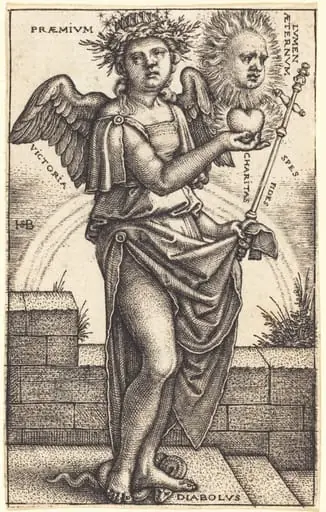 Allegory of Christianity
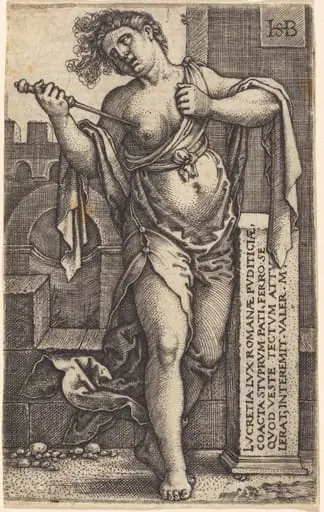 Lucretia Standing
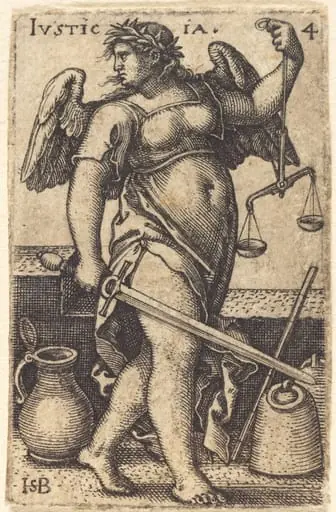 Justicia (Justice)
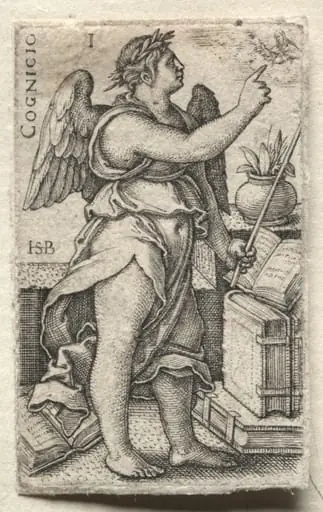 The Knowledge of God and the Seven Cardinal Virtues: Knowledge of God - Cognicio
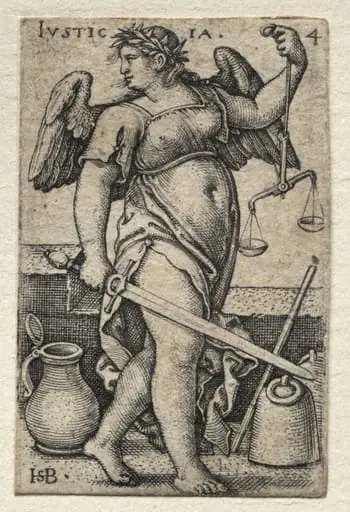 The Knowledge of God and the Seven Cardinal Virtues: Justice - Justicia
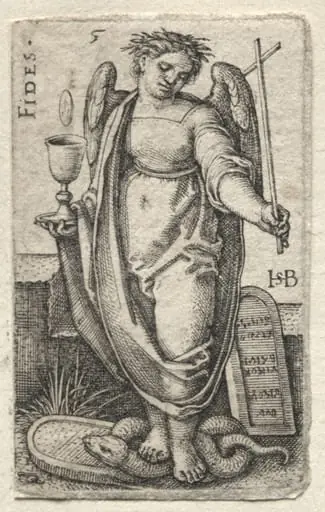 The Knowledge of God and the Seven Cardinal Virtues: Fidelity - Fides
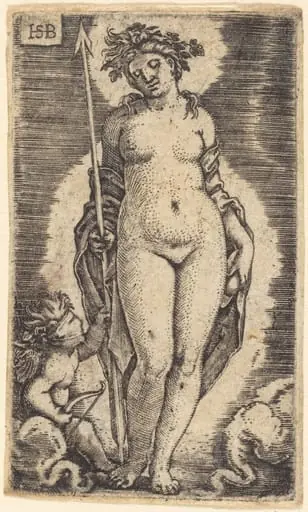 Venus and Cupid