Artwork
The Agony in the Garden
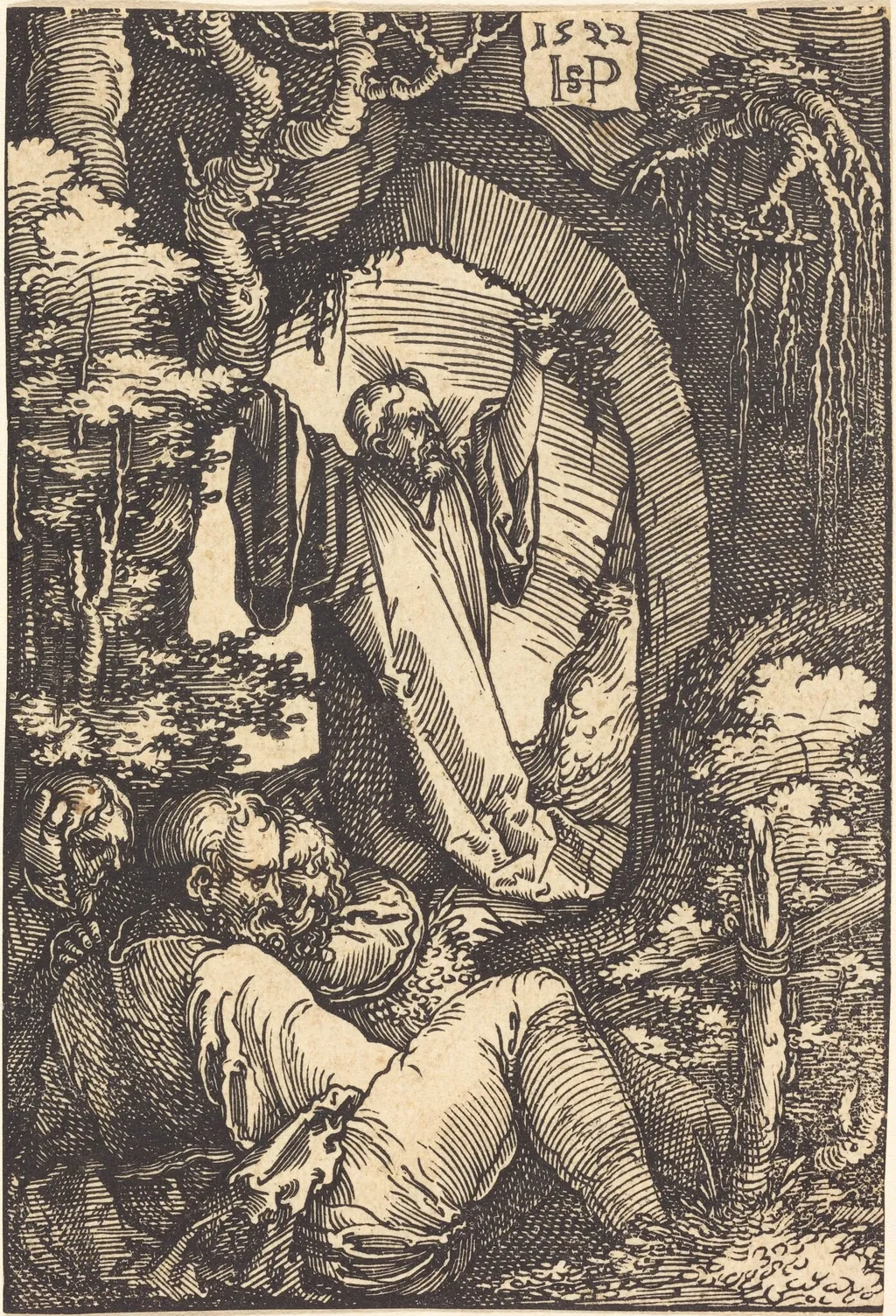
The Agony in the Garden is an ink print by the Renaissance artist Sebald Beham. It dates from 1522 and is held in the collection of the National Gallery of Art.
About this work
Overview
The Agony in the Garden is a woodcut on laid paper created by Sebald Beham in 1522. It exemplifies the artist's skill in small-scale printmaking and reflects the period's emphasis on detailed and intricate designs.
Subject & Meaning
The woodcut depicts Christ's agony in the Garden of Gethsemane, a pivotal biblical scene. Three figures are shown in a dark, turbulent environment, conveying a sense of intensity and emotional depth.
Technique & Style
Beham achieved depth and texture in the work using black ink on laid paper, with overlapping and twisting lines that create a dynamic interplay between light and shadow. The woodcut technique, involving carving into wood and printing, allowed for the creation of intricate and detailed designs.
History & Provenance
Sebald Beham, a German painter and printmaker associated with the 'Little Masters,' was born in Nuremberg and later worked in Frankfurt. His work is characteristic of the period's German printmaking, influenced by Albrecht Dürer.
Context
The Agony in the Garden is a product of a period when German printmakers were producing highly detailed woodcuts, often drawing on biblical themes and motifs.
Artist & collection
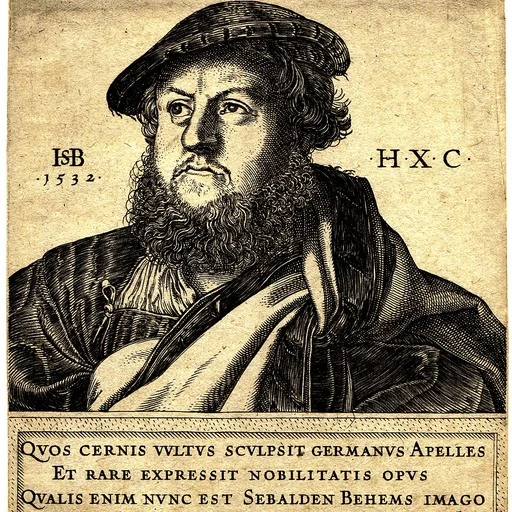
Artist
Sebald Beham (1500–1550) was a German painter and printmaker, mainly known for his very small engravings.


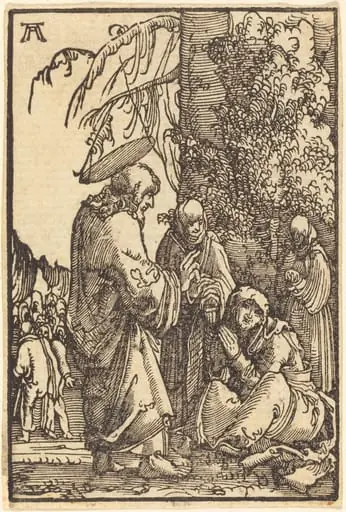 Christ Taking Leave of his Mother
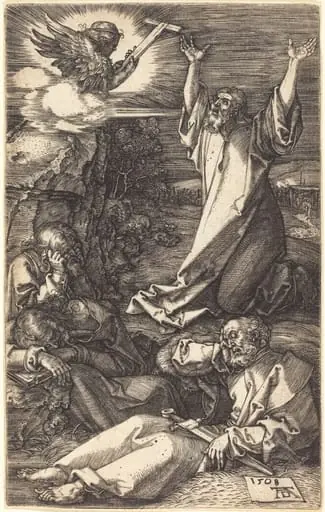 Christ on the Mount of Olives
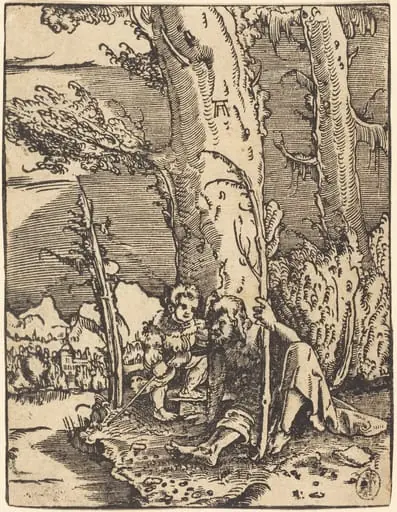 Saint Christopher Seated by a River Bank
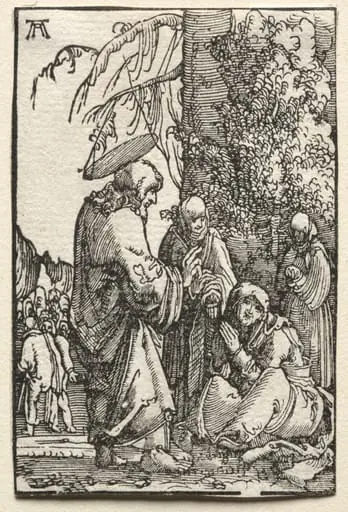 The Fall and Redemption of Man: Christ Taking Leave of His Mother before the Passion
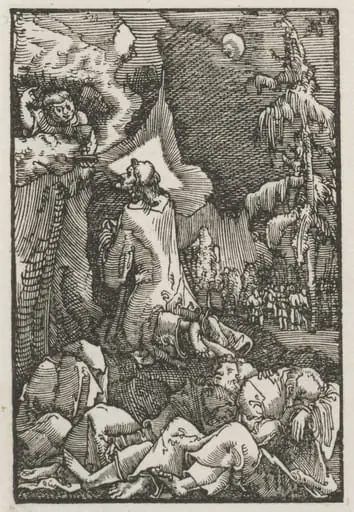 The Fall and Redemption of Man: Christ on the Mount of Olives
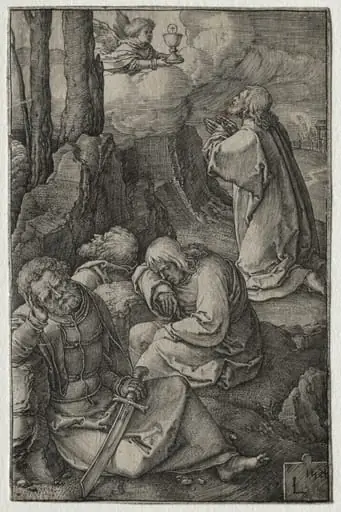 The Passion: The Agony in the Garden
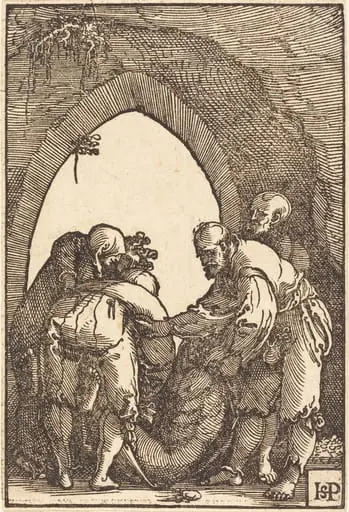 The Entombment
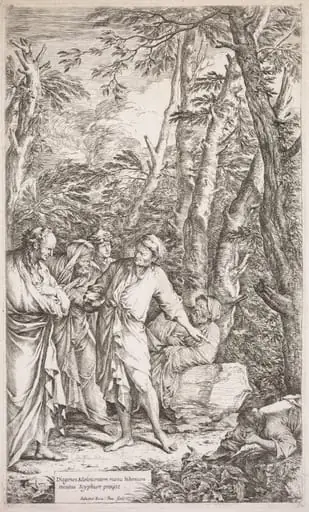 Diogenes and His Cup
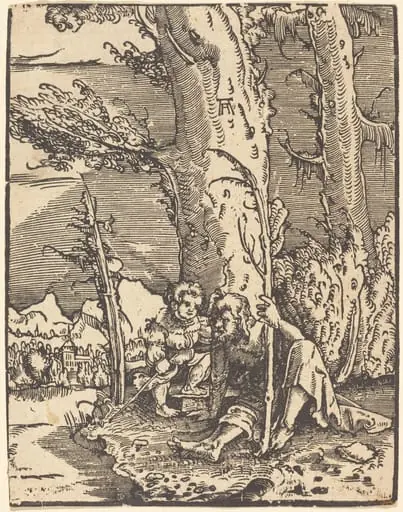 Saint Christopher Seated by a River Bank