Artwork
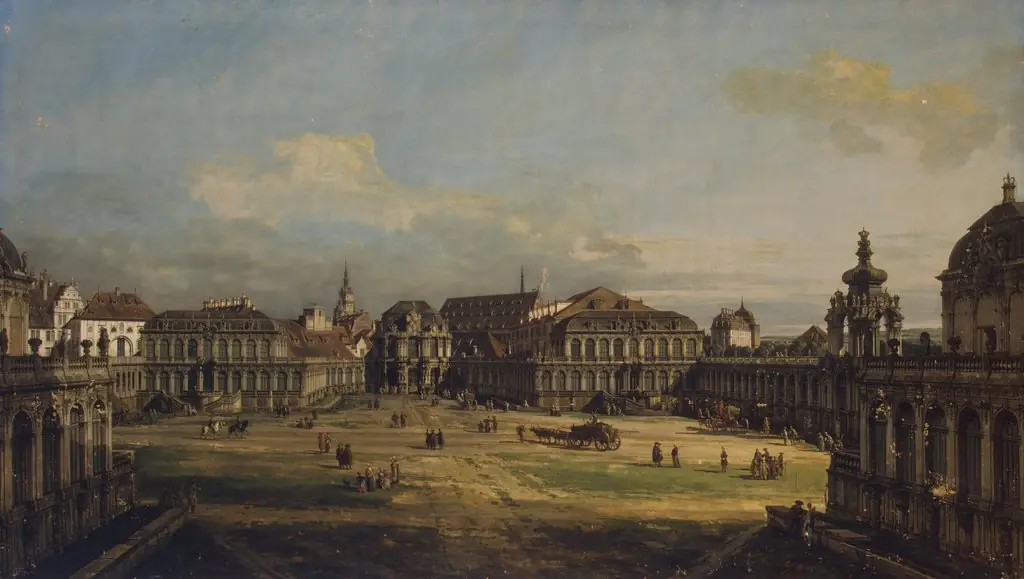
Oraș cu cetățuie
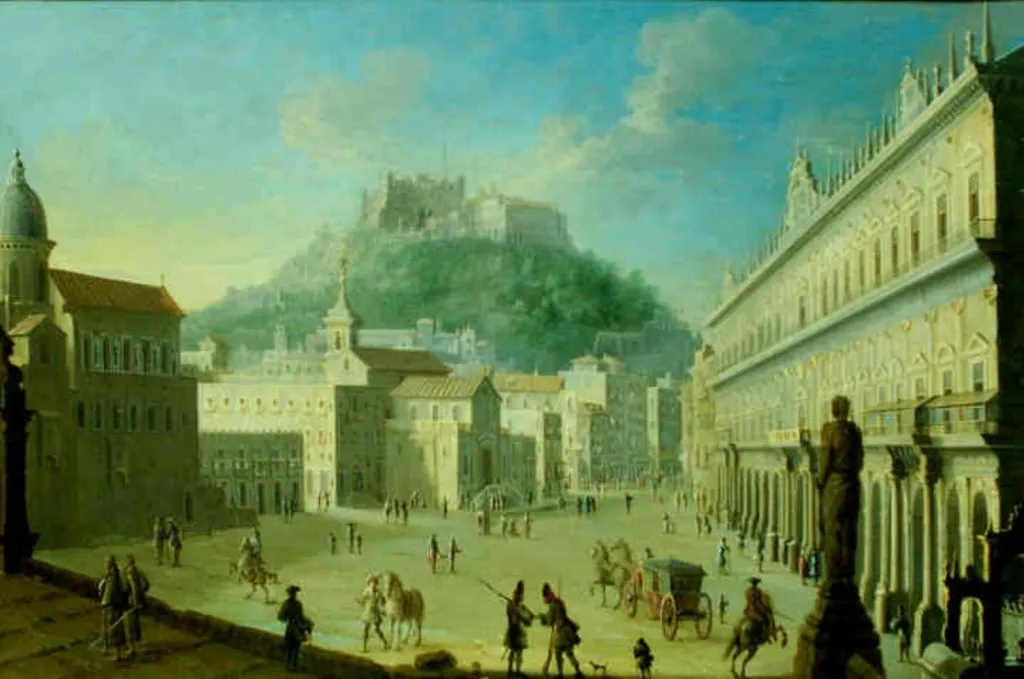
Oraș cu cetățuie is an unspecified painting by the Rococo painting artist Bernardo, zis Il Canaletto Bellotto. It dates from 1750 and is held in the collection of the Art museum of Craiova.
About this work
Overview
Created around 1750, “Oraș cu cetățuie” is an oil painting by the Italian vedutista Bernardo Bellotto, known as Il Canaletto. The work is part of the collection of the Museum of Ethnography. It depicts a broad urban square framed by tall, light‑colored façades, with figures on foot and horseback, a few horse‑drawn carriages, and a distant rocky outcrop topped by a domed church.
Subject & Meaning
The composition presents a bustling yet orderly civic space, emphasizing the relationship between architecture and daily life.
The composition presents a bustling yet orderly civic space, emphasizing the relationship between architecture and daily life. The central square, emptied of large crowds, suggests a moment of quiet transit, while the surrounding structures convey the stability of the city’s built environment. The distant rock and church provide a visual anchor, hinting at the town’s geographical and spiritual landmarks.
Technique & Style
Bellotto employs a delicate handling of light that renders the pale façades with a luminous glow, while the shadows remain soft, creating a subtle depth. The precise rendering of cobblestones, horse‑drawn vehicles, and human figures reflects his meticulous veduta approach, combining topographical accuracy with atmospheric effects that guide the viewer’s eye through the scene.
History & Provenance
Attributed to Bellotto’s mature period, the painting likely originated from his series of urban views produced for patrons interested in Northern European locales. It entered the Museum of Ethnography’s holdings through a 20th‑century acquisition, though the exact path of ownership prior to that remains undocumented in public records.
Context
Bellotto, the nephew of the famed Canaletto, traveled extensively across Central and Eastern Europe, documenting cities with a blend of artistic skill and cartographic precision. This work reflects his interest in portraying the civic architecture of lesser‑known towns, aligning with the Enlightenment era’s fascination with urban planning and the visual cataloguing of European landscapes.
Artist & collection

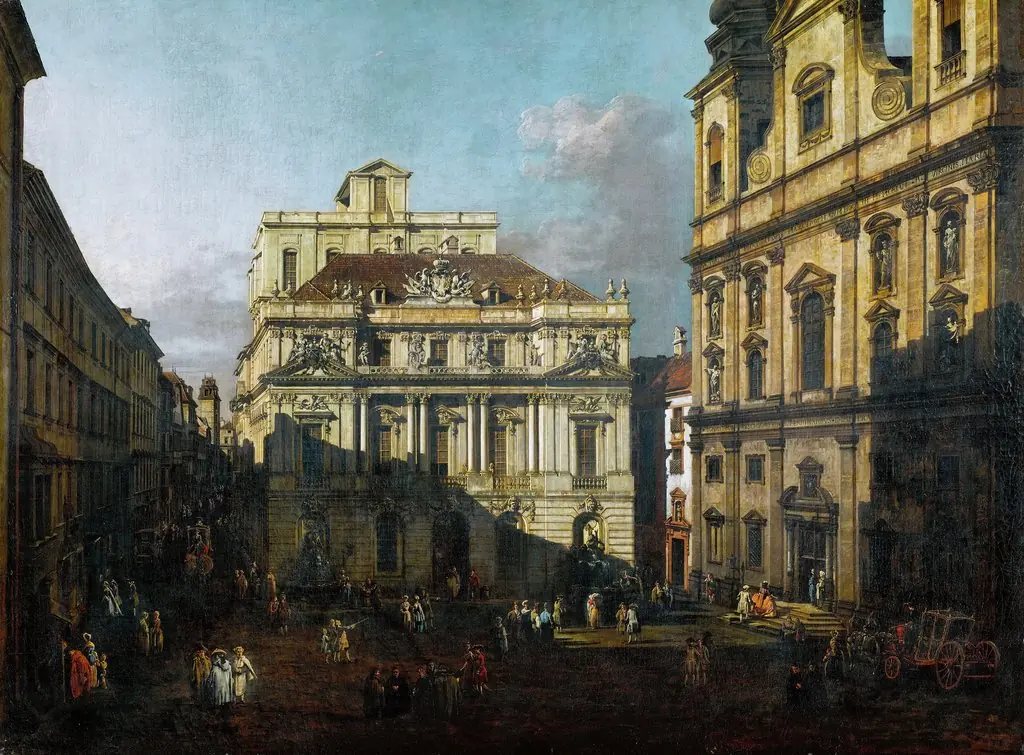 Universitätsplatz in Vienna
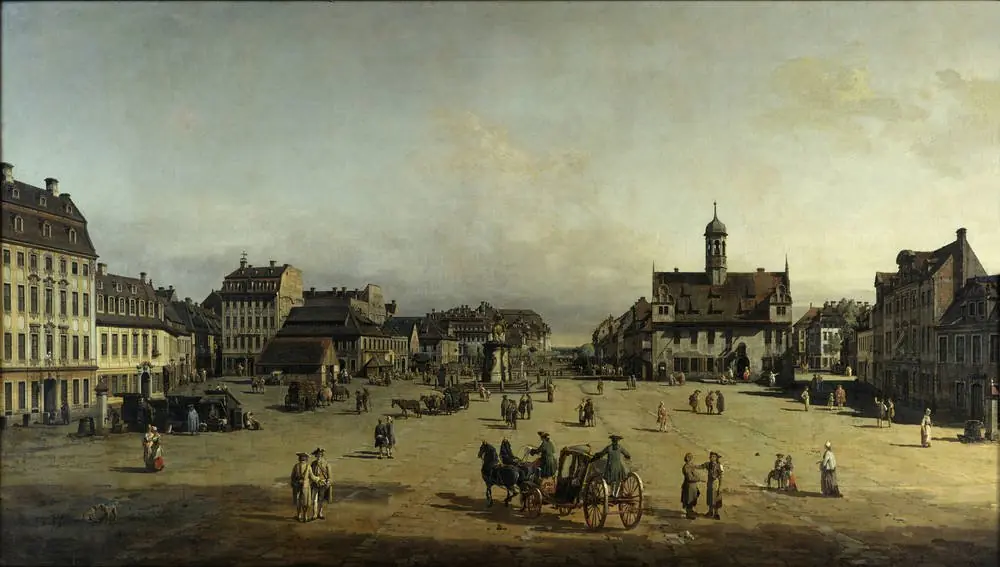 The New Market in Dresden
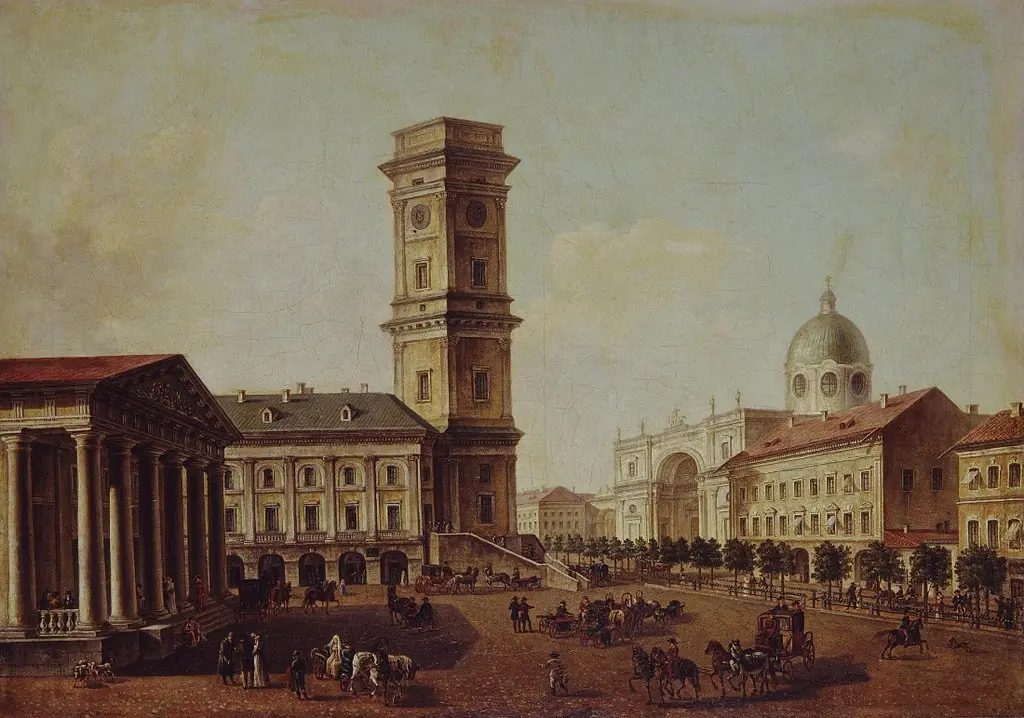 The View of Nevsky Prospect near the City Duma in St Petersburg
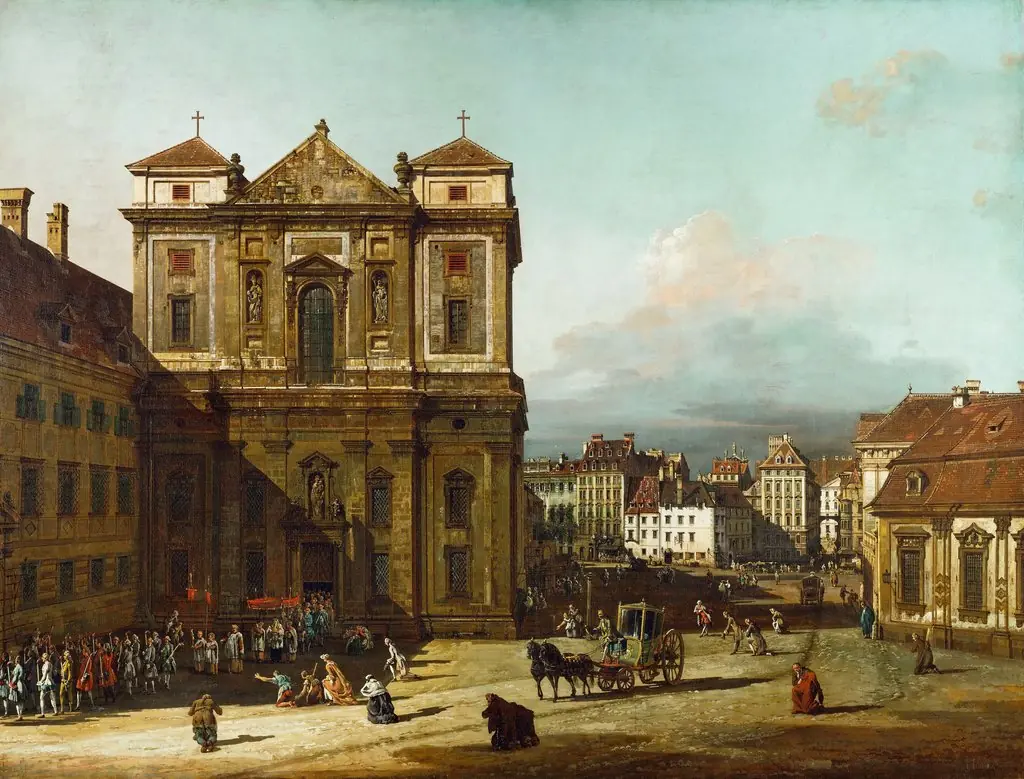 The Freyung in Vienna, from the North-West
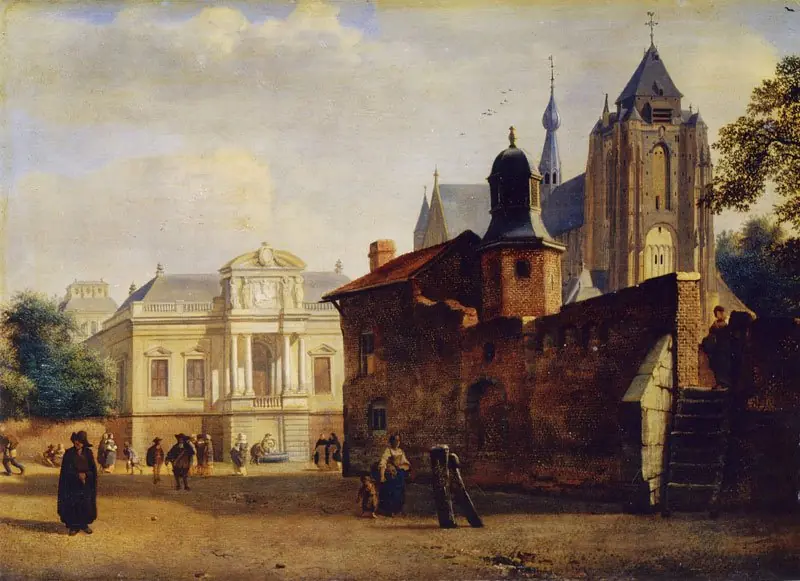 The Great Church in Veere with a Fantasy Villa
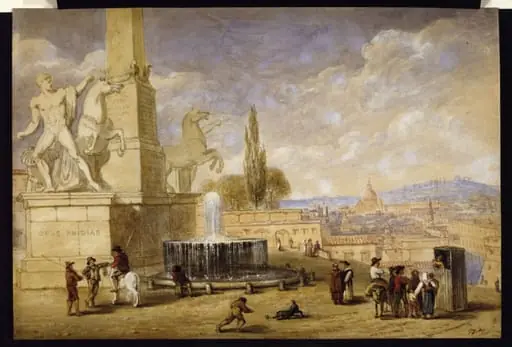 Monte Cavallo, Rome
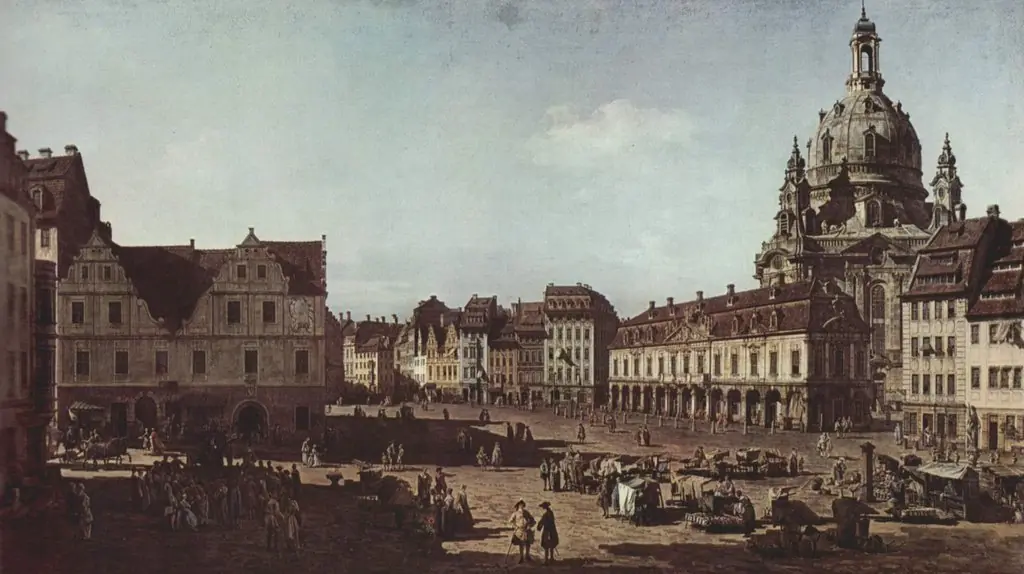 The New Market in Dresden from Moritzstraße
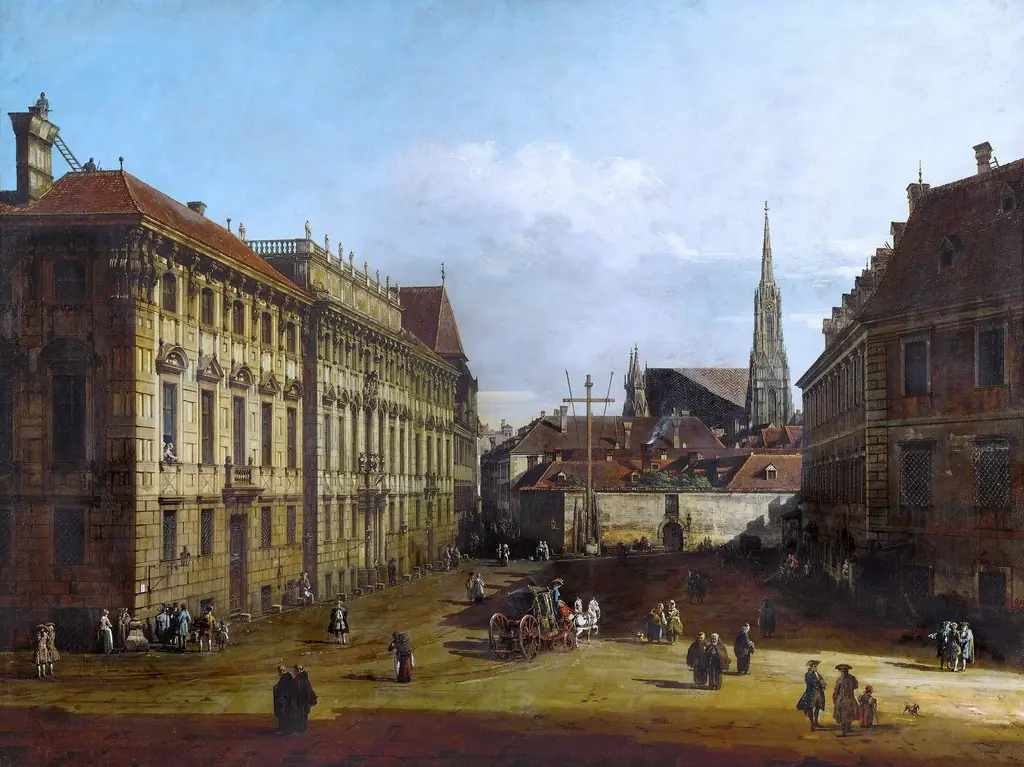 Lobkowitzplatz in Vienna
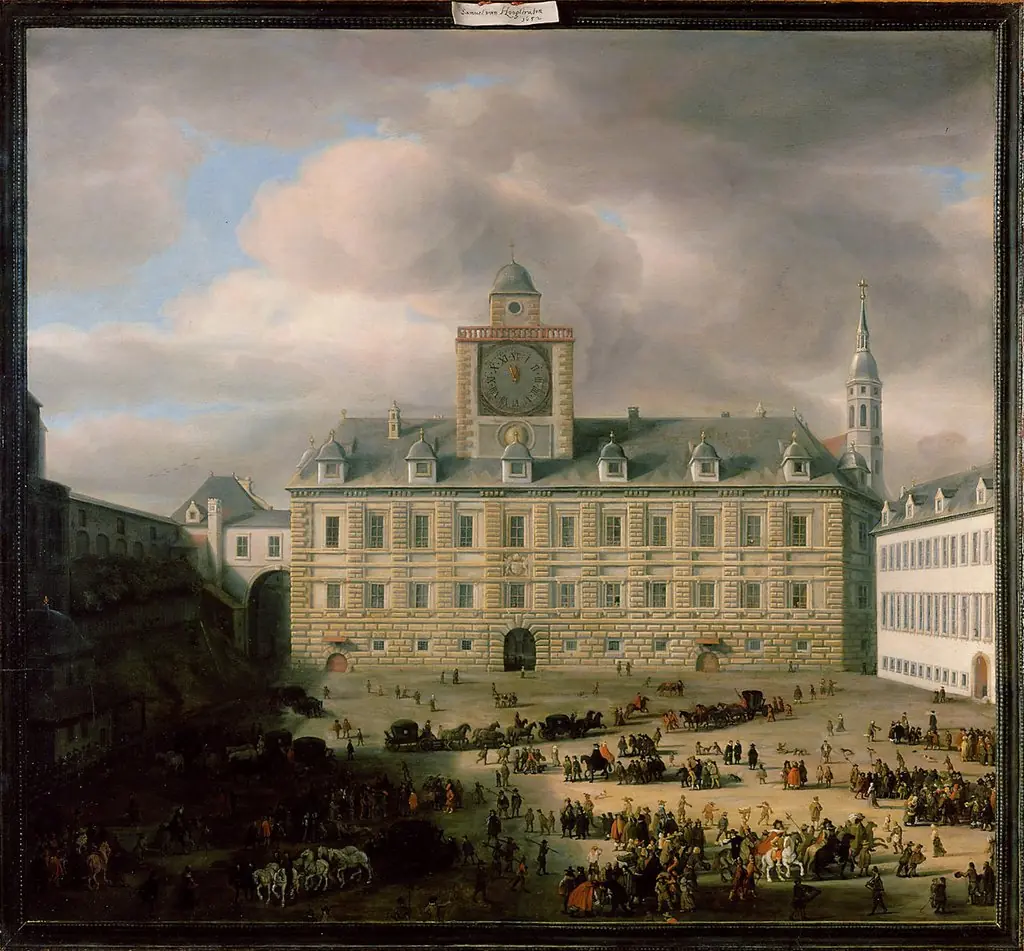 View of the Hofburg in Vienna
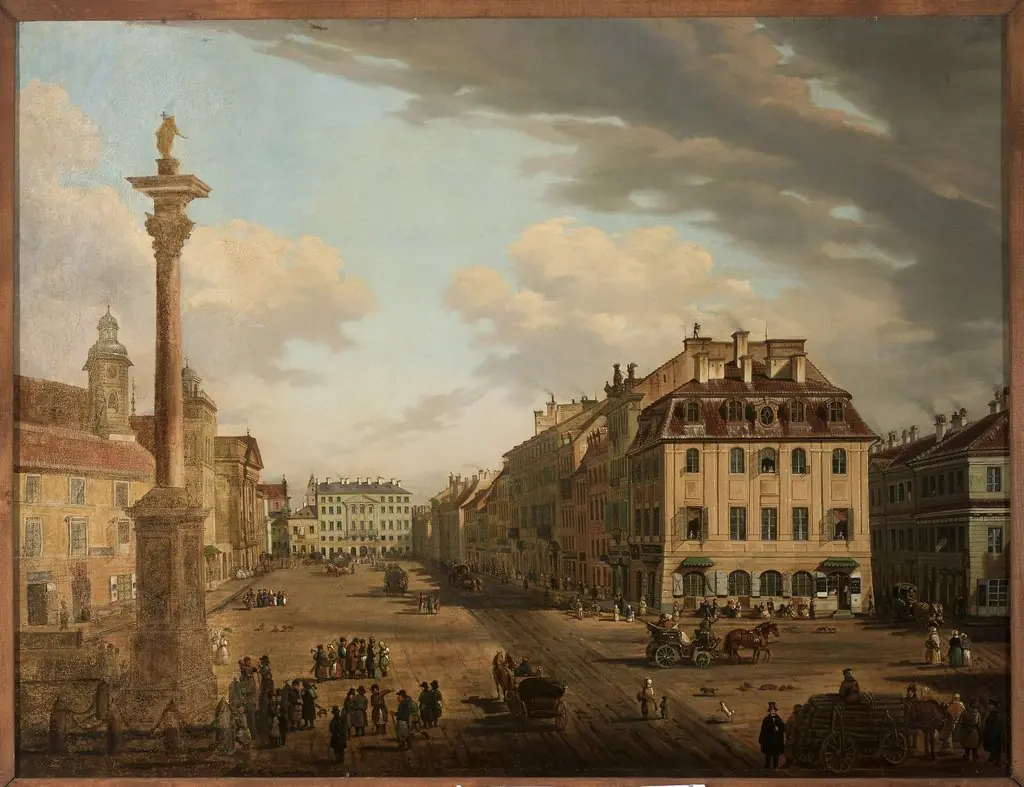 View from the Castle Square towards Krakowskie Przedmieście
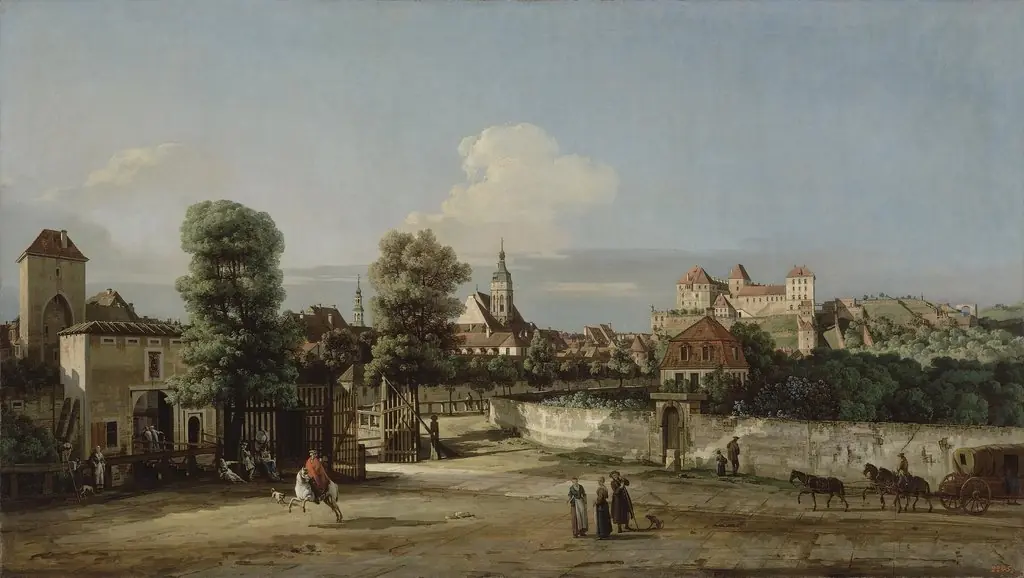 View of Pirna from the West, from the Corner of Wide Street
 Zwinger in Dresden