Artwork
Woman before a Fire
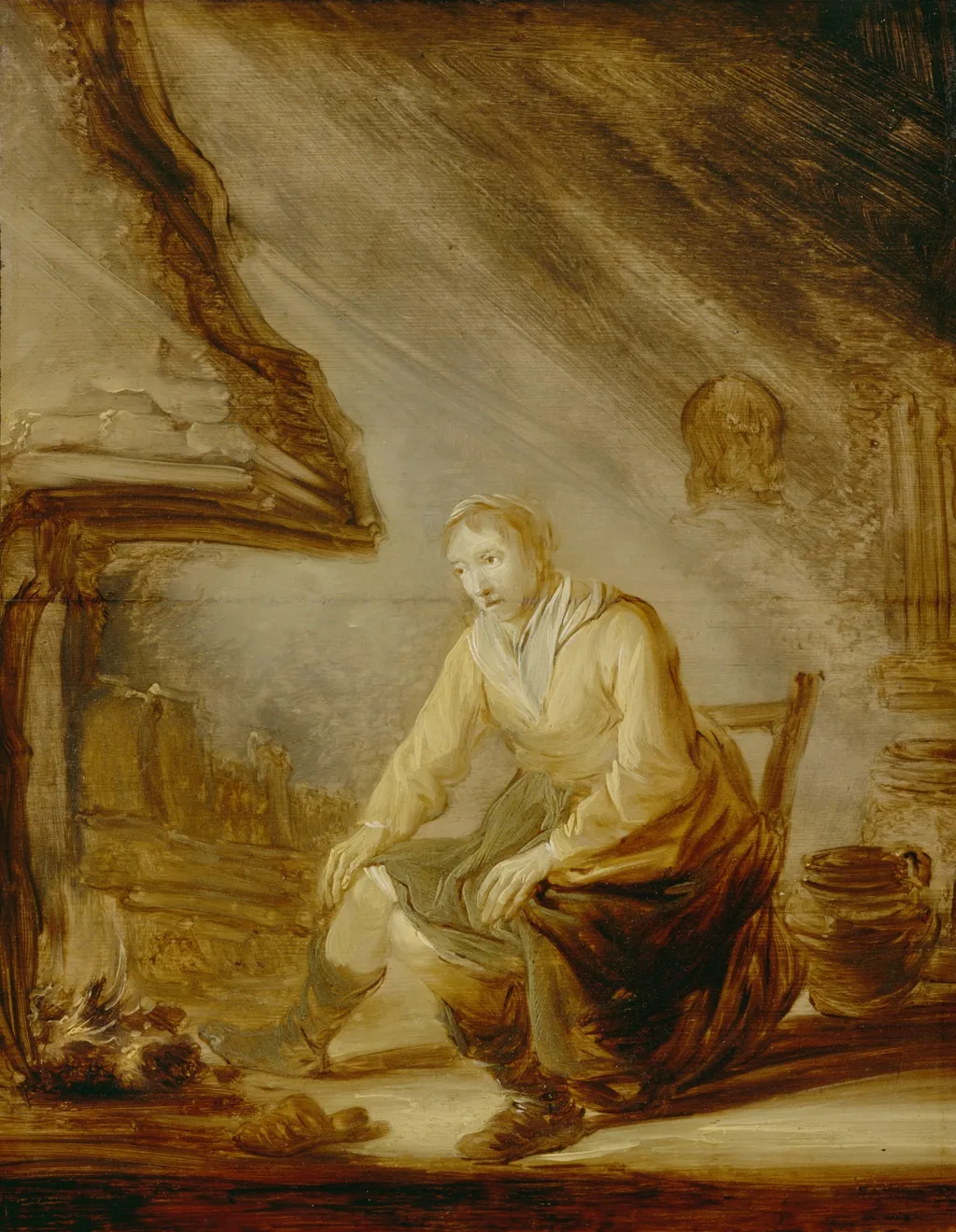
Woman before a Fire is an unspecified painting by the Dutch Golden Age artist Benjamin Gerritsz Cuyp. It dates from 1640 and is held in the collection of the Detroit Institute of Arts.
About this work
Overview
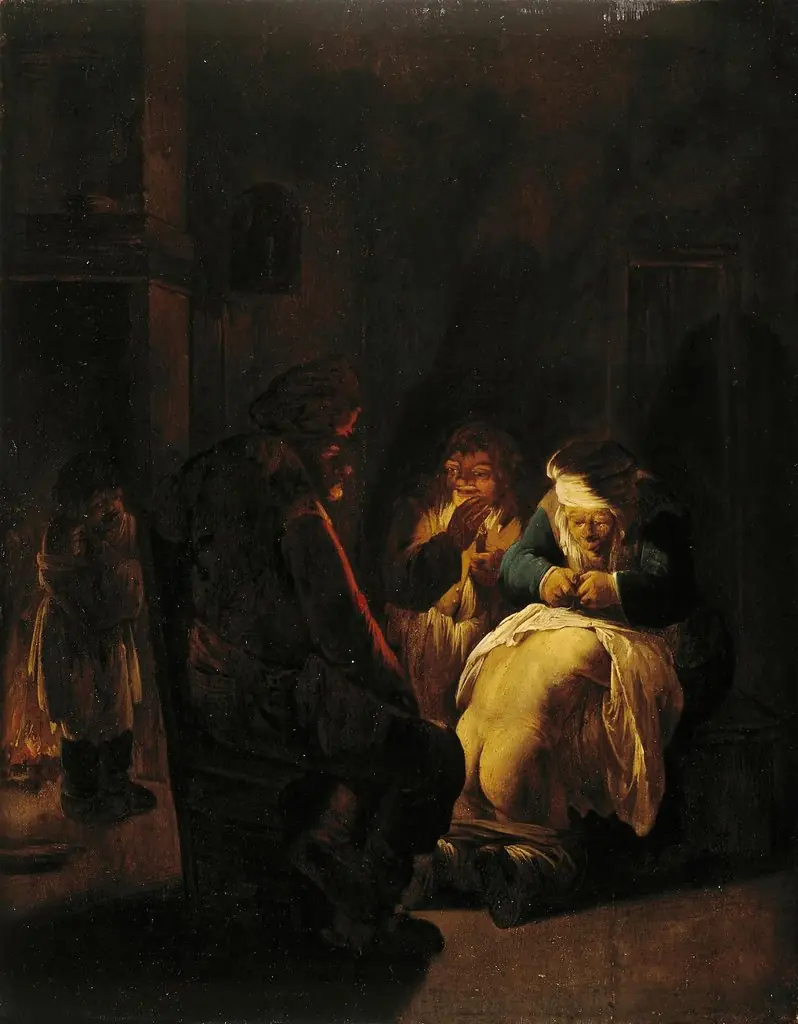
Painted in 1640 by Benjamin Gerritsz Cuyp, Woman before a Fire is a small-scale oil on panel depicting a solitary woman seated near a hearth. The work resides in the Detroit Institute of Arts and exemplifies Dutch genre painting of the mid-seventeenth century. Its quiet composition and restrained palette reflect an interest in domestic stillness rather than narrative drama.
Subject & Meaning
The absence of narrative action or symbolic objects shifts focus to the immediacy of the moment, emphasizing solitude and the comfort of routine.
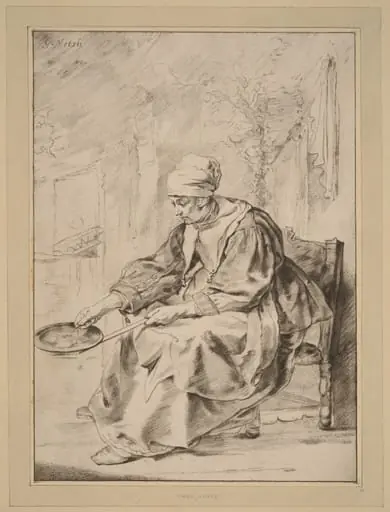
The figure, dressed in modest clothing with a white headscarf, sits calmly before a low fire, hands folded in her lap. Her gaze is inward, suggesting introspection or quiet repose. The absence of narrative action or symbolic objects shifts focus to the immediacy of the moment, emphasizing solitude and the comfort of routine. The scene invites contemplation without overt moral or religious interpretation.
Technique & Style
Cuyp employs subtle chiaroscuro to model the woman’s form, using the fire’s glow to define her features and the surrounding space. The warm light contrasts with the cool shadows of the room, creating depth without theatricality. Brushwork is restrained, favoring smooth transitions over texture, reinforcing the painting’s serene mood. The limited palette—yellow, dark browns, and muted whites—enhances the intimacy of the setting.
History & Provenance
The painting entered the Detroit Institute of Arts’ collection in the early 20th century, though its earlier ownership remains undocumented. It was likely produced for a private Dutch patron, as such intimate genre scenes were popular in middle-class households. No records of exhibition or significant alteration exist prior to its acquisition by the museum.
Context
In 1640s Holland, domestic interiors were a favored subject among painters, reflecting societal values of order, modesty, and private virtue. Cuyp, influenced by his uncle Aelbert Cuyp and contemporaries like Rembrandt, focused on naturalistic lighting and unembellished moments. This work aligns with a broader trend of portraying everyday life with psychological nuance rather than grandeur.
Legacy
Woman before a Fire contributes to the understanding of how Dutch artists captured quiet human experience through light and composition. While not widely reproduced, it remains a representative example of Cuyp’s genre work and the era’s preference for understated emotional resonance. Its preservation allows ongoing study of 17th-century domestic aesthetics and painterly restraint.
Own this work as a print
Artist & collection