Artwork
Enthroned Virgin and Child, with the Cardinal Virtues and Two Figures Holding Scrolls
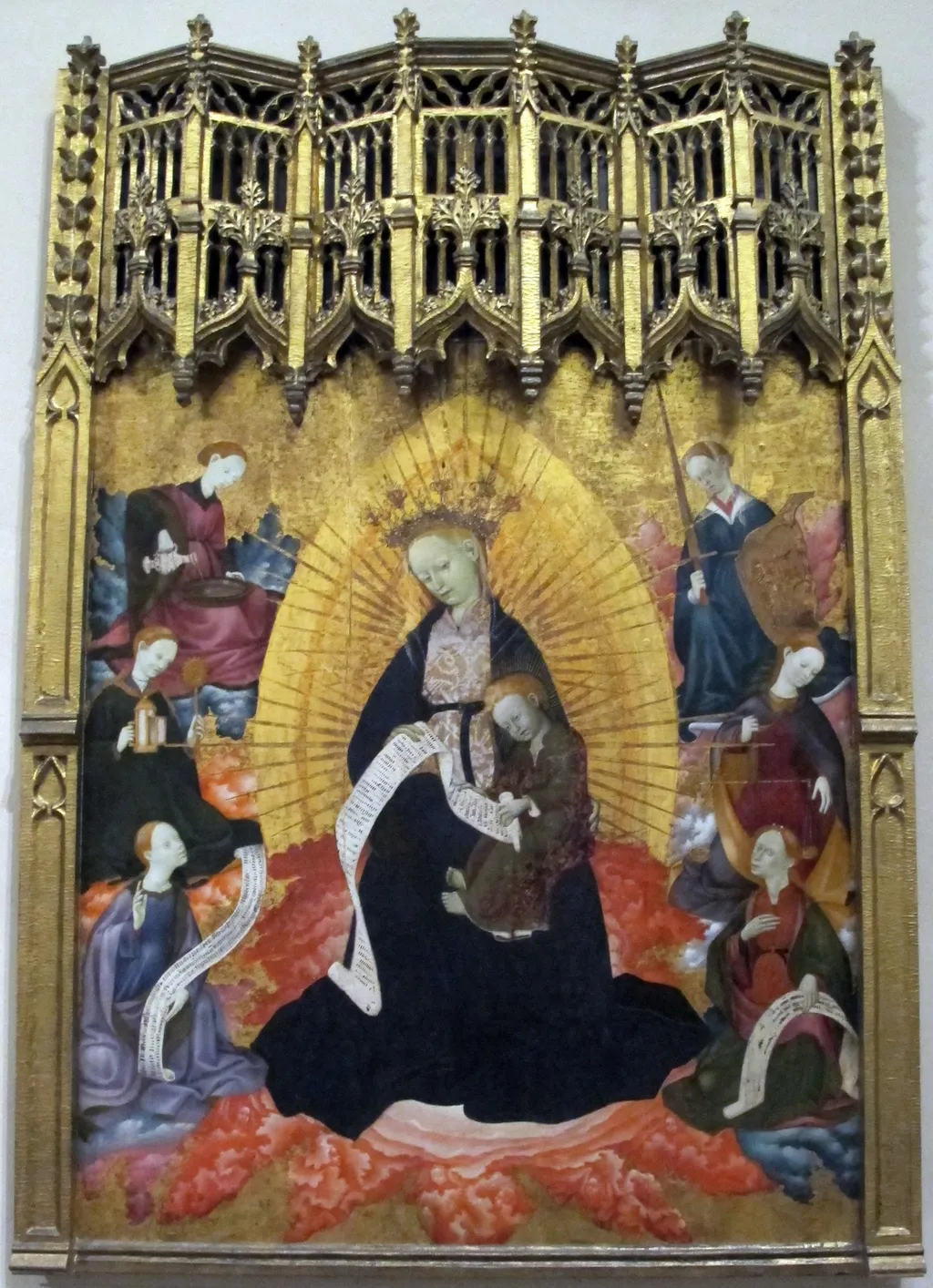
Enthroned Virgin and Child, with the Cardinal Virtues and Two Figures Holding Scrolls is an unspecified painting by the Northern Renaissance artist Bernat Martorell. It is held in the collection of the Philadelphia Museum of Art.
About this work
Overview
The composition is set against a gold ground with a decorative red-and-white border at the base, typical of late medieval altarpiece conventions in Catalonia.
Painted in 1496 by Bernat Martorell, this devotional panel depicts the Virgin Mary seated on a throne with the Christ Child on her lap. Surrounding them are eight figures representing theological and cardinal virtues, along with two individuals holding scrolls. The composition is set against a gold ground with a decorative red-and-white border at the base, typical of late medieval altarpiece conventions in Catalonia.
Subject & Meaning
The Virgin and Child occupy the central focus, symbolizing divine authority and maternal grace. The surrounding figures personify the four Cardinal Virtues—Prudence, Justice, Fortitude, and Temperance—alongside two additional figures holding scrolls, likely representing scriptural or doctrinal authority. Their solemn gazes reinforce the sacred hierarchy, emphasizing reverence and spiritual order within the Christian worldview of the time.
Technique & Style
Martorell employed tempera on panel, a standard medium for Catalan altarpieces. The figures are rendered with refined linear detail and flat, decorative patterning, particularly in the drapery and halos. Gold leaf backgrounds and stylized crowns reflect Byzantine influences, while the rigid postures and frontal orientation prioritize symbolic presence over naturalistic space, aligning with late Gothic devotional aesthetics.
History & Provenance
The painting was originally part of a larger altarpiece commissioned for a church in Catalonia, likely for private devotion or liturgical use. It entered the Philadelphia Museum of Art’s collection in the early 20th century, having passed through private European holdings after the dissolution of monastic institutions in the 19th century. Its survival reflects its enduring value as a regional religious artifact.
Context
Created during the final decades of the Gothic period in Catalonia, the work reflects the region’s strong ties to both Iberian and Mediterranean artistic traditions. Religious imagery of this type served to instruct the faithful and affirm ecclesiastical authority. The inclusion of virtues alongside scriptural figures suggests a didactic purpose, reinforcing moral and theological ideals for viewers in a pre-Reformation context.
Legacy
Martorell’s panel remains a key example of late medieval Catalan painting, illustrating the persistence of symbolic representation well into the Renaissance era. While later styles favored perspective and naturalism, this work preserves the spiritual intensity and hierarchical composition characteristic of its time, offering insight into the visual language of devotion in pre-modern Spain.
Artist & collection

Artist
Bernat Martorell was the leading painter of Barcelona, in modern-day Spain. He is considered to be the most important artist of the International Gothic style in Catalonia. Martorell painted retable panels and…

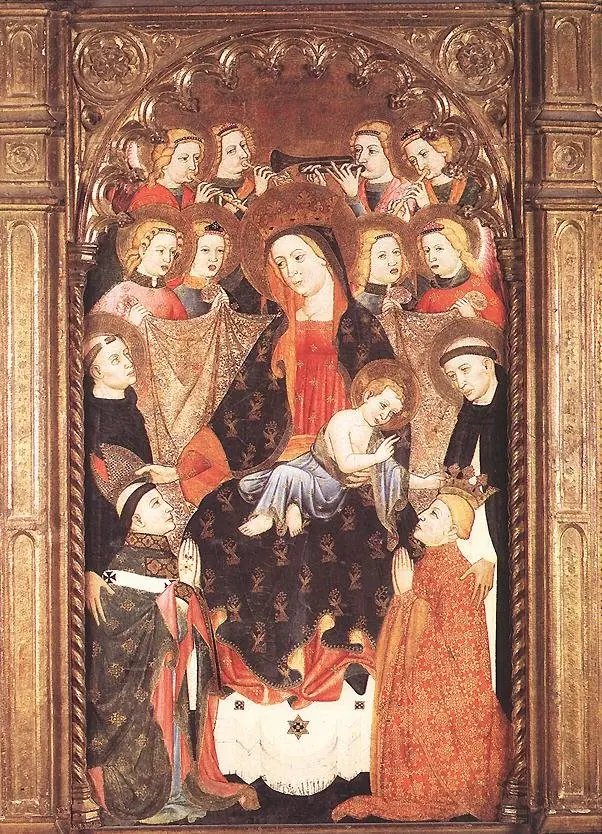 Virgin and Child with Angels and Saints
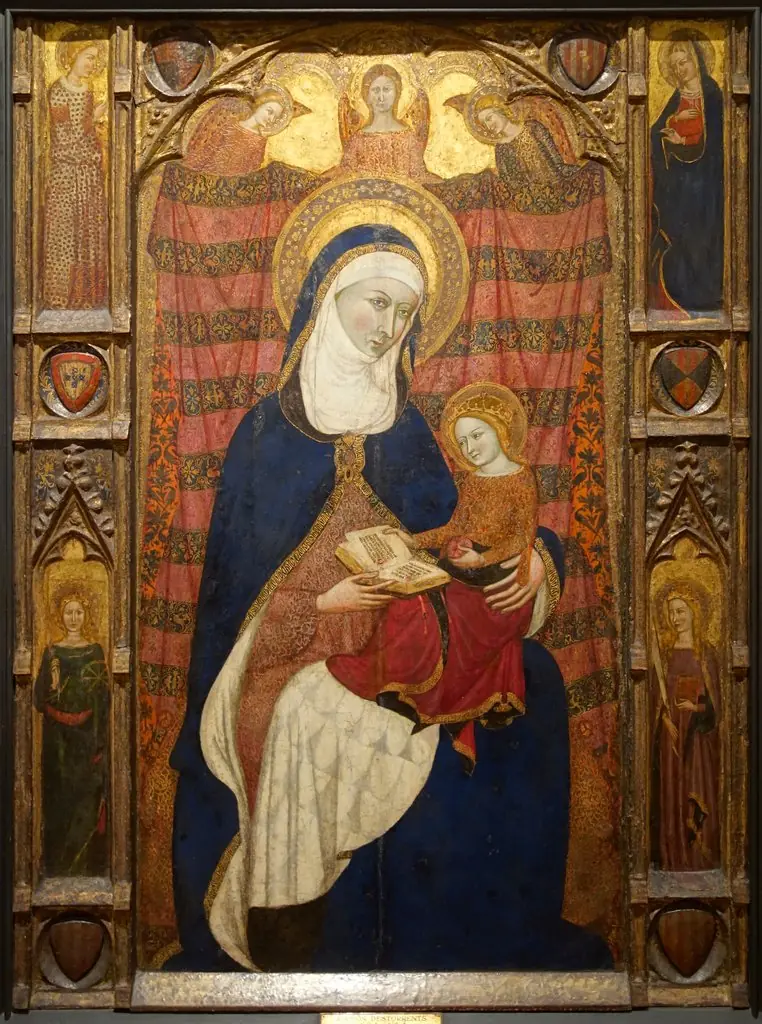 Retaule de Santa Anna i la Mare de Déu
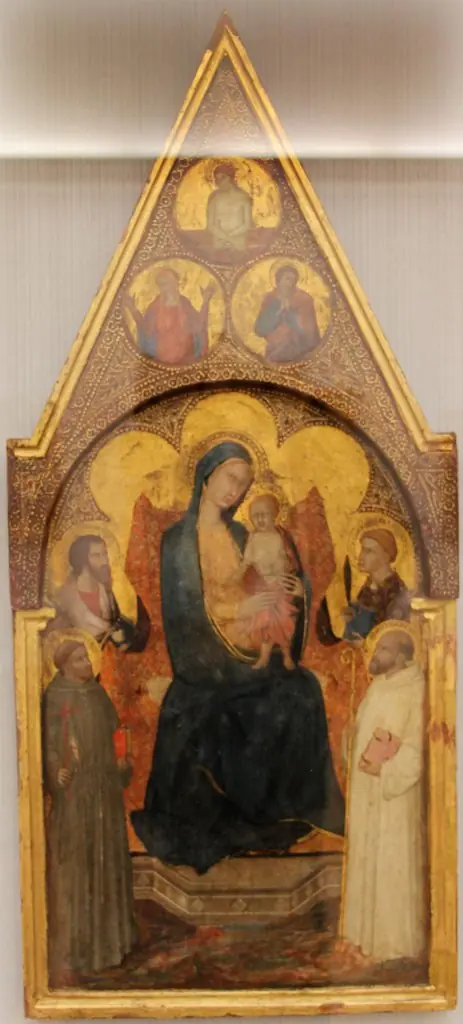 Thronende Maria mit dem Kind und vier Heiligen
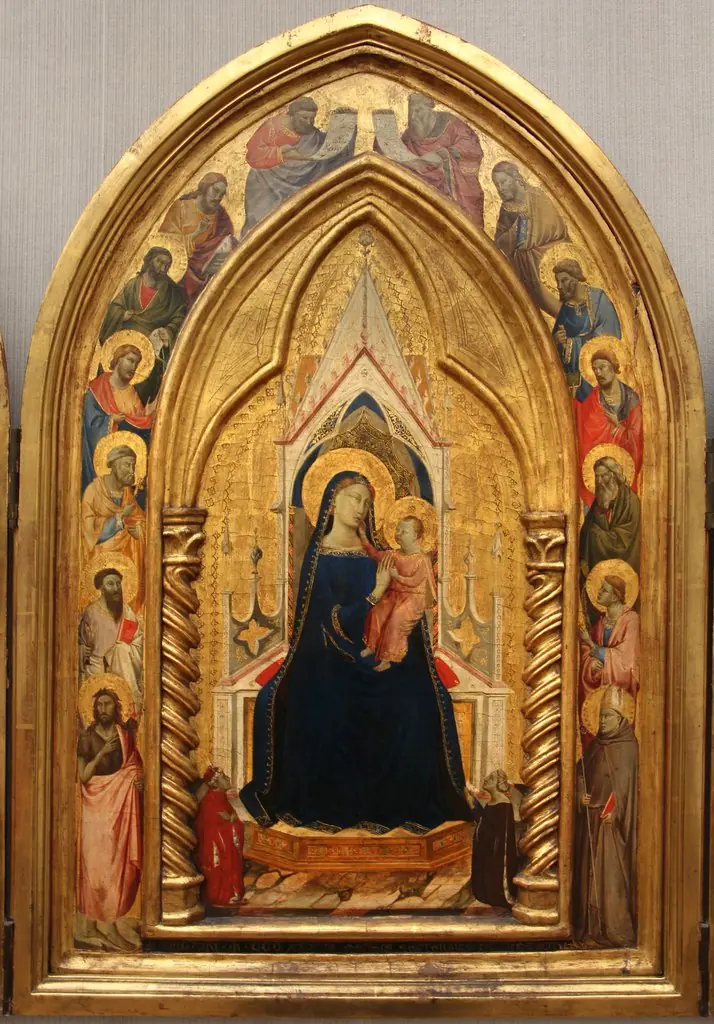 Central panel of the triptych
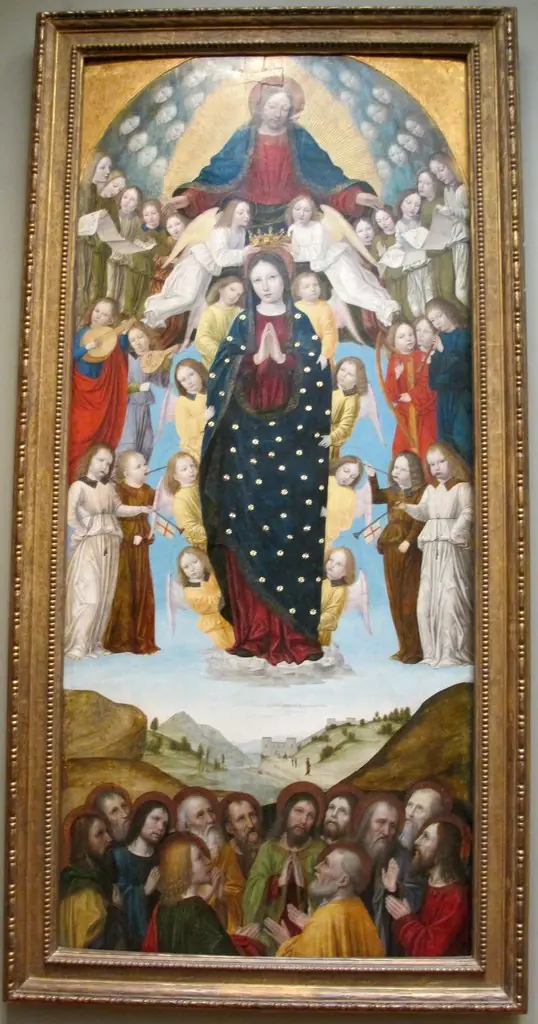 Assumption of the Virgin
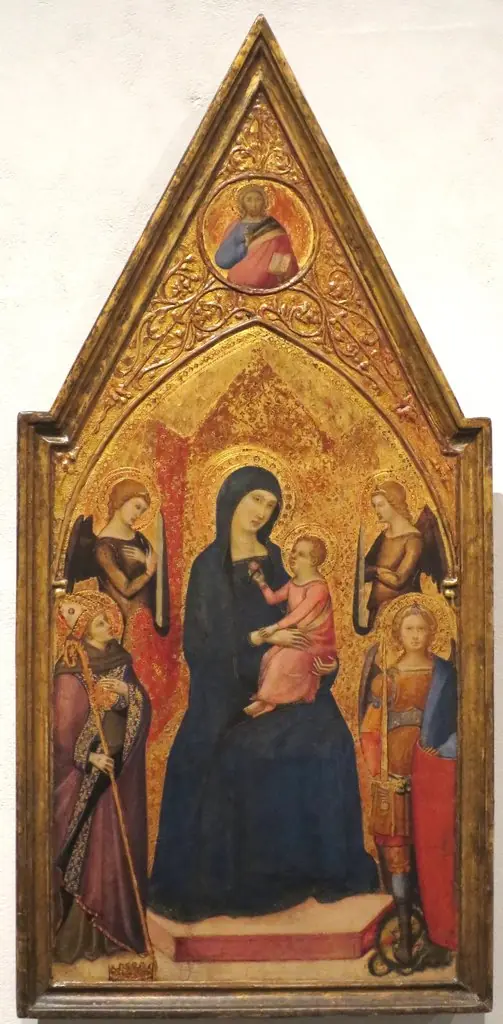 Virgin and Child with Sts. Louis of Toulouse and Michael
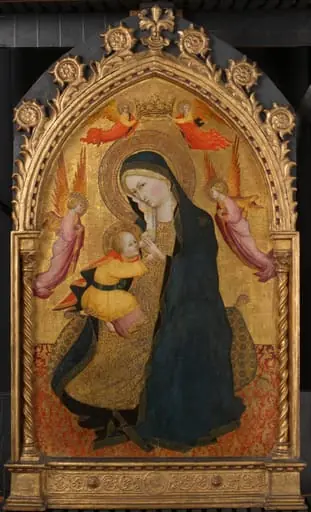 Madonna of Humility
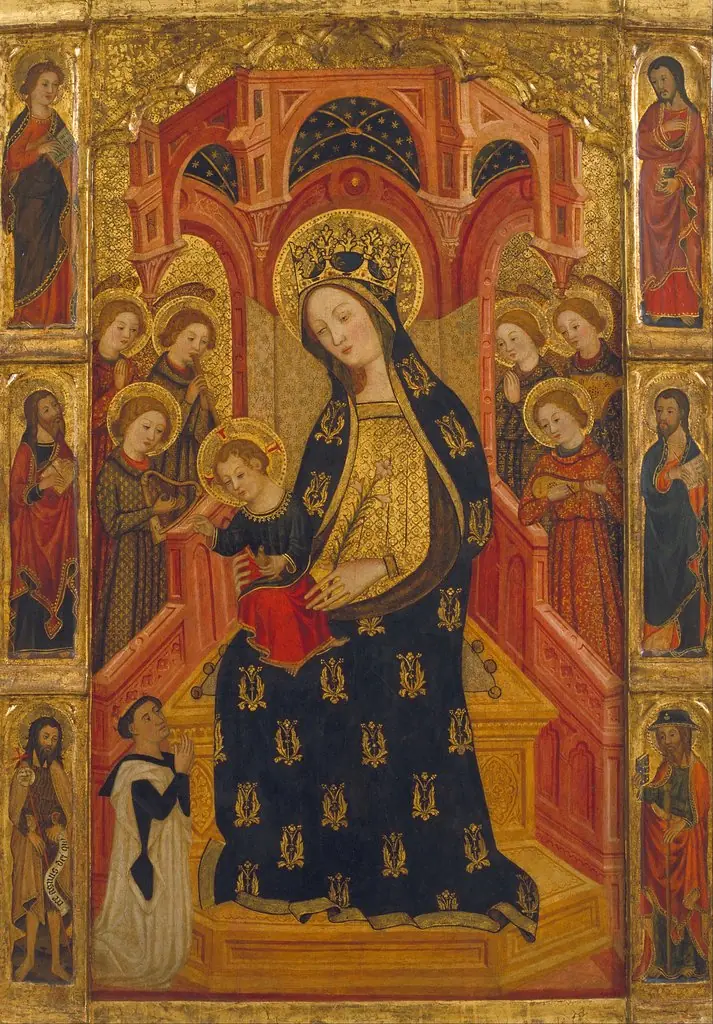 Virgin of the Angels
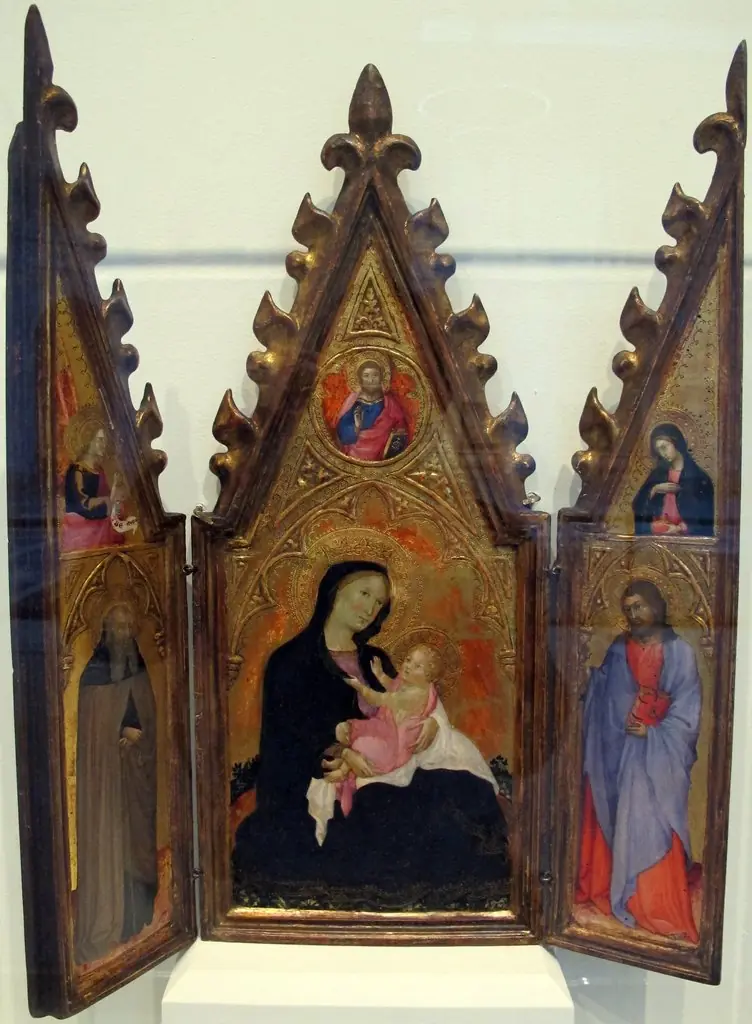 trittico con madonna dell'umiltà, ss. antonio abate jacopo
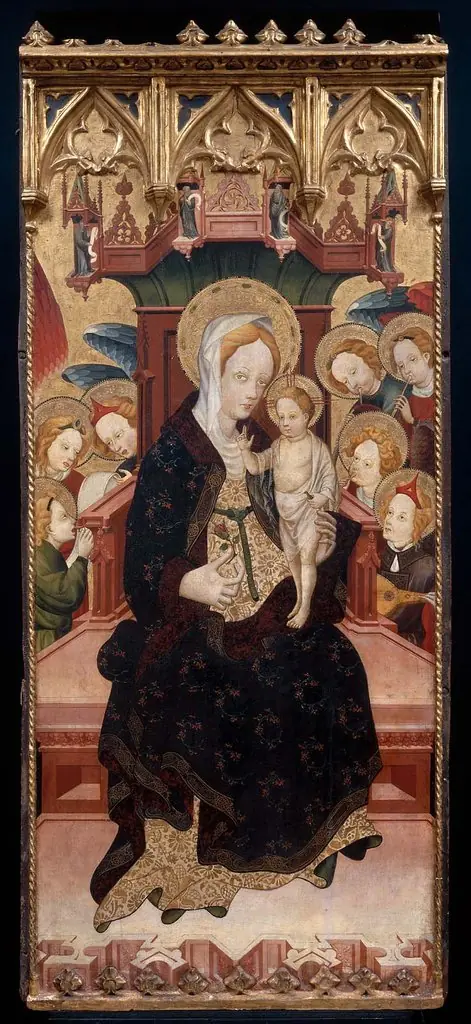 Virgin and Child Enthroned