Artwork
Jules Destrée
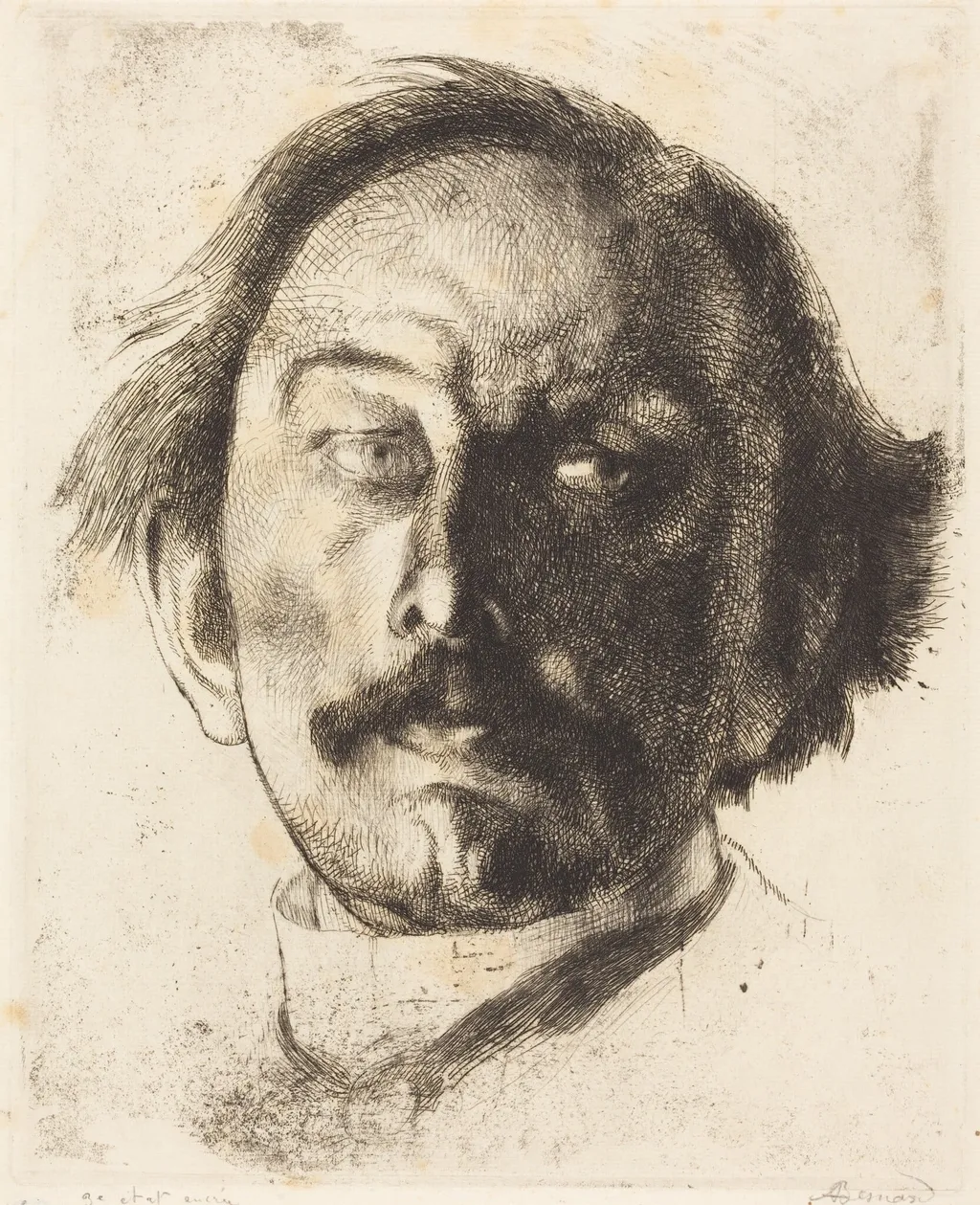
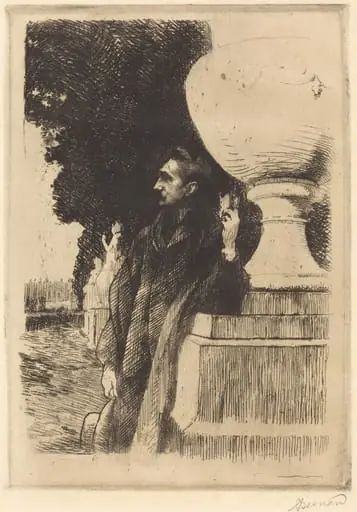
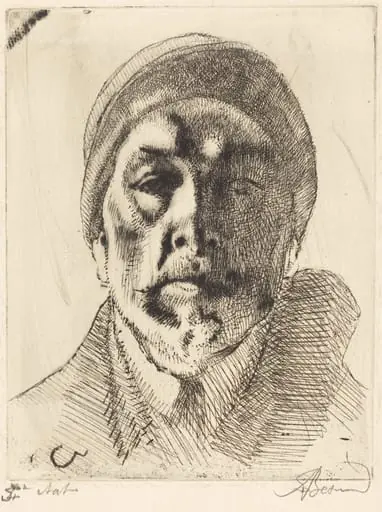
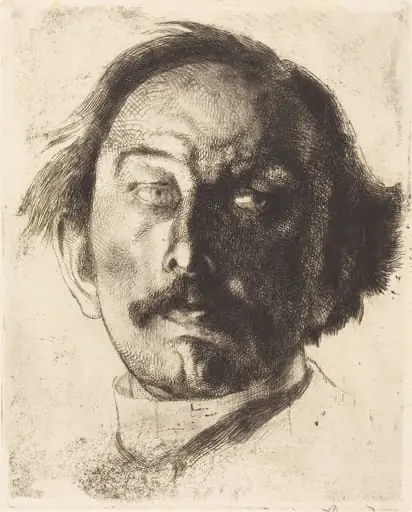
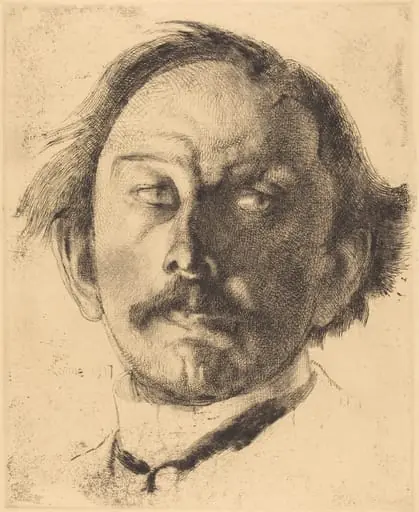
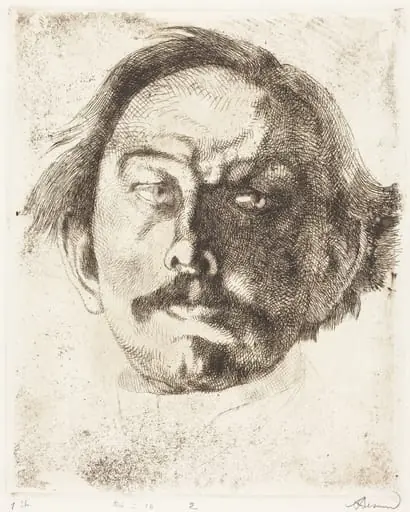
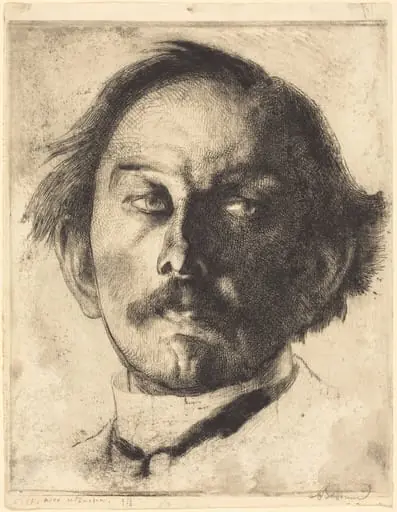
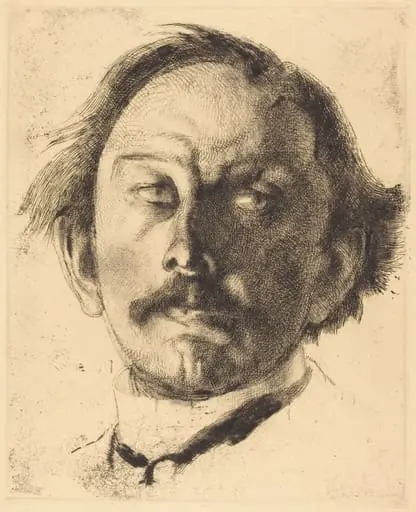
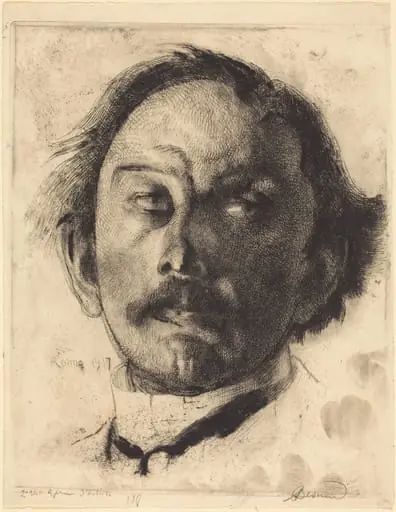
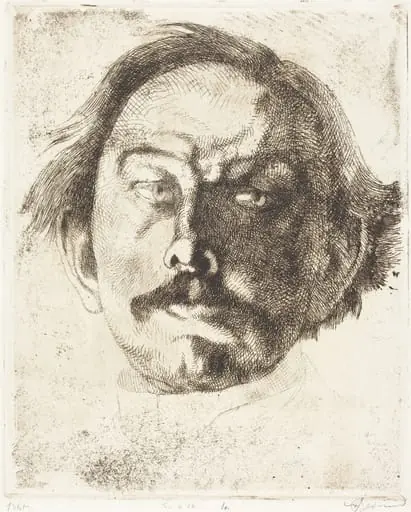
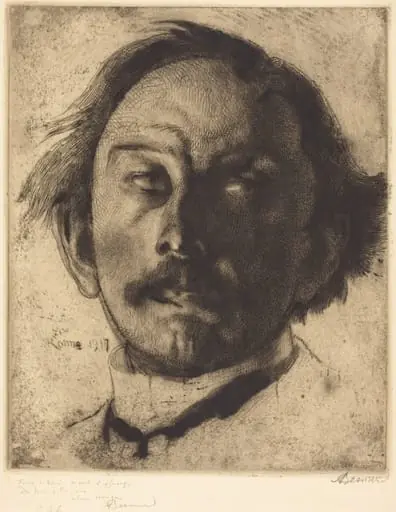
Jules Destrée is an ink print by Paul-Albert Besnard. It dates from 1917 and is held in the collection of the National Gallery of Art.
About this work
Overview
Albert Besnard’s 1917 print, titled “Jules Destrée,” is executed as an etching and drypoint on laid paper. The work presents a solitary male figure in profile, his head slightly turned toward the viewer. The composition is limited to the face, emphasizing the subject’s features through a restrained, sketch‑like approach.
Subject & Meaning
The portrait captures a man with an unkempt beard and hair rendered in swift, irregular strokes, suggesting a sense of immediacy or perhaps a candid observation. The expression is neutral, allowing viewers to infer the sitter’s character from the raw, unrefined rendering rather than from any overt narrative.
Technique & Style
Besnard combined traditional etching with drypoint, allowing ink to rest on the incised lines and produce a characteristic grainy texture. The laid paper’s subtle tooth enhances the effect, while light shading around the cheek and jaw creates a modest sense of volume without smoothing the surface, preserving the sketch‑like quality.
Context
Created during the final year of World War I, the work reflects a period when many artists turned to intimate, personal subjects amid broader turmoil. The choice of a quick, almost improvisational technique aligns with contemporary trends favoring immediacy over polished finish.
History & Provenance
The print remains attributed to Besnard, with no recorded changes in ownership beyond its initial circulation among his contemporaries. Its survival in good condition on laid paper attests to careful handling and the durability of the combined etching‑drypoint method.
Own this work as a print
Artist & collection
Artist
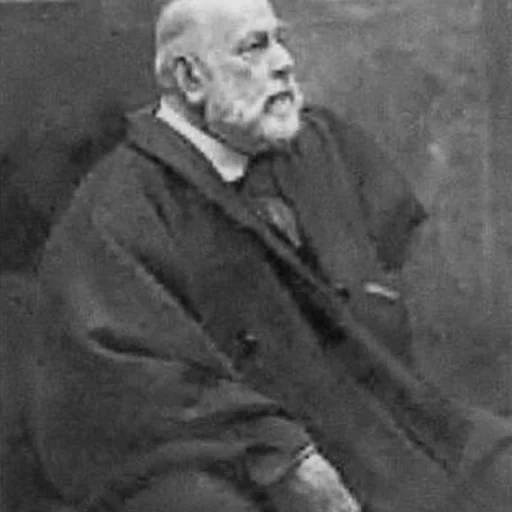
Paul-Albert Besnard (1849–1934) was a French artist, born in 7th arrondissement of Paris.