Artwork
Jules Destrée
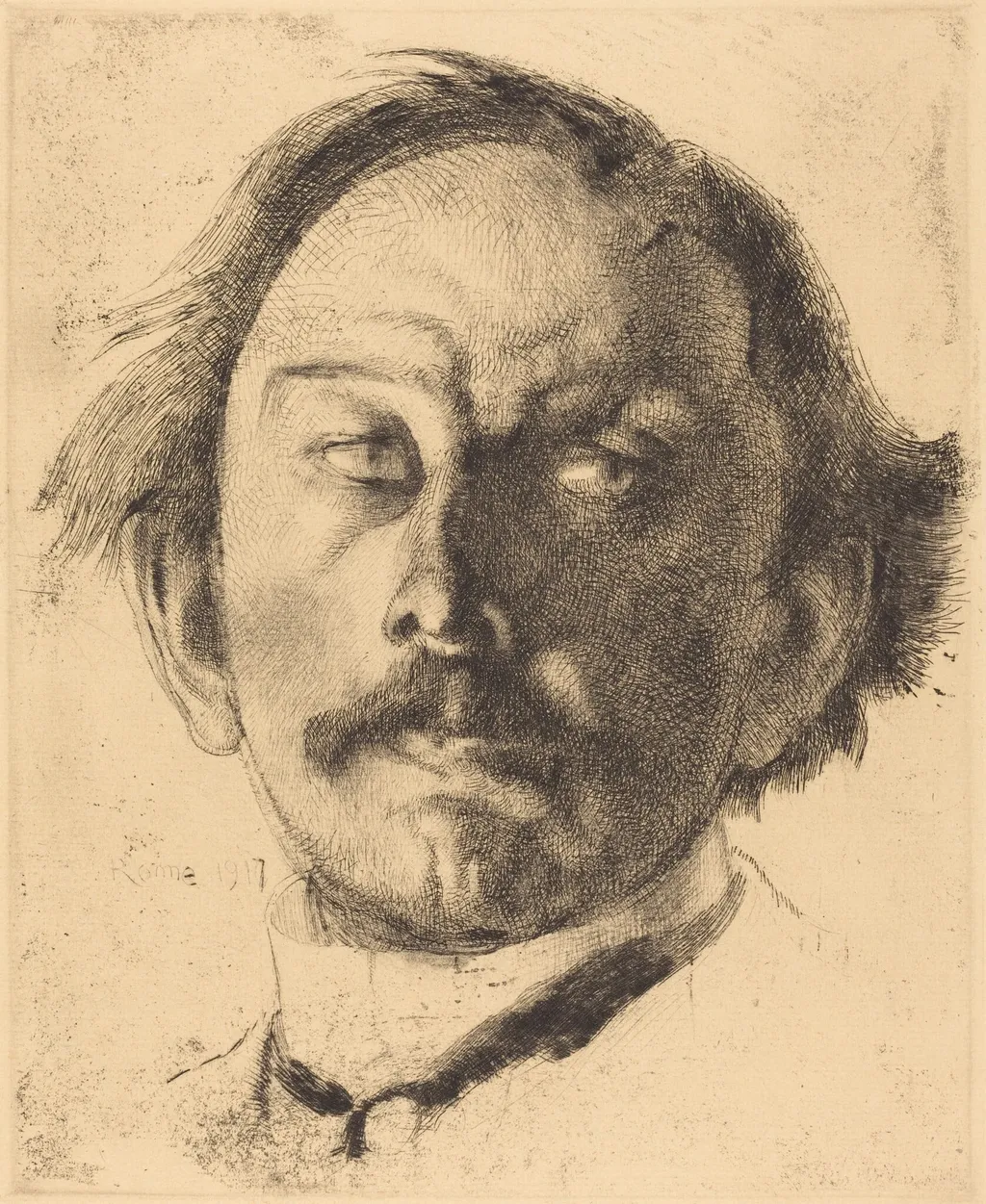
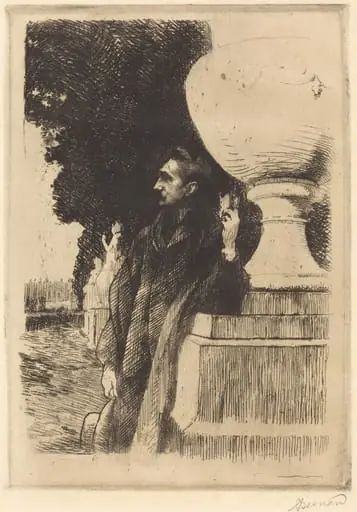
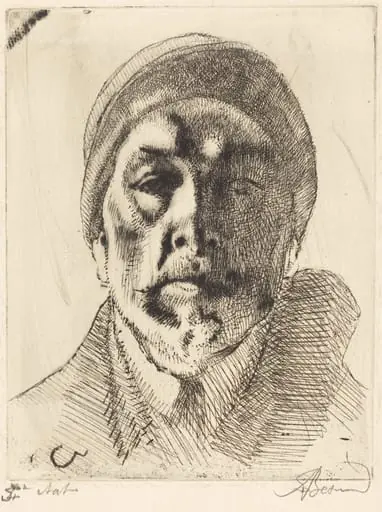
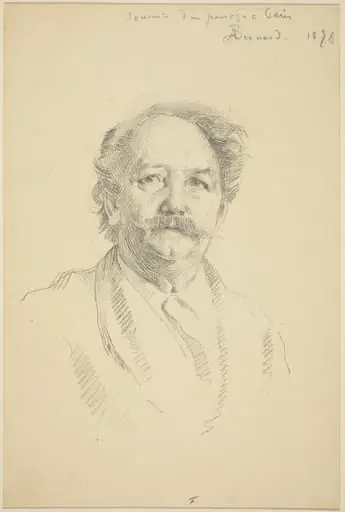
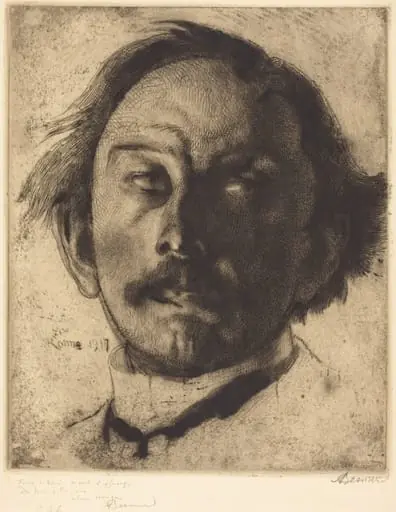
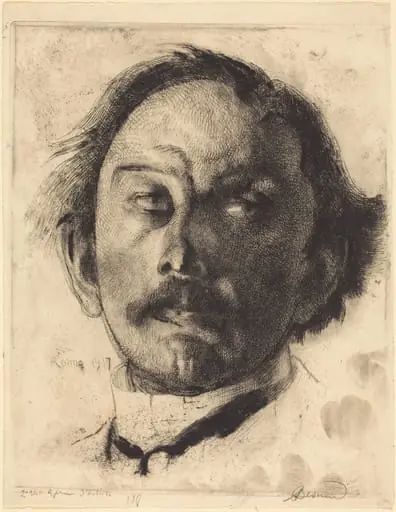
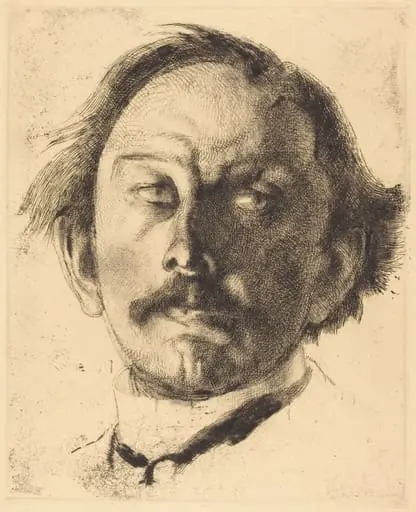
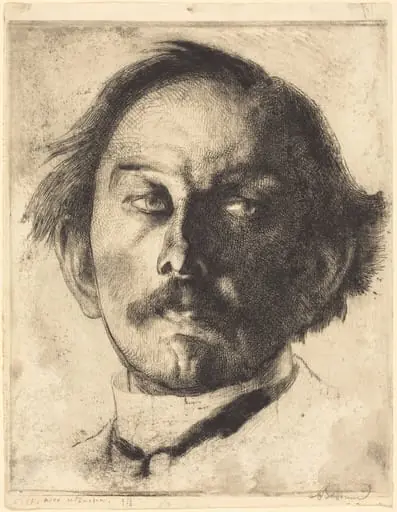
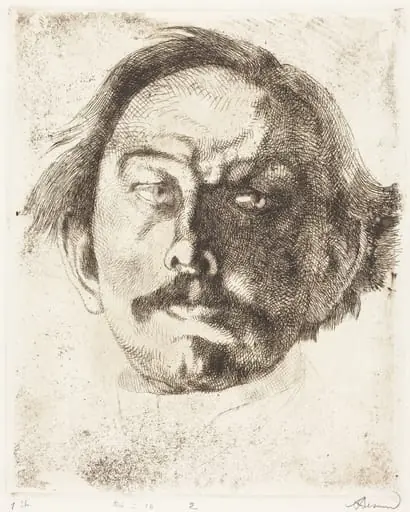
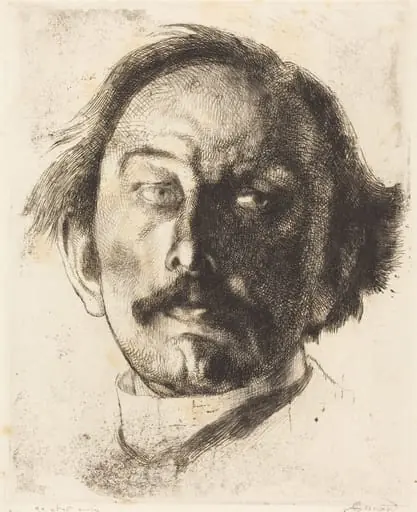
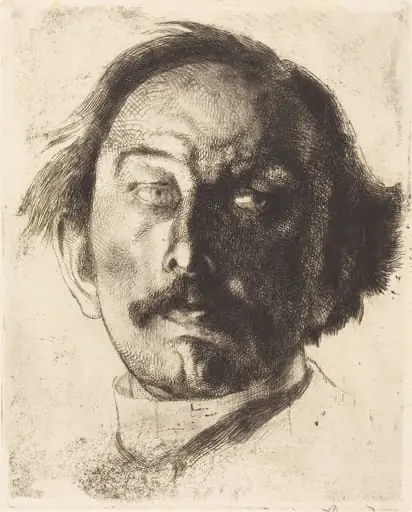
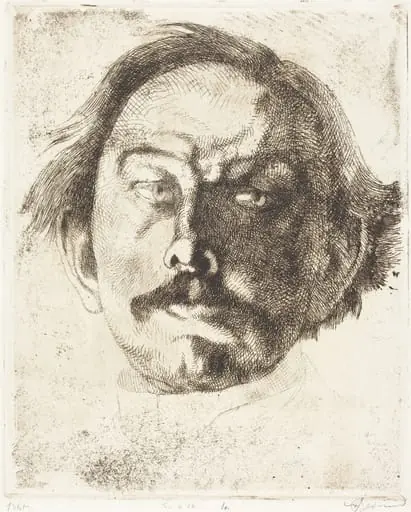
Jules Destrée is an ink print by Paul-Albert Besnard. It dates from 1917 and is held in the collection of the National Gallery of Art.
About this work
Overview
Created in 1917 by Albert Besnard, this print depicts Jules Destrée, a Belgian writer and politician, in profile. Executed in etching and drypoint on laid paper, the work captures a quiet, introspective moment. The warm off-white tone of the paper enhances the subtle tonal range, while the delicate interplay of fine lines suggests both form and mood without overt detail.
Subject & Meaning
The portrait reflects a personal, almost intimate engagement with a public figure, emphasizing inner life over public persona.
Jules Destrée, known for his intellectual rigor and cultural influence, is portrayed with restrained dignity. His downward gaze conveys contemplation rather than confrontation. Besnard avoids idealization, focusing instead on the texture of aging skin and the weight of thought. The portrait reflects a personal, almost intimate engagement with a public figure, emphasizing inner life over public persona.
Technique & Style
Besnard employed drypoint to generate rich, velvety lines around the face, particularly in the beard and hair, where scratchy, overlapping strokes build density. Etching provided finer, controlled contours. The variation in line thickness and pressure creates depth without traditional shading. The paper’s texture interacts with the ink, enhancing the tactile quality of the marks and reinforcing the work’s intimate scale.
History & Provenance
The print was made during World War I, a period when Besnard was actively engaged in documenting cultural figures. It likely originated as part of a series of portraits commissioned or initiated by Besnard himself. The work remained in private collections in France and Belgium before entering institutional holdings, where it is now preserved as an example of early 20th-century printmaking.
Context
In the early 1900s, French and Belgian artists turned to intimate portraiture as a counterpoint to monumental public art. Besnard, influenced by the Impressionists and Japanese prints, favored direct, unembellished depictions. Destrée’s portrait aligns with this trend, reflecting a broader cultural interest in psychological realism and the quiet dignity of intellectual life amid wartime uncertainty.
Legacy
This print exemplifies Besnard’s mastery of intaglio techniques and his ability to convey character through minimal means. Though not widely reproduced, it remains a reference in studies of modern printmaking for its nuanced use of drypoint and its sensitive rendering of subjectivity. It continues to inform discussions on the role of portraiture in capturing private thought within public life.
Own this work as a print
Artist & collection
Artist
Paul-Albert Besnard (1849–1934) was a French artist, born in 7th arrondissement of Paris.