Artwork
Jules Destrée
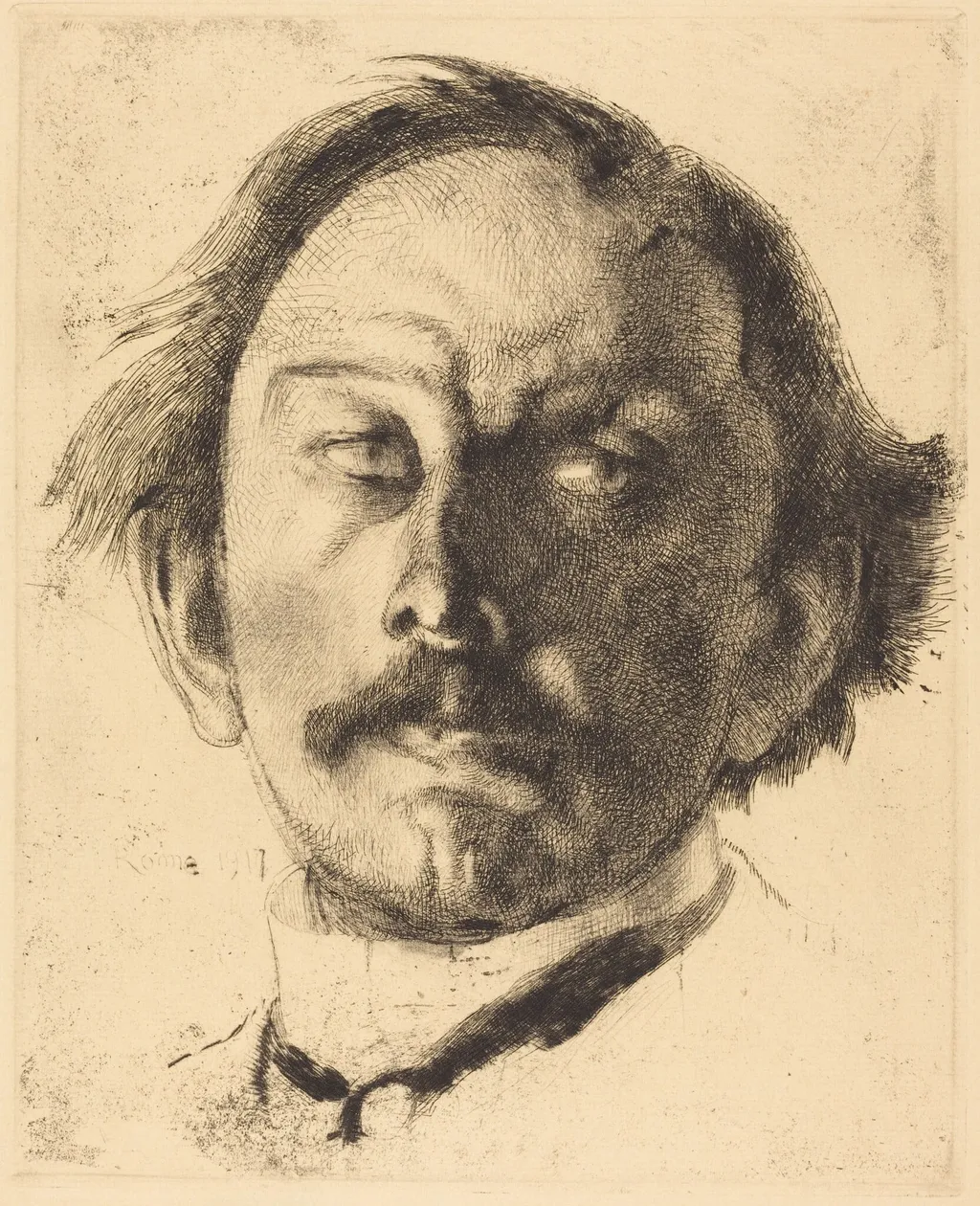
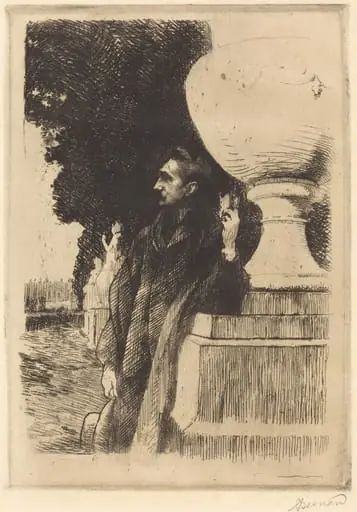
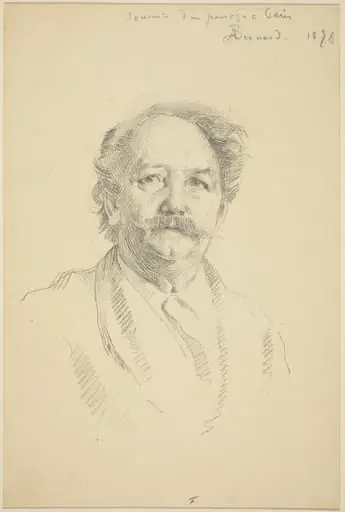
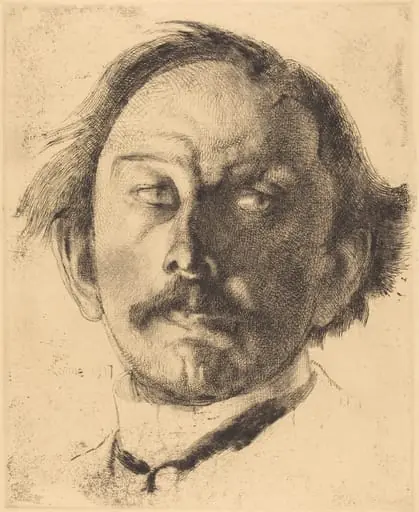
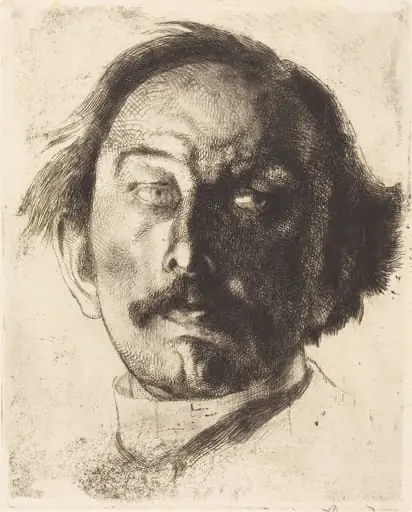
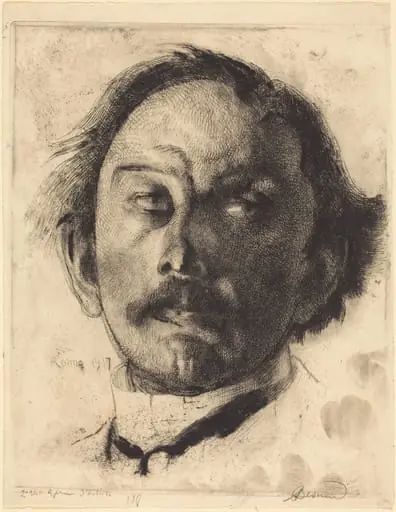
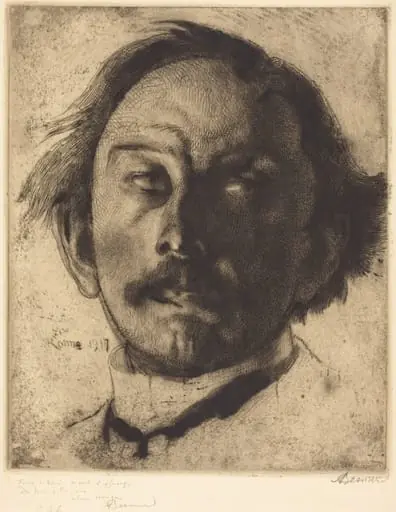
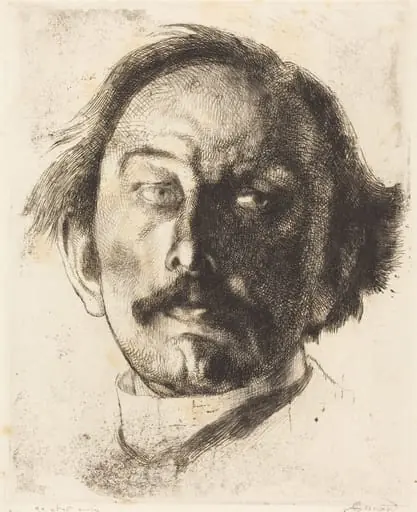
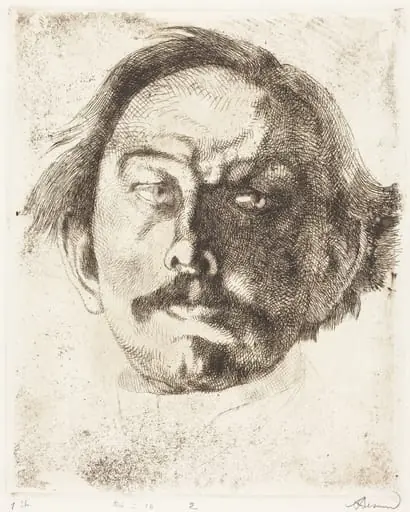
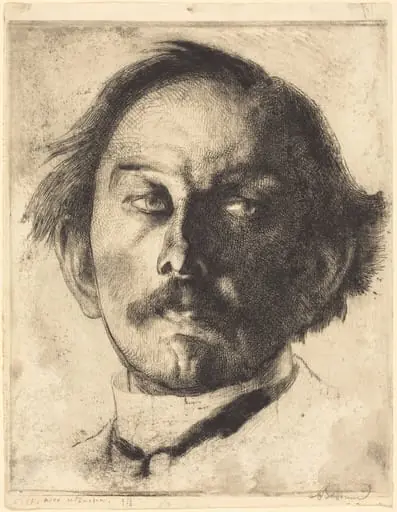
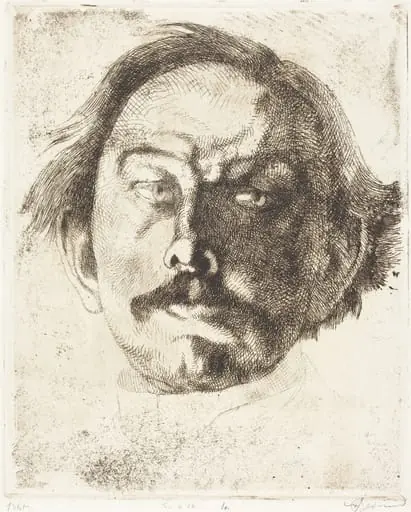
Jules Destrée is an ink print by Paul-Albert Besnard. It dates from 1917 and is held in the collection of the National Gallery of Art.
About this work
Overview
Albert Besnard’s 1917 print titled "Jules Destrée" combines etching and dry‑point on a sheet of BFK Rives laid paper. The work presents a solitary male figure in profile, his gaze directed downward, rendered in stark, dark lines against a light‑beige background.
Subject & Meaning
The portrait captures the likeness of Jules Destrée, a notable French figure, emphasizing introspection through the downward tilt of his head. The simplified composition and focus on facial features convey a contemplative mood without extraneous detail.
Technique & Style
Besnard employed both traditional etching and the more immediate dry‑point method, incising lines directly into a metal plate. The resulting scratches produce a textured, slightly fuzzy edge that retains ink, giving the hair and mustache a quick, sketch‑like quality while maintaining overall clarity.
Context
Created during the final year of World War I, the work reflects a period when many artists turned to printmaking for both practical and expressive reasons. Besnard’s choice of dry‑point aligns with contemporary explorations of immediacy and texture in portraiture.
Artist & collection
Artist
Paul-Albert Besnard (1849–1934) was a French artist, born in 7th arrondissement of Paris.