Artwork
Morphine Addicts (Morphinomanes)
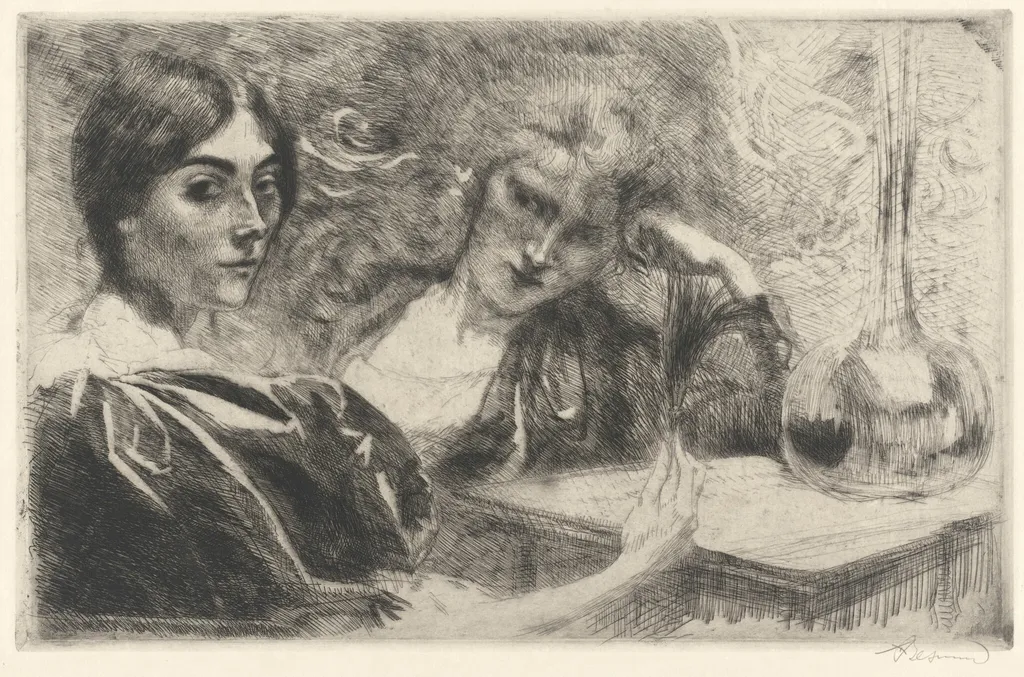
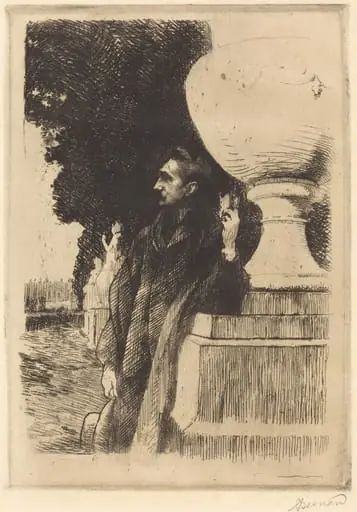
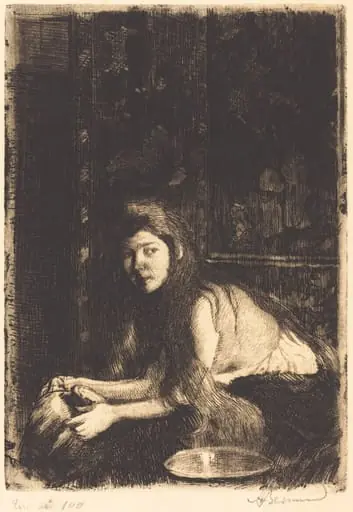
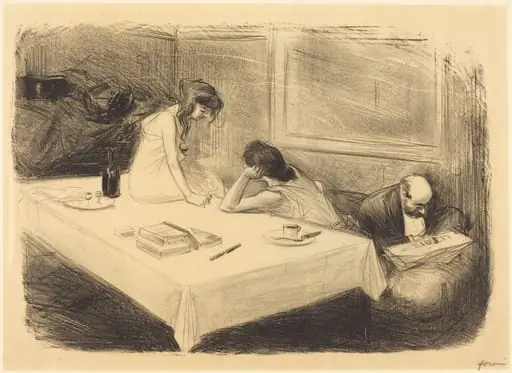
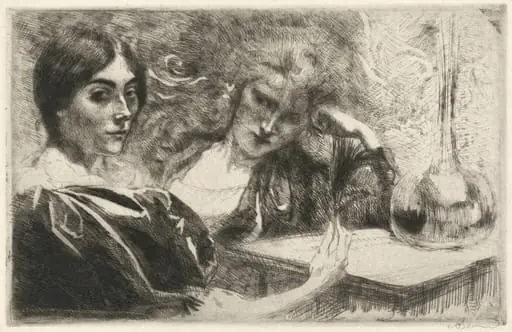
Morphine Addicts (Morphinomanes) is an ink print by the Impressionist artist Paul-Albert Besnard. It dates from 1887 and is held in the collection of the National Gallery of Art.
About this work
Overview
Albert Besnard’s 1887 etching titled “Morphine Addicts (Morphinomanes)” presents a somber scene rendered in black ink on wove paper. The composition centers on two figures reclined side by side, their gazes directed toward one another, suggesting an intimate yet troubled exchange.
Subject & Meaning
One figure appears alert, eyes fixed forward, while the companion’s expression conveys introspection or discomfort, evoking the physical and psychological toll of morphine dependence. The title explicitly references addiction, guiding the viewer toward an interpretation of the pair’s shared affliction.
Technique & Style
Besnard employed swift, gestural lines characteristic of etching, allowing the metal plate’s incised marks to convey the figures’ loosened garments and the surrounding atmosphere. The background is rendered in dark, swirling tones that resemble smoke or a dreamscape, enhancing the work’s sense of fatigue and disorientation.
History & Provenance
Created in the late nineteenth century, the print reflects contemporary concerns about opiate use. While specific ownership details are scarce, the work is catalogued among Besnard’s prints from the 1880s, a period marked by his exploration of socially charged subjects.
Context
During the 1880s, Europe faced growing awareness of morphine’s addictive properties, especially among medical patients. Artists like Besnard responded by depicting the human consequences of drug dependence, aligning the piece with broader realist and socially conscious trends in French art.
Own this work as a print
Artist & collection
Artist
Paul-Albert Besnard (1849–1934) was a French artist, born in 7th arrondissement of Paris.