Artwork
Pusterla dei Fabbri, Milan
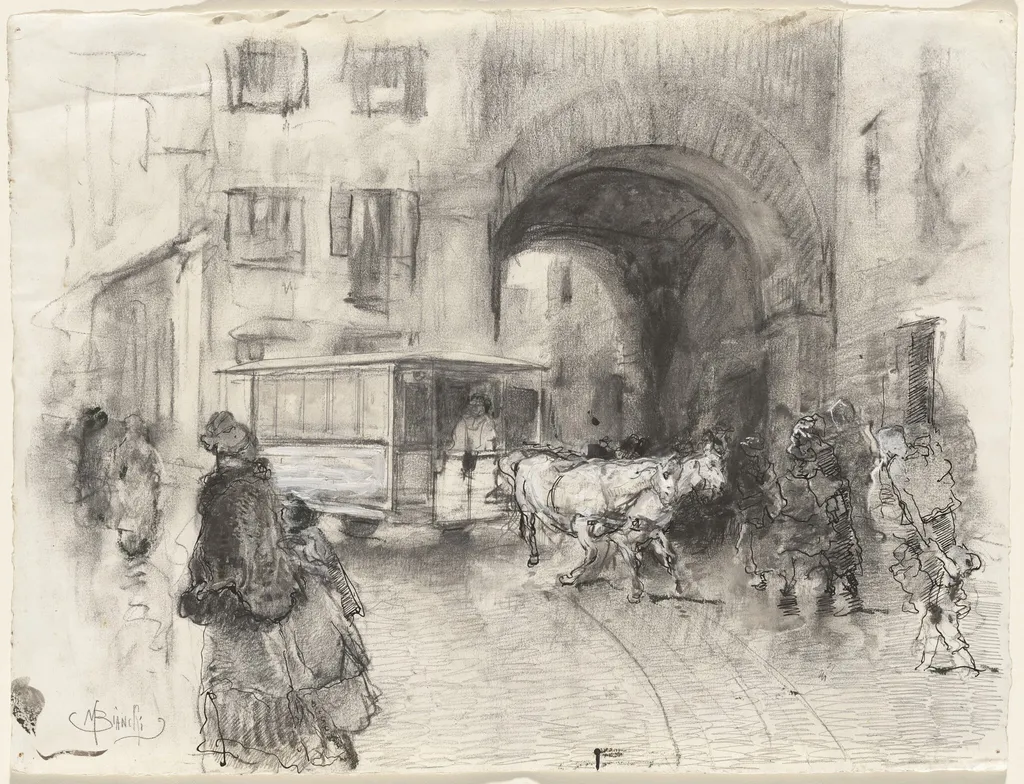
Pusterla dei Fabbri, Milan is a gouache drawing by the Impressionist artist Mosè Bianchi. It dates from 1888 and is held in the collection of the National Gallery of Art.
About this work
Overview
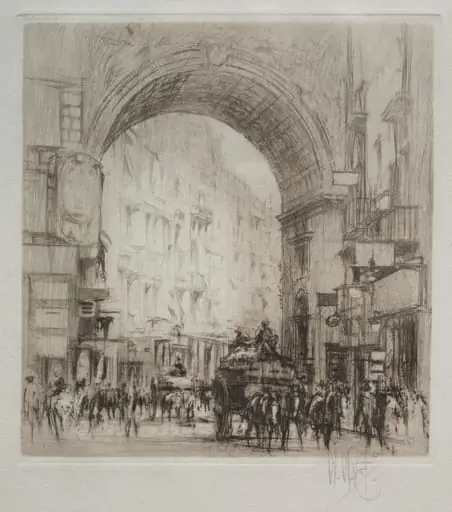
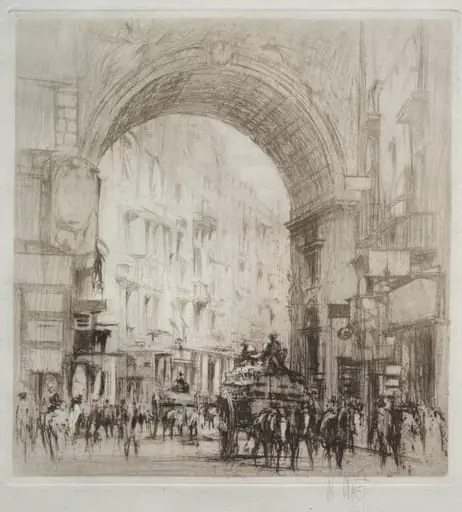
Mosè Bianchi’s drawing, titled Pusterla dei Fabbri, dates from around 1888 and is part of the National Gallery of Art’s collection in Washington. Executed in charcoal with stumping, wash, graphite, pen and black ink, and highlighted with white gouache, the work records a lively urban scene from Milan.
Subject & Meaning
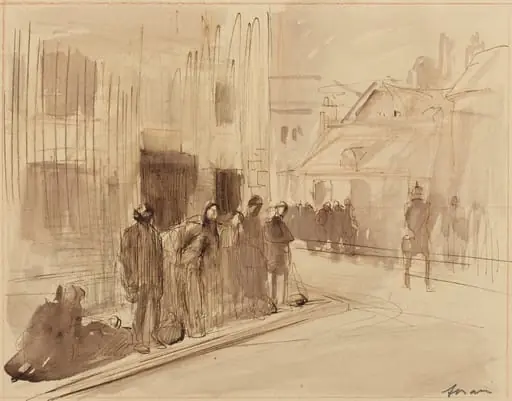
The composition centers on a bustling Milanese street framed by a prominent arched gateway. A horse‑drawn carriage moves through the middle of the picture, while pedestrians populate the foreground, suggesting everyday activity and the flow of city life in the late nineteenth century.
Technique & Style
Bianchi combines charcoal shading with stumping and wash to model forms and suggest atmospheric depth. Graphite and pen add fine line work, while touches of white gouache accentuate highlights, creating contrast between illuminated surfaces and shadowed areas and lending a sense of movement to the figures and horses.
History & Provenance
Created circa 1888, the drawing entered the National Gallery of Art’s holdings in Washington, where it remains on view. Its acquisition reflects the museum’s interest in 19th‑century Italian drawing and the artist’s reputation for capturing urban scenes.
Context
Pusterla dei Fabbri depicts a historic gate that once marked a point of entry to Milan’s medieval walls. By the 1880s the area had become integrated into the expanding modern city, and Bianchi’s work records this transitional moment between old fortifications and contemporary urban life.
Artist & collection

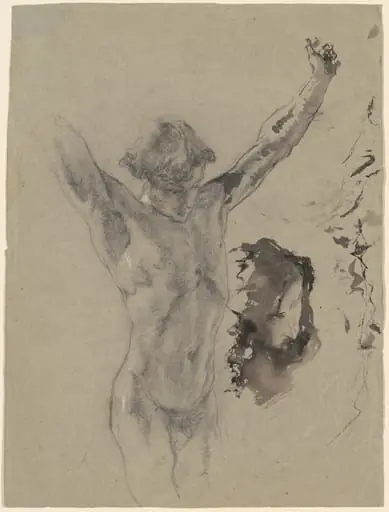 Study of the Figure and Head of Christ in "Christ on the Cross and Mary Magdalene"
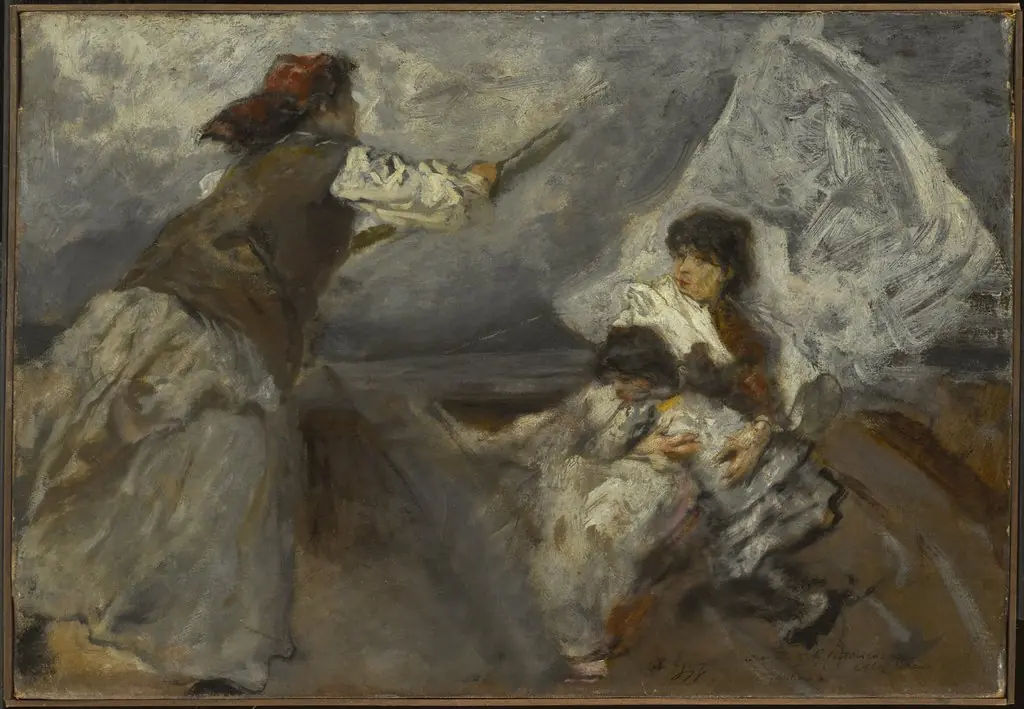 Study for Boating in the Lagoon
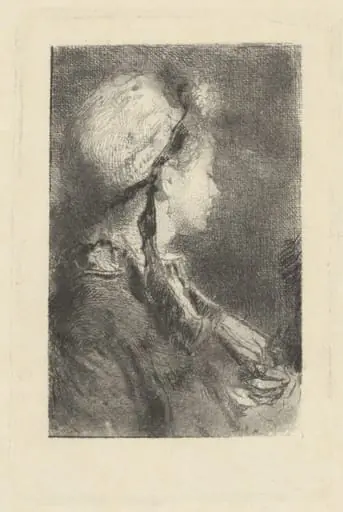 The Artist's Wife in Profile Facing Right
![Un Miracle [A Miracle], by Mosè Bianchi](https://artifactworldgallery.com/img/mose-bianchi--un-miracle-a-miracle--274238d7058a4087-w320.webp) Un Miracle [A Miracle]
Un Miracle [A Miracle]![Un Miracle [A Miracle], by Mosè Bianchi](https://artifactworldgallery.com/img/mose-bianchi--un-miracle-a-miracle--333a12cf5ec140c5-w320.webp) Un Miracle [A Miracle]
Un Miracle [A Miracle]![La lezione di violincello [The Violin Lesson], by Mosè Bianchi](https://artifactworldgallery.com/img/mose-bianchi--la-lezione-di-violincello-the-violin-lesson--409ab16368cea0c8-w320.webp) La lezione di violincello [The Violin Lesson]
La lezione di violincello [The Violin Lesson]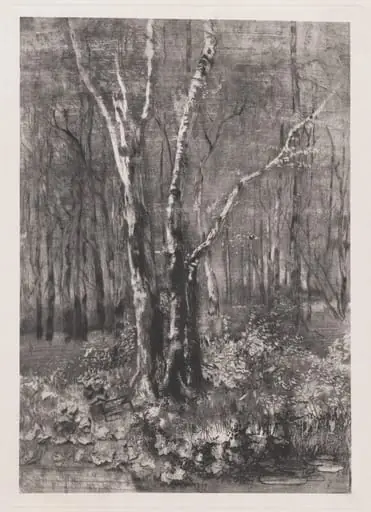 Woods in the Park near Monza
![Intérieur d'église à Milan [Interior of a Church in Milan], by Mosè Bianchi](https://artifactworldgallery.com/img/mose-bianchi--interieur-d-eglise-a-milan-interior-of-a-church-in-milan--6e5465a8fb58e0ea-w320.webp) Intérieur d'église à Milan [Interior of a Church in Milan]
Intérieur d'église à Milan [Interior of a Church in Milan]