Artwork
Plan et elevation des plus beaux confessionnaux de Paris, tres fidelemant mesure
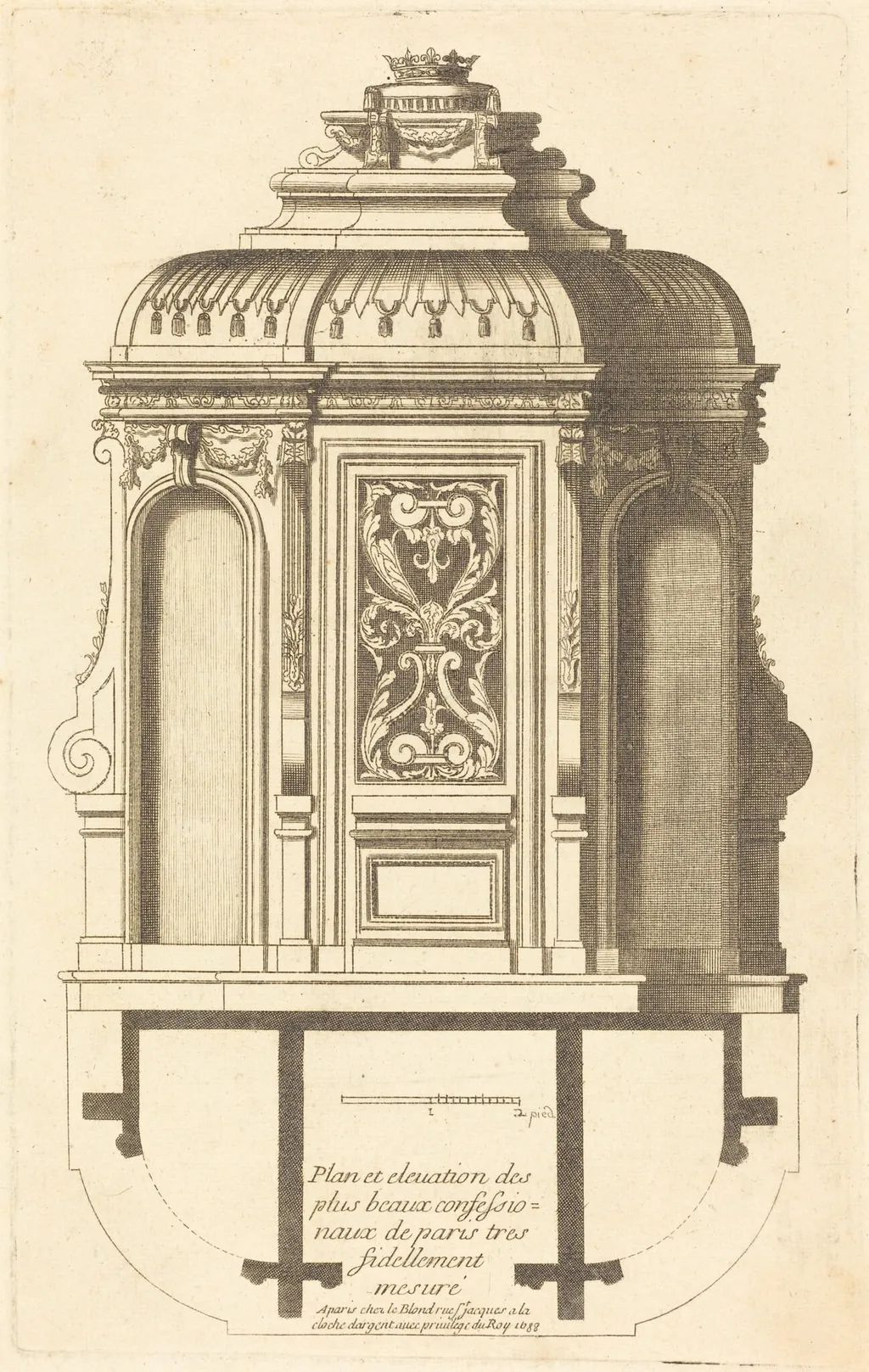
Plan et elevation des plus beaux confessionnaux de Paris, tres fidelemant mesure is an ink print by the Baroque artist Jean Le Blond. It dates from 1688 and is held in the collection of the National Gallery of Art.
About this work
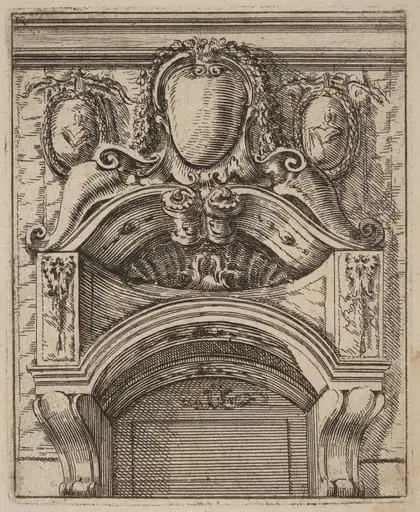
It shows two small rooms side by side, each with a curved front and decorative carvings on the doors.
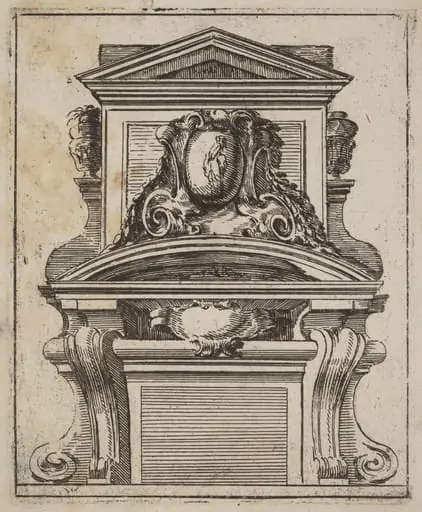
This is a detailed drawing of a church confession booth. It shows two small rooms side by side, each with a curved front and decorative carvings on the doors. The top has a crown and ornate trim, while the base has simple supports. The lines are precise, and the shading gives it a three-dimensional look.
The text below says it’s a "faithful measure" of Paris’s finest confessionals, published in 1688. This means it was made as a guide for building similar booths.
Next, check out how engraving works to see how artists create these sharp, detailed images.
Overview
This 1688 engraving by Jean Le Blond presents precise architectural drawings of confessionals found in Parisian churches. Created as a technical reference, it includes both plan and elevation views of two adjacent confession booths, rendered with measured accuracy. The work was intended for use by craftsmen and builders seeking to replicate these designs, reflecting a broader interest in standardizing ecclesiastical furnishings during the late 17th century.
Subject & Meaning
The subject consists of two side-by-side confessionals, each featuring curved fronts and elaborately carved doors. Their design emphasizes privacy and solemnity, aligning with the ritual function of confession in Catholic practice. The inclusion of a crown and ornamental trim above the structure suggests a symbolic connection to divine authority, while the overall form prioritizes quiet dignity over ostentation, consistent with devotional architecture of the period.
Technique & Style
Executed in fine-line engraving, the image achieves remarkable clarity through controlled cross-hatching and precise linework. Shading is used subtly to suggest depth and volume, enhancing the three-dimensionality of the architectural forms without decorative excess. The composition is methodical and symmetrical, reflecting the precision expected in architectural documentation. Textual annotations reinforce the work’s purpose as a reliable guide rather than an artistic expression.
History & Provenance
Produced in Paris in 1688, the engraving was part of a broader movement to record and disseminate architectural details of religious interiors. Jean Le Blond, an architect and engraver, compiled these designs to serve builders and clergy. The work likely circulated among Parisian artisans and ecclesiastical authorities, contributing to the standardization of confessionals in churches across the city during the reign of Louis XIV.
Context
In late 17th-century France, the Catholic Church emphasized liturgical uniformity and the visual dignity of sacred spaces. This engraving emerged amid efforts to formalize church furnishings following the Counter-Reformation’s emphasis on ritual clarity. Similar publications appeared across Europe, documenting altars, pulpits, and confessionals as part of a growing professionalization of ecclesiastical architecture and craftsmanship.
Legacy
The engraving remains a valuable record of liturgical furniture design in early modern Paris. Though not widely known outside architectural circles, it provides insight into the material culture of Catholic worship and the role of printed media in disseminating technical knowledge. Its survival offers historians a tangible link to the craftsmanship and devotional priorities of its time.
Artist & collection


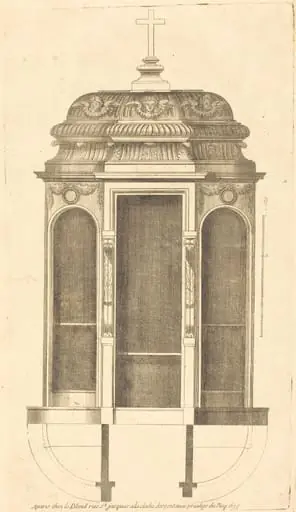 Plan et elevation des plus beaux confessionnaux de Paris, tres fidelemant mesure
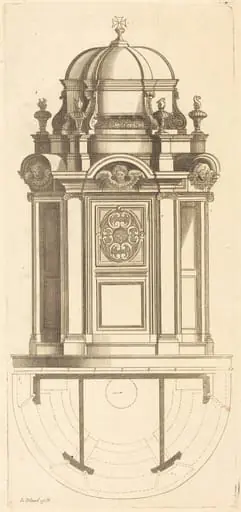 Plan et elevation des plus beaux confessionnaux de Paris, tres fidelemant mesure
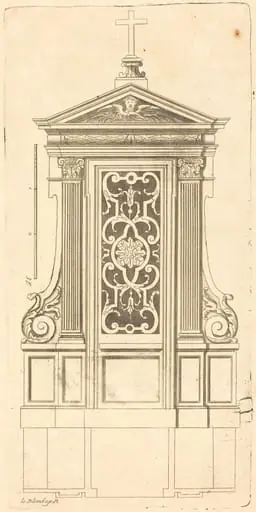 Plan et elevation des plus beaux confessionnaux de Paris, tres fidelemant mesure
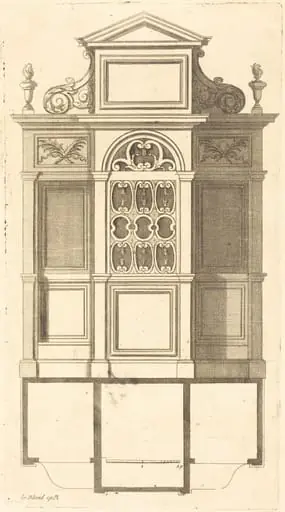 Plan et elevation des plus beaux confessionnaux de Paris, tres fidelemant mesure
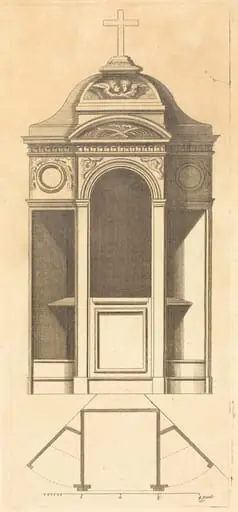 Plan et elevation des plus beaux confessionnaux de Paris, tres fidelemant mesure