Artwork
Rococo Altar with a Reliquary Tomb
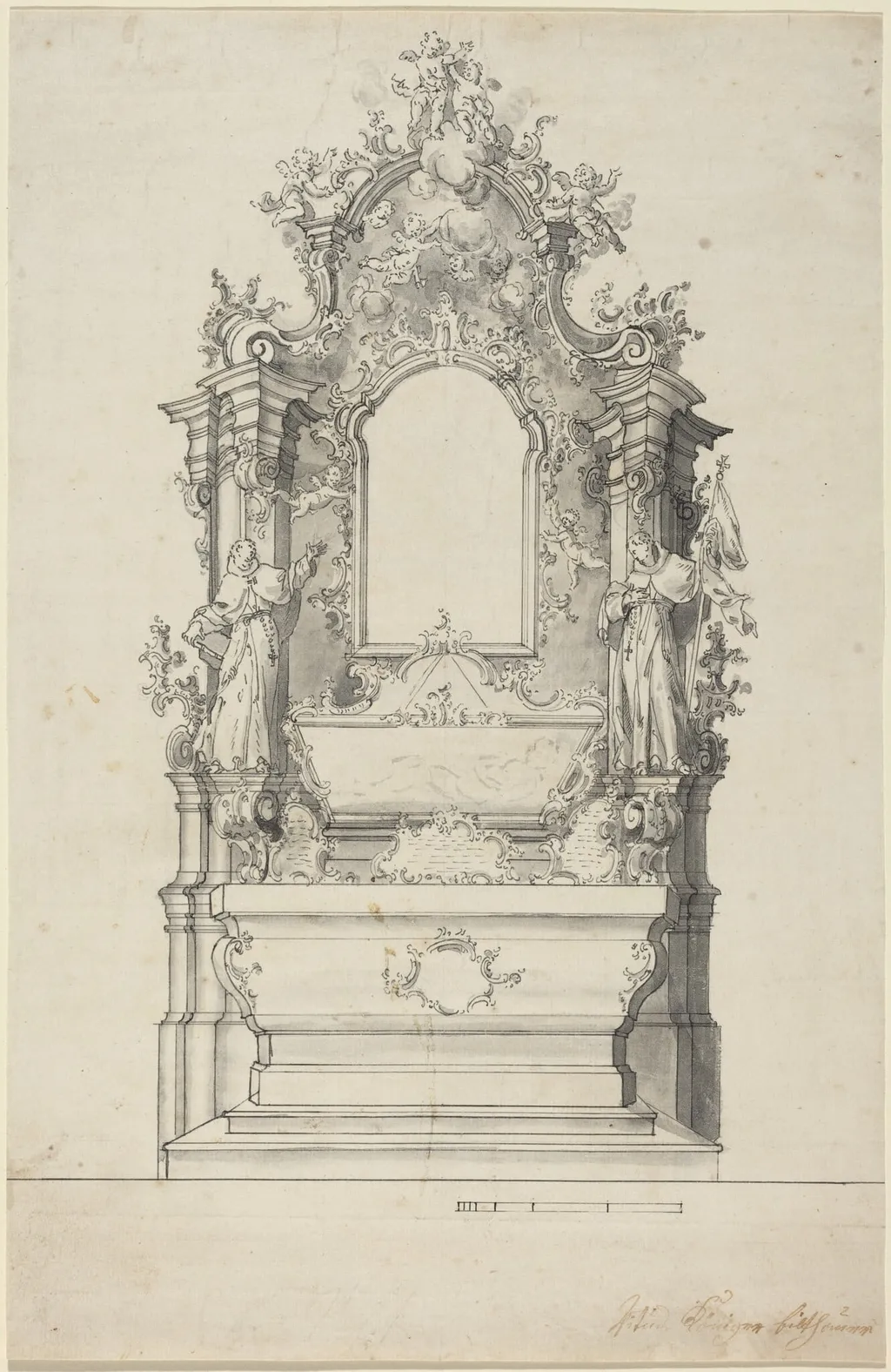
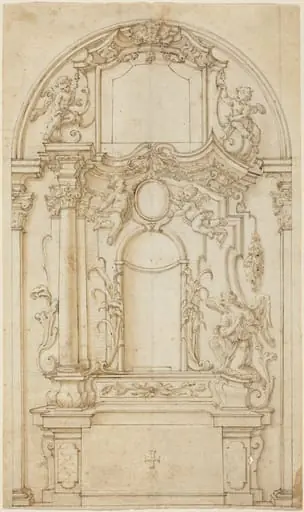
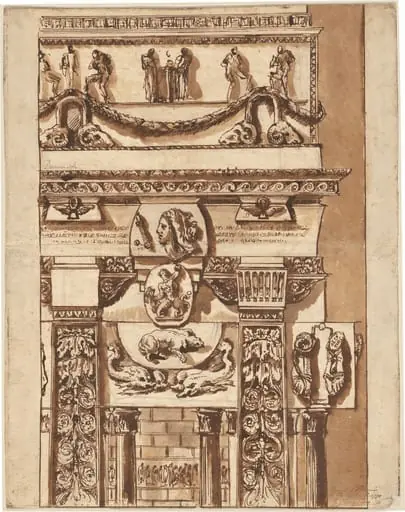
Rococo Altar with a Reliquary Tomb is an ink drawing by the Baroque artist Veit Königer. It dates from 1764 and is held in the collection of the National Gallery of Art.
About this work
Overview
Created around 1764 by Veit Königer, this drawing is a pen-and-ink design with gray wash on laid paper. It depicts an ornate altar structure featuring a reliquary tomb, rendered with meticulous detail. The composition centers on an empty niche, suggesting the work was a preparatory sketch for an architectural or devotional installation rather than a final piece.
Subject & Meaning
The altar is designed to house sacred relics, with its central void indicating space for a statue or painting to be installed later. Flanking elements—scrolls, floral motifs, and small figures—emphasize devotion and ceremonial grandeur. A small statuette on the right, holding an offering, reinforces the altar’s liturgical function, grounding its ornamentation in religious practice.
Technique & Style
Königer used fine pen lines and layered gray washes to model volume and depth on a flat surface. The swirling, vegetal arch above the niche and the dense decorative carvings reflect Rococo sensibilities: fluidity, asymmetry, and intricate surface detail. The rendering suggests spatial illusion without color, relying entirely on tonal gradation and line weight.
History & Provenance
The drawing is attributed to Königer, an 18th-century German draftsman active in ecclesiastical design. Its survival as a standalone sheet implies it was preserved as a study or presentation piece, possibly for a patron or workshop. No definitive record of its original commission or installation location is known.
Context
Produced during the height of Rococo influence in southern German and Austrian church interiors, the drawing aligns with contemporaneous altar designs that prioritized theatricality and ornamental richness. It reflects a broader trend in Catholic regions where liturgical spaces became immersive environments, blending architecture, sculpture, and decoration.
Legacy
Though not widely reproduced, the drawing exemplifies the role of preparatory sketches in ecclesiastical art production. It preserves the visual language of Rococo sacred design, offering insight into how elaborate altars were conceived before execution in stone or wood. Its existence underscores the importance of draftsmanship in architectural planning of the period.
Artist & collection


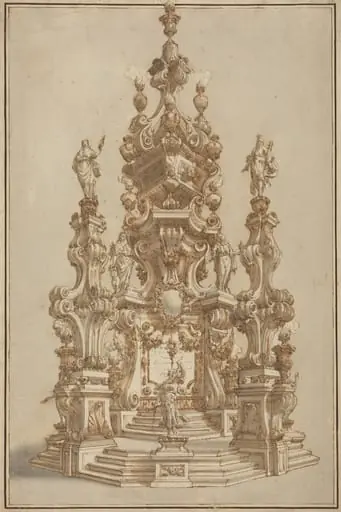 Magnificent Catafalque for a Deceased Noble
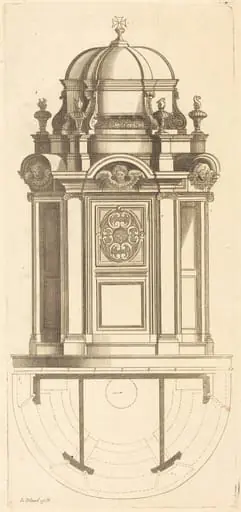 Plan et elevation des plus beaux confessionnaux de Paris, tres fidelemant mesure
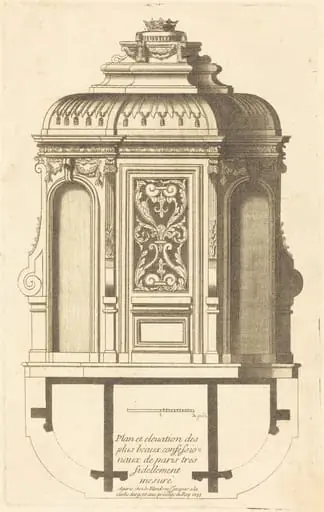 Plan et elevation des plus beaux confessionnaux de Paris, tres fidelemant mesure
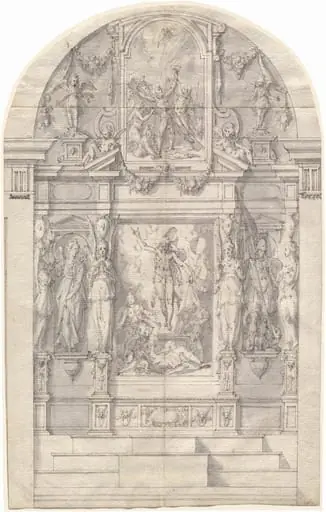 An Elaborate Altar with the Resurrection of Christ and the Martyrdom of Saint Andrew
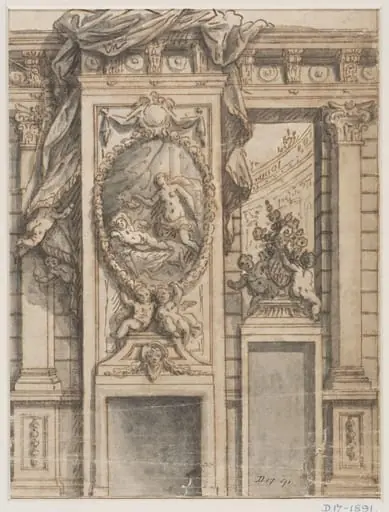 Design for wall decoration, possibly at Chatsworth, Derbyshire
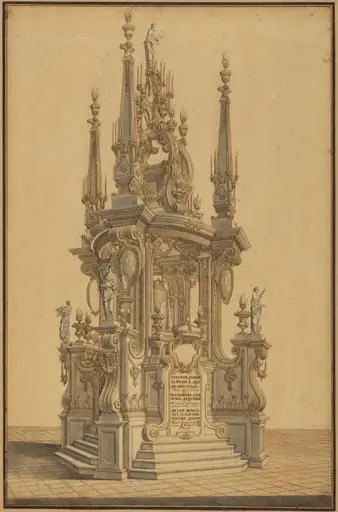 Magnificent Catafalque in Honor of John III, King of Poland
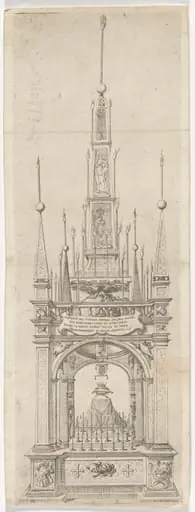 Catafalque for the Funeral of Giulio Thieni, Marquis of Scandiano
 Fantasy of a Façade with Bizarre Ornaments