Artwork
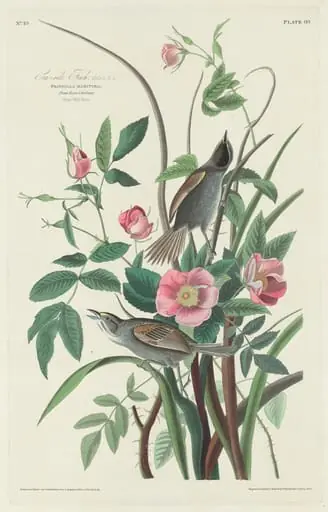
Seaside Finch; and Grafs Finch or Bay-Winged Bunting
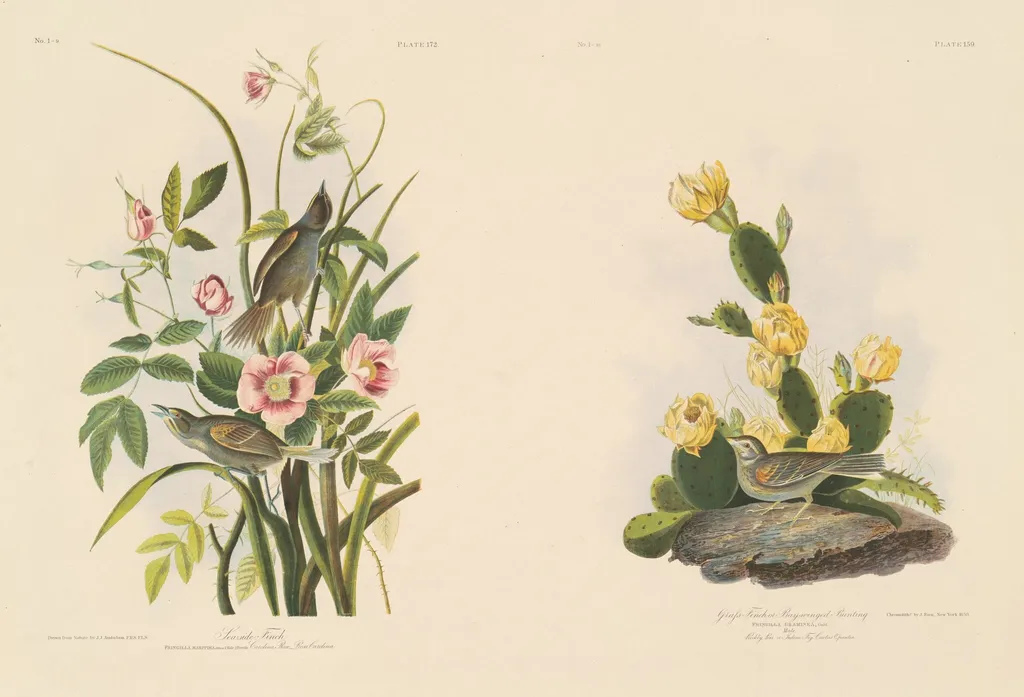
Seaside Finch; and Grafs Finch or Bay-Winged Bunting is an ink print by the Impressionist artist Julius Bien. It dates from 1858 and is held in the collection of the National Gallery of Art.
About this work
Overview
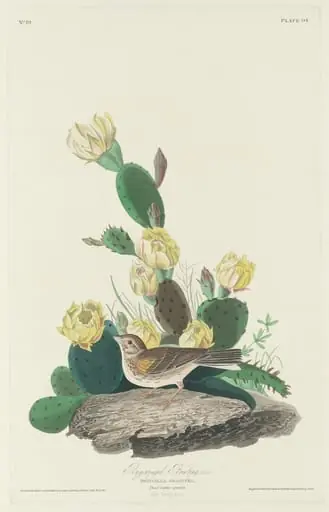
Created in 1858 by Julius Bien, this chromolithograph depicts two North American birds alongside their native vegetation.
Created in 1858 by Julius Bien, this chromolithograph depicts two North American birds alongside their native vegetation. Printed on wove paper and enhanced by hand, the work combines precision printing with subtle manual color application. It belongs to a broader 19th-century effort to document avian species with scientific accuracy and aesthetic care, reflecting the era’s interest in natural history illustration.
Subject & Meaning
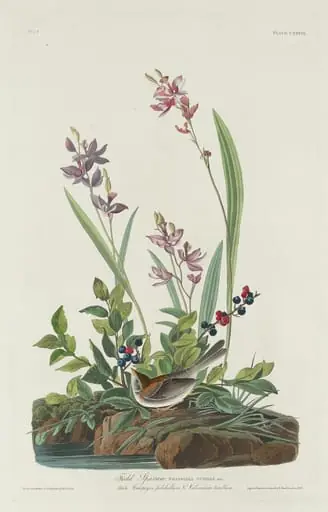
The left panel portrays a small finch perched among pink-flowered shrubs and green foliage, while the right shows a bay-winged bunting near a cactus with yellow blooms and a weathered log. The birds are rendered with anatomical attention, suggesting identification rather than ornamentation. The plants, carefully selected for regional authenticity, frame each bird within its ecological context, reinforcing a documentary intent.
Technique & Style
Chromolithography enabled Bien to layer multiple ink colors with fine control, achieving soft gradations and naturalistic tones. Hand coloring added nuance to feathers and petals, enhancing realism without overwhelming the printed base. The composition is balanced and static, prioritizing clarity over dynamism. Each element is rendered with meticulous detail, characteristic of scientific illustration of the period.
History & Provenance
Produced during the height of chromolithographic innovation in the United States, the print likely originated as part of a larger ornithological publication. Julius Bien, a prominent New York printer, was known for his collaborations with naturalists and his technical mastery in color printing. The work reflects the growing market for accessible, high-quality natural history imagery among educated audiences.
Context
In the mid-19th century, advances in printing allowed detailed natural history images to reach wider audiences beyond academic circles. This print aligns with contemporaneous efforts by Audubon and others to catalog American wildlife. The inclusion of specific flora suggests an awareness of habitat, reflecting emerging ecological thinking even before the term was formally recognized.
Legacy
Though not widely known today, Bien’s work represents a critical bridge between scientific documentation and mass-produced visual culture. Chromolithographs like this one helped standardize the visual representation of birds for educators, collectors, and amateur naturalists. Their technical precision laid groundwork for later illustrated field guides and influenced how wildlife was visually understood by the public.
Artist & collection