Artwork
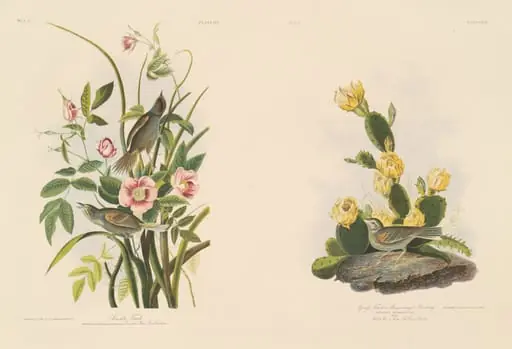
Bay-winged Bunting
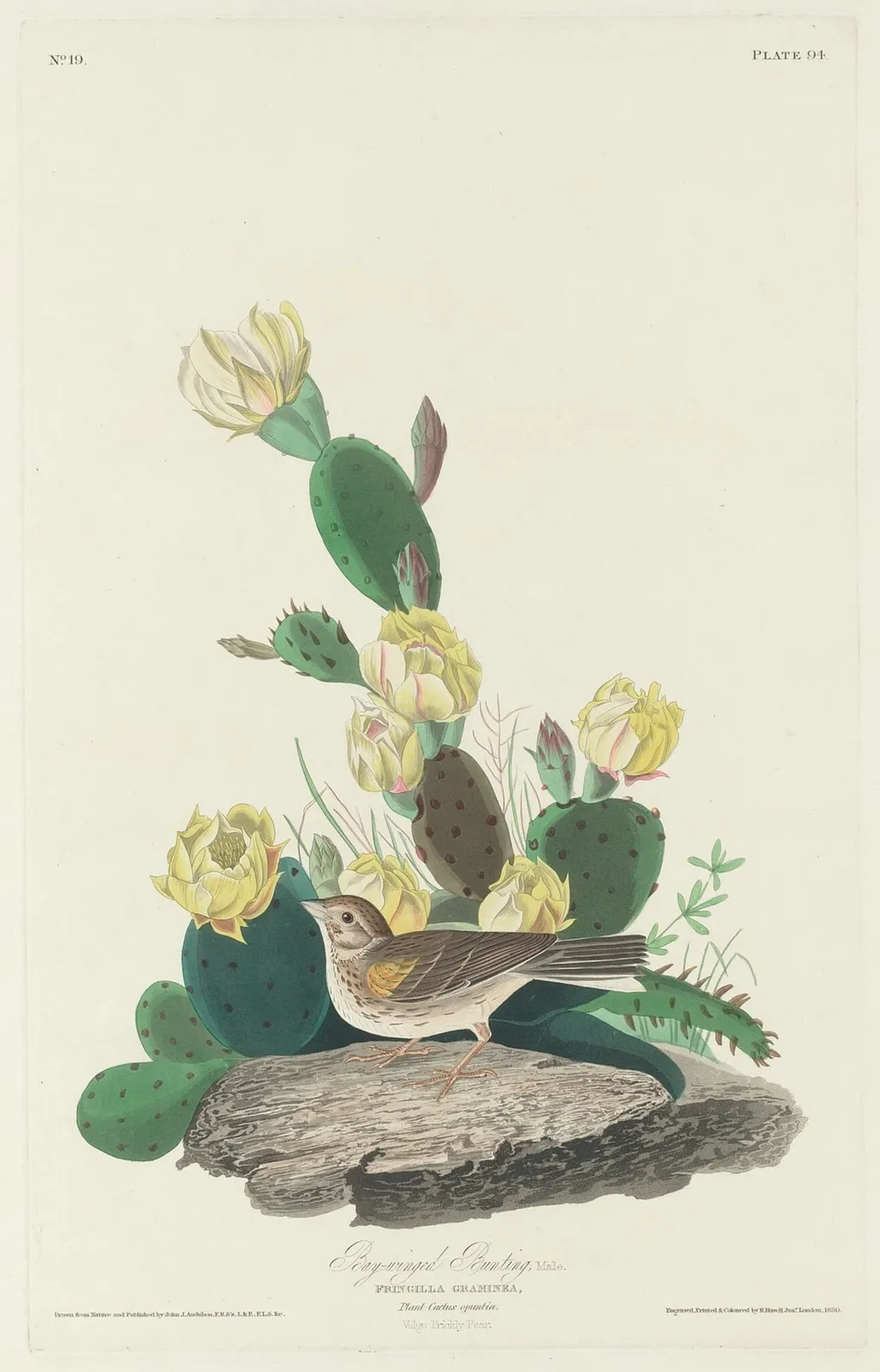
Bay-winged Bunting is an ink print by the Romanticist artist Robert Havell Jr.. It dates from 1830 and is held in the collection of the National Gallery of Art.
About this work
Overview
Bay-winged Bunting is a hand-colored engraving and aquatint print on Whatman wove paper, created by Robert Havell Jr. in 1830. It showcases a detailed bird study within a natural setting.
Subject & Meaning
The print depicts a small, brown bird with darker stripes perched on a rock, amidst cacti with spiky green pads and soft, pale yellow flowers. The composition reflects the 19th-century fascination with natural history illustration.
Technique & Style
Havell employed fine lines and cross-hatching to achieve intricate details in the bird’s feathers and cactus spines, characteristic of the precise drawing techniques common in historical scientific illustrations.
History & Provenance
As part of the Havell family of engravers and etchers, known for their aquatint expertise and ties to Indian art, Bay-winged Bunting represents a continuation of the family’s artistic legacy.
Context
Created during a period of heightened interest in natural history, the work aligns with contemporary scientific and artistic trends of detailed, realistic depictions of the natural world.
Artist & collection

Artist
The Havell family of Reading, Berkshire, England, included a number of notable engravers, etchers and painters, as well as writers, publishers, educators, and musicians.