Artwork
Bachman's Warbler
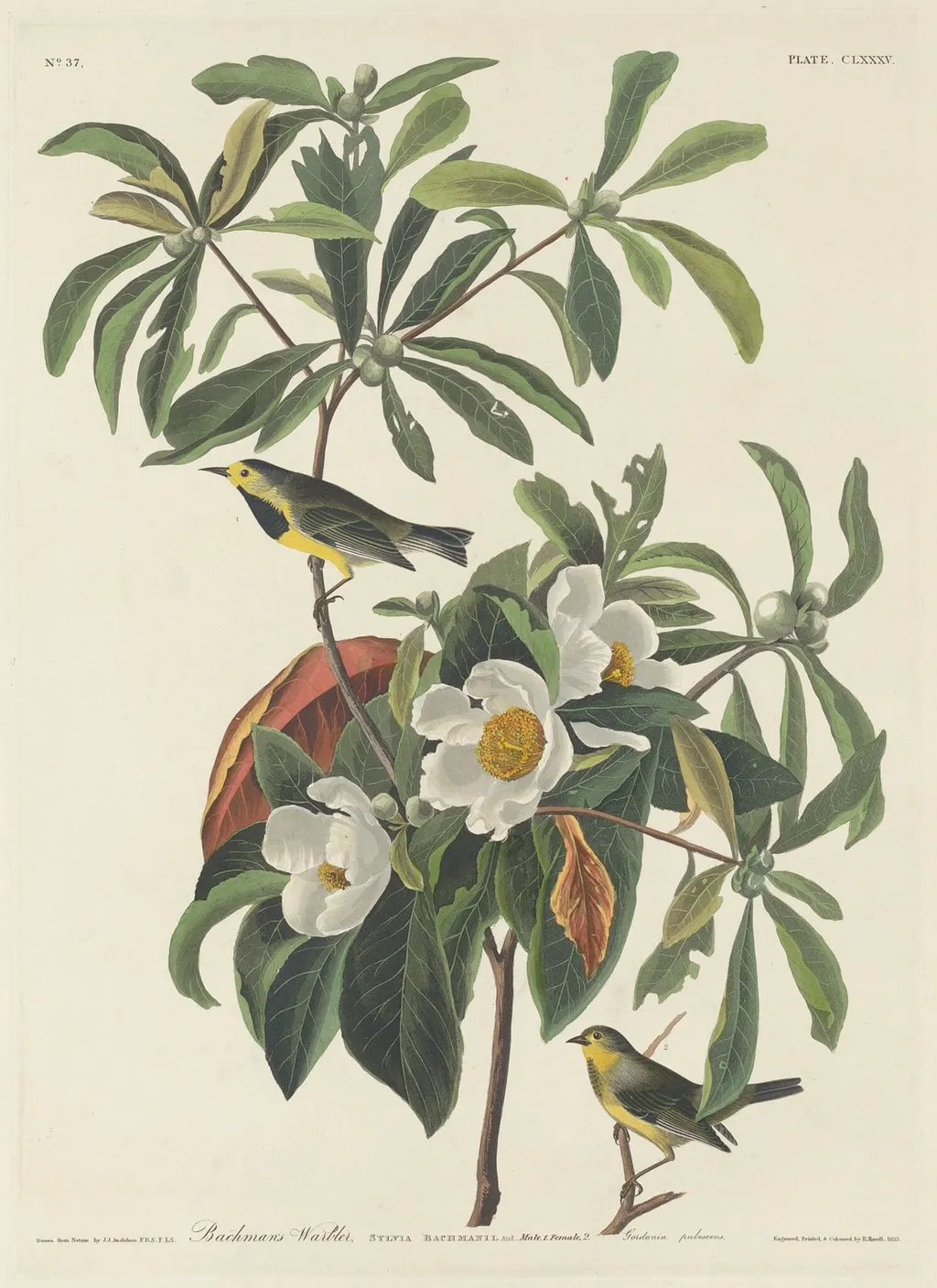
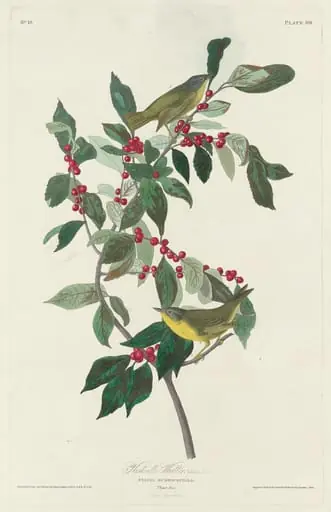
Bachman's Warbler is an ink print by the Romanticist artist Robert Havell Jr.. It dates from 1834 and is held in the collection of the National Gallery of Art.
About this work
Overview
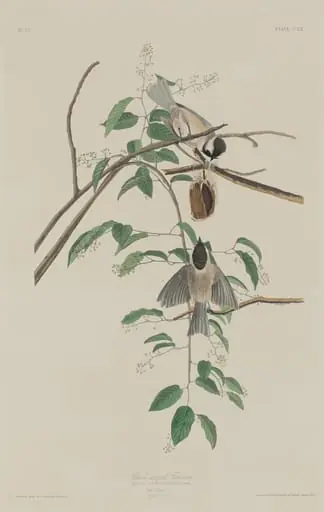
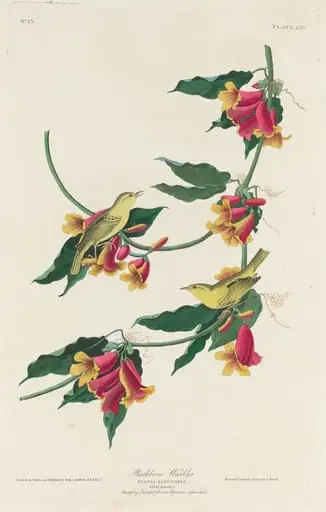
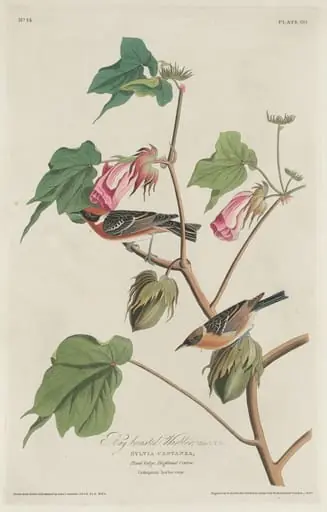
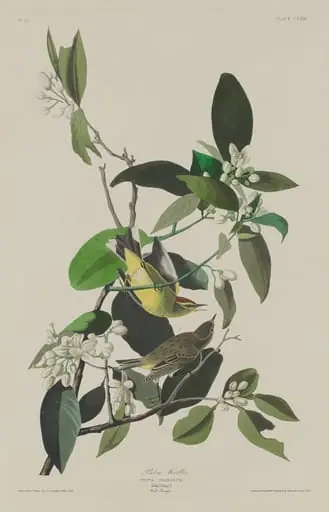
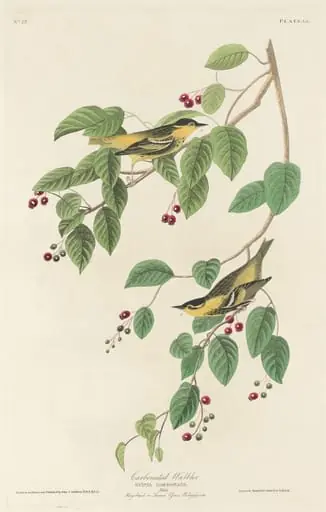
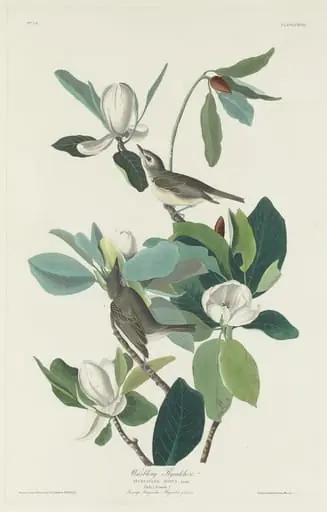
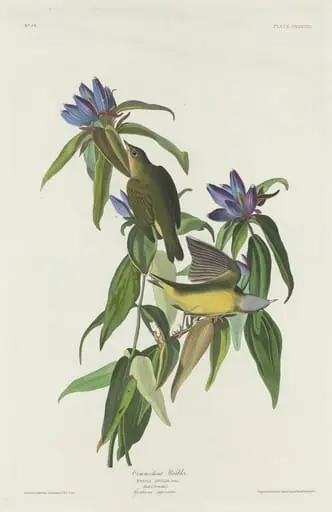
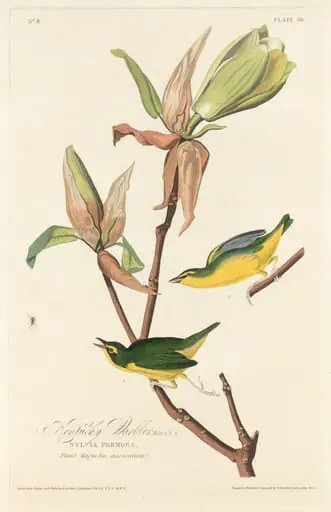
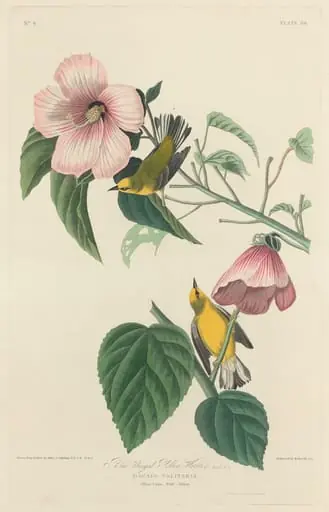
Created in 1834, this print presents a small North American songbird perched amid a verdant branch laden with glossy leaves, white blossoms and a few red buds. The composition balances two birds with yellow chests and dark backs, one clinging to foliage and the other poised on a twig, rendered in soft yet vivid hues that emphasize natural detail.
Technique & Style
The image was produced by Robert Havell Jr. through a combination of hand‑colored engraving and aquatint on Whatman wove paper. Fine line work defines the foliage and feathers, while the aquatint provides delicate tonal washes. Hand‑applied watercolor adds subtle coloration, a method typical of early‑19th‑century scientific illustration that sought both accuracy and aesthetic clarity.
Subject & Meaning
The print depicts the bird known as Bachman’s Warbler, named after the 19th‑century naturalist John Bachman. By portraying the species in a realistic setting, the work serves both as a visual record for ornithological study and as a tribute to the naturalist’s contributions to American wildlife documentation.
History & Provenance
Robert Havell Jr. belonged to a prominent family of engravers, etchers and painters, inheriting the aquatint expertise of his father, Robert Havell the Elder, and his uncle, Luke Havell. The Havells were noted for their work on natural history subjects, and this print reflects the family’s longstanding involvement in producing detailed scientific imagery for publications of the period.
Artist & collection

Artist
The Havell family of Reading, Berkshire, England, included a number of notable engravers, etchers and painters, as well as writers, publishers, educators, and musicians.