Artwork
Chestnut-colored Finch, Black-headed Siskin, Black Crown Bunting and Arctic Ground Finch
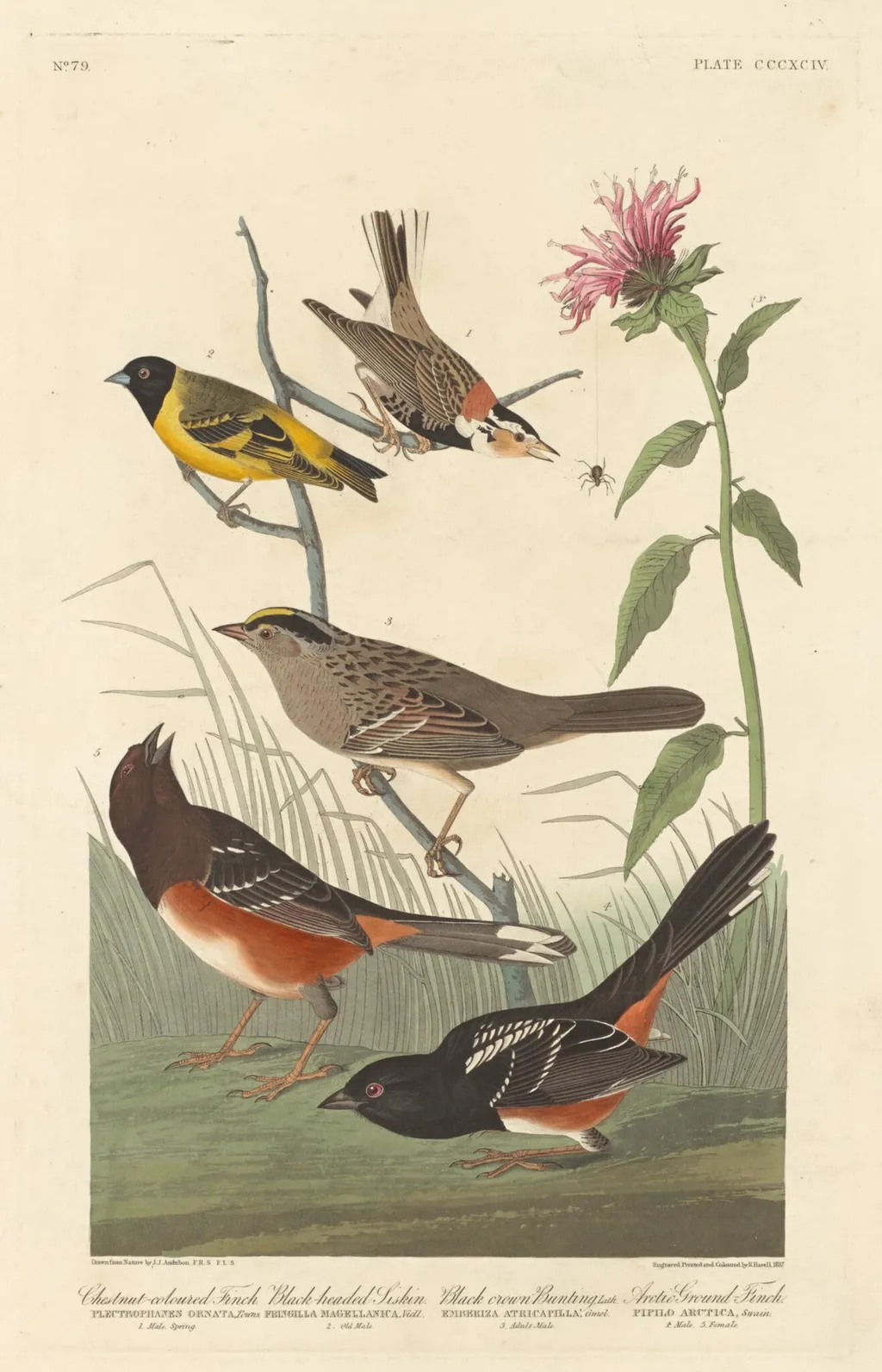
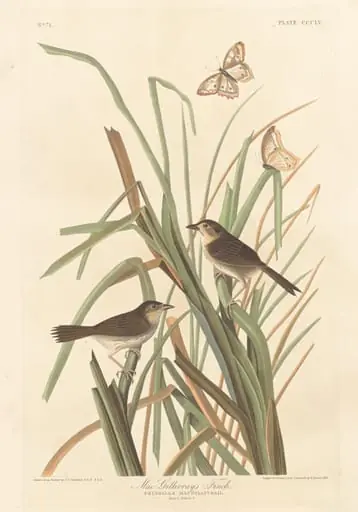
Chestnut-colored Finch, Black-headed Siskin, Black Crown Bunting and Arctic Ground Finch is an ink print by the Romanticist artist Robert Havell Jr.. It dates from 1837 and is held in the collection of the National Gallery of Art.
About this work
Overview
This 1837 hand‑colored engraving and aquatint presents four distinct bird species—Chestnut‑colored Finch, Black‑headed Siskin, Black Crown Bunting, and Arctic Ground Finch—arranged on branches and grass against a light background. The composition includes a pink flower on a tall stem and a spider suspended in a web, adding botanical detail to the naturalistic scene.
Subject & Meaning
The grouping highlights the diversity of North American and Eurasian finches, reflecting contemporary interests in comparative ornithology.
Each bird is rendered with attention to its characteristic plumage: a yellow‑belly, black‑headed finch occupies the upper left; a brown‑and‑white striped siskin appears in the upper right; a brown‑backed bunting with a white stripe sits lower left; and a black‑backed finch with a contrasting white stripe rests lower right. The grouping highlights the diversity of North American and Eurasian finches, reflecting contemporary interests in comparative ornithology.
Technique & Style
The image combines engraving with aquatint, a method that allows for delicate tonal washes alongside precise line work. Hand‑applied color on the print enhances the natural hues of the birds and flora. Printed on Whatman wove paper, the smooth surface supports fine detail and subtle shading typical of early 19th‑century natural history illustration.
History & Provenance
Created by Robert Havell Jr., the work continues a family tradition established by his father, Robert Havell the Elder, and uncle Luke Havell, who were prominent engravers in late‑18th‑ and early‑19th‑century England. The Havell workshop was known for producing illustrated scientific volumes, and this print exemplifies their contribution to the period’s burgeoning interest in documenting wildlife.
Context
The print emerges from a broader European fascination with natural history and the cataloguing of exotic species, a trend fueled by expanding scientific societies and colonial exploration. The inclusion of a detailed botanical element alongside the birds aligns with the era’s integrated approach to illustrating flora and fauna within a single, educational composition.
Artist & collection

Artist
The Havell family of Reading, Berkshire, England, included a number of notable engravers, etchers and painters, as well as writers, publishers, educators, and musicians.

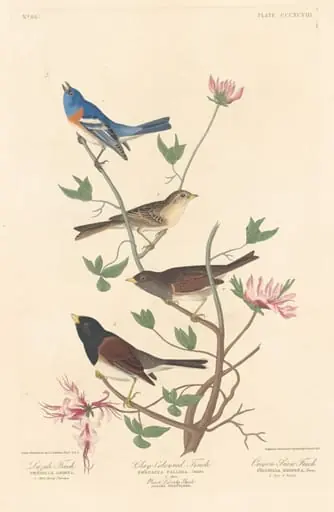 Lazuli Finch, Clay-colored Finch and Oregon Snow Finch
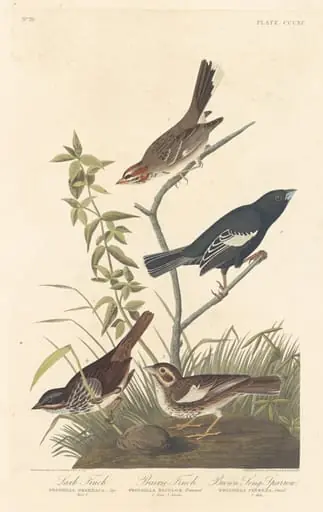 Lark Finch, Prairie Finch and Brown Song Sparrow
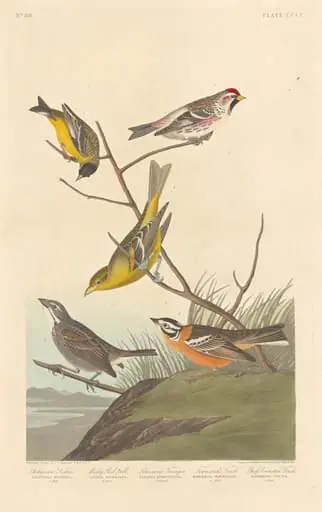 Arkansaw Siskin, Mealy Red-poll, Louisiana Tanager, Townsend's Finch and Buff-breasted Finch
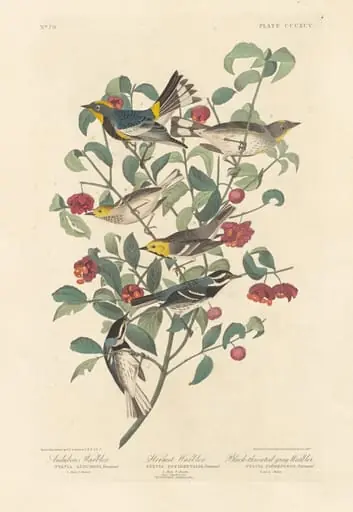 Audubon's Warbler, Hermit Warbler and Black-throated Gray Warbler
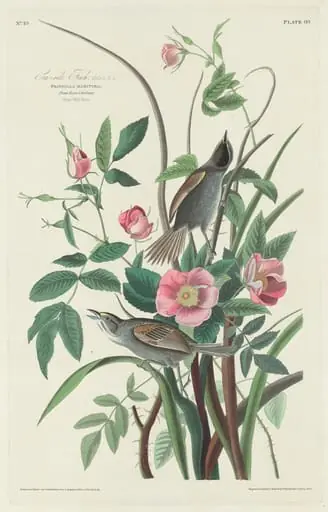 Sea-side Finch
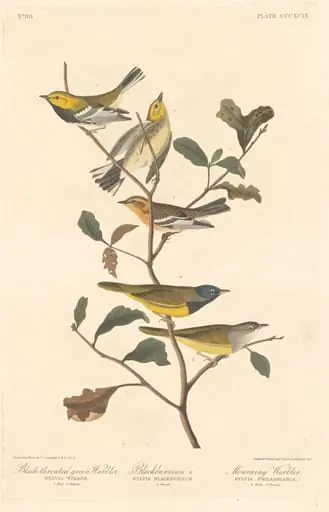 Black-throated Green Warbler, Blackburnian Warbler and Mourning Warbler
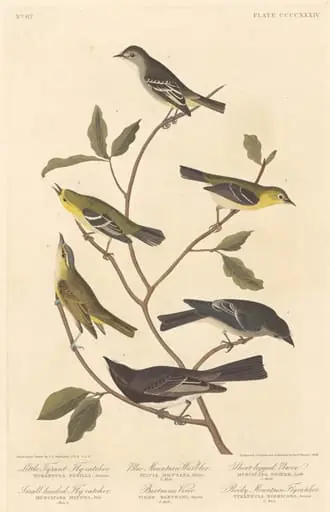 Little Tyrant Flycatcher, Small-Headed Flycatcher, Blue Mountain Warbler, Bartram's Vireo, Short-Legged Pewee, and Rocky Mountain Flycatcher
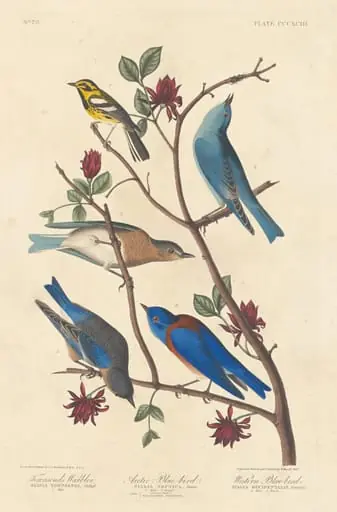 Townsend's Warbler, Arctic Blue Bird and Western Blue Bird
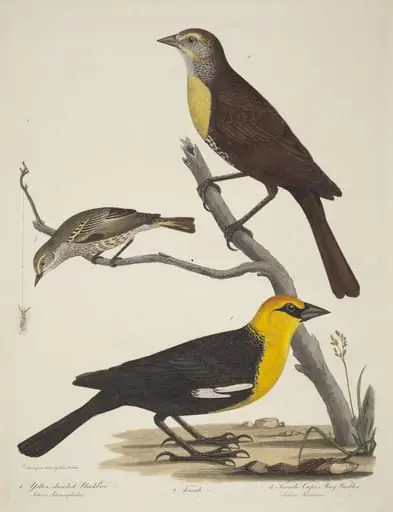 Yellow-headed Blackbird, Female Blackbird, and Female Cape May Warbler
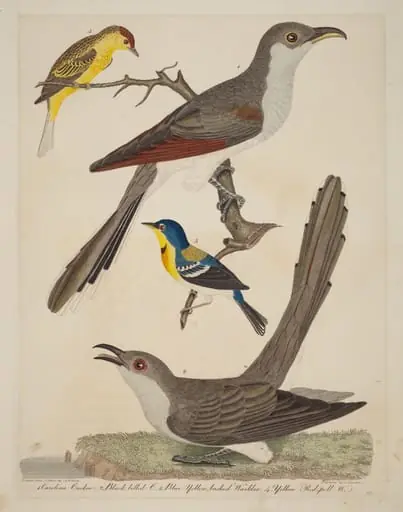 Carolina Cuckoo, Black-billed Cuckoo, Blue Yellow-backed Warbler, and Yellow Red-poll Warbler
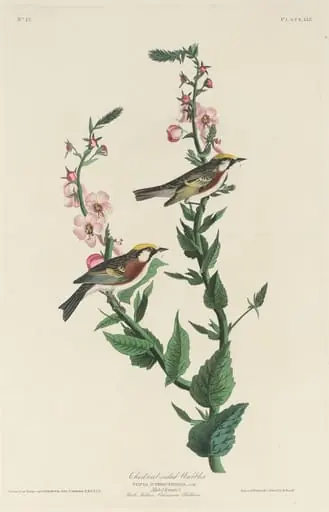 Chestnut-sided Warbler
 MacGillivray's Finch