Artwork
The Finding of Moses
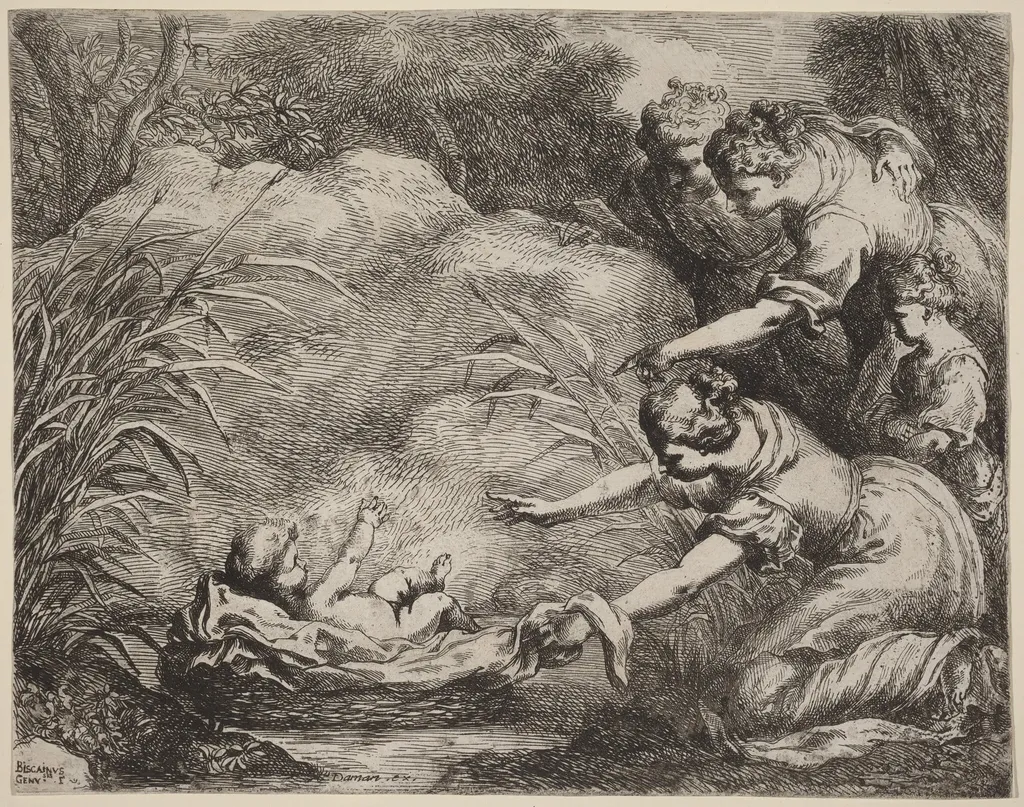
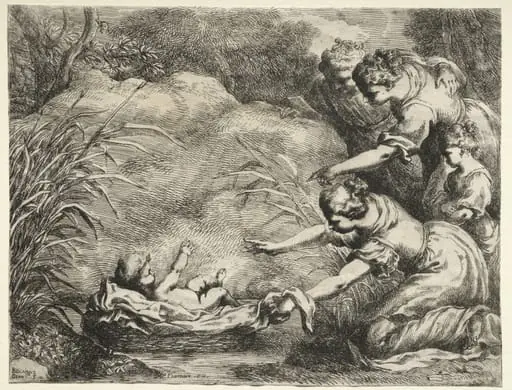
The Finding of Moses is an ink print by the Baroque artist Bartolomeo Biscaino. It dates from 1644 and is held in the collection of the National Gallery of Art.
About this work
Overview
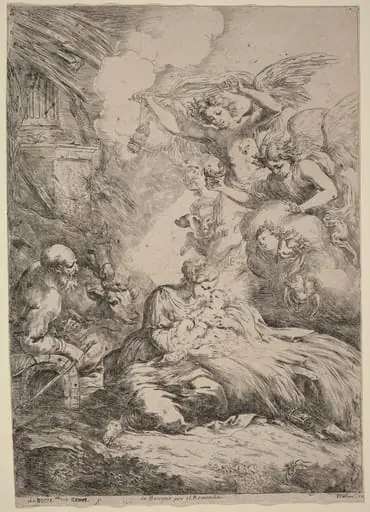
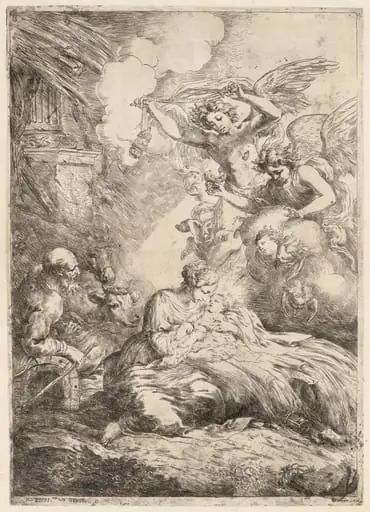
Created in 1644, this etching by Bartolomeo Biscaino depicts the biblical moment when the infant Moses is discovered in the Nile. Rendered in monochrome, the scene captures a quiet yet intense interaction between three figures against a rugged natural setting. The technique emphasizes line and contrast to convey motion and emotional tension, typical of 17th-century Italian printmaking traditions.
Subject & Meaning
The scene illustrates the story from Exodus, where Pharaoh’s daughter finds the Hebrew baby Moses floating in a basket among reeds. The kneeling woman, likely the princess, reaches for the child as a male attendant observes nearby. The composition underscores divine intervention and compassion, framing the discovery as both a personal and pivotal historical moment within the biblical narrative.
Technique & Style
Biscaino employed fine, incised lines to define form and atmosphere, using the etching process to achieve sharp contrasts between light and shadow.
Biscaino employed fine, incised lines to define form and atmosphere, using the etching process to achieve sharp contrasts between light and shadow. The swirling clouds and dense reeds suggest movement and depth, while the figures’ gestures are rendered with expressive precision. The absence of color heightens the drama, relying solely on tonal variation to guide the viewer’s eye through the narrative.
History & Provenance
The etching was produced during Biscaino’s active years in Genoa, a center for printmaking in mid-17th-century Italy. Though few records survive from this period, the work aligns with regional trends favoring biblical subjects rendered with emotional immediacy. It likely circulated among collectors and religious institutions, valued for its narrative clarity and technical finesse.
Context
In mid-17th-century Italy, religious themes dominated print culture, especially in regions like Liguria where Biscaino worked. Etchings served as accessible devotional images and artistic studies. This piece reflects the Counter-Reformation emphasis on emotionally engaging biblical stories, designed to inspire reflection among viewers through intimate, dramatic compositions.
Legacy
Biscaino’s etching remains a representative example of Genoese printmaking, illustrating how artists translated large-scale religious paintings into smaller, reproducible formats. While not widely known today, it contributes to the broader understanding of how biblical narratives were visually disseminated in early modern Europe through the medium of print.
Artist & collection

 Moses Saved from the Nile
 The Infant Jesus and Saint John
 The Rest on the Flight into Egypt
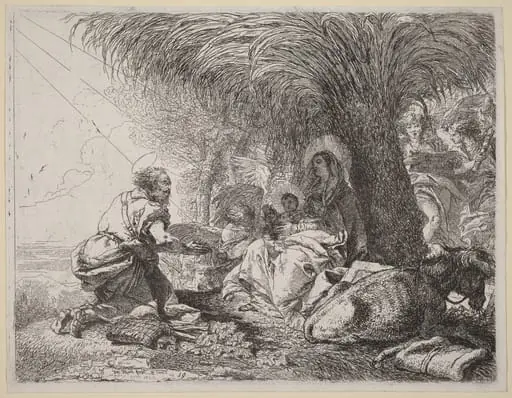 The Rest on the Flight with Joseph in Adoration
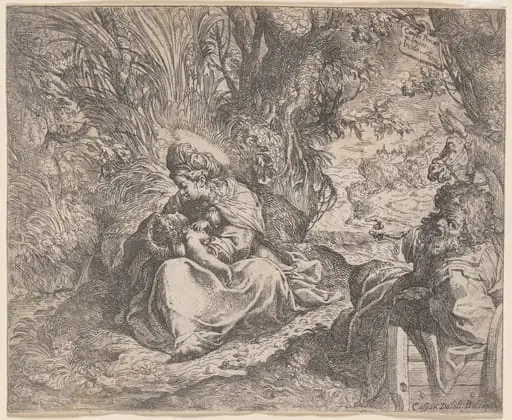 The Rest on the Flight into Egypt
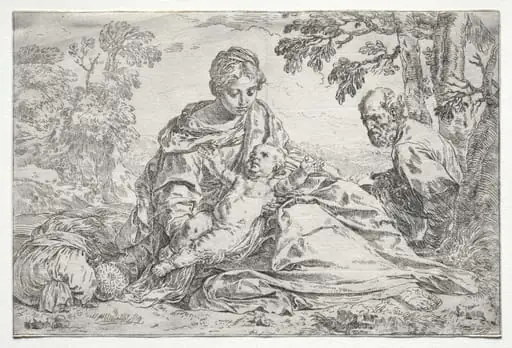 Rest on the Flight into Egypt
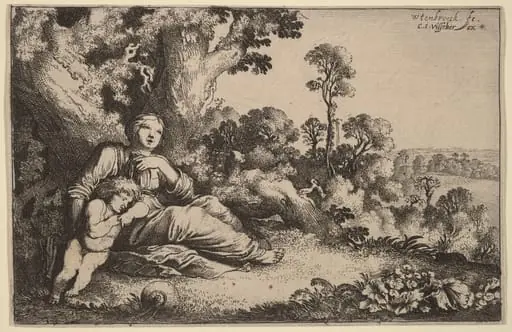 Hagar in the Desert
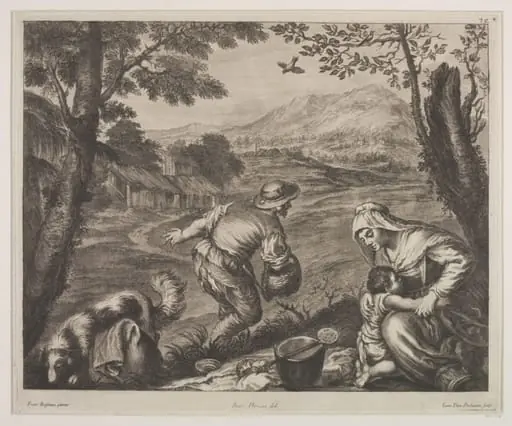 The Husbandman
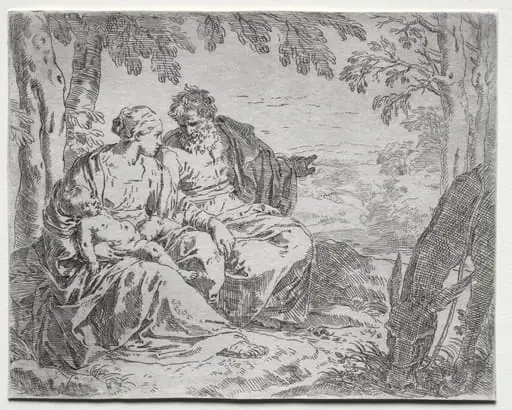 Rest on the Flight in to Egypt
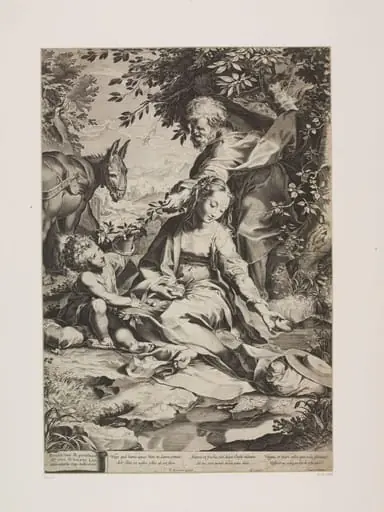 Repose in Egypt
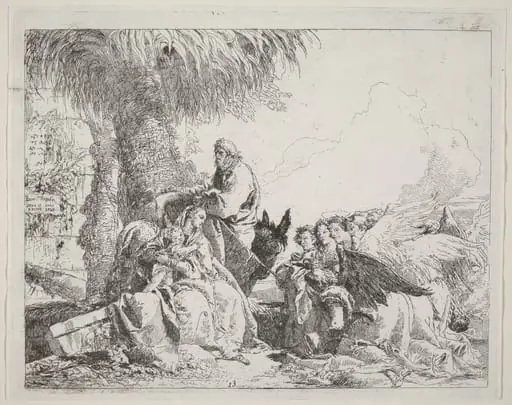 The Rest on the Flight, with Adoring Angels