Artwork
David Offering the Head of Goliath to King Saul
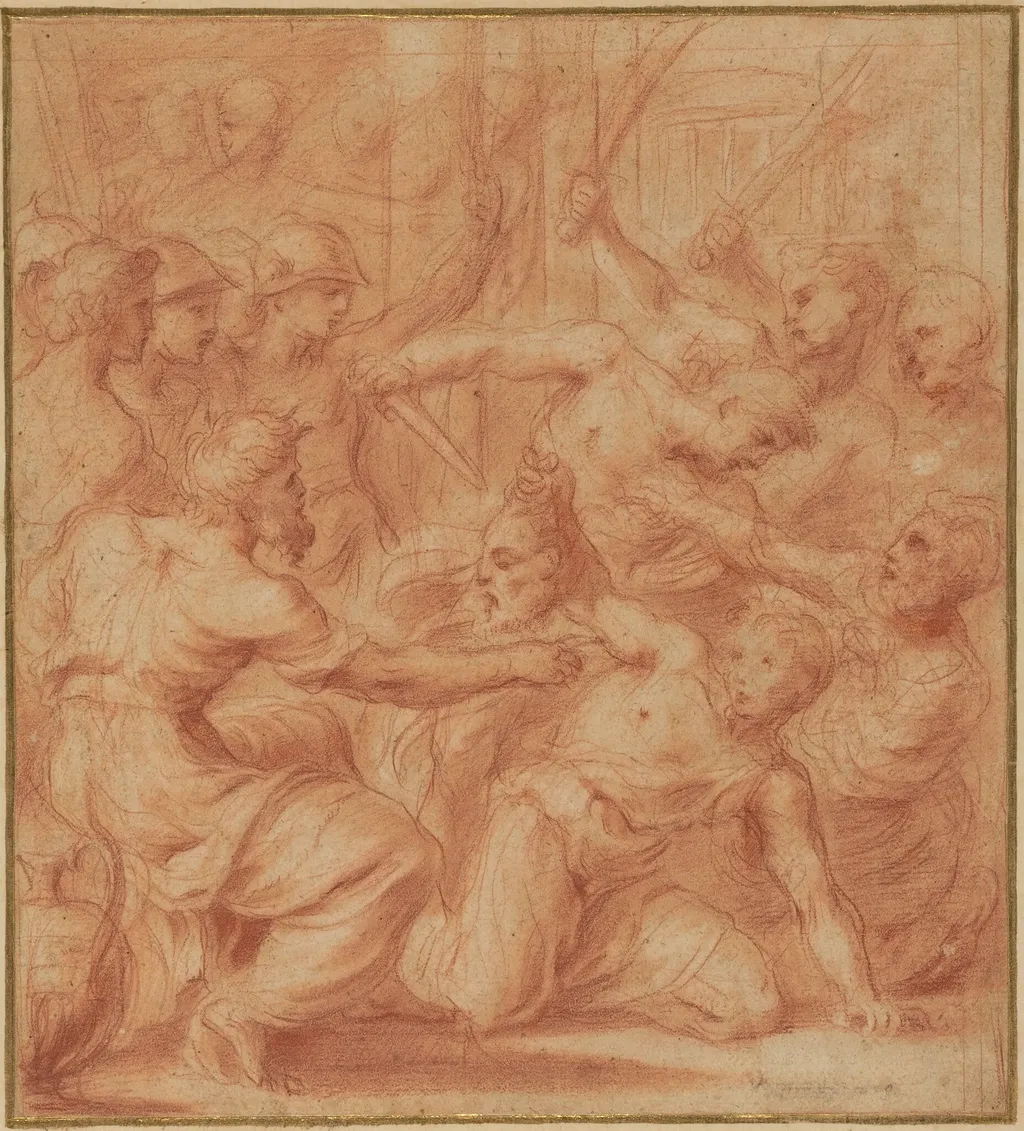
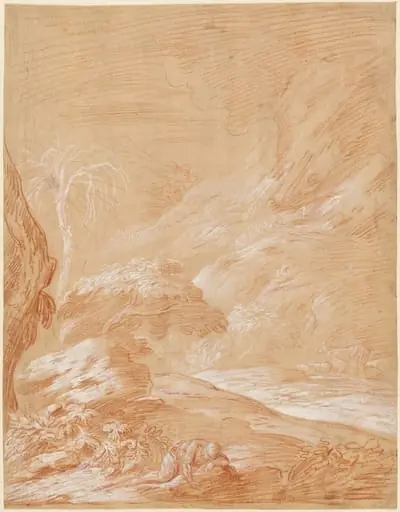
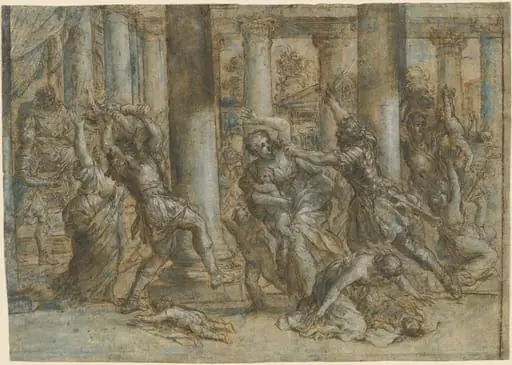
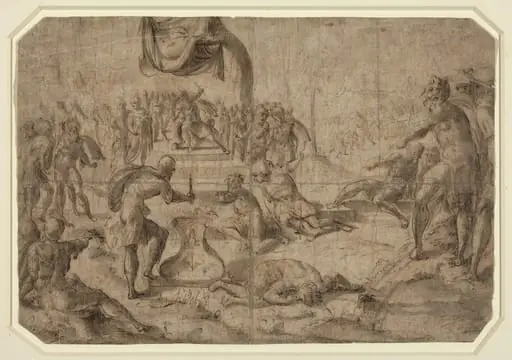
David Offering the Head of Goliath to King Saul is a chalk drawing by the Baroque artist Bartolomeo Biscaino. It dates from 1654 and is held in the collection of the National Gallery of Art.
About this work
Overview
Bartolomeo Biscaino’s drawing, dated around 1654, depicts a dramatic biblical episode in which a youthful David presents the severed head of Goliath to King Saul. Executed in red chalk on laid paper, the work captures a tense interior space, with Saul seated on an elaborately carved throne while the kneeling figure holds a blood‑stained sword and the giant’s head.
Subject & Meaning
The composition illustrates the moment after the famed duel, emphasizing the transfer of victory from the shepherd‑boy hero to the monarch. David’s humble posture and the stark presentation of the trophy underscore themes of divine favor, the burden of triumph, and the complex relationship between the youthful victor and the aging king.
Technique & Style
Rendered solely with red chalk, the drawing relies on line work to model form and texture. Biscaino’s handling of the medium creates pronounced folds in Saul’s robe and delineates the stone walls, while the absence of pigment focuses attention on chiaroscuro effects achieved through varied pressure and hatching.
History & Provenance
Created in the mid‑seventeenth century, the piece is attributed to the Venetian‑born artist Bartolomeo Biscaino, who was active in Rome and Naples. The drawing entered the collection of the National Gallery of Art in Washington, where it is catalogued among the museum’s holdings of Baroque drawings.
Context
The work reflects the Baroque fascination with dramatic narrative and emotional intensity, common in religious and historical subjects of the period. Biscaino’s choice of a single‑color chalk medium aligns with contemporary practices of preparatory studies, allowing the artist to explore composition and gesture before committing to a full‑scale painting.
Artist & collection