Artwork
The Holy Family with Saint John
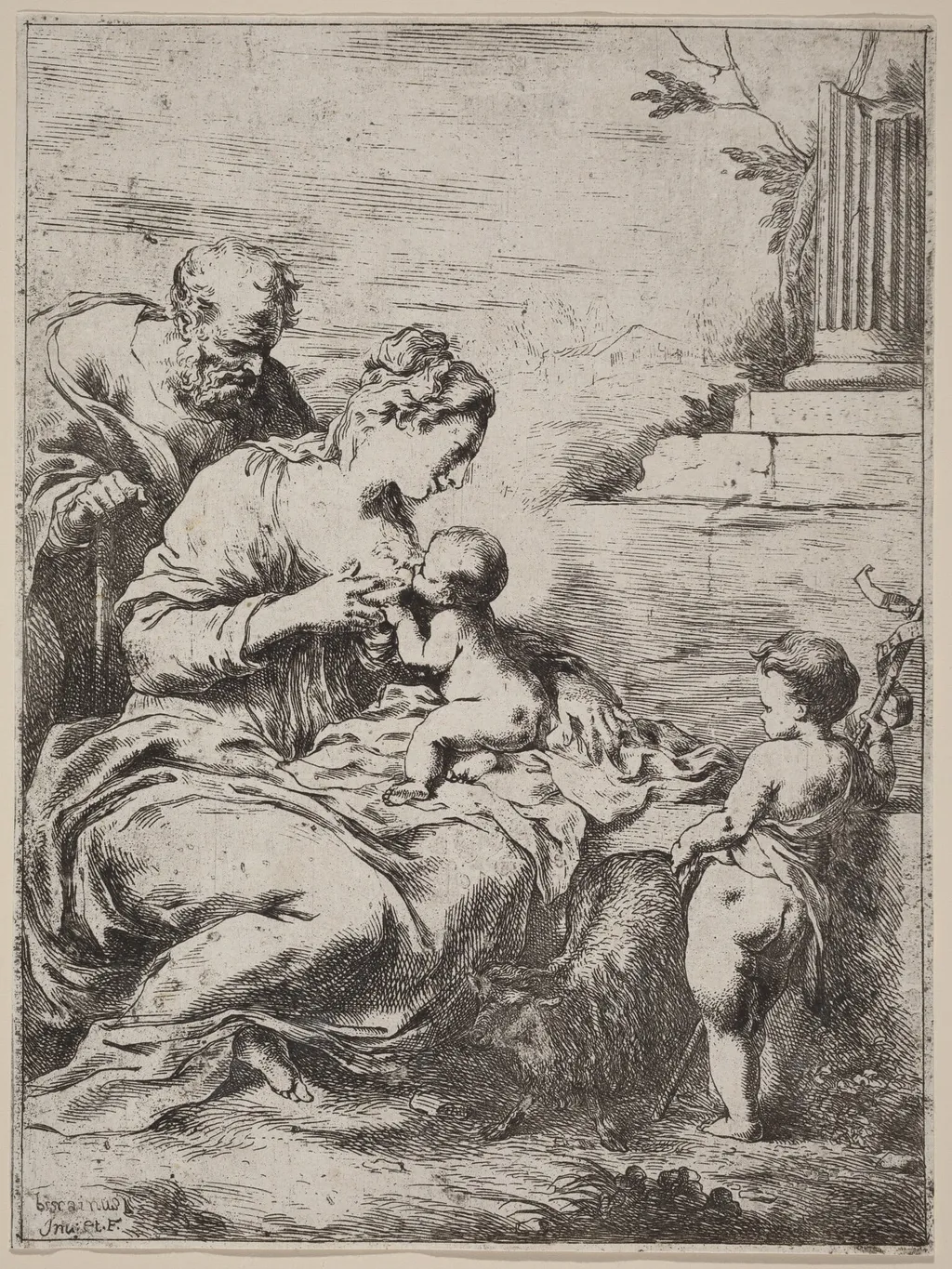
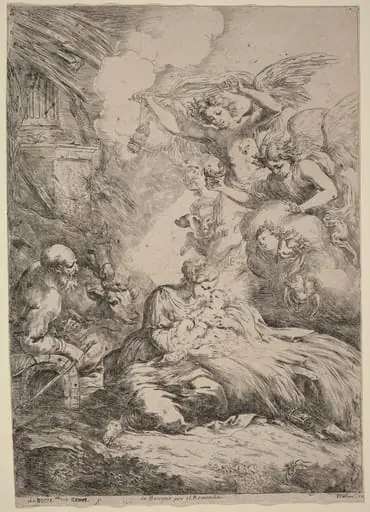
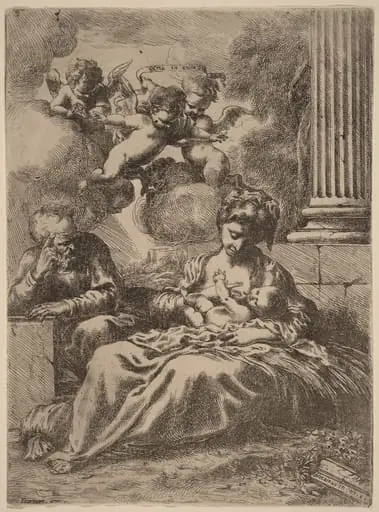
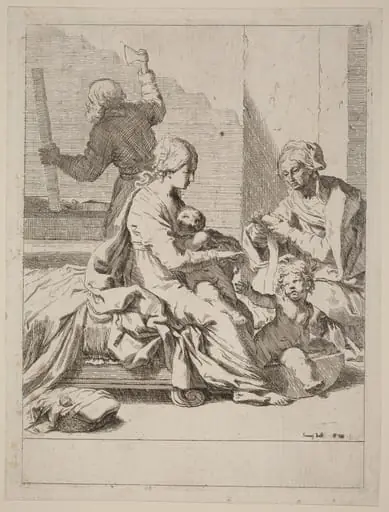
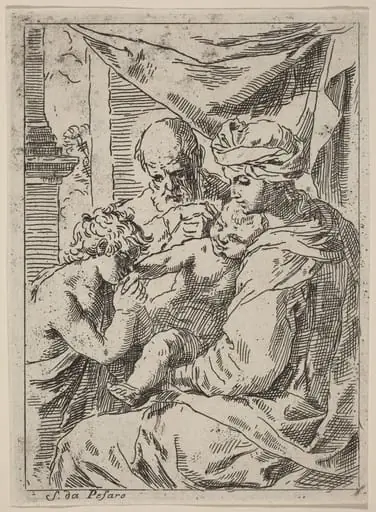
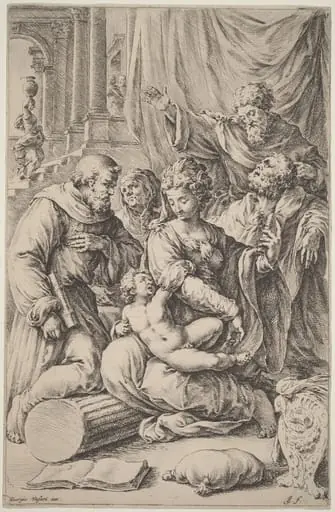
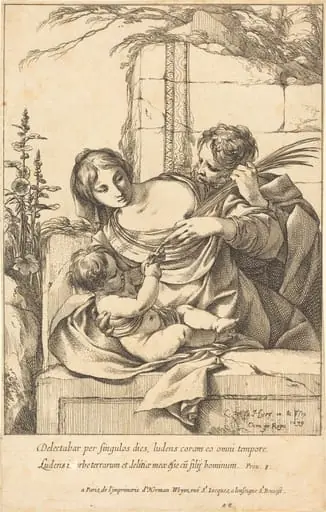
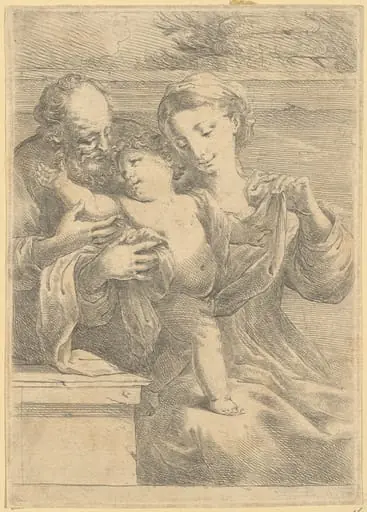
The Holy Family with Saint John is an ink print by the Baroque artist Bartolomeo Biscaino. It dates from 1644 and is held in the collection of the National Gallery of Art.
About this work
Overview
Executed in a single plate using the etching technique, the work belongs to the broader tradition of religious prints produced in 17th-century Italy.
Created in 1644, this etching by Bartolomeo Biscaino depicts the Holy Family alongside the young Saint John the Baptist. Executed in a single plate using the etching technique, the work belongs to the broader tradition of religious prints produced in 17th-century Italy. Its small scale and fine line work reflect the intimate nature of devotional imagery intended for private contemplation rather than public display.
Subject & Meaning
The composition centers on the Virgin Mary, Joseph, and the Christ Child, with Saint John the Baptist positioned nearby, often identified by his simple garment and staff. The grouping suggests a moment of quiet familial tenderness, reinforcing theological themes of divine kinship and the foreshadowing of Christ’s mission through John’s presence. The scene avoids dramatic action, favoring stillness to invite reflection.
Technique & Style
Biscaino employed etching to achieve subtle tonal variation through controlled acid-bitten lines. Delicate hatching and cross-contouring model forms without heavy shading, demonstrating mastery over the medium’s limitations. The precision of the lines conveys texture in fabric and hair, while the sparse background keeps focus on the figures, a hallmark of Baroque printmaking aimed at clarity and emotional restraint.
History & Provenance
The etching was produced during Biscaino’s active years in Genoa, where he worked under the influence of Ligurian and Piedmontese artistic circles. Few impressions survive, and known examples are held in institutional collections, suggesting limited circulation. Its date, 1644, aligns with the artist’s mature period, shortly before his death, indicating it may represent one of his final works in print.
Context
In mid-17th-century Italy, religious prints served as accessible tools for personal devotion, especially in regions affected by Counter-Reformation emphasis on piety. Etchings like this one allowed clergy and laypeople to engage with sacred narratives without costly paintings. Biscaino’s work reflects the regional preference for intimate, finely detailed imagery over grandiose altarpieces.
Legacy
Though Biscaino is less known than contemporaries like Rembrandt, his etchings contributed to the development of Italian graphic art in the Baroque era. This work exemplifies how regional artists adapted technical precision to devotional needs, influencing later printmakers in northern Italy. Its survival in museum collections underscores its role as a quiet but significant artifact of religious visual culture.
Own this work as a print
Artist & collection