Artwork
The Assumption of the Virgin
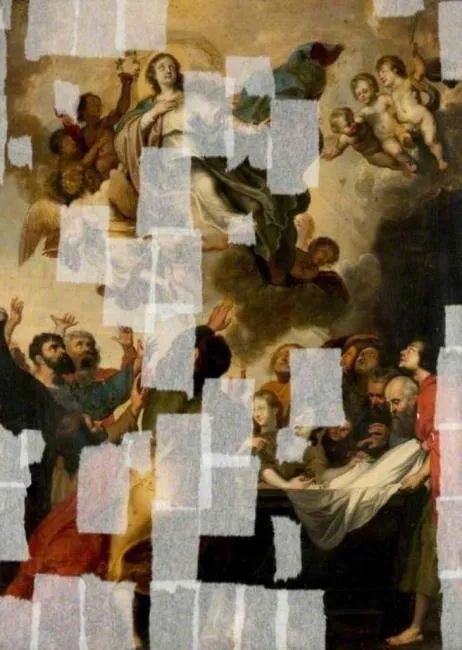
The Assumption of the Virgin is an oil painting by the High Baroque Italian artist Bartolomeo Biscaino. It dates from 1640 and is held in the collection of the Kelvingrove Art Gallery and Museum.
About this work
The painting is done in a style that emphasizes light and shadow, with the Virgin and the angels being highlighted against a darker background.
The painting shows the Virgin Mary being lifted up to heaven by angels. She is dressed in white and blue robes and has her hands together in prayer. The angels are holding her up and looking up at her with adoration. There are also other figures in the painting, including a group of people on the ground who are looking up at the Virgin in awe.
The painting is done in a style that emphasizes light and shadow, with the Virgin and the angels being highlighted against a darker background. The overall effect is one of movement and energy, as if the Virgin is being swept up to heaven.
The use of light and shadow in this painting is reminiscent of the technique of chiaroscuro, which was popular in the 17th century.
Overview
Painted in 1640 by Bartolomeo Biscaino, this oil on canvas work illustrates the theological moment of the Virgin Mary’s ascent into heaven. Executed in the Baroque tradition, the composition centers on Mary’s upward motion, surrounded by celestial figures, while earthly witnesses react below. The painting resides in the Kelvingrove Art Gallery and Museum in Glasgow, where it remains a key example of 17th-century Ligurian religious art.
Subject & Meaning
The scene captures the Assumption of the Virgin, a doctrine affirming Mary’s bodily entry into heaven. She is shown ascending, hands clasped in prayer, enveloped by a halo of divine light. Angels lift her gently, their gazes fixed upward in reverence. Below, a group of apostles and devotees look on in wonder, their postures conveying awe and disbelief, reinforcing the miraculous nature of the event as understood in Catholic tradition.
Technique & Style
Biscaino employs strong chiaroscuro to heighten the drama of the ascent. The Virgin and angels emerge from a dim, shadowed background, illuminated by a celestial glow that contrasts with the muted tones of the earthly figures. Dynamic drapery and upward-sweeping lines suggest motion, while the spatial arrangement draws the viewer’s eye toward the heavens. The brushwork is fluid, emphasizing texture in fabric and the softness of divine light.
History & Provenance
Commissioned for a religious context in Genoa, the painting entered the Kelvingrove collection in the late 19th century through a private donation. Its attribution to Biscaino, a lesser-known Ligurian painter influenced by Caravaggisti, was confirmed through stylistic analysis and archival records. It has remained in public display since its acquisition, with minimal restoration recorded.
Context
Created during the Counter-Reformation, the painting reflects the Catholic Church’s emphasis on Marian devotion and visual storytelling to inspire faith. Biscaino’s style aligns with the broader Italian Baroque trend of emotional intensity and theatrical lighting, though his approach remains more restrained than that of his Roman or Neapolitan contemporaries. The work exemplifies regional adaptations of larger ecclesiastical themes in northern Italy.
Legacy
Though not widely reproduced, the painting is recognized in scholarly circles as a representative example of Ligurian Baroque religious art. It contributes to understanding how regional artists interpreted universal theological subjects with localized sensibilities. Its continued presence in a major public museum ensures its role in educating audiences about lesser-known but significant figures in early modern Italian painting.
Artist & collection

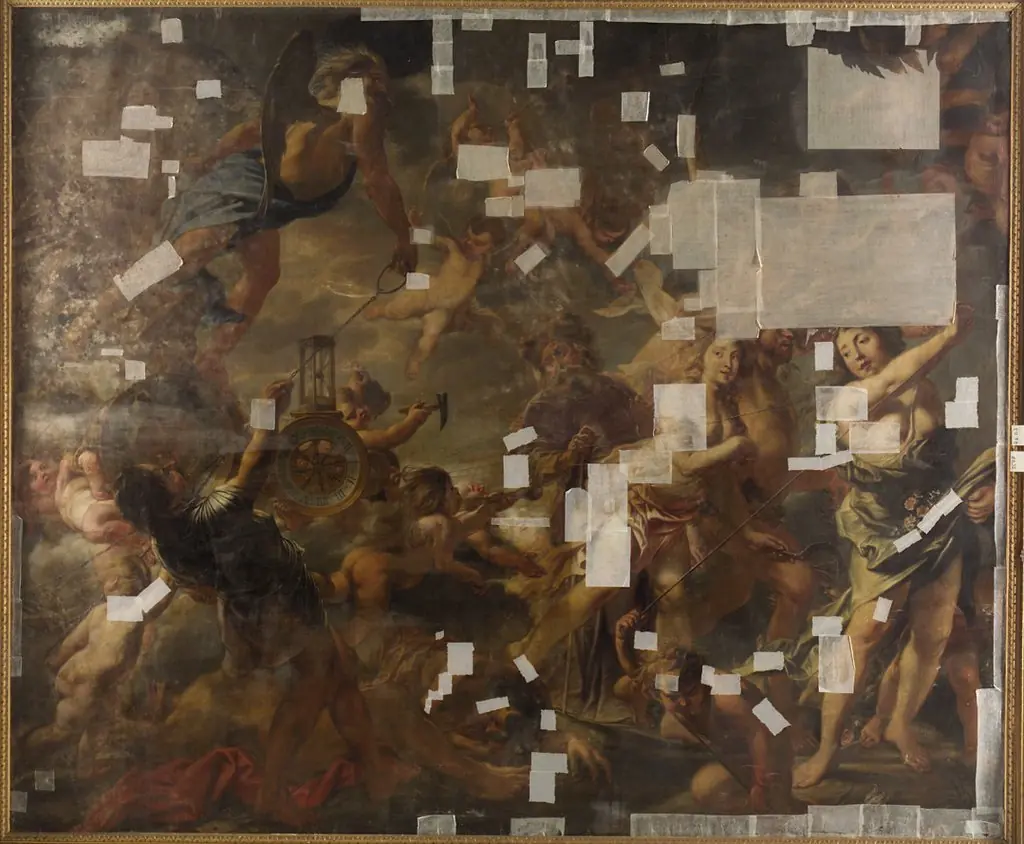 Triumph der Zeit
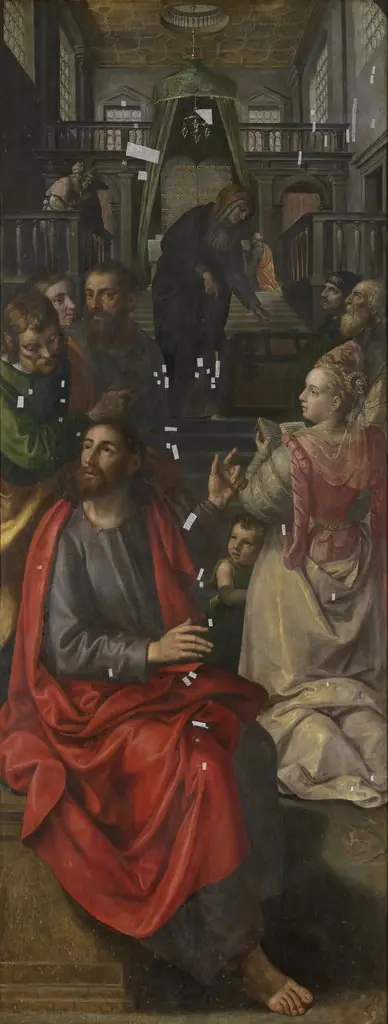 The Widow's Offering
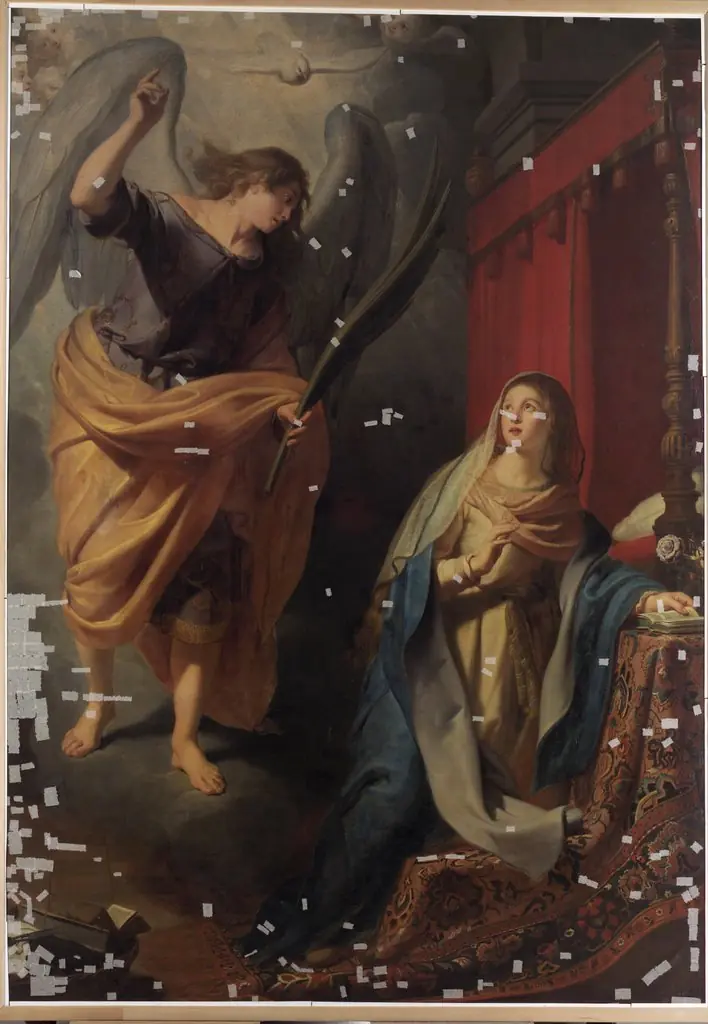 The Annunciation
 Saint Louis IX, King of France, the Crusader
 Adam and Eve, with Cain and Abel
 Saint Constantia's Vision before the Tomb of Saints Agnes and Emerentiana
 Coronation of Mary
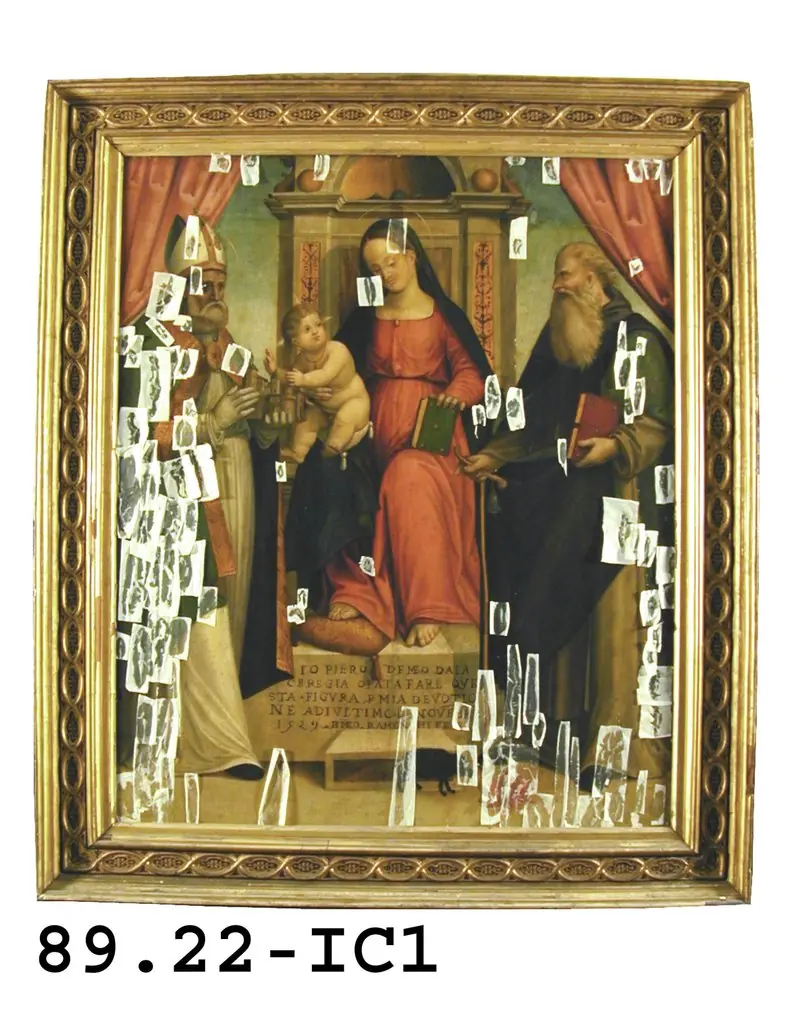 The Virgin Enthroned with Saint Amadio and Saint Anthony
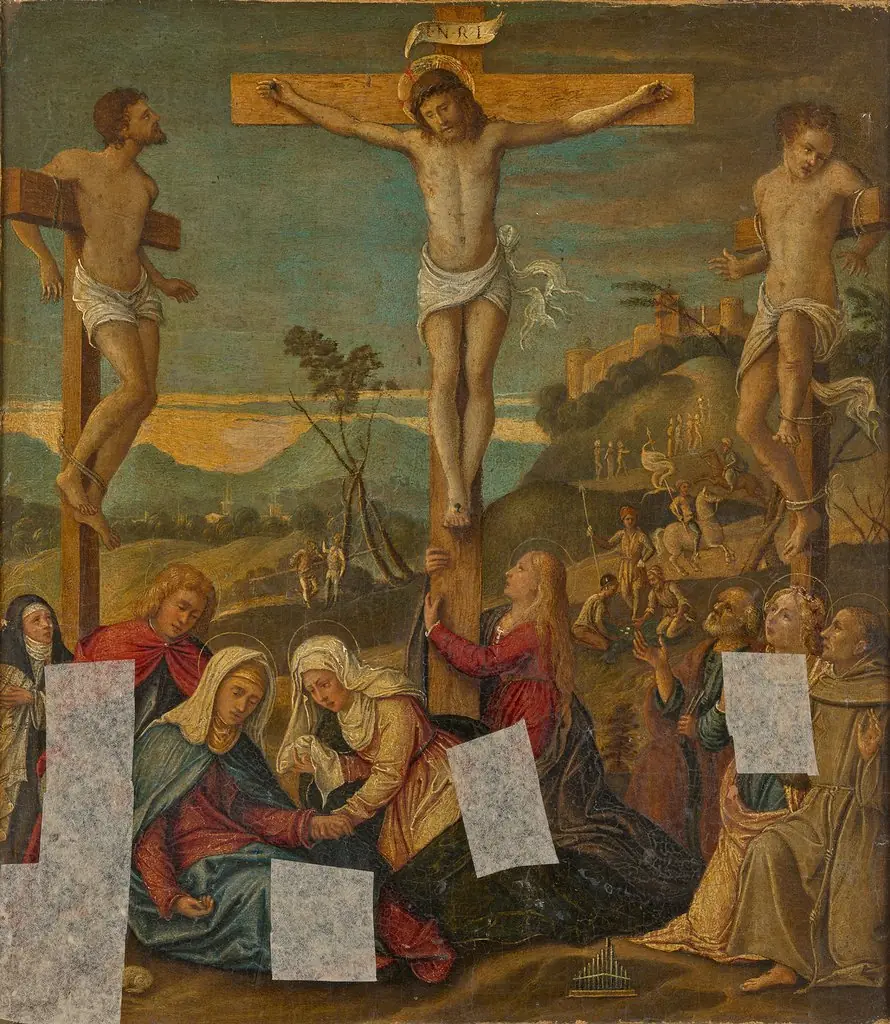 The Crucifixion of Christ