Artwork
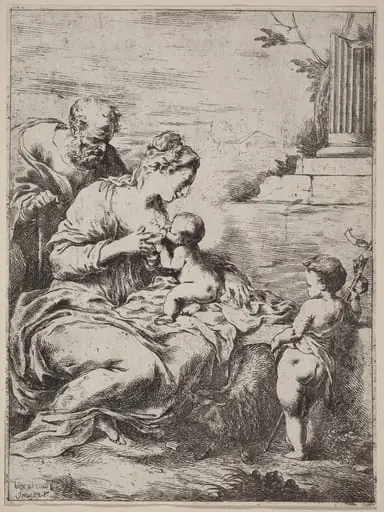
The Holy Family by a Column
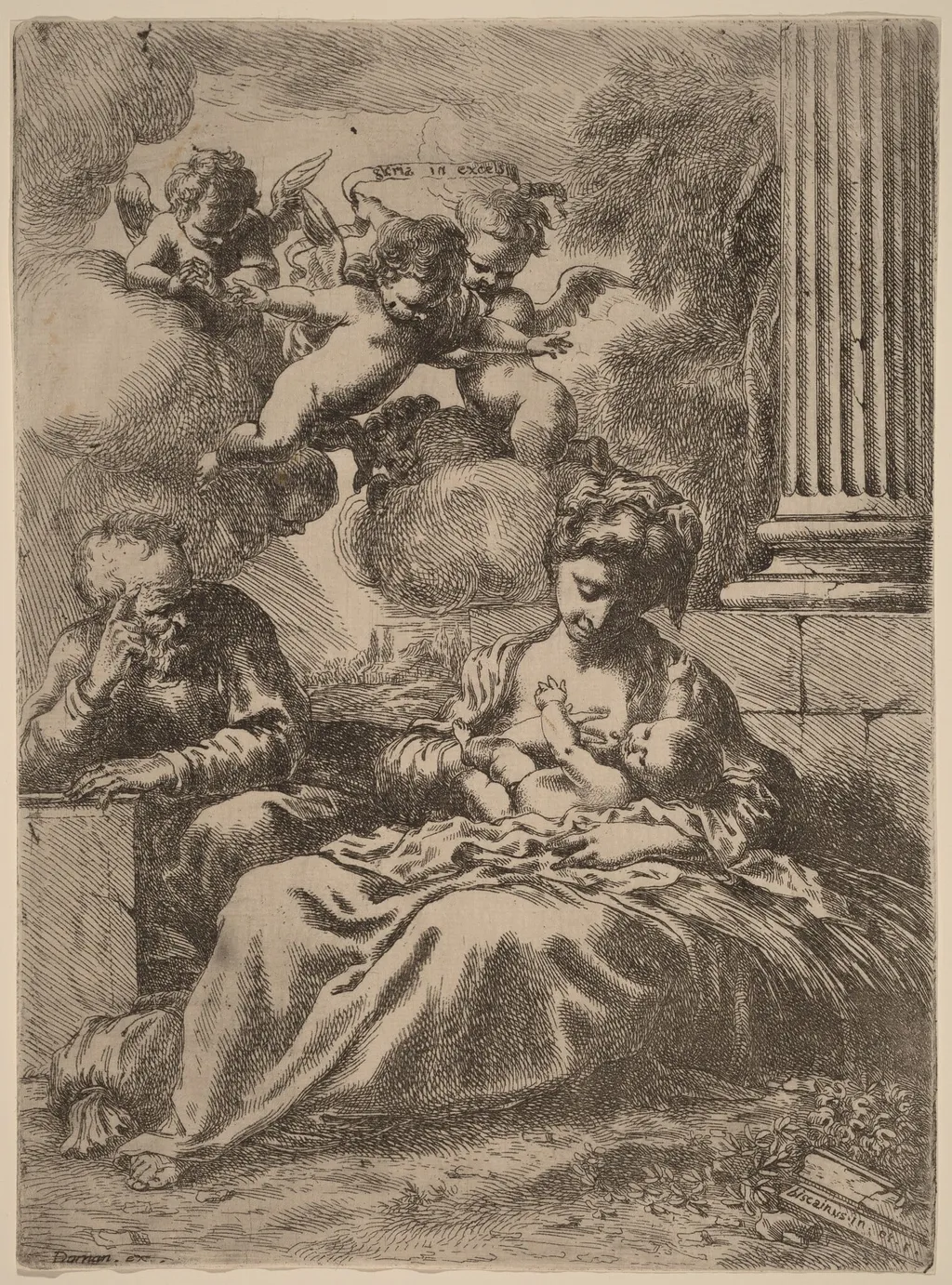
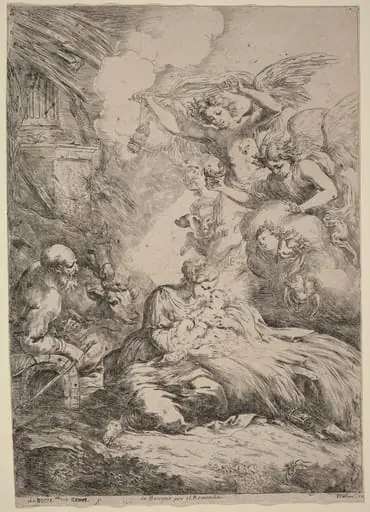
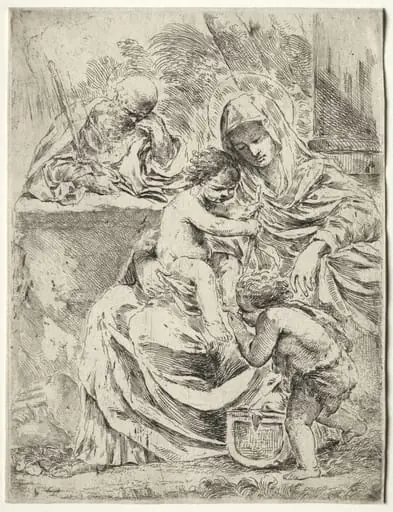
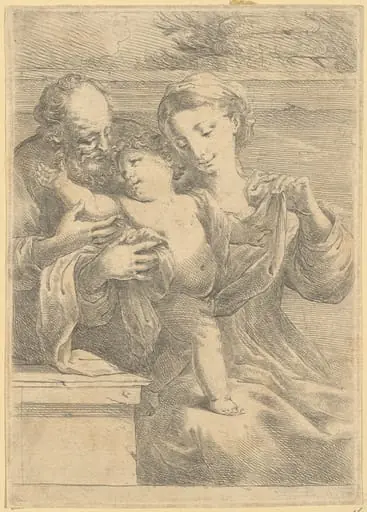
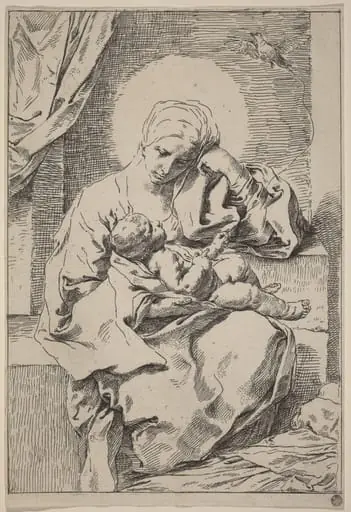
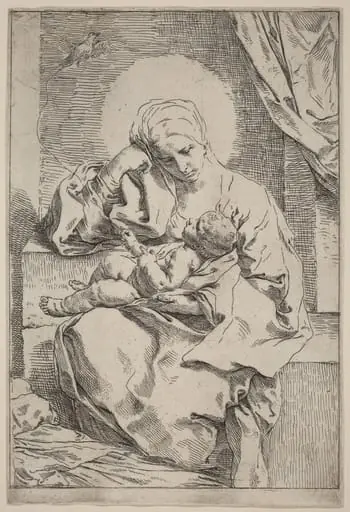
The Holy Family by a Column is an ink print by the Baroque artist Bartolomeo Biscaino. It dates from 1655 and is held in the collection of the National Gallery of Art.
About this work
Overview
Bartolomeo Biscaino’s etching titled *The Holy Family by a Column* dates from around 1655. Executed as a single‑plate print, the work presents a compact religious scene framed by a classical column and a draped backdrop, characteristic of mid‑seventeenth‑century devotional imagery.
Subject & Meaning
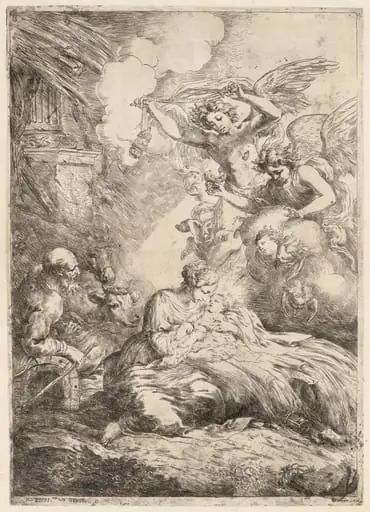
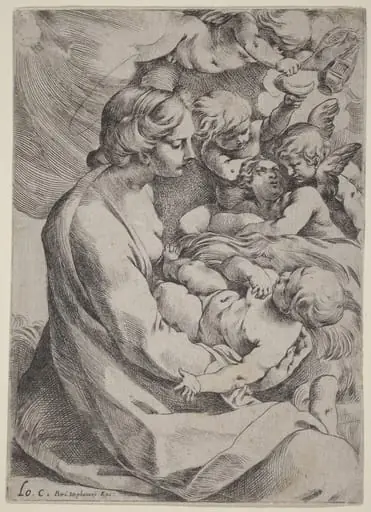
The composition centers on a mother cradling an infant, identified as the Virgin and Child, while two cherubic figures hover above them. The column and rugged ledge provide a symbolic architectural setting, suggesting stability and sanctity, and the surrounding angels reinforce the work’s sacred narrative.
Technique & Style
Biscaino employed the etching process, incising lines into a copper plate and using acid to reveal the design. The print displays vigorous, swirling strokes and pronounced hatching that model the figures and create a sense of depth. Such dramatic chiaroscuro and textured surfaces were typical of Baroque printmaking, emphasizing movement and emotional intensity.
History & Provenance
Created circa 1655, the etching belongs to Biscaino’s brief but productive period before his early death. Surviving impressions are held in several European print collections, reflecting the work’s circulation among collectors of religious prints during the late seventeenth and eighteenth centuries.
Artist & collection