Artwork
Rao Bharah and Jassa Jam
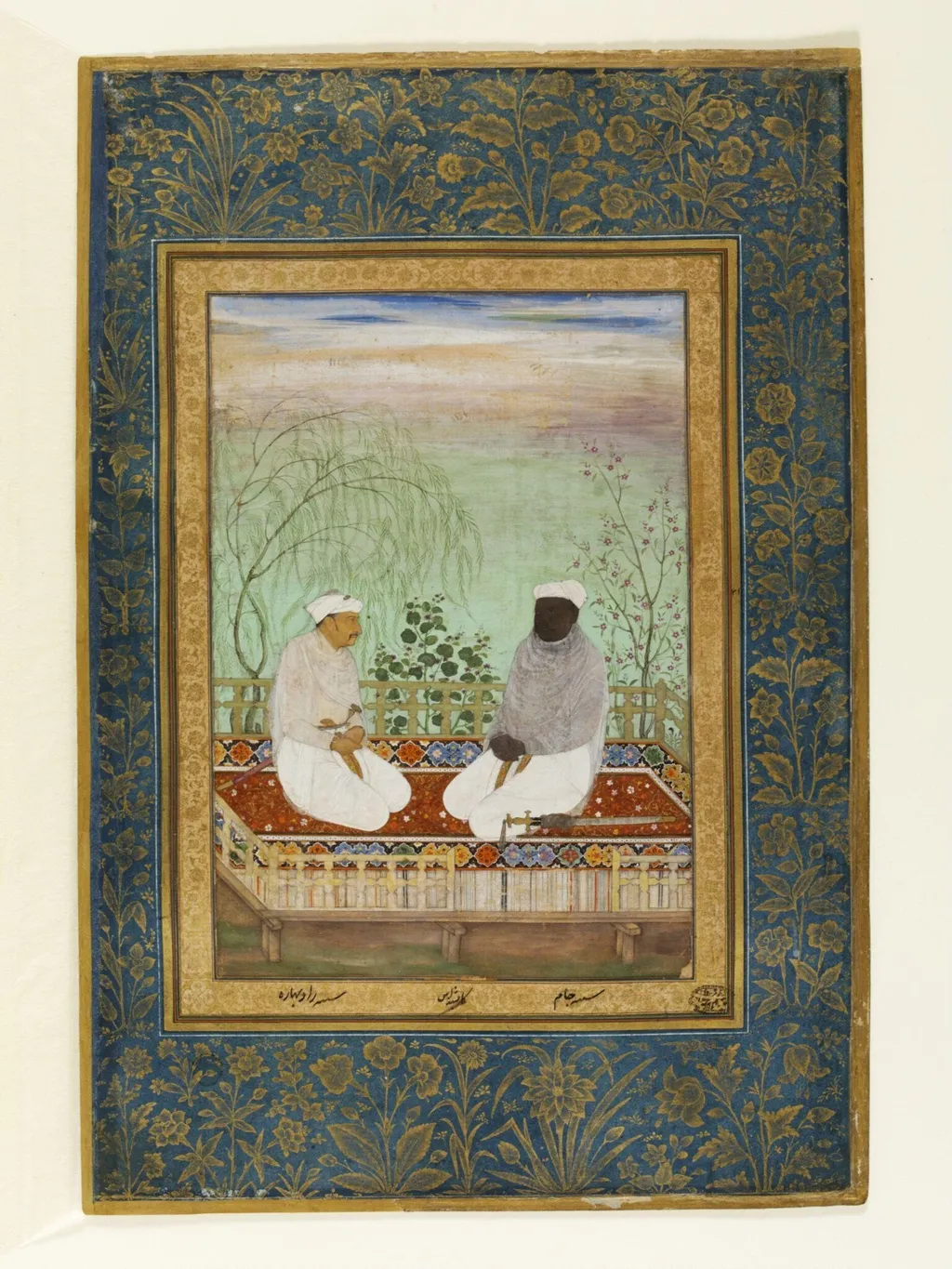
Rao Bharah and Jassa Jam is a paint painting by the Baroque artist Bishandas. It dates from 1619 and is held in the collection of the Victoria and Albert Museum.
About this work
Copied from separate studies, the artist combined two real landowners into one scene.
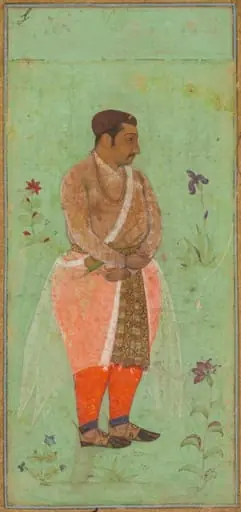
Two men sit side by side on patterned rugs against a plain wall.
Their faces show age and wisdom, their robes rich with gold stitching.
One grips a walking stick; the other holds folded papers.
Bishndas painted them in 1618–20, but they never met.
Copied from separate studies, the artist combined two real landowners into one scene.
The men shared a great-grandfather, hinting at their quiet bond.
See how Mughal artists mixed portraiture with storytelling.
Look up Bishndas next.
Overview
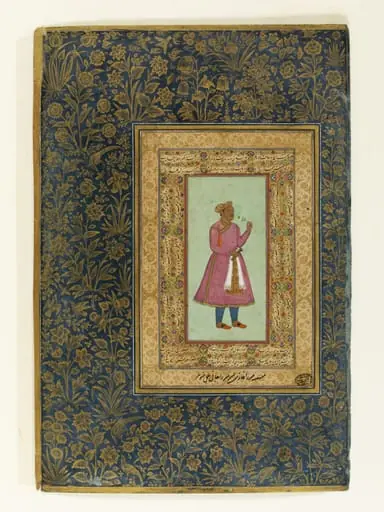
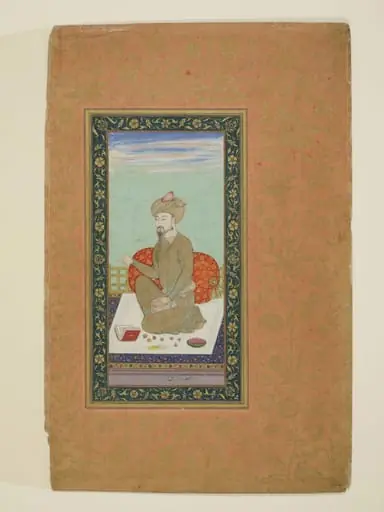
The work is a Mughal painting portraying two prominent Gujarati landowners, Rao Bharah and Jassa Jam. Rendered on indigo‑dyed paper with gold‑embellished borders, the figures sit side by side on patterned rugs before a plain wall, each dressed in richly stitched robes, one holding a walking stick and the other a bundle of papers.
Subject & Meaning
Although the composition suggests a shared moment, the two men never actually met; the portrait fuses separate studies into a single, imagined encounter. Their familial link—tracing back to a common ancestor—provides a subtle narrative of kinship and the social ties among Gujarat’s elite during the early 17th century.
Technique & Style
The painting exhibits the precise line work and delicate gold detailing characteristic of Mughal court art. The borders, applied with finely drawn gold over the indigo background, likely date from the same workshop period, reinforcing the piece’s cohesive aesthetic.
History & Provenance
The subjects visited the Mughal capital, Jahangir’s court, in 1618 as part of the emperor’s Gujarat expedition, accompanied by leading court painters. A marginal note attributes the work to the artist Bishndas, whose career included a diplomatic mission to Iran after 1620, suggesting the painting was executed sometime after his return.
Context
Mughal portraiture of this era often blended realistic likenesses with narrative elements, reflecting both the individual status of the sitters and broader political relationships. The inclusion of a walking stick and folded documents hints at the landowners’ authority and administrative roles.
Artist & collection
Artist
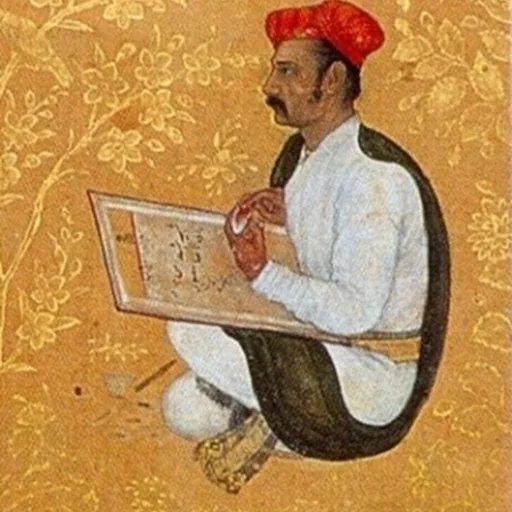
Bishandas, also Bishan Das or Bishn Das, was an Indian painter during the Mughal era.