Artwork
Death of Archimedes
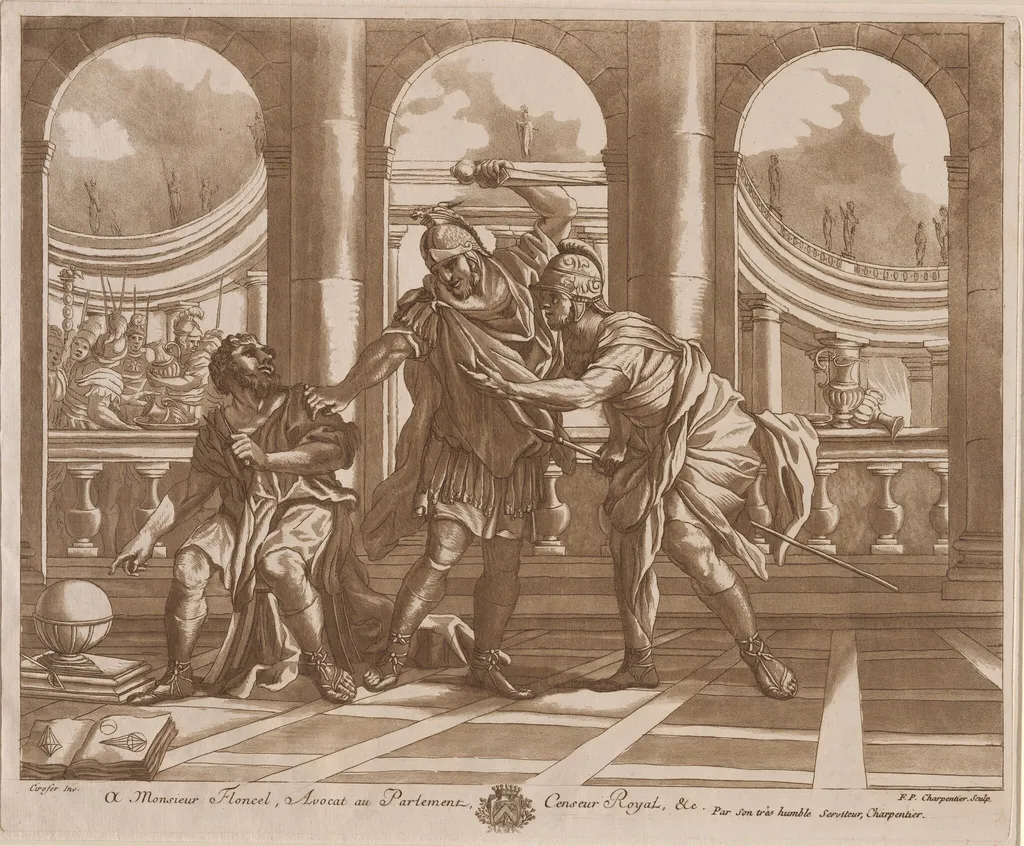
Death of Archimedes is an ink print by the Romanticist artist François-Philippe Charpentier. It dates from 1766 and is held in the collection of the National Gallery of Art.
About this work
Overview
François-Philippe Charpentier, a French engraver born in 1734, produced this print in 1766 using etching and aquatint on laid paper. Trained in Paris under a copperplate engraver, he was known for advancing aquatint techniques. The work captures a pivotal moment from antiquity and is now part of the National Gallery of Art’s collection in Washington, D.C.
Subject & Meaning
The composition underscores the tragedy of intellectual loss amid war, emphasizing the contrast between contemplation and violence.
The scene illustrates the death of Archimedes during the Roman siege of Syracuse in 212 BCE. As the mathematician is absorbed in his diagrams, a soldier approaches to kill him. Two other figures intervene—one attempting to restrain the attacker, the other recoiling in distress. The composition underscores the tragedy of intellectual loss amid war, emphasizing the contrast between contemplation and violence.
Technique & Style
Charpentier employed etching for fine lines and aquatint to achieve tonal gradations in brown ink, creating depth and volume. The figures are rendered with sculptural solidity through careful shading, while the background’s arched windows and classical architecture suggest a monumental interior. The blurred face of the soldier adds ambiguity, focusing attention on the emotional dynamics rather than individual identity.
History & Provenance
Created in 1766, the print reflects Charpentier’s interest in historical narratives and technical innovation. It entered the National Gallery of Art’s collection through established acquisition channels, likely as part of a broader 19th-century interest in Enlightenment-era prints that combined classical themes with emerging reproductive techniques.
Context
In mid-18th-century France, there was renewed scholarly interest in antiquity, fueled by archaeological discoveries and Enlightenment ideals. Charpentier’s print aligns with this trend, translating historical tragedy into a visually compelling print. His use of aquatint, still relatively new, allowed for greater atmospheric nuance than traditional line engraving.
Legacy
Charpentier’s work contributed to the evolution of printmaking by refining aquatint for expressive tonal range. While not widely reproduced, this print remains a significant example of how technical innovation served narrative depth in late 18th-century French graphic art, influencing later practitioners interested in historical and emotional realism.
Artist & collection

Artist
François-Philippe Charpentier (b. Blois, 1734; d. there 22 July 1817) was a French engraver and inventor. His father was a bookbinder, a poor man who reportedly made many sacrifices so that his son might attend the…

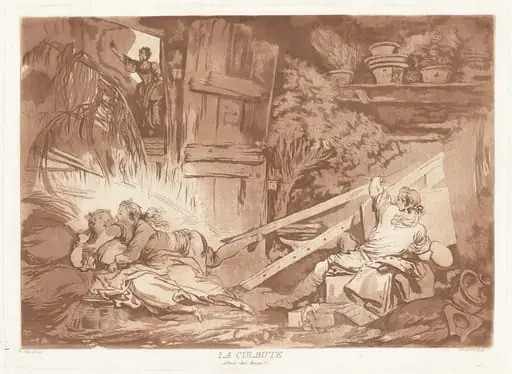 La Culbute (The Tumble)
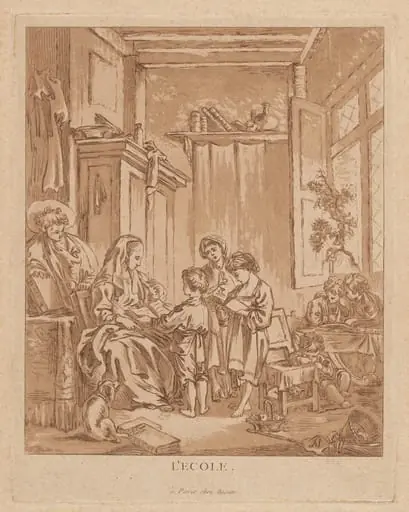 L’École (The School)
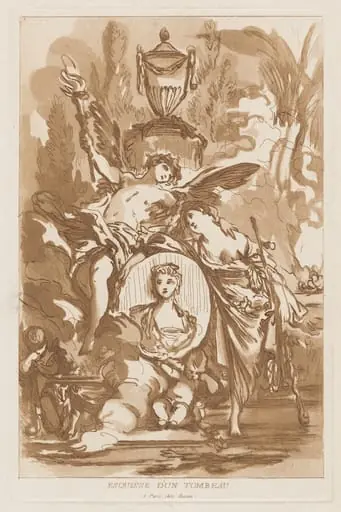 Esquisse d’un tombeau (Sketch for a Tomb)
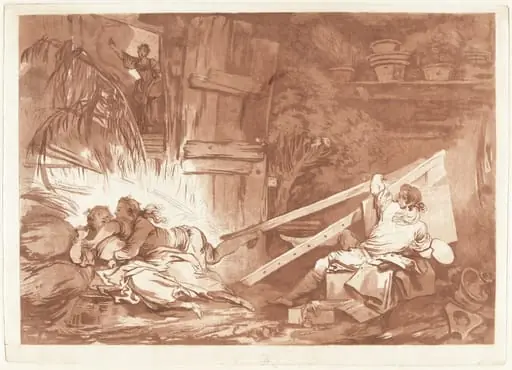 The Tumble
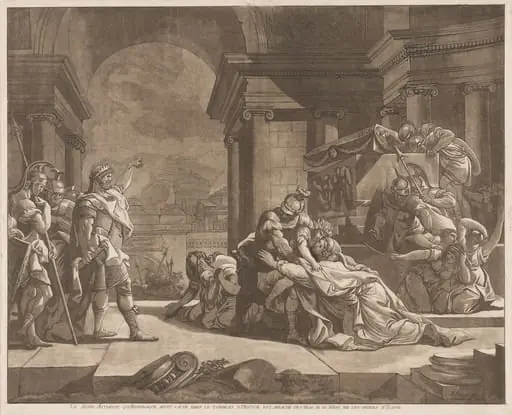 Le Jeune Astianax qu’Andromaque avoit caché dans le tombeau d’Hector est arraché des bras de sa Mere par les ordres d'Ulisse (Young Astianax, who Andromache Hid in Hector's Tomb, is Seized from his Mother's Arms by Ulysses' Orders)
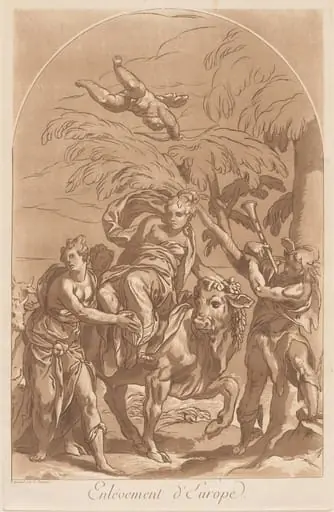 Rape of Europa
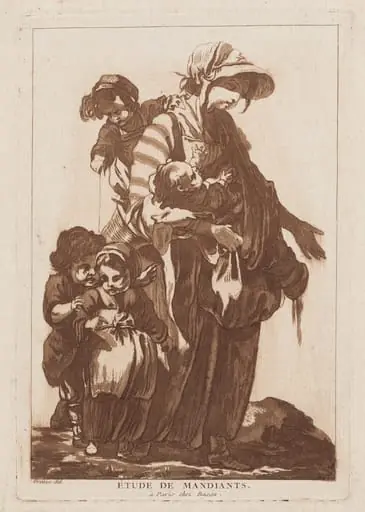 Étude de Mandiants (Study of Beggars)
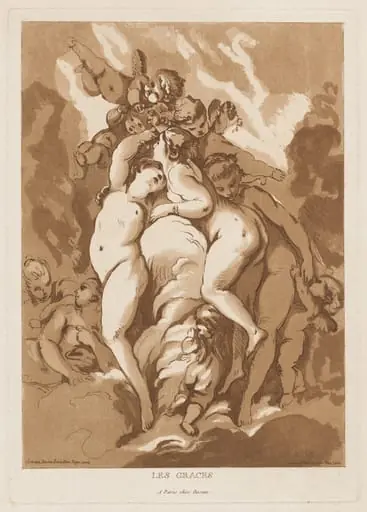 Les Graces (The Graces)
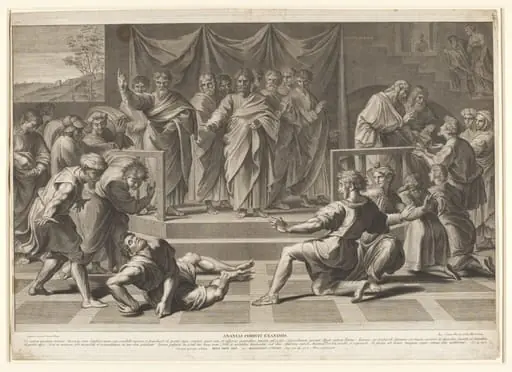 Pinacotheca Hamptoniana
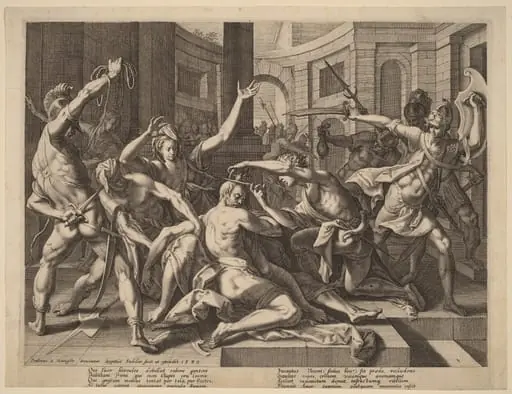 Delilah Cutting Samson's Hair
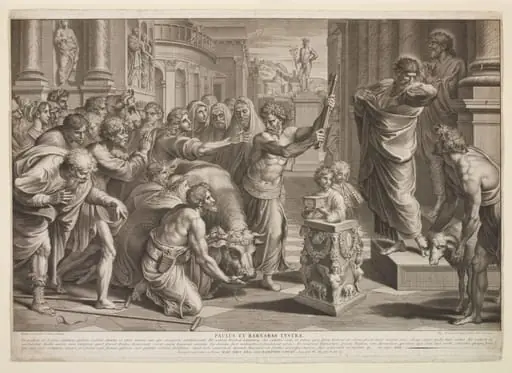 The Sacrifice at Lystra
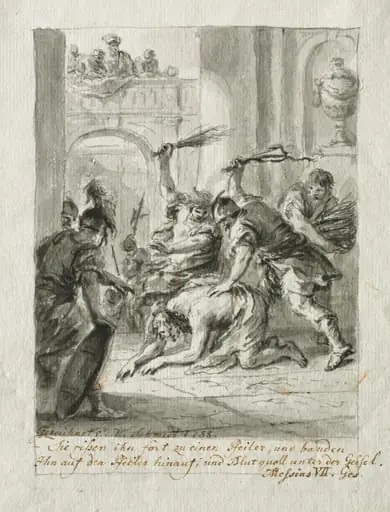 The Flagellation
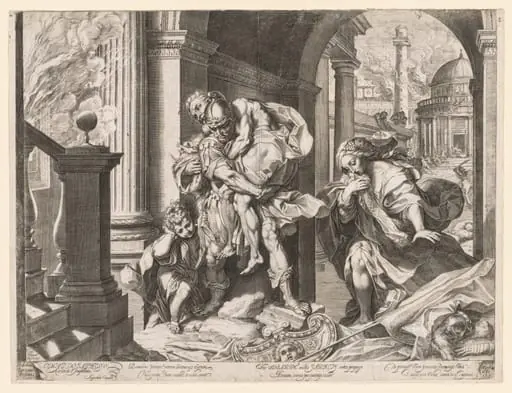 Aeneas and His Family Fleeing Troy
![The Martyrdom of Saints Peter and Paul [recto], by Antonio da Trento](https://artifactworldgallery.com/img/antonio-da-trento--the-martyrdom-of-saints-peter-and-paul-recto--a51e90060085a207-w320.webp) The Martyrdom of Saints Peter and Paul [recto]
The Martyrdom of Saints Peter and Paul [recto]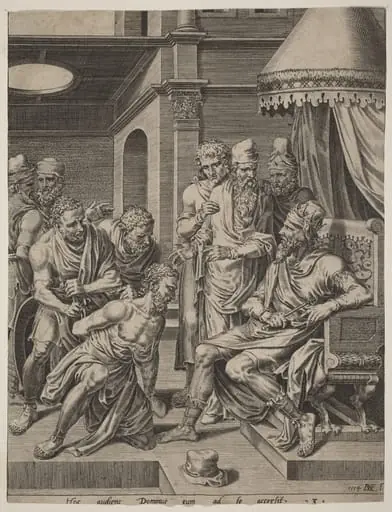 The Unmerciful Servant Brought before the King
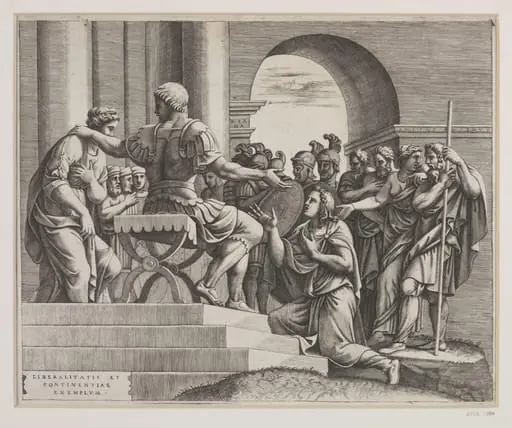 The Continence of Scipio
 Untitled
 Iconologia or Morall Emblems by Caesar Ripa
 The Death of Lausus