Artwork
Pigeon
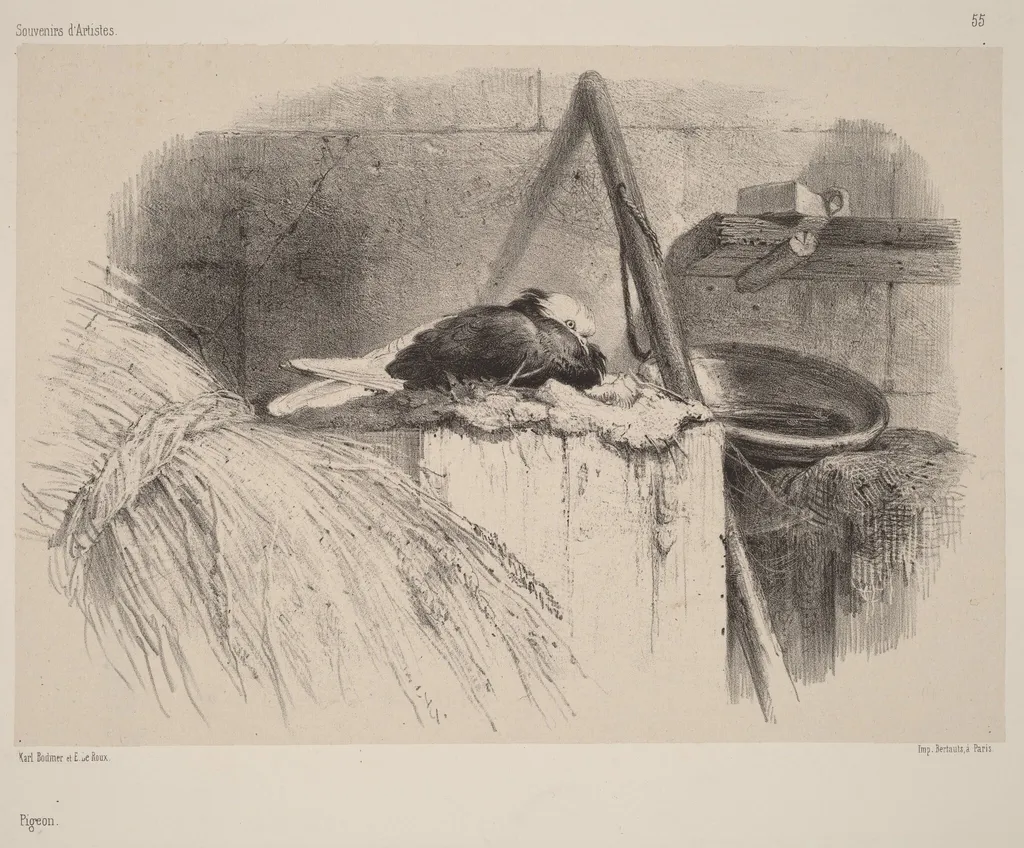
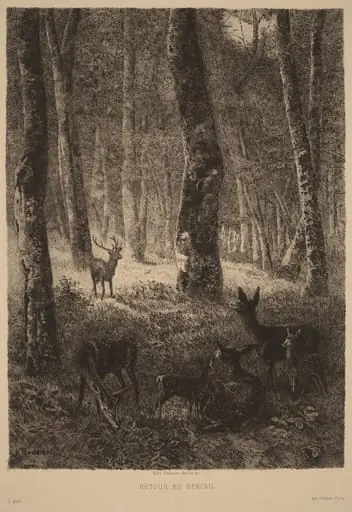
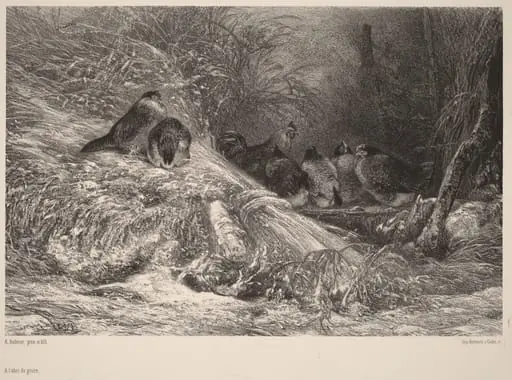
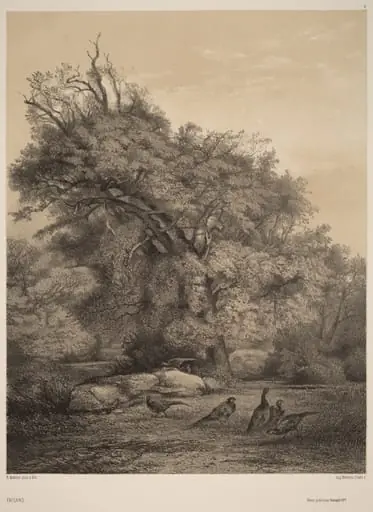
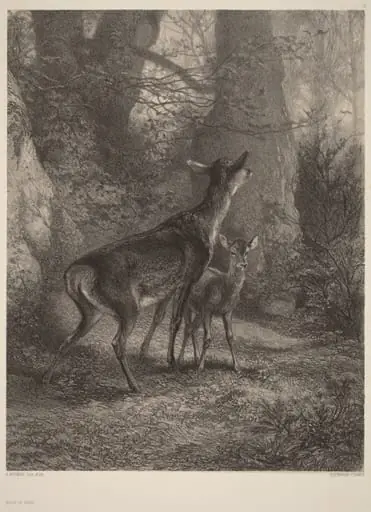
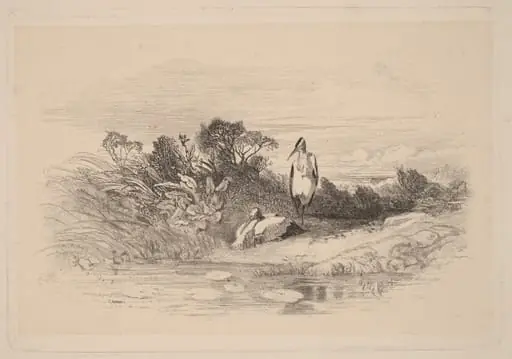
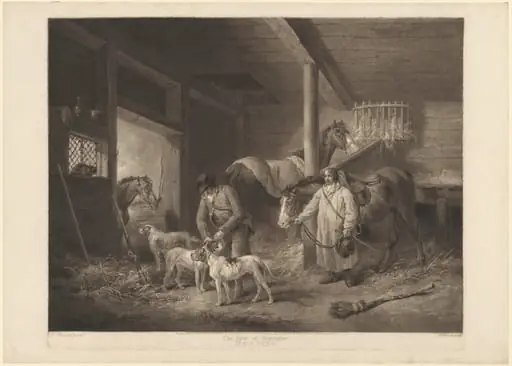
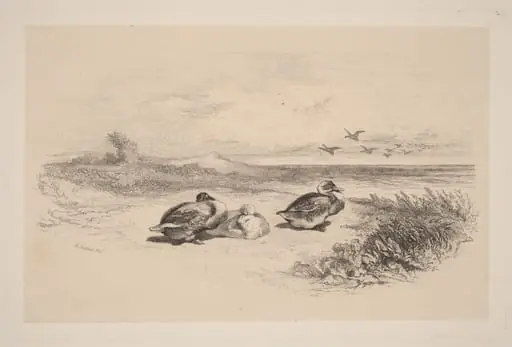
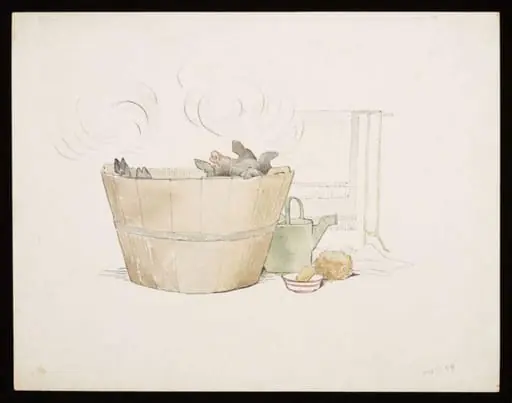
Pigeon is an ink print by the Romanticist artist Karl Bodmer. It dates from 1851 and is held in the collection of the National Gallery of Art.
About this work
Overview
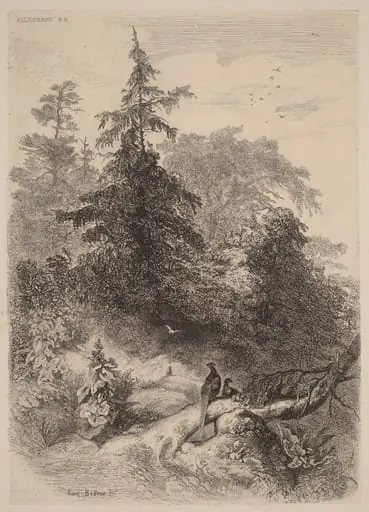
Pigeon is a lithograph created by Karl Bodmer in 1851. Characterized by loose, sketchy lines, the work captures a serene, everyday scene.
Subject & Meaning
The lithograph depicts a calm pigeon perched on a ledge, surrounded by mundane human belongings—a hat, cane, and cup on a table. The pigeon appears oblivious to its surroundings, highlighting the coexistence of nature and everyday life.
Technique & Style
Bodmer's detailed yet observational printmaking approach is evident in Pigeon. The loose lines suggest a quick, note-like rendering, focusing on simplicity over elaborate detail.
History & Provenance
Created in 1851, Pigeon falls within Bodmer's period of work before his relocation from Germany to France. It reflects his tendency to document ordinary scenes, though typically more known for landscapes along the Rhine, Mosel, and Lahn rivers.
Context
While Bodmer is renowned for his depictions of German and later French landscapes, Pigeon exemplifies his ability to find subject matter in the most ordinary, intimate settings, alongside his work in various mediums like watercolors and aquatints.
Legacy
Pigeon contributes to the broader legacy of lithography, showcasing the medium's capacity for capturing everyday life with simplicity and elegance, characteristic of 19th-century printmaking interests.
Artist & collection
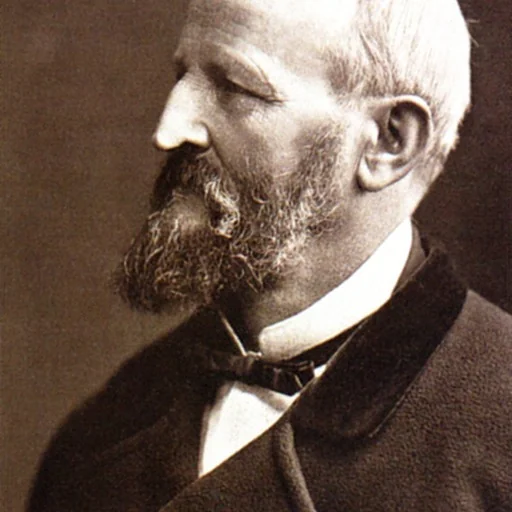
Artist
Johann Carl Bodmer (11 February 1809 – 30 October 1893) was a Swiss-French printmaker, etcher, lithographer, zinc engraver, draughtsman, painter, illustrator, and hunter.