Artwork
Seated Old Man about to Drink from a Gourd
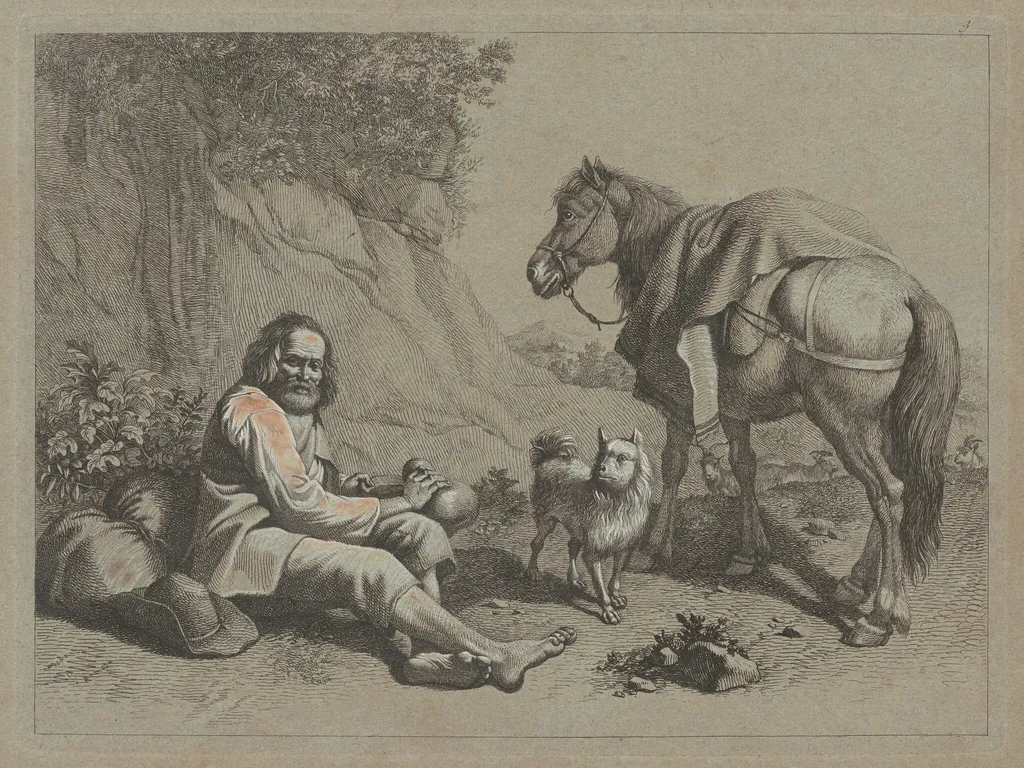
Seated Old Man about to Drink from a Gourd is an ink print by the Romanticist artist Francesco Londonio. It dates from 1763 and is held in the collection of the National Gallery of Art.
About this work
Overview
Created circa 1763, this etching by Francesco Londonio depicts an elderly peasant seated on the ground, about to sip from a gourd. Rendered on blue laid paper, the image is highlighted with white pigment, which contrasts sharply with the dark etched lines and emphasizes the figure’s clothing, the horse’s harness, and surrounding animals.
Subject & Meaning
The composition centers on a barefoot, bearded old man in simple attire, holding a gourd as two dogs investigate the air nearby. A tied horse stands behind him, and a modest pile of rocks completes the rustic setting, suggesting a moment of quiet repose in a pastoral environment.
Technique & Style
Londonio employed traditional etching methods, incising fine lines into a copper plate before printing. White heightening applied after printing adds luminosity, while the blue laid paper serves as a colored ground that intensifies the contrast between dark lines and white highlights, a common approach in his genre scenes.
History & Provenance
Trained in Milan under Ferdinando Porta, Giovanni Battista Sassi, and engraver Benigno Bossi, Londonio traveled to Rome and Naples before producing this work. The print reflects the artist’s longstanding interest in rustic and pastoral subjects, a genre that attracted affluent Northern Italian patrons during the late‑Baroque and Rococo periods.
Context
The image belongs to a broader trend in 18th‑century Italian art that celebrated everyday rural life. Londonio’s focus on peasants, animals, and simple domestic activities aligns with contemporary tastes for genre scenes that combined moral undertones with a nostalgic view of the countryside.
Artist & collection

Artist
Francesco Londonio (1723–1783) was an Italian painter, engraver, and scenographer, active mainly in his native Milan in a late-Baroque or Rococo style.

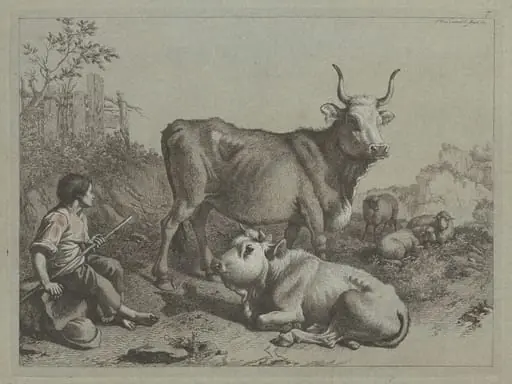
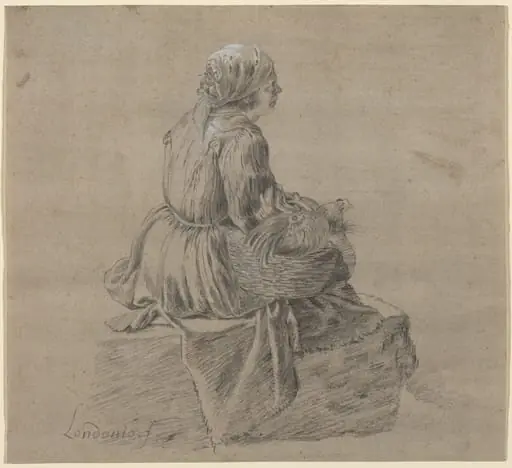
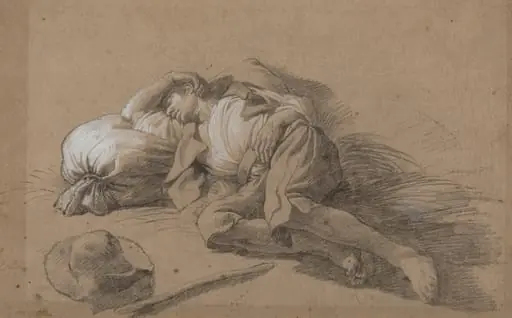
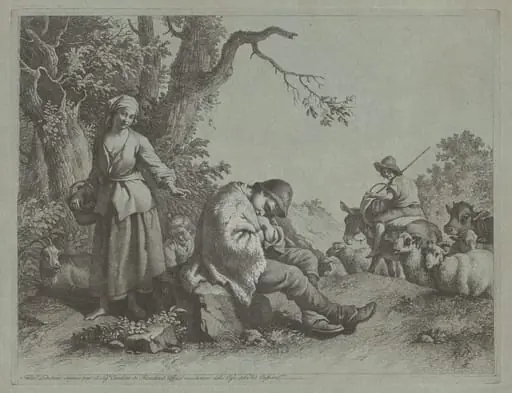
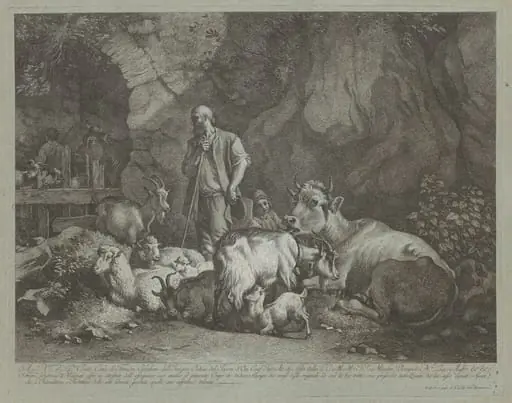
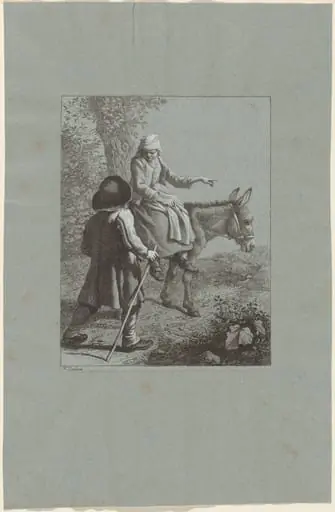
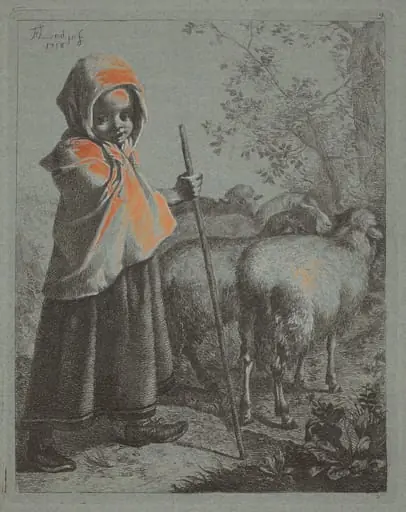
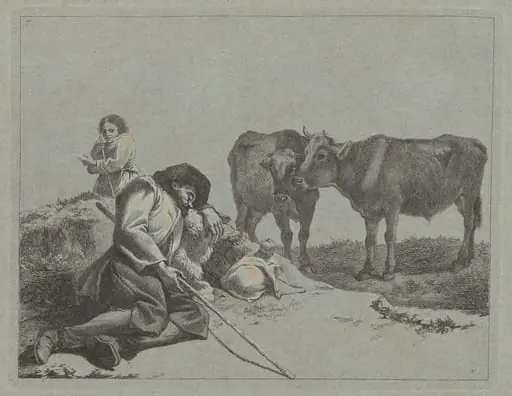 Sleeping Shepherd, Two Calves, and a Peasant Woman
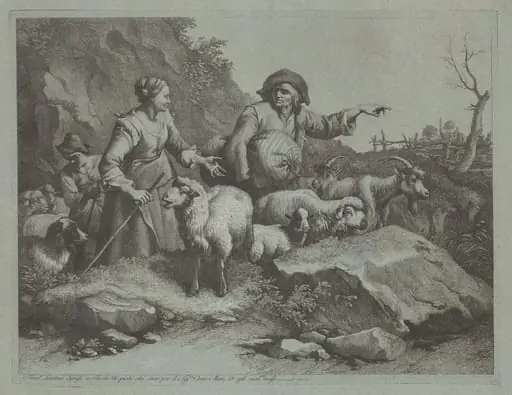 Peasant Man with a Sack and Two Shepherdesses
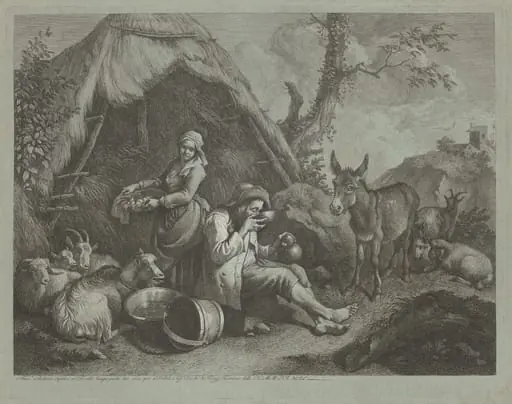 Seated Old Man and Woman with a Basket of Eggs
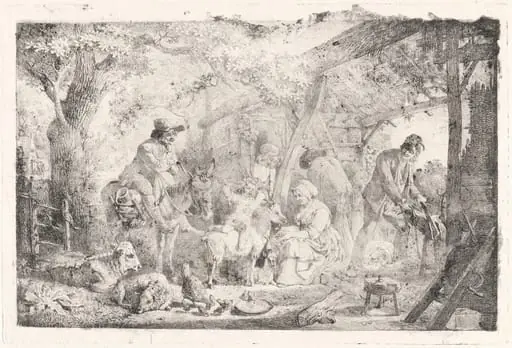 The Little Cavalier (Le Petit Cavalier)
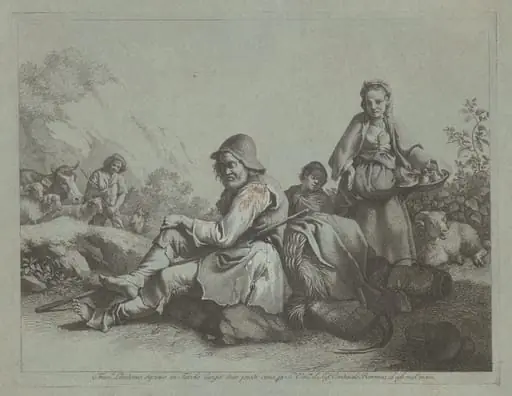 Seated Shepherd and a Peasant Woman with a Basket
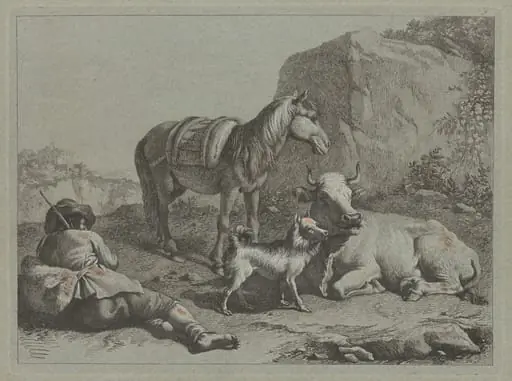 Reclining Shepherd with a Sack
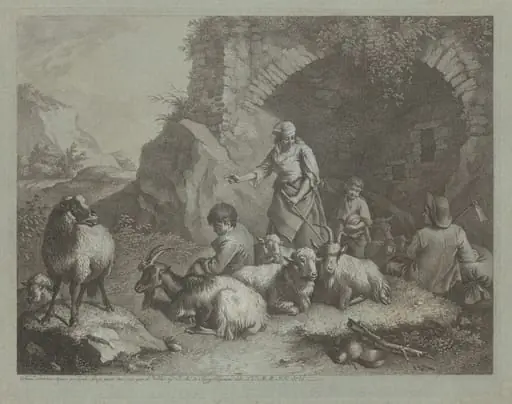 Woman, Shepherd Boys, and Sheep near an Arch
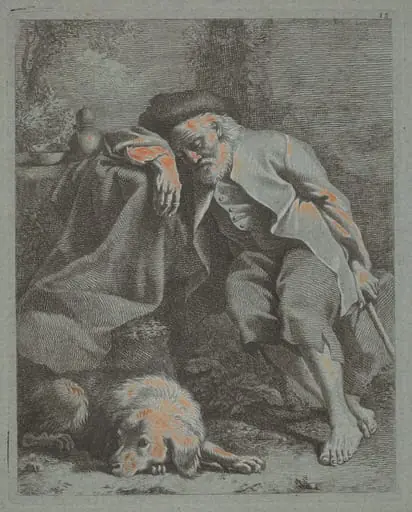 Sleeping Old Man with Dog
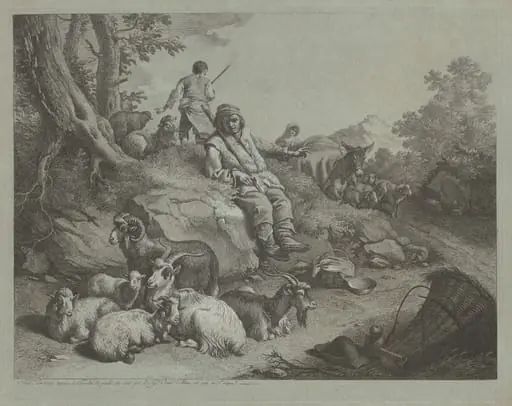 Seated Shepherd before a Flock of Goats
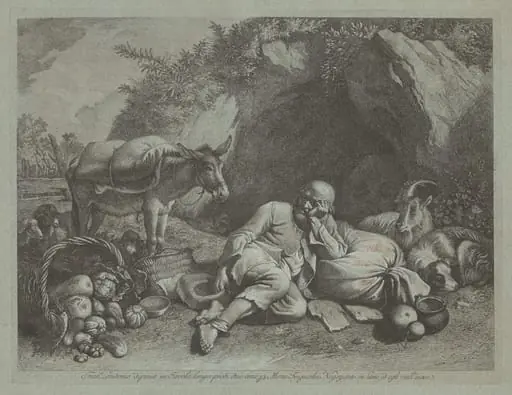 Old Man Leaning against a Sack
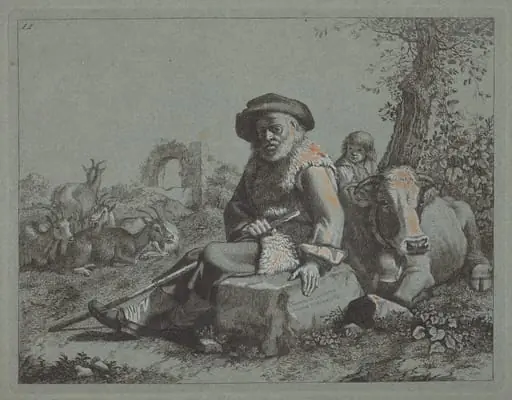 Seated Old Man