Artwork
Two Houses with Tile Roofs
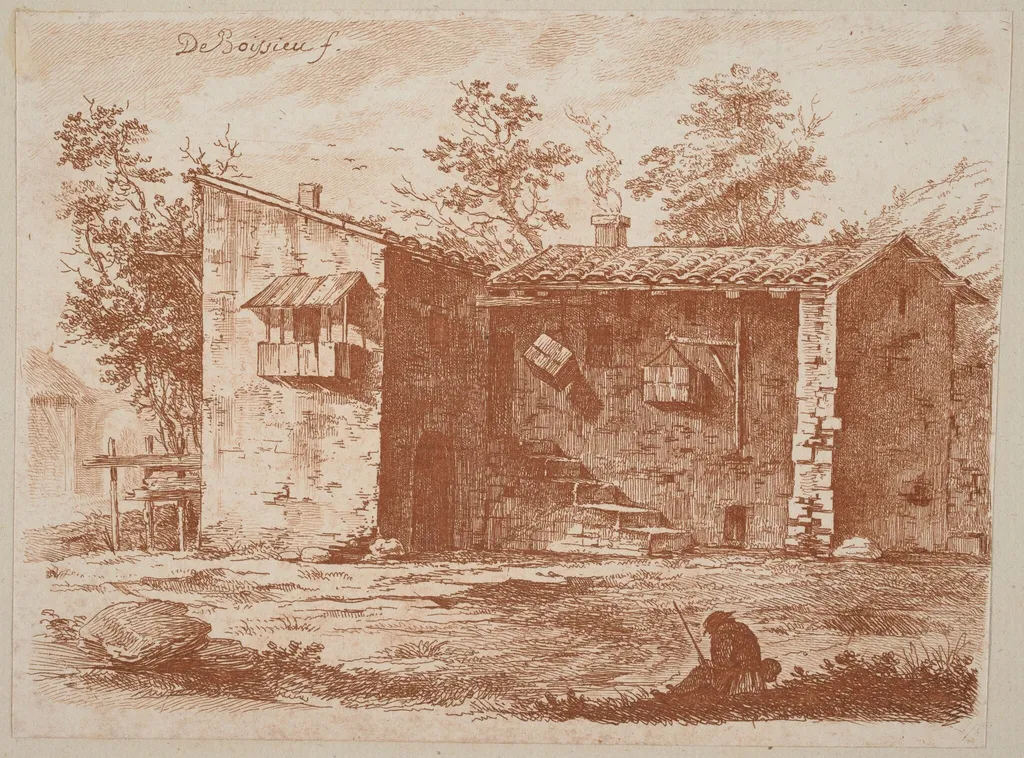
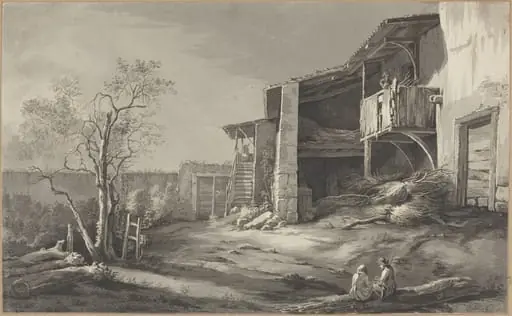
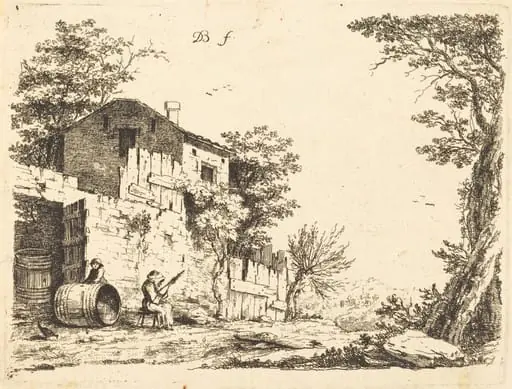
Two Houses with Tile Roofs is an ink print by the Romanticist artist Jean-Jacques de Boissieu. It dates from 1759 and is held in the collection of the National Gallery of Art.
About this work
Overview
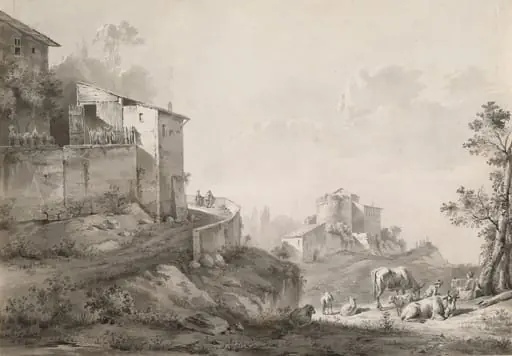
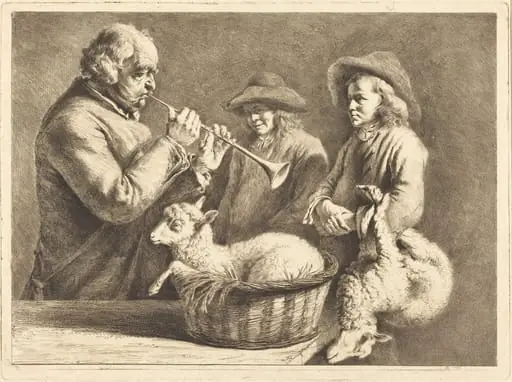
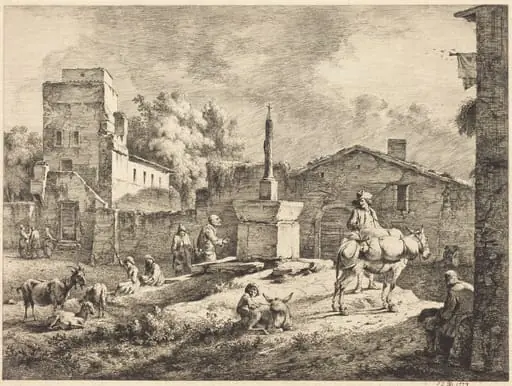
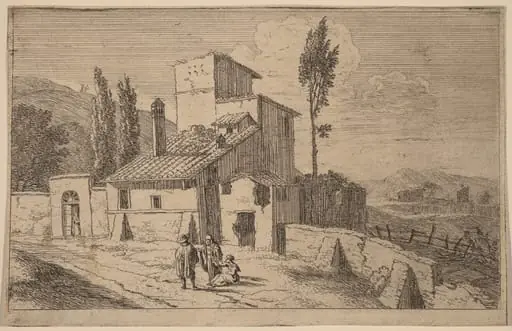
Jean‑Jacques de Boissieu’s print Two Houses with Tile Roofs, executed in 1759, presents a modest rural scene rendered in sepia tones. The work combines etching with drypoint, allowing the artist to delineate two modest structures—one with a small porch and bench, the other resembling a shed—set among leaf‑less trees and a low fence.
Subject & Meaning
The composition captures a quiet moment in the countryside: a solitary figure sits on the ground near the fence, holding an object, while the surrounding bare‑branched trees emphasize the season’s austerity. The juxtaposition of the inhabited house and the utilitarian shed suggests a contrast between domestic comfort and simple labor, inviting contemplation of everyday rural life.
Technique & Style
De Boissieu employed both traditional etching and the more direct drypoint method. The drypoint lines, incised directly into the plate, produce a characteristic roughness and richer, velvety shadows that enhance the texture of the tiled roofs and the bark of the trees. The sepia palette unifies the scene, lending it a subdued, atmospheric quality.
History & Provenance
Created in the mid‑eighteenth century, the print reflects de Boissieu’s interest in topographical subjects and his skill in printmaking. While specific ownership records are limited, the work has been catalogued among his landscape series and remains an example of French printmaking practices prior to the rise of aquatint, illustrating the artist’s contribution to the medium.
Own this work as a print
Artist & collection
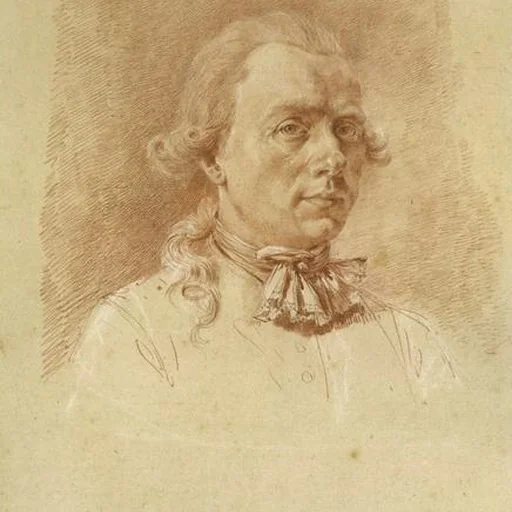
Artist
Jean-Jacques de Boissieu (1736–1810) was a French artist, born in Lyon.