Artwork
Hercules and the Nemean Lion
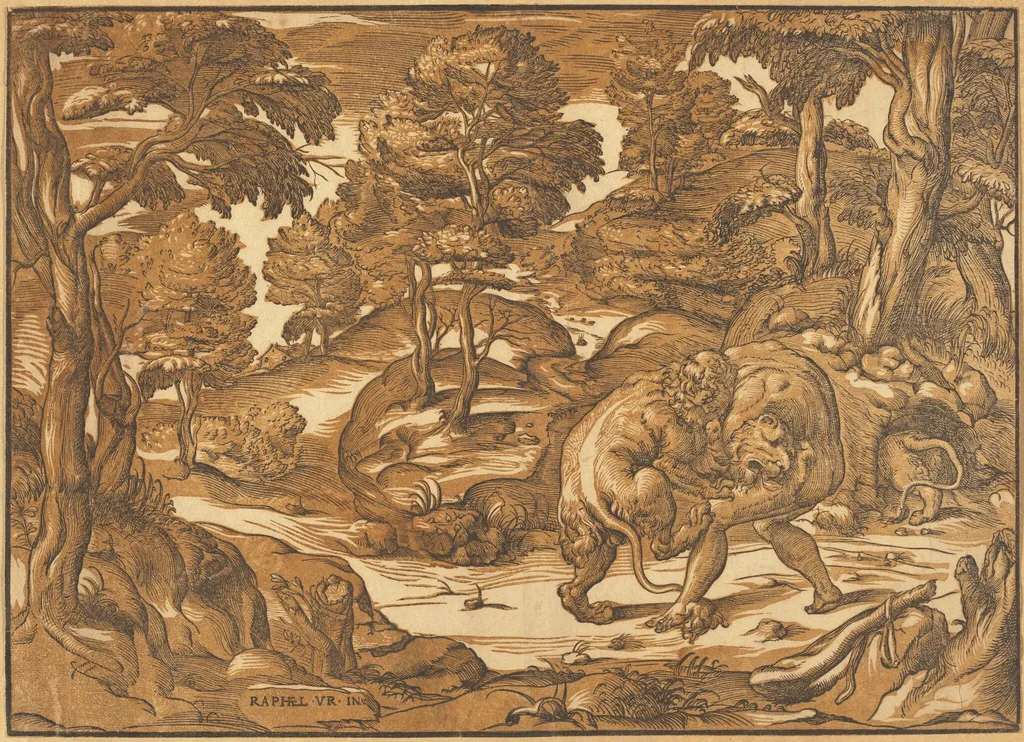
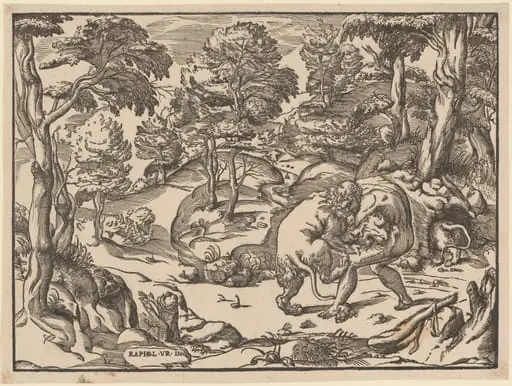
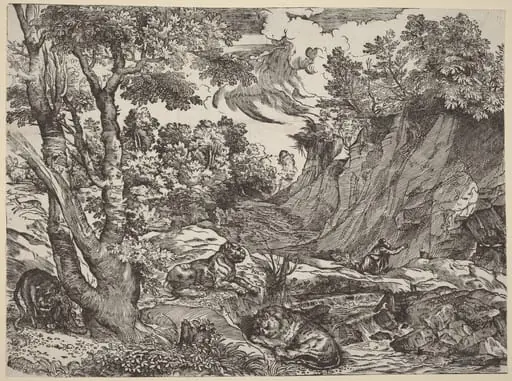
Hercules and the Nemean Lion is an ink print by the Renaissance artist Nicolò Boldrini. It dates from 1566 and is held in the collection of the National Gallery of Art.
About this work
Overview
Nicolò Boldrini's Hercules and the Nemean Lion is a mythological woodcut created around 1566, utilizing a chiaroscuro technique with tan and black ink on buff laid paper.
Subject & Meaning
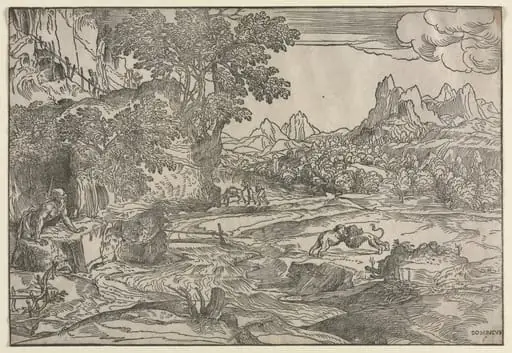
The print depicts Hercules engaged in combat with the Nemean Lion in a dark, foreboding forest. The lion's fur is uniquely rendered to resemble scales, emphasizing its mythical nature.
Technique & Style
Boldrini employed a two-block printing method: one block for outlines and the other for shadows. This technique achieved high contrast while preserving intricate details, characterized by thick black lines accentuating muscular forms against a lighter tan background.
Context
The use of chiaroscuro and bold shadows in this work aligns with influences of the time, notably reminiscent of Albrecht Dürer's printmaking style.
History & Provenance
Created circa 1566, specific details on the work's history and ownership prior to its current location are not provided.
Legacy
While the broader impact of Hercules and the Nemean Lion on subsequent art is not detailed here, its execution reflects the technical innovations and mythological themes prevalent in 16th-century European printmaking.
Artist & collection