Artwork
Venus and Cupid
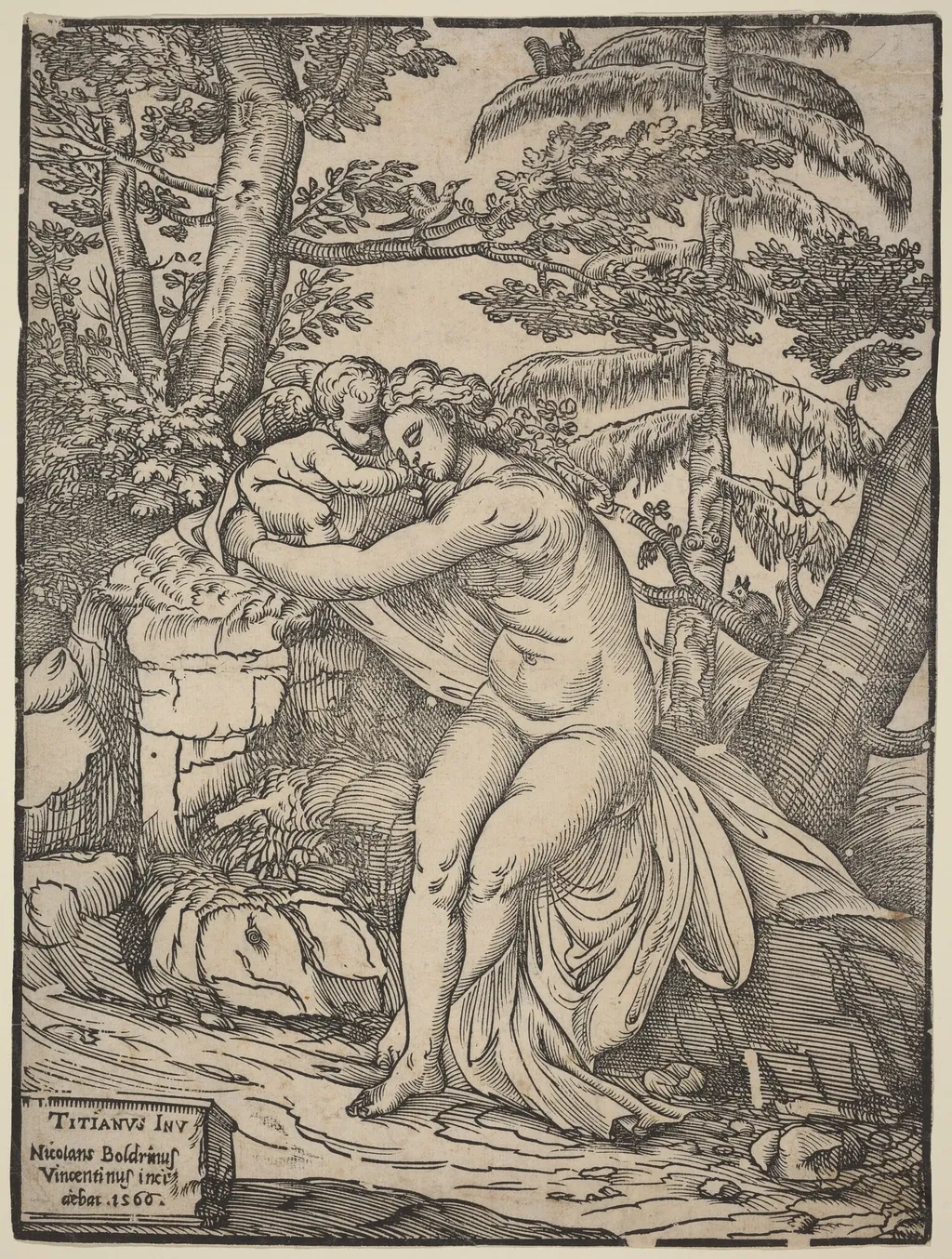
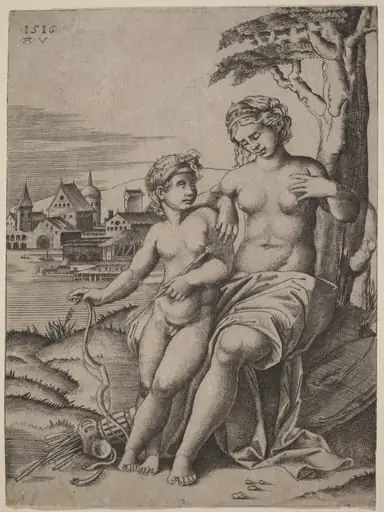
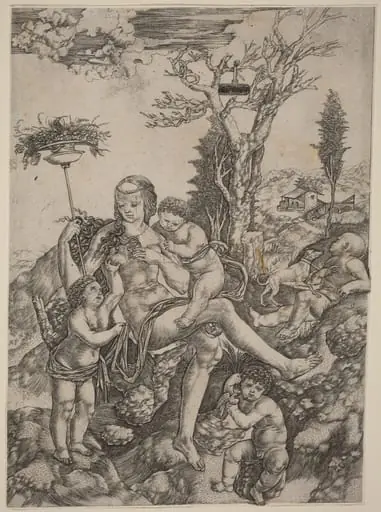
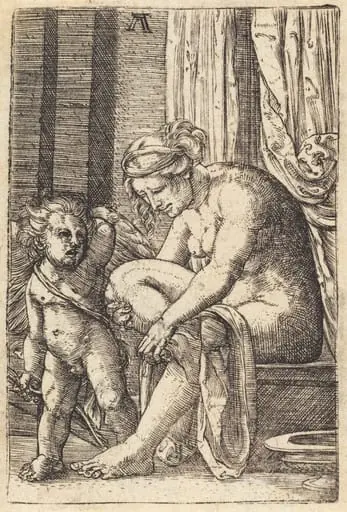
Venus and Cupid is an ink print by the Renaissance artist Nicolò Boldrini. It dates from 1566 and is held in the collection of the National Gallery of Art.
About this work
Overview
The overall effect is one of calm repose intertwined with subtle intrigue.
Nicolò Boldrini’s 1566 woodcut, titled Venus and Cupid, presents a classical scene in which the goddess Venus stands nude beneath a twisting tree, cradling the infant Cupid. The composition balances the figures with surrounding foliage and diminutive cherubic figures peeking from the leaves, while a patterned ground suggests water or grass. The overall effect is one of calm repose intertwined with subtle intrigue.
Subject & Meaning
The print draws on the mythological pairing of Venus, the Roman goddess of love, and her son Cupid, the personification of desire. By placing the pair in a natural setting, Boldrini emphasizes themes of fertility and the nurturing aspect of love. The gentle posture of Venus, one hand resting on her hip, conveys both maternal tenderness and the poised confidence associated with the deity.
Technique & Style
Boldrini employs the woodcut medium’s characteristic crisp lines to delineate form and create a sense of depth. The figure of Venus merges with the shadows cast by the tree’s branches, while the intricate carving of foliage and the tiny cherubs demonstrates a high level of detail. The wavy ground pattern, rendered through repeated incisions, adds texture that suggests water or grass without explicit shading.
History & Provenance
Created in 1566, this print reflects the Renaissance interest in classical subjects and the diffusion of mythological imagery through printmaking. As a work by Boldrini, a noted Venetian engraver, it would have been circulated among collectors and scholars interested in humanist themes. Surviving copies are documented in several European print collections, indicating its distribution and appreciation during the late sixteenth century.
Artist & collection