Artwork
Samson and Delilah
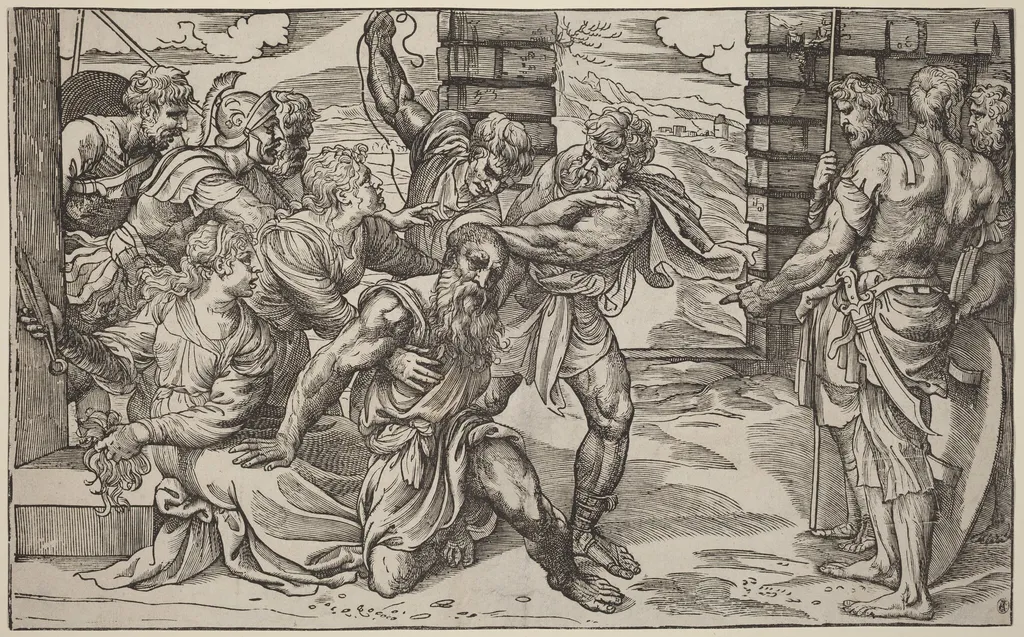
Samson and Delilah is an ink print by the Renaissance artist Nicolò Boldrini. It dates from 1540 and is held in the collection of the National Gallery of Art.
About this work
Overview
A building with illuminated windows and a distant landscape form the backdrop, creating a complex, narrative composition.
Nicolò Boldrini’s woodcut, dated around 1540, depicts the biblical episode of Samson and Delilah. The print centers on a muscular, long‑haired Samson restrained by Delilah, who sits upon his lap, while a crowd of figures—some winged, others bearing musical instruments—surrounds them. A building with illuminated windows and a distant landscape form the backdrop, creating a complex, narrative composition.
Subject & Meaning
The image captures the moment of betrayal when Delilah subdues Samson, emphasizing themes of vulnerability and deceit. The surrounding onlookers, including celestial beings, suggest a moral commentary on the consequences of hubris and the interplay between earthly desire and divine judgment, common motifs in Renaissance interpretations of biblical stories.
Technique & Style
Executed as a woodcut, the work relies on bold, incised lines that generate stark contrasts and a sense of kinetic energy. Sharp contours delineate muscular forms and dramatic gestures, while the crowded composition is organized to guide the viewer’s eye through the central drama. The stylized figures and ornamental details reflect the Mannerist taste for complexity and tension.
History & Provenance
Created in the mid‑sixteenth century, the print is attributed to Boldrini, a Venetian artist known for reproducing works of masters such as Titian. Though specific ownership records are scarce, the woodcut circulated among collectors of religious prints, contributing to the diffusion of biblical narratives in Northern Italian print culture.
Context
During the 1540s, woodcut remained a primary medium for disseminating religious imagery to a broad audience. Boldrini’s rendition aligns with contemporary efforts to visualize scriptural episodes for devotional purposes, while also reflecting the period’s fascination with dramatic, emotionally charged storytelling.
Artist & collection


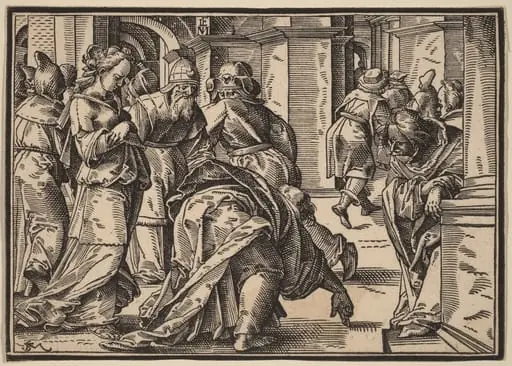 Christ Tells His Disciples of the Last Judgment
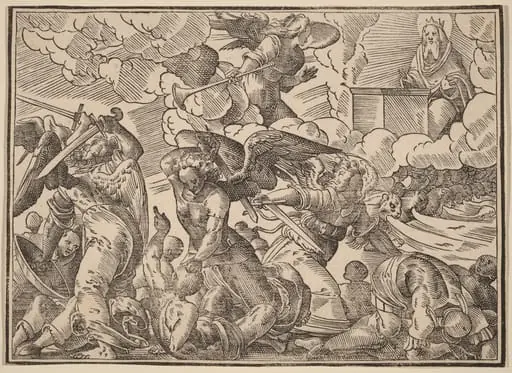 The Four Horsemen of the Apocalypse
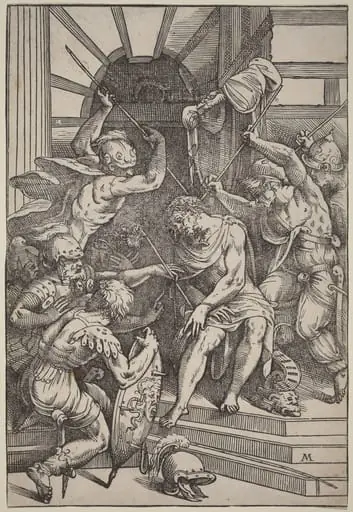 Christ Crowned with Thorns
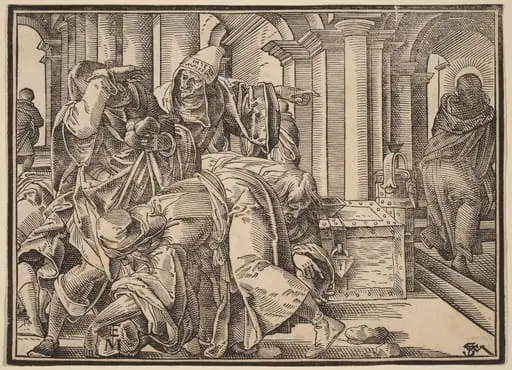 Christ Tells His Disciples of the Last Judgment
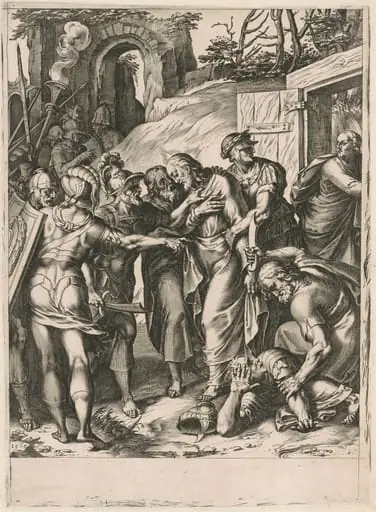 The Betrayal of Christ
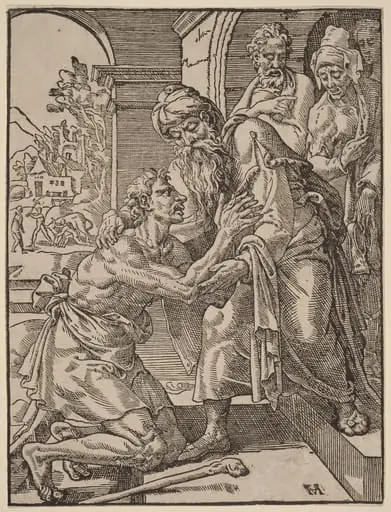 The Return of the Prodigal Son
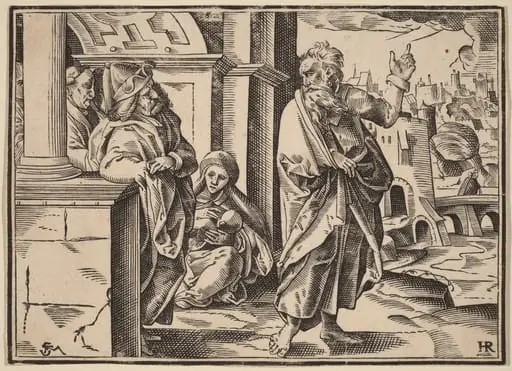 Christ Tells His Disciples of the Last Judgment
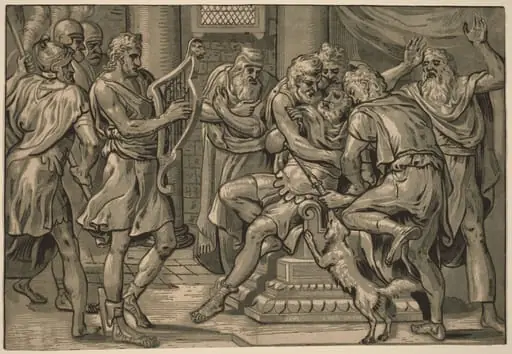 David Playing the Harp before Saul
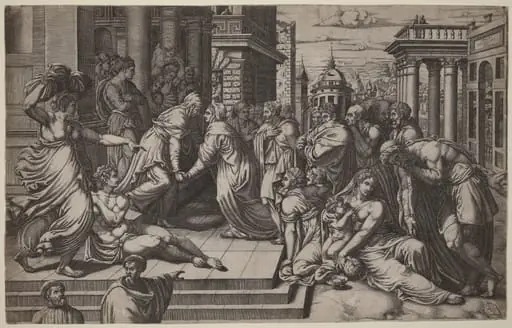 The Visitation
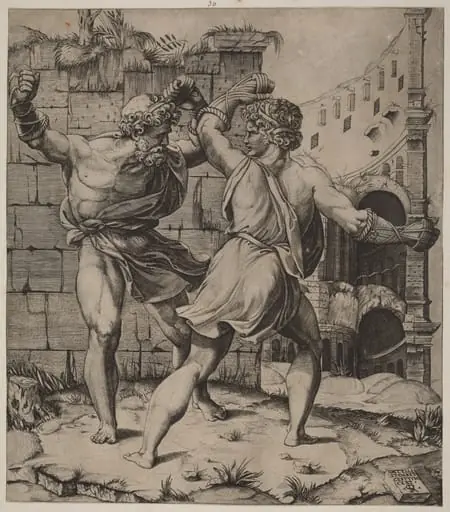 Entellus and Dares