Artwork
Adam de Coster
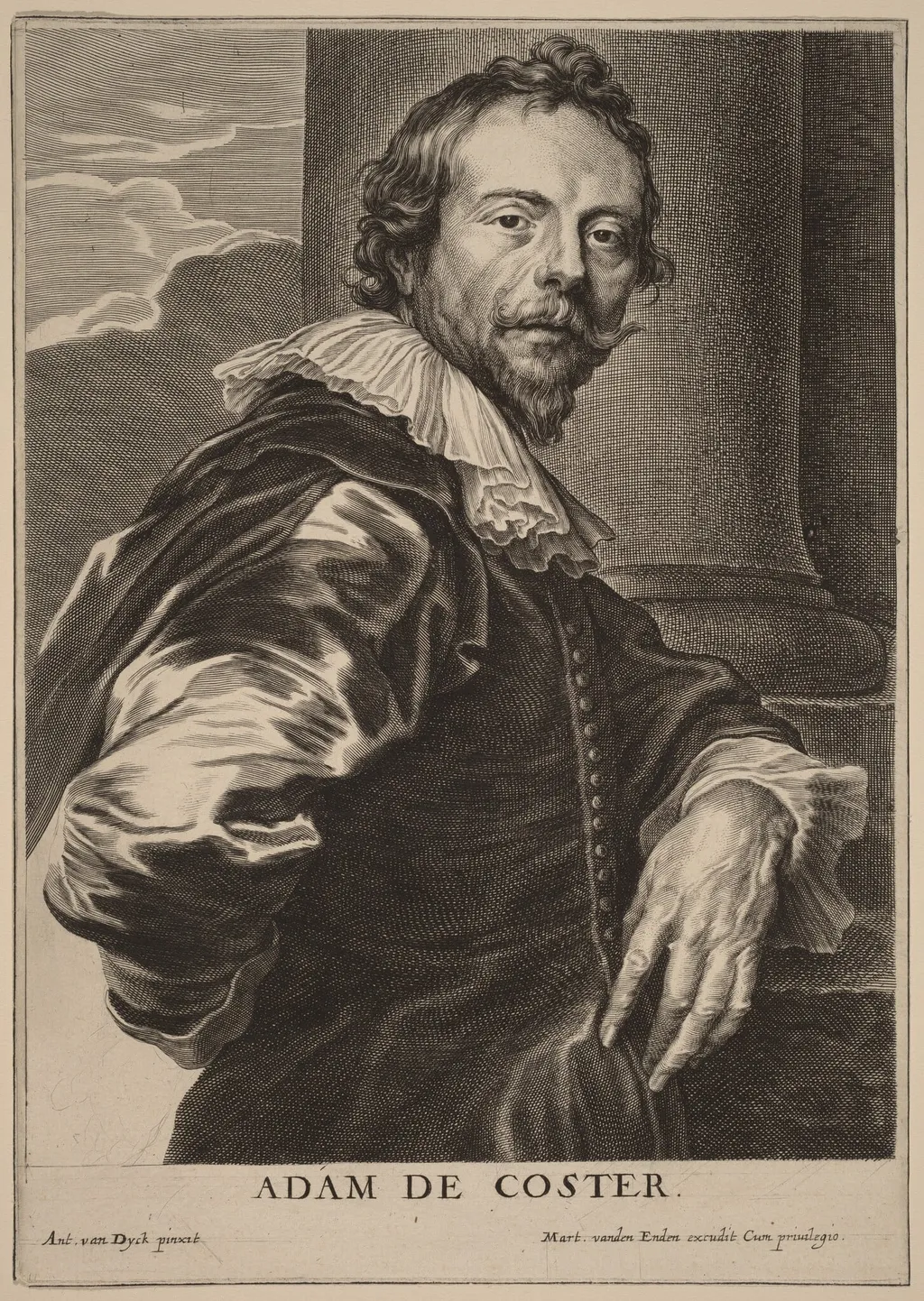
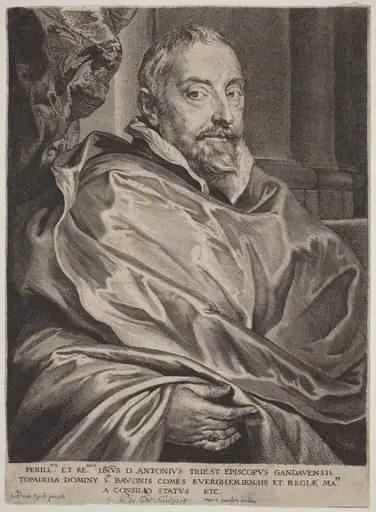
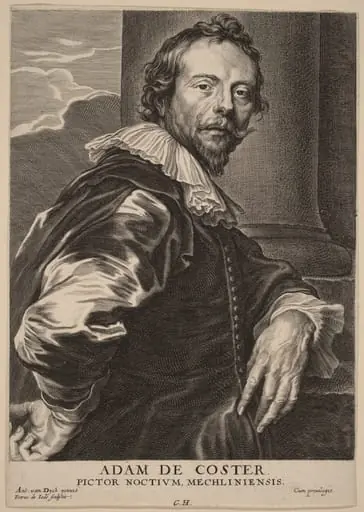
Adam de Coster is an ink print by the Baroque artist Pieter de Jode II. It dates from 1634 and is held in the collection of the National Gallery of Art.
About this work
Overview
The inscription at the base identifies the figure as Adam de Coster, though the image is in fact a self-portrait of the artist.
This black-and-white print, created around 1634, is an engraving by Pieter de Jode II. It depicts a man in a high-collared fur-lined cloak and a ruffled linen shirt, his hand resting gently on his chest. The composition is minimal, with no background details to distract from the subject’s focused expression. The inscription at the base identifies the figure as Adam de Coster, though the image is in fact a self-portrait of the artist.
Subject & Meaning
Though labeled as Adam de Coster, the portrait is a self-representation by Pieter de Jode II. The subject’s direct gaze and restrained gesture convey quiet dignity, typical of artistic self-representation in the early 17th century. The fur-lined cloak suggests status, while the plain setting emphasizes introspection. The image functions as both identification and personal statement, affirming the artist’s identity through his craft.
Technique & Style
De Jode employed fine, controlled lines to model form and texture, using hatching and cross-hatching to render the folds of fabric and the depth of the beard. The contrast between the dark tones of the cloak and the lighter fabric of the shirt creates subtle volume. The engraving’s precision reflects the technical discipline of the medium, where each line is incised into a metal plate and inked for printing.
History & Provenance
Created in the early 1630s, the print emerged from Antwerp’s thriving print culture, where artists often produced self-portraits to establish their professional identity. De Jode, part of a family of engravers, likely made this image for circulation among patrons and peers. Its survival suggests it was valued within artistic circles, though its early ownership remains undocumented.
Context
In early 17th-century Flanders, engraving was a respected medium for disseminating likenesses and artistic skill. Artists frequently depicted themselves to assert their status and craftsmanship. De Jode’s portrait aligns with a broader trend of self-representation among printmakers, who used the medium not only to reproduce others’ work but to assert their own presence in the art world.
Legacy
The engraving stands as a quiet testament to the role of printmakers in shaping visual culture. While not widely known today, it exemplifies how artists used self-portraiture to claim authority within their trade. Its technical refinement and restrained expression reflect the values of a profession that prioritized precision over flamboyance, leaving a subtle but enduring mark on the history of print.
Artist & collection