Artwork
Heinrich Julius von Goldbeck
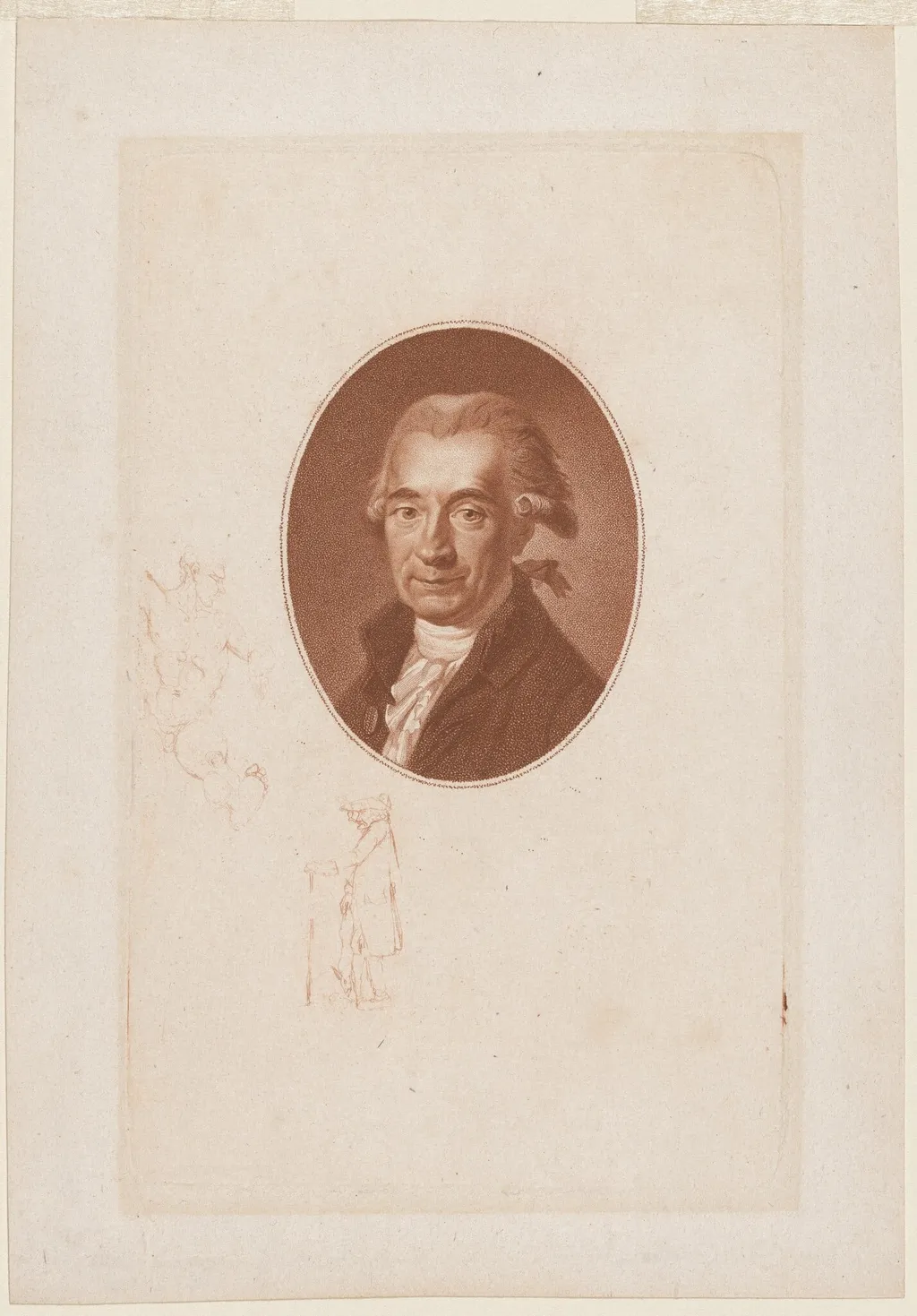
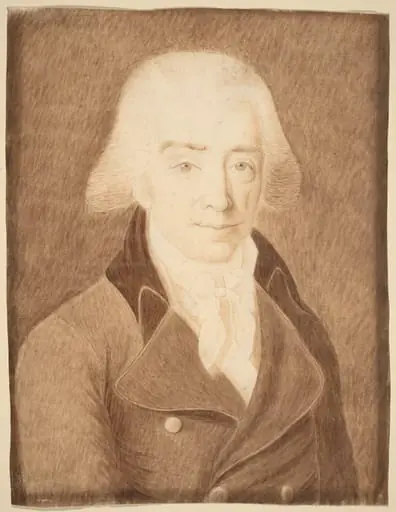
Heinrich Julius von Goldbeck is an ink print by the Romanticist artist Johann Friedrich Bolt. It dates from 1800 and is held in the collection of the National Gallery of Art.
About this work
Overview
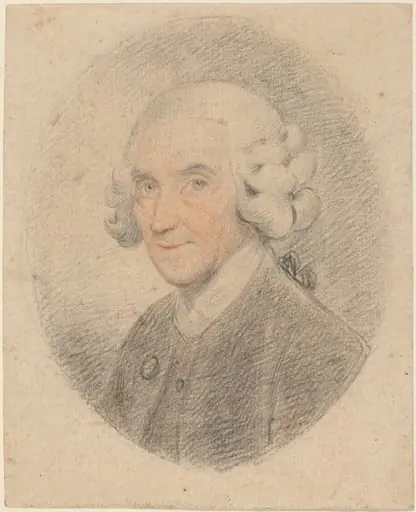
Executed in stipple etching and printed in red-brown ink on wove paper, it presents a formal portrait within a circular border.
This print depicts Heinrich Julius von Goldbeck, created around 1800 by Johann Friedrich Bolt. Executed in stipple etching and printed in red-brown ink on wove paper, it presents a formal portrait within a circular border. The composition is restrained, emphasizing the sitter’s likeness through tonal gradation rather than line. Faint sketch marks in the corners suggest preparatory work or paper handling during production.
Subject & Meaning
Heinrich Julius von Goldbeck, a Prussian military officer and court official, is portrayed with solemn composure. His high forehead and neatly tied white cravat convey propriety and social standing. The plain background and focused gaze reinforce a sense of dignity and restraint, typical of portraiture intended to document status rather than express emotion. The round frame may allude to classical ideals of harmony and permanence.
Technique & Style
Bolt employed stipple etching, a method using fine dots to build tone and texture, avoiding traditional lines. This technique allowed subtle modeling of facial features and fabric, suited to the era’s preference for soft, lifelike portraits. The red-brown ink enhances warmth and depth, while the wove paper’s smooth surface supports the delicate dotwork. The faint corner marks hint at the print’s physical handling during production.
History & Provenance
The print was made circa 1800, during a period when stipple etching was widely used for reproductive portraiture in Germany. Though specific early ownership records are unconfirmed, such prints were often circulated among aristocratic and military circles as tokens of status. Its survival suggests it was preserved as a personal or institutional portrait, likely within Prussian administrative or familial archives.
Context
In early 19th-century Germany, stipple etching was favored for its ability to mimic the softness of chalk or pastel portraits while allowing mass reproduction. This technique bridged the gap between painting and print, making formal likenesses accessible beyond elite commissions. Goldbeck’s portrait reflects this trend, aligning with contemporary efforts to document public figures through standardized, refined imagery.
Legacy
The print stands as an example of early 19th-century German reproductive printmaking, illustrating the technical precision and social function of stipple etching. While not widely known today, it contributes to understanding how portraiture served administrative and commemorative purposes in Prussian society. Its preservation offers insight into the visual culture of bureaucratic elites during the Napoleonic era.
Artist & collection