Artwork
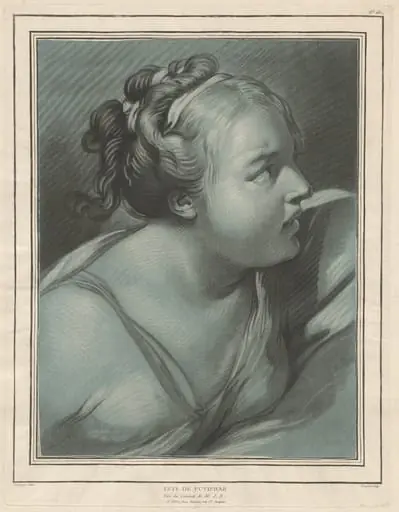
Tête de Putiphar (Potiphar's Wife)
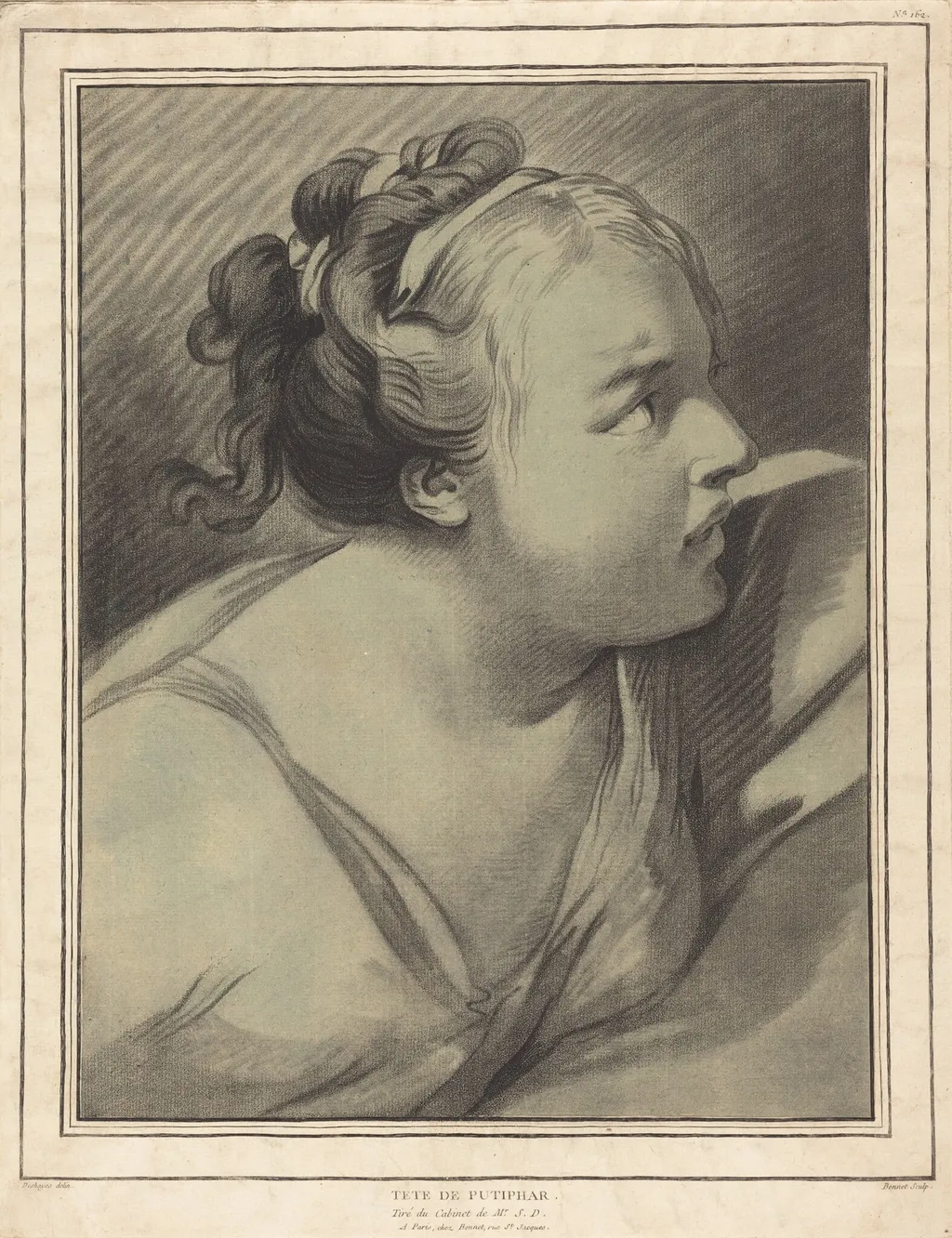
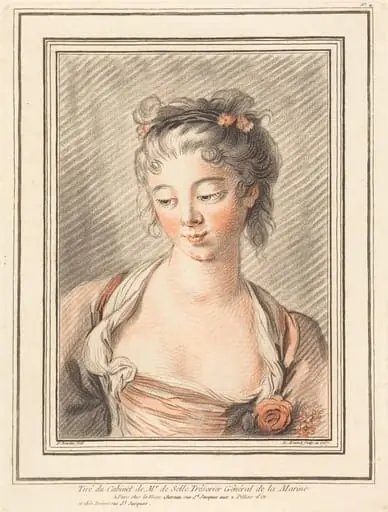
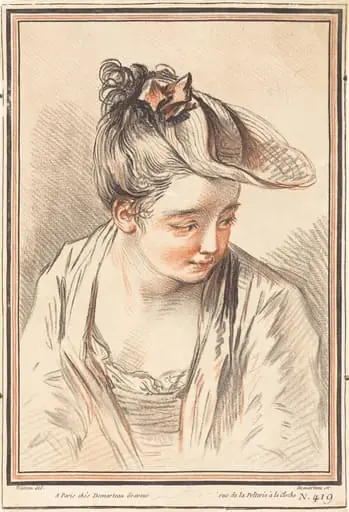
Tête de Putiphar (Potiphar's Wife) is a chalk print by the Romanticist artist Louis-Marin Bonnet. It dates from 1775 and is held in the collection of the National Gallery of Art.
About this work
Overview
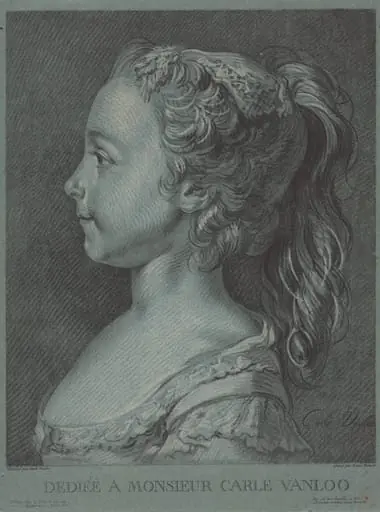
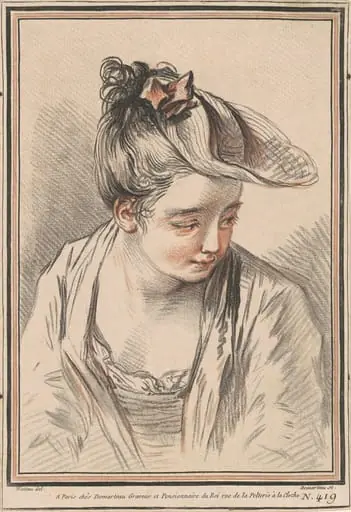
Louis-Marin Bonnet’s 1775 print titled Tête de Putiphar, or Potiphar’s Wife, presents a single female head rendered in a chalk‑manner technique. The image is printed in black on blue laid paper and transferred onto an engraved sheet, exemplifying the period’s interest in tonal drawing reproduced as print.
Subject & Meaning
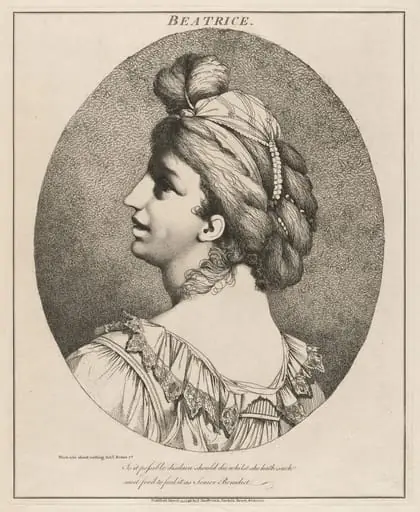
The work depicts a woman whose head is turned slightly away, hair gathered back with a few loose curls, and bare neck and shoulders. The title links the figure to the biblical Potiphar’s wife, a character known for her encounter with Joseph, suggesting an allusion to themes of desire and moral conflict.
Technique & Style
Bonnet employed a chiaroscuro approach, using deep shadows and gradual tonal shifts to model the face and hair, creating a sense of volume on the flat surface. The chalk‑manner effect, achieved by printing black on blue paper, enhances the soft gradations and gives the figure a three‑dimensional appearance.
History & Provenance
The print was produced in 1775, a time when French artists frequently explored chiaroscuro prints to emulate the effects of charcoal and pastel drawings. It remains attributed to Bonnet, though specific ownership records from its early circulation are scarce.
Context
In the late eighteenth century, biblical subjects were popular in academic art, serving both moral instruction and decorative purposes. Bonnet’s choice of a single, isolated head reflects the era’s fascination with portraiture studies and the expressive potential of limited color palettes.
Artist & collection