Artwork
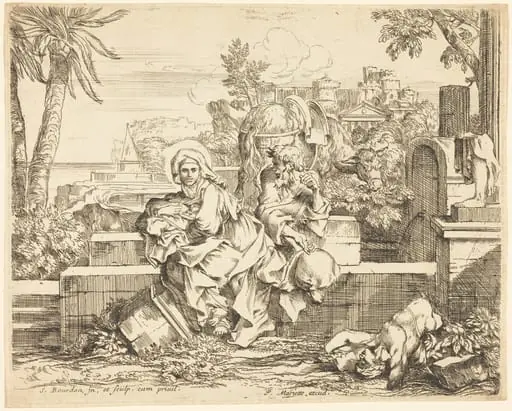
Holy Family Seated on an Arch
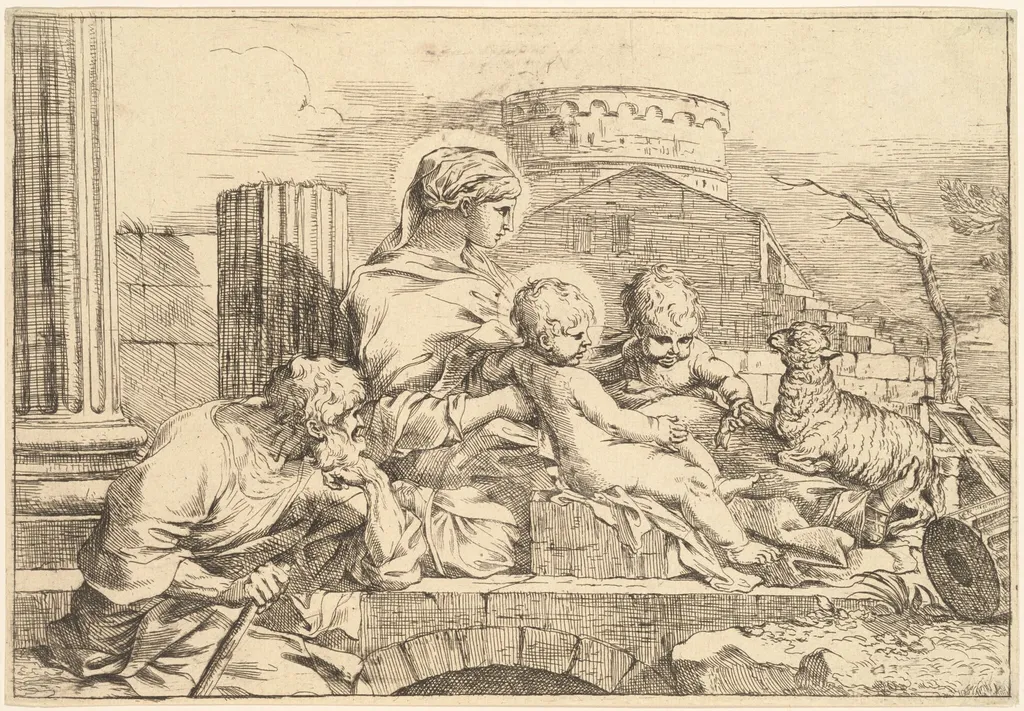
Holy Family Seated on an Arch is an ink print by the Baroque artist Sébastien Bourdon. It dates from 1647 and is held in the collection of the National Gallery of Art.
About this work
Overview
Bourdon, primarily known as a painter, also produced a significant body of graphic work, often blending religious themes with dramatic spatial compositions.
Sébastien Bourdon created this etching in 1647, depicting the Holy Family resting on a fractured arch. Executed in ink on laid paper, the work is part of the National Gallery of Art’s print collection in Washington, D.C. Bourdon, primarily known as a painter, also produced a significant body of graphic work, often blending religious themes with dramatic spatial compositions. This piece exemplifies his engagement with printmaking during his mid-career.
Subject & Meaning
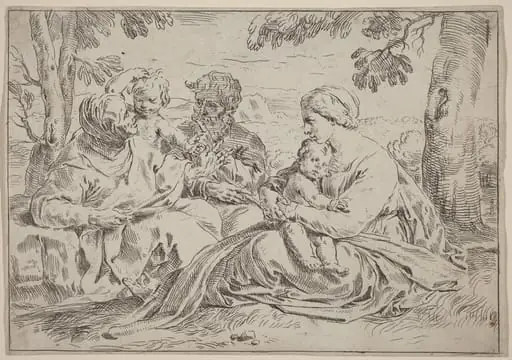
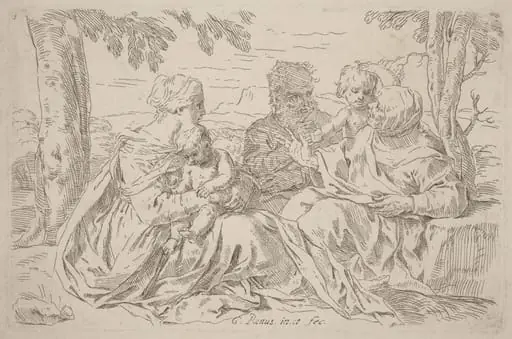
The composition centers on the Virgin Mary seated with the infant Jesus and a young John the Baptist on a crumbling stone arch. Their quiet intimacy contrasts with the decaying architecture behind them, suggesting the fragility of earthly structures against enduring spiritual presence. The children’s interaction—one reaching, the other clutching an object—hints at early recognition of their future roles, while Mary’s turned gaze adds a contemplative stillness.
Technique & Style
Bourdon employed etching to achieve varied line quality, using controlled acid bites to create both sharp contours and soft, blurred edges. Ink pooling in deeper grooves enhances tonal depth, lending texture to the ruins and fabric. The sketch-like quality, with visible hatching and uneven shadows, conveys immediacy rather than polish, reflecting an interest in expressive draftsmanship over idealized form.
History & Provenance
The print was made in 1647 during Bourdon’s time in Rome, where he absorbed classical and Baroque influences. It entered the National Gallery of Art’s collection in the 20th century as part of a broader acquisition of European prints. No early ownership records are documented, but its presence in major institutional collections confirms its recognition among connoisseurs of 17th-century graphic art.
Context
In mid-17th-century France, religious imagery remained central to artistic production, even as secular themes gained ground. Bourdon’s etching reflects the Counter-Reformation emphasis on intimate, humanized sacred scenes. His use of architectural decay as symbolic backdrop aligns with broader Baroque tendencies to merge naturalism with spiritual metaphor, distinguishing his approach from more formalized contemporaries.
Legacy
Though less celebrated than his paintings, Bourdon’s etchings influenced later generations of printmakers through their emotional directness and technical experimentation. This work, in particular, demonstrates how etching could convey narrative tension without overt drama. Its preservation in a major public collection ensures continued study of his contribution to the evolution of printmaking in early modern Europe.
Artist & collection
Artist
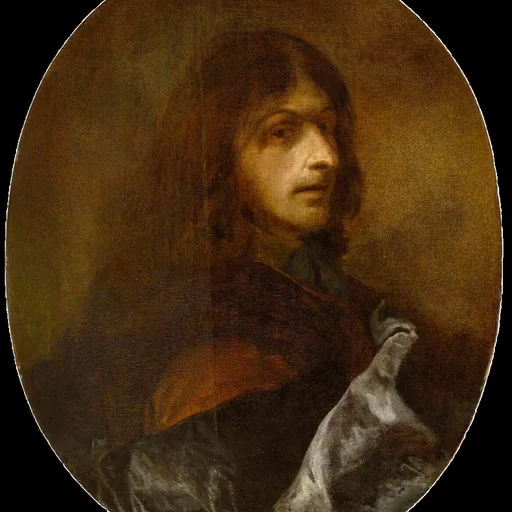
Sébastien Bourdon (French pronunciation: ; 2 February 1616 – 8 May 1671) was a French painter and engraver. His chef d'œuvre is The Crucifixion of St. Peter made for the cathedral of Notre Dame.

 The Holy Family
 The Holy Family
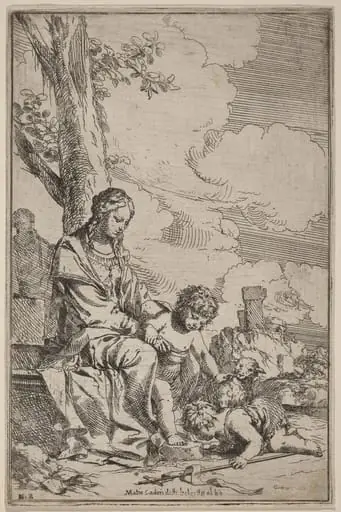 The Virgin and Child with Saint John the Baptist
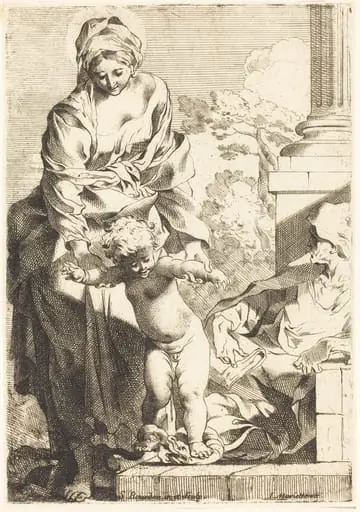 Virgin and Child Trampling on Sin
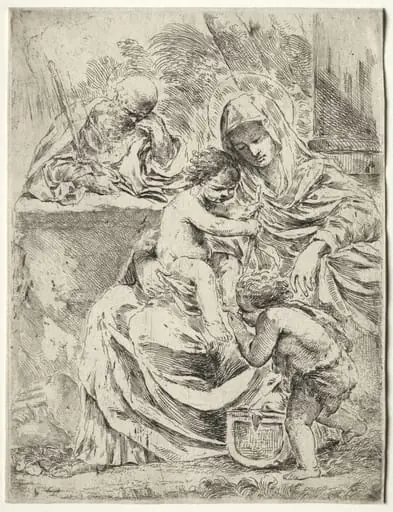 The Holy Family
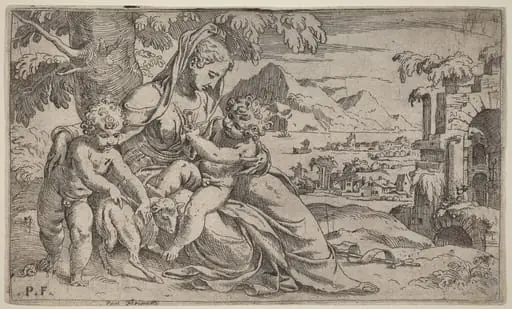 Madonna and Child with John the Baptist
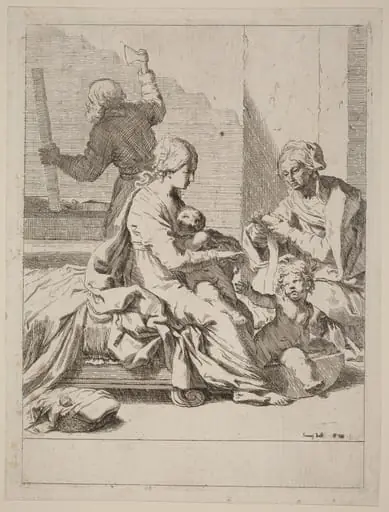 The Holy Family with Saint Elizabeth and Saint John the Baptist
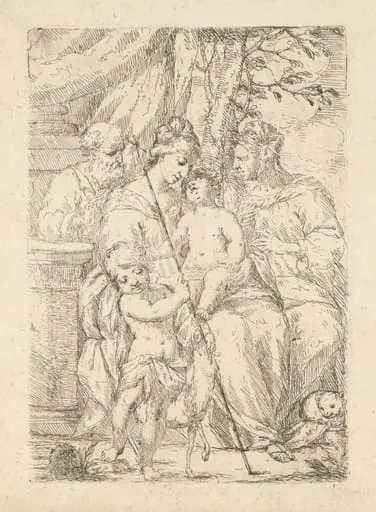 Holy Family with Saint Elizabeth
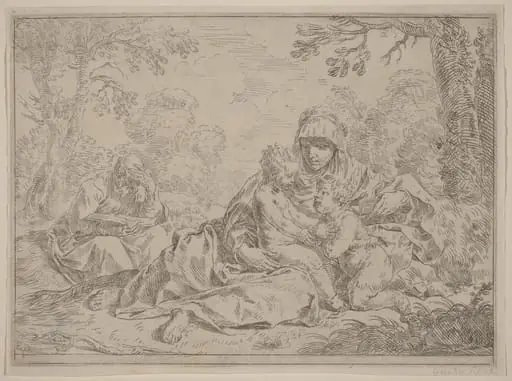 The Holy Family
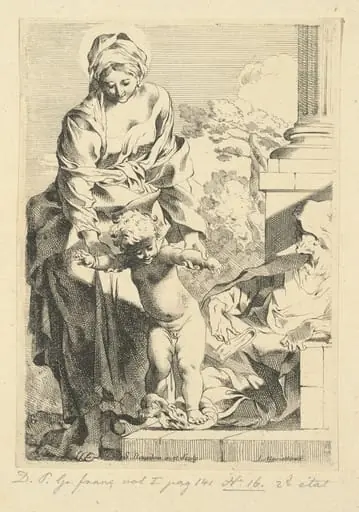 Virgin and Child Trampling Sin
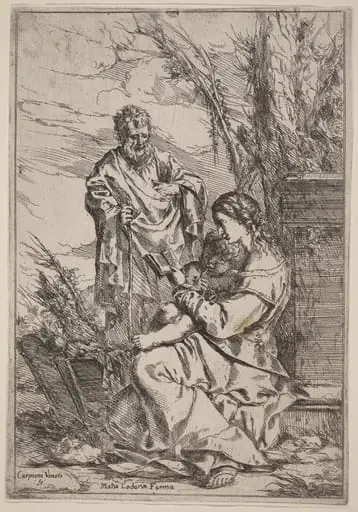 Holy Family with the Virgin Reading
 Rest on the Flight into Egypt